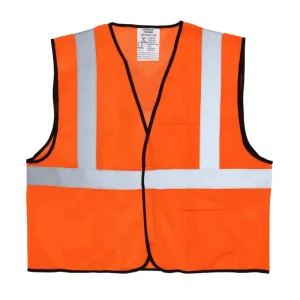
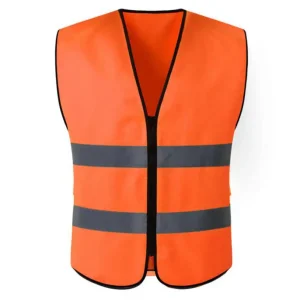
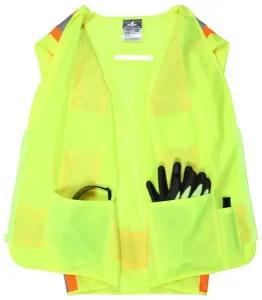
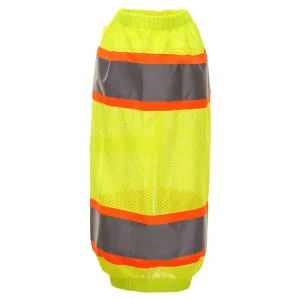
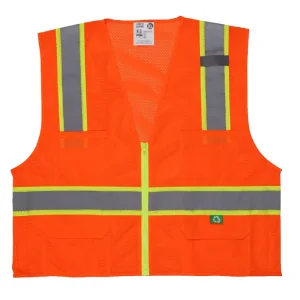
Certified ANSI/ISEA 107 & EN ISO 20471 compliant protective garments engineered by leading Chinese manufacturing facilities.
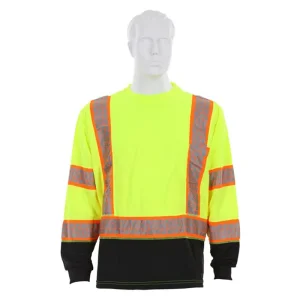
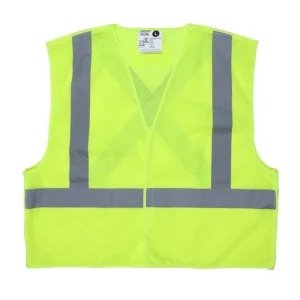
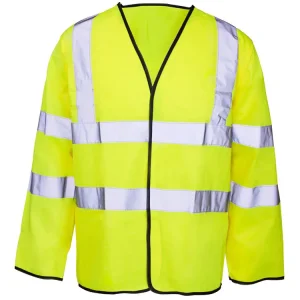
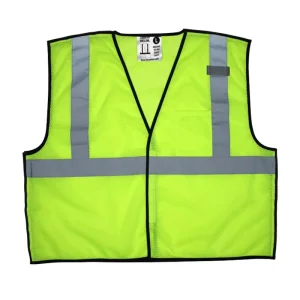
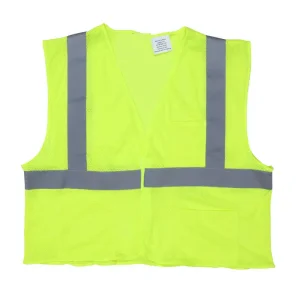
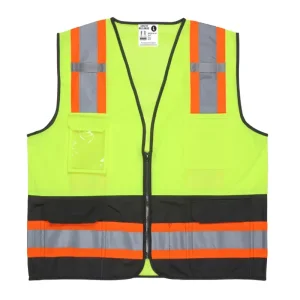
The global market for High-Visibility Personal Protective Equipment (PPE), specifically construction safety shirts and reflective workwear, is undergoing a structural transformation. Driven by stringent occupational safety mandates such as OSHA 29 CFR 1926.651 in the United States and EU Directive 89/686/EEC, modern industrial site operators demand workwear that balances extreme photometric compliance with ergonomic, all-day comfort. China has solidified its position as the premier manufacturing hub for these advanced garments, producing over 65% of the world's certified hi-vis protective gear.
In high-risk operational environments—including highway infrastructure construction, urban civil engineering, railway logistics, and utility maintenance—the visibility of workers is directly correlated with incident prevention. Modern construction safety shirts serve as the primary line of passive defense. The integration of advanced synthetic fibers, moisture-wicking technologies, and micro-prismatic retroreflective tapes has elevated safety shirts from simple uniform items to engineered personal protective equipment.
As enterprise procurement managers navigate complex global supply chains, partnering directly with specialized Chinese safety shirt manufacturers—such as Yongkang Wow Safety Products Co., Ltd.—offers unmatched economies of scale, technological versatility, and rigorous compliance assurance. Operating out of a modern 6,000 m² production facility with over 150 skilled technicians in Jinhua City, Zhejiang Province, leading factories combine automated fabric laser cutting, ultrasonic tape welding, and strict spectrophotometric testing to satisfy global enterprise tenders.
Key Takeaway for B2B Buyers: Modern procurement strategy requires looking beyond basic price-per-unit metrics. Evaluating a manufacturer’s vertical integration—from yarn spinning and fluorescent dyeing consistency to retroreflective tape coefficient testing—is essential for mitigating liability and ensuring worker protection.
High-performance safety shirts rely on the precise interplay between fluorescent background materials and retroreflective trim. Fluorescent fabrics function by absorbing invisible ultraviolet light from sunlight and re-emitting it as visible light of a longer wavelength, drastically increasing daytime luminance. Retroreflective tapes, conversely, utilize glass bead technology or micro-prismatic optics to return light straight back toward vehicle headlights during low-light and nighttime conditions.
Utilizing 100% Polyester Birdseye Mesh (120–160 GSM), high-capacity wicking structures transport sweat away from the skin, preventing heat stroke in tropical or summer work environments.
Premium 2-inch silver retroreflective strips certified to ANSI Class 2 & 3 standards deliver retroreflection coefficients exceeding 330–500 cd/(lx·m²), ensuring 360-degree visibility over 1,000 feet.
For oil, gas, and electrical utility work environments, safety shirts incorporate inherent flame-retardant (FR) Modacrylic/Cotton blends meeting NFPA 2112 and EN ISO 11612 specifications.
To comply with international standards, fluorescent base materials must fall within strict chromaticity coordinates defined on the CIE 15.2 colorimetric space. The three recognized safety colors—Fluorescent Yellow-Green, Fluorescent Orange-Red, and Fluorescent Red—must maintain minimum luminance factors ($\beta$) across their lifecycle:
China’s safety apparel manufacturing ecosystem, anchored in industrial regions like Yongkang, Zhejiang, provides global buyers with an unparalleled combination of raw material availability, skilled craftsmanship, and advanced quality control infrastructure. Yongkang Wow Safety Products Co., Ltd. exemplifies this industrial strength, leveraging 15+ years of specialized production experience.
In-house lab testing verifies color consistency, chromaticity coordinates, and luminance factors before fabric rolls enter the cutting stage.
Reflective tapes undergo ISO 6330 wash testing, guaranteeing retroreflectivity retention over 25 to 50+ commercial wash cycles.
Computer-Aided Design (CAD) pattern cutting reduces fabric waste while ensuring tailored fits that prevent snag hazards on machinery.
By integrating lean manufacturing practices with automated sewing lines, tier-1 Chinese factories ensure that every lot—whether a 500-piece custom batch or a 100,000-piece municipal tender—meets exact dimensional tolerances, seam strength specifications, and labeling requirements.
Procurement specifications for safety shirts vary significantly across geographic regions and occupational hazard zones. Understanding these regulatory nuances is critical for compliance and safety management.
Under ANSI/ISEA 107-2020, safety shirts fall under Performance Class 2 or Class 3 depending on background fabric area and reflective tape coverage:
The European standard categorizes risk based on vehicle approach speeds. Class 2 requires at least 0.50 m² of background material and 0.13 m² of reflective material, while Class 3 requires 0.80 m² of background material and 0.20 m² of retroreflective tape. Long-sleeve hi-vis t-shirts with 360-degree waist and arm stripes are standard for European civil infrastructure contracts.
In Middle Eastern desert construction environments, safety shirts utilize ultra-lightweight 110 GSM micro-mesh fabrics with UPF 50+ UV defense ratings. Conversely, in Northern European or Canadian winters, safety shirts serve as thermal base layers, incorporating brushed fleece linings paired with stretch-flex retroreflective heat-transfer vinyl (HTV).
For global safety equipment brands, distributors, and large-scale construction enterprises, partnering with a direct manufacturer allows for extensive customization without sacrificing regulatory compliance.
Using screen printing, heat transfer, or high-density embroidery, enterprise logos are placed within certified non-reflective zones to preserve compliance area requirements.
Customization options include radio tabs, dual chest pen pockets, mic loops, zipper closures, segment reflective tape for stretch flexibility, and breakaway Velcro side seams.
Leading factories offer 100% Recycled PET (rPET) polyester fabrics derived from post-consumer plastic bottles, helping buyers meet corporate ESG sustainability goals.
Standard MOQs for custom color dyes or custom pattern designs typically start at 1,000 pieces per style. However, for standard stock fluorescent colors (Lime-Yellow and Orange) with custom logo printing, flexible MOQs starting from 300 to 500 pieces can be accommodated.
Garment models undergo rigorous third-party testing at accredited laboratories (such as SGS, SATRA, or TÜV Rheinland). Certificates are provided for both the retroreflective trim and the fluorescent background fabric, detailing luminance factors, colorfastness, tensile strength, and photometric retroreflectivity values.
For summer workwear, a lightweight 120 GSM to 140 GSM 100% Polyester Birdseye Mesh or Interlock knit provides maximum breathability without compromising structural integrity or opacity standards set by ANSI Class 2 requirements.
Yes, if the logo covers too much fluorescent background material and reduces the remaining high-visibility fabric area below standard limits. Experienced manufacturers calculate certified print zones on the chest and back to ensure full compliance is maintained.
Sample development typically takes 5 to 7 days. Full mass production for orders ranging from 5,000 to 20,000 pieces is completed within 25 to 35 days. Accelerated production lines are available for urgent municipal contract tenders.
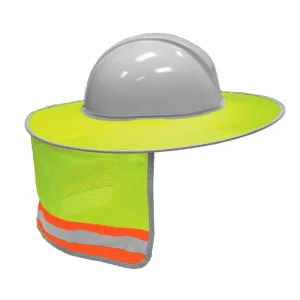
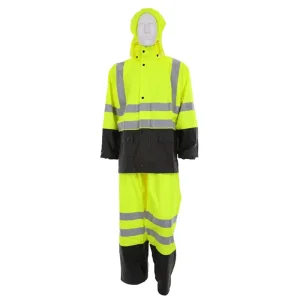
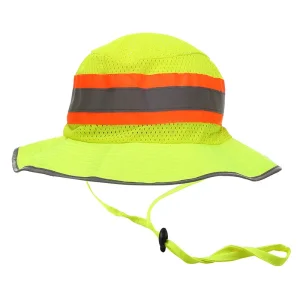
From full rain suits to hard hat sun shields—discover our comprehensive product portfolio manufactured in Yongkang, China.