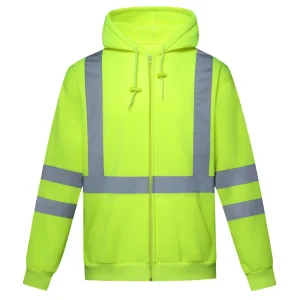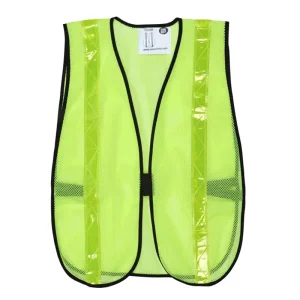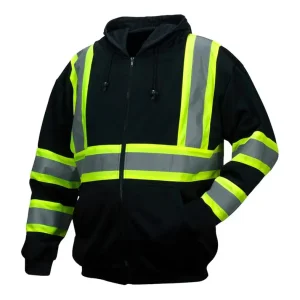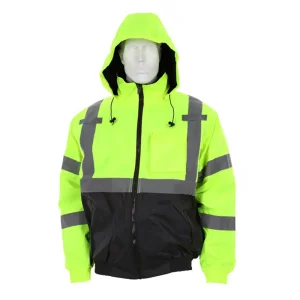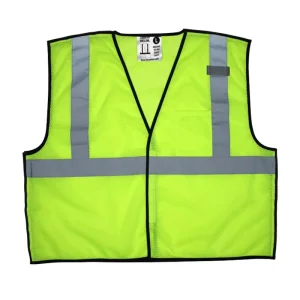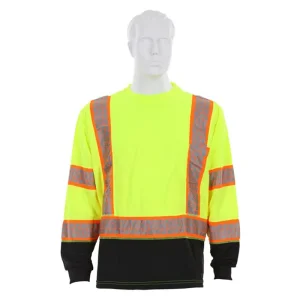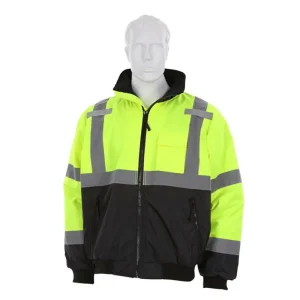
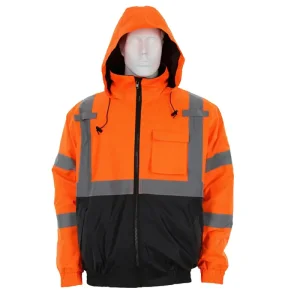
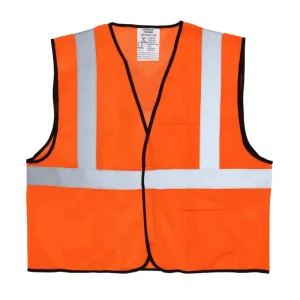
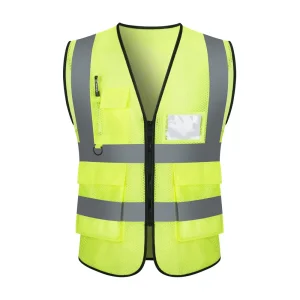
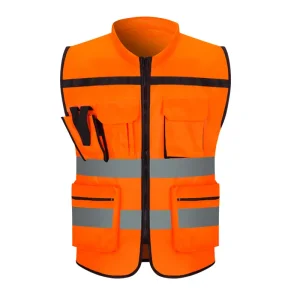
The global high-visibility (hi-vis) safety apparel market has evolved from a basic regulatory compliance sector into a high-tech, material-science-driven industrial domain. Valued at over USD 3.2 Billion globally, the demand for specialized safety jackets is projected to grow at a Compound Annual Growth Rate (CAGR) of 6.8% through 2030. This growth is predominantly anchored by expanding global infrastructure initiatives, stringent occupational health and safety (OH&S) enforcement across North America and the European Union, and escalating industrial automation in logistics and maritime hubs.
Modern workwear procurement is no longer restricted to purchasing generic protective vests. Today’s industrial enterprise clients—ranging from multinational EPC (Engineering, Procurement, Construction) conglomerates to regional municipal transit authorities—demand highly specialized Hi-Vis Safety Jackets engineered for micro-climate adaptation, extreme mechanical abrasion resistance, and multi-hazard protection (e.g., flame resistance, arc flash protection, thermal insulation, and waterproof breathability).
In high-risk operational zones such as highway construction, airport ramp handling, railway maintenance, and deep-sea port terminals, human visibility is directly correlated with mortality reduction. According to data from the U.S. Bureau of Labor Statistics (BLS) and Eurostat, struck-by-object and vehicle impact hazards account for nearly 18% of all fatal occupational injuries in heavy industrial sectors. Deploying certified hi-vis jackets manufactured by accredited specialized factories remains the primary line of passive optical defense for field personnel working in low-light, nighttime, or adverse meteorological environments.
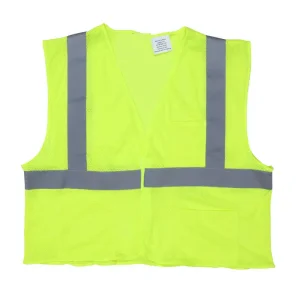
A premium hi-vis safety jacket represents a sophisticated synthesis of background fluorescent substrate materials and high-coefficient retroreflective elements. The efficacy of these garments depends on strict adherence to international photometric testing standards.
Fluorescent fabrics function by converting invisible ultraviolet (UV) light waves into visible light, rendering the wearer brightly visible during daytime, twilight, and overcast conditions. Global safety mandates recognize three distinct color spectra:
Offers the highest luminance factor and is most easily detected by the human eye's peak spectral sensitivity under daylight conditions. Standardized for general road construction and municipal work.
Provides exceptional visual contrast against green foliage, marine backgrounds, and concrete urban settings. Preferred for railway infrastructure, forestry, and maritime logistics.
Utilized primarily across specialized European municipal services, emergency response teams, and specialized industrial search-and-rescue units.
Retroreflection occurs when light rays striking a surface are bounced back directly toward their original light source (e.g., a vehicle's headlights). High-quality factories employ two primary retroreflective technologies:
| Classification Standard | Min. Background Fabric | Min. Retroreflective Material | Primary Industrial Application |
|---|---|---|---|
| ANSI Class 1 / EN ISO Class 1 | 0.14 m² (217 sq. in.) | 0.10 m² (155 sq. in.) | Low-speed operational environments (< 25 mph), warehouse logistics, parking attendants. |
| ANSI Class 2 / EN ISO Class 2 | 0.50 m² (775 sq. in.) | 0.13 m² (201 sq. in.) | Roadway construction zones, utility repair crews, traffic control near speeds up to 50 mph. |
| ANSI Class 3 / EN ISO Class 3 | 0.80 m² (1240 sq. in.) | 0.20 m² (310 sq. in.) | High-risk environments, highway construction (> 50 mph), inclement weather, emergency services. |
China remains the undisputed epicenter of global high-visibility workwear production, producing approximately 75% of the world's certified safety clothing. The country’s competitive edge stems not merely from competitive unit labor costs, but from an unrivaled, fully vertically integrated textile ecosystem.
From raw polyester synthesis and dope-dyeing yarn production to specialized PU/TPU membrane lamination, seam-sealing tape manufacturing, and automated computer-controlled cutting (CAD/CAM), Chinese safety garment factories offer global B2B buyers unmatched agility, scalability, and technical compliance guarantees.
Leading the vanguard of China’s high-precision safety apparel exporters, Yongkang Wow Safety Products Co., Ltd. exemplifies modern technical garment manufacturing. Spanning a state-of-the-art 6,000 square meter production facility staffed by 150+ highly skilled textile technicians, the company specializes in OEM and ODM execution for global enterprise procurement networks.
When evaluating procurement options between regional domestic distributors and direct factory contract manufacturing in China, enterprise buyers consistently leverage the scale efficiencies detailed below:
High-visibility jackets are tailored engineered solutions designed to mitigate specific workplace environmental hazards. Sourcing managers must align garment material specifications with actual field deployment requirements:
Requires heavy-duty 300D polyester Oxford shell fabrics treated with DWR (Durable Water Repellent) coatings. High resistance to tearing, mud accumulation, and concrete dust abrasion.
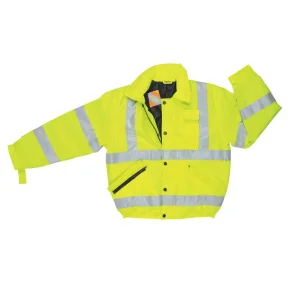
Demands insulated bomber jackets equipped with 200g/m² thermal quilted polyfill or detachable fleece liners. Maintains core body heat in temperatures down to -20°C.
Mandates inherent Flame Resistant (FR) fabrics compliant with NFPA 2112 and EN ISO 11612. Uses non-conductive, anti-static carbon fiber grid threading.
Strictly mandates specialized Fluorescent Orange background fabric (RIS-3279-TOM standard in UK/EU) to avoid optical confusion with green track signals.
The high-visibility clothing industry is undergoing a dual paradigm shift driven by digital integration and environmental stewardship. Modern factories are actively incorporating advanced innovations into next-generation garment design:
Passive retroreflection requires an external light source (headlights). Next-gen hi-vis jackets integrate flexible, washable electroluminescent (EL) strips or active micro-LED filaments powered by rechargeable lithium-ion packs, providing 360-degree self-illuminated visibility even in total darkness.
Global ESG (Environmental, Social, Governance) mandates are driving adoption of recycled Polyethylene Terephthalate (rPET) derived from post-consumer plastic waste. Certified GRS (Global Recycled Standard) hi-vis fabrics match virgin polyester in tear strength, tensile durability, and color fastness.
To streamline industrial laundry tracking and monitor garment wash-cycle lifespans, factory-integrated UHF RFID chips are embedded into interior seams. This provides safety directors with automated logs verifying when a jacket has exceeded its certified wash-cycle threshold.
Procurement directors managing international tender bids for hi-vis safety workwear must enforce rigorous factory verification procedures. Substandard reflective tape or improper fluorescent dyeing can result in severe legal liability and compromised worker safety.
Verify chromaticity coordinates ($x, y$) and luminance factor ($\beta$) before and after xenon arc light exposure tests.
Waterproof rain jackets must maintain a minimum resistance of $\ge 10,000 \text{ mm H}_2\text{O}$ pressure according to ISO 811 testing protocol.
Tape must retain $\ge 100 \text{ cd/lux/m}^2$ reflectivity performance after 25 to 50 ISO 6330 industrial laundering cycles at 60°C.
Check major structural seams for minimum 550 N breaking strength and evaluate hot-air PU seam tape adhesion strength.