High-performance protective apparel engineered for heavy weather, high-hazard zones, and international safety compliance.
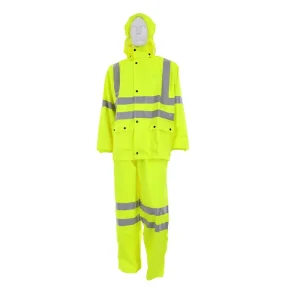
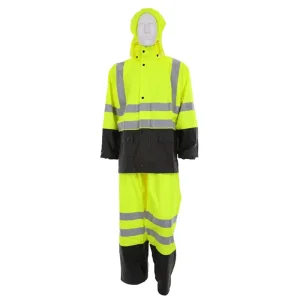
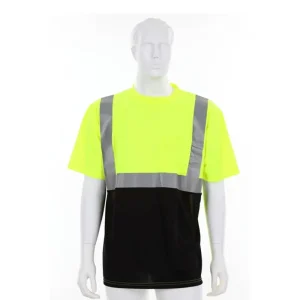
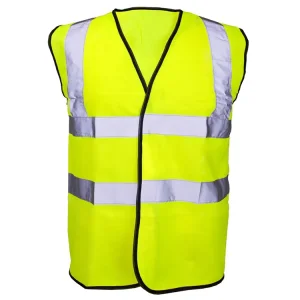
Analyzing regulatory shifts, extreme weather impacts, and B2B procurement trends driving demand for high-visibility waterproof workwear.
In modern occupational safety engineering, High-Visibility Rainwear and Waterproof Rain Pants represent a critical line of defense for personnel operating in adverse environmental conditions. According to global workplace safety statistics, low-visibility coupled with precipitation accounts for over 35% of fatal struck-by hazards on transport infrastructure, maritime docks, and heavy industrial construction sites. As occupational health and safety regulations—such as OSHA 1910/1926 in North America, Directive 89/686/EEC in Europe, and Safe Work Australia frameworks—continue to mandate stricter compliance, procurement teams are shifting away from basic single-use rain ponchos toward heavy-duty, multi-norm technical rain suits.
The market for high-visibility waterproof gear has evolved beyond simple color signalization. Today’s industrial procurement officers require a sophisticated synergy of hydrostatic waterproofness, moisture vapor permeability (breathability), retroreflective performance after repeated laundering, and ergonomic durability. Specialized manufacturers such as Yongkang Wow Safety Products Co., Ltd. sit at the epicenter of this technological shift, bridging advanced material science with scalable industrial manufacturing in Zhejiang, China.
Modern workwear must conform simultaneously to EN ISO 20471 Class 3 for visibility and EN 343 Class 3:1 or Class 4:4 for rain protection, requiring rigorous dual-certification procedures.
Increased frequency of extreme atmospheric events requires field crews to operate in intense downpours and low-light storm conditions without sacrificing thermal comfort or movement range.
Global B2B enterprise buyers are prioritizing vendors that integrate Recycled PET (rPET), solvent-free Polyurethane coatings, and PFC-free Durable Water Repellent (DWR) formulations.
Deconstructing the multi-layer fabric matrices, seam-sealing technology, and micro-prismatic optics essential for ANSI Class 3 compliance.
To understand why commercial hi-vis rain jackets and bib pants perform reliably during torrential storms, buyers must examine the multi-layered textile engineering behind factory production. Rainwear construction relies on a balance between barrier protection against liquid penetration and heat dissipation from sweat evaporation.
Industrial rainwear utilizes three primary polymer coating approaches. Polyurethane (PU) breathable coatings and Thermoplastic Polyurethane (TPU) bonded membranes represent the gold standard for high-end professional workwear. Unlike legacy Polyvinyl Chloride (PVC) coatings—which are impermeable but trap body heat and become brittle at freezing temperatures—TPU membranes feature a microporous structure. Millions of microscopic pores per square inch permit water vapor molecules (sweat) to escape outward while preventing liquid water droplets from penetrating inward.
| Material Class | Hydrostatic Rating (ISO 811) | Breathability (RET Value) | Cold Flexibility Range | Primary Application Field |
|---|---|---|---|---|
| PU Coated 300D Oxford Polyester | 8,000 - 12,000 mm | RET < 15 (Moderate) | -15°C to +50°C | General Highway Work & Logistics |
| TPU Laminated Stretch Poly-Cotton | 12,000 - 18,000 mm | RET < 8 (High Breathability) | -30°C to +60°C | Heavy Civil Engineering & Utilities |
| Heavy-Duty PVC/Polyester Matrix | > 20,000 mm | Impermeable (Non-breathable) | -5°C to +40°C | Offshore Fishing, Mining & Pressure Washing |
| Flame-Retardant PU Membrane (FR) | 10,000 - 15,000 mm | RET < 12 (Good) | -25°C to +60°C | Petrochemical Refining & Electrical Arc Hazards |
A garment is only as waterproof as its weakest seam. Every needle penetration during the stitching process creates thousands of microscopic leakage paths. To eliminate moisture ingress, factory production lines utilize automated hot-air seam sealing machines. A multi-layer PU or TPU waterproof tape is applied over all stitched seams—including shoulder armholes, crotch gussets, and hood attachments—at precisely controlled temperatures (up to 400°C) and mechanical pressures. This fuses the tape directly to the inner polymer membrane, guaranteeing leakproof performance under continuous torrential rains.
Visible performance during dusk, night, and heavy fog depends on retroreflective trim. Micro-glass bead technology (such as 3M™ Scotchlite™ or high-grade equivalent silver tapes) features millions of microscopic glass spheres suspended in a durable polymer resin. Light beams from approaching vehicle headlights enter the sphere, refract, reflect off a mirrored backing layer, and bounce directly back toward the driver's line of sight. High-vis rainsuits manufactured to ANSI/ISEA 107-2020 Level 2 retroreflective standards maintain a minimum retroreflective coefficient ($R_A$) of 330 to 500 cd/(lx·m²), providing clear 360-degree detection at distances exceeding 300 meters.
How customized hi-vis rainwear configurations meet the unique operational hazards of diverse global industries.
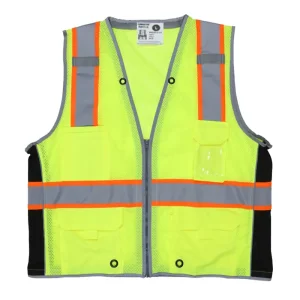
Crews exposed to high-speed traffic (above 50 mph) require Class 3 rain suits featuring 2-inch wide silver reflective bands around the torso, arms, and pant legs. Garments feature durable 300D Oxford fabric to resist friction against asphalt and heavy tools.
Dock workers face severe salt spray, constant ocean winds, and extreme humidity. Specialized rain pants with heavy-duty elastic suspenders, storm flaps, and salt-water resistant brass/plastic press studs are essential to prevent moisture seepage.
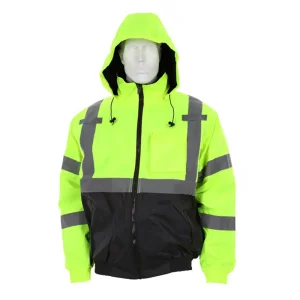
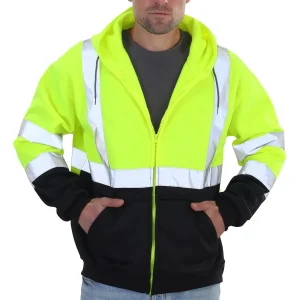
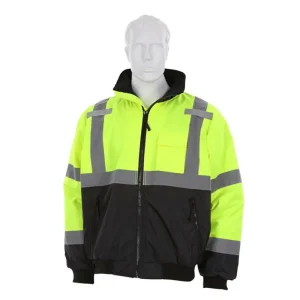
Utility workers restoring power lines in electrical storms need flame-retardant (FR) anti-static PU rain jackets. Combined fluorescent yellow-green base fabric with black lower panels conceals dirt, grease, and mud during underground repairs.
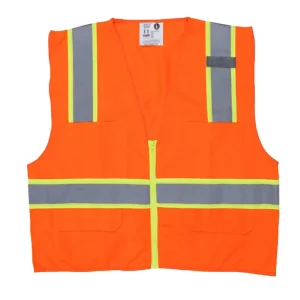
Railway operations in regions like the UK (RIS-3279-TOM standard) demand high-visibility orange rain coats to avoid confusion with green signaling lights. Snag-proof designs with detachable hoods prevent accidental snagging on moving stock.
Outdoor crews operating in rugged terrain require ripstop canvas reinforcements on knees, elbows, and seat areas of rain pants. Breathable underarm zippers allow heat release during rigorous physical labor.
How the Yongkang / Zhejiang safety manufacturing ecosystem delivers unmatched turnaround speeds, cost efficiency, and quality consistency.
When international buyers procure commercial quantities of safety workwear, supply chain stability and unit cost optimization are paramount. Situated in Yongkang, Jinhua City, Zhejiang Province—the industrial heartland of Chinese hardware and protective equipment manufacturing—companies like Yongkang Wow Safety Products Co., Ltd. leverage a complete, vertically integrated regional supply chain.
Fluorescent brightness chromaticity ($x, y$ coordinates) verified via spectrophotometer. Waterproof PU membrane lamination tested under hydrostatic pressure gauges.
Automated CAD nesting minimizes fabric waste. Hot-air seam tape sealing applied across all needle penetrations at controlled speeds.
Finished garments undergo AQL 2.5 visual inspection, retroreflective luminance measurement, and water submersion batch testing before export loading.
Discover how next-generation smart materials, eco-friendly membranes, and active illumination are reshaping personal protective equipment.
Passive retroreflective tape requires an external light source (headlights) to shine. Next-generation hi-vis rainwear incorporates ultra-thin, washable LED strip arrays and electroluminescent (EL) piping powered by micro lithium batteries. This ensures active 360-degree visibility for workers standing in complete darkness or around unlit vehicle perimeters.
With global regulatory bodies banning per- and polyfluoroalkyl substances (PFAS/PFCs), factory R&D is pioneering plant-based and bio-based silicone water-repellent finishes. These eco-friendly coatings allow rain droplets to bead up and roll off without releasing persistent organic pollutants into aquatic ecosystems.
Shifting away from fossil-fuel derived plastics, future hi-vis rain pants will utilize bio-TPU synthesized from non-food castor bean oil and recycled PET yarns. These circular textiles deliver identical hydrostatic performance while reducing carbon footprint by over 40% per garment.
Smart workwear is incorporating flexible RFID tags to automate industrial laundry tracking and monitor garment wash cycles. Advanced concepts feature embedded thermal sensors to detect heat stress or cold exposure, transmitting real-time safety alerts to site supervisors.
Navigating international safety certifications, custom ergonomic sizing, and brand-tailored OEM services.
Serving enterprise clients across North America, Europe, Oceania, and Latin America requires strict compliance with regional standards. Wow Safety provides comprehensive documentation support, third-party lab test reports (SGS, TÜV, SATRA), and localized customization tailored to target market requirements.
Full compliance with Type R (Roadway), Type P (Public Safety), and Type O (Off-Roadway) garments. Garments adhere to strict square-inch minimums for fluorescent background materials and 2-inch wide retroreflective striping.
Dual certification covering visibility luminance standards (Class 1, 2, or 3) and waterproof/breathability ratings (Class 1 through Class 4). Materials comply with EU REACH chemical safety regulations and OEKO-TEX Standard 100.
Optimized for extreme UV radiation exposure and high temperature/humidity working conditions. Incorporates UPF 50+ sun protection ratings alongside high-visibility day/night compliance.
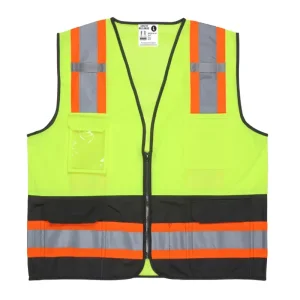
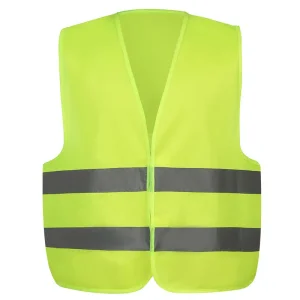
Explore our broader range of certified high-visibility garments and reflective traffic safety items available for bulk procurement.
Addressing key operational questions regarding waterproofing ratings, wash durability, custom OEM branding, and factory sourcing.
PU (Polyurethane) coating involves spreading a fluid liquid resin onto the interior surface of polyester fabric. It offers excellent waterproofing at an economical cost. TPU (Thermoplastic Polyurethane) lamination bonds a pre-extruded solid breathable film to the fabric using heat and pressure. TPU offers superior elasticity, higher water vapor permeability (lower RET value), enhanced cold-crack resistance down to -30°C, and greater wash longevity compared to traditional PU coatings.
Standard commercial safety garments certified to ISO 6330 or EN ISO 20471 retain required retroreflectivity (≥330 cd/lx/m²) for up to 25 to 50 domestic wash cycles at 40°C. For heavy industrial laundering programs, Wow Safety uses reinforced glass-bead or micro-prismatic tapes engineered to survive industrial washing up to 60°C and tunnel drying without delaminating.
For light drizzle, a 3,000mm rating is adequate. However, field workers operating in heavy downpours, kneeling on wet surfaces, or leaning against rain-soaked equipment require a minimum rating of 10,000mm H₂O (EN 343 Class 3 or 4). Wow Safety’s premium rainwear series delivers test results up to 15,000mm H₂O.
Yes. Logo customization is performed via screen printing, heat transfer reflective vinyl, or embroidered patches. To maintain EN 343 waterproof integrity, heat-transfer vinyl is applied to non-seam zones (such as the upper chest flap or rear back panel). If embroidery is required, an automated waterproof sealing tape is applied over the interior embroidery backing to seal all needle holes.
Standard OEM production MOQs start at 500 units per style/colorway. Sample development requires 3 to 7 business days, while full container production batches are typically completed within 25 to 35 days, depending on fabric coating lead times and order complexity.