Premium thermal safety sweatshirts, fleece hoodies, and workwear manufactured to rigorous international compliance standards for cold-weather protection.
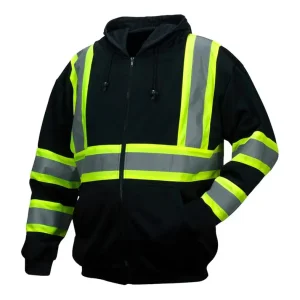
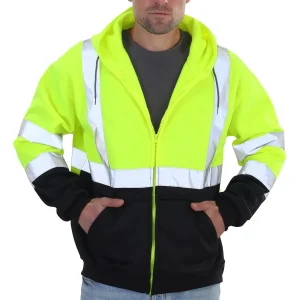
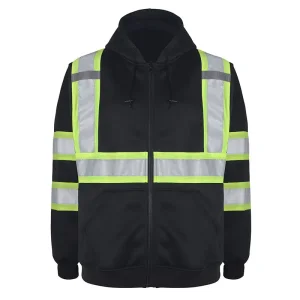
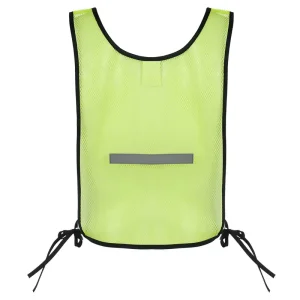
An authoritative evaluation of material science, retroreflective compliance, and industrial manufacturing standards for cold-weather personal protective equipment (PPE).
In modern industrial safety, high-visibility (hi-vis) sweatshirts have evolved from simple cold-weather work apparel into critical personal protective equipment (PPE) engineered to safeguard human life in high-risk, low-light environments. As enterprise procurement parameters shift toward enhanced wearer comfort, thermal efficiency, and all-weather operational compliance, industrial safety directors and bulk buyers are prioritizing specialized Hi-Vis Sweatshirts Factory partners capable of delivering validated certification, scalable manufacturing output, and structural garment longevity.
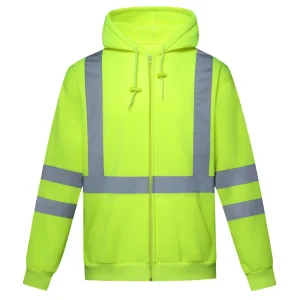
Unlike lightweight polyester safety vests that serve primarily as daytime outer shells, hi-vis fleece sweatshirts must perform a complex dual function: providing thermal insulation against ambient sub-zero temperatures while maintaining strict compliance with international photometric standards such as ANSI/ISEA 107-2020 (Type R Class 3) in North America and EN ISO 20471:2013+A1:2016 (Class 3) in the European Union. Achieving this equilibrium demands sophisticated textile engineering, precision pattern construction, and state-of-the-art retroreflective tape application.
To achieve true ANSI/ISEA Class 3 or EN ISO 20471 Class 3 compliance, a hi-vis sweatshirt must incorporate a minimum of 1,240 square inches (0.80 m²) of certified fluorescent background material and 310 square inches (0.20 m²) of retroreflective material. Furthermore, Class 3 garments require full-length sleeve coverage equipped with continuous 360° retroreflective striping to outline the human form's motion signature in nighttime conditions.
The core structural integrity and warmth of a professional safety hoodie depend on fabric selection. Elite manufacturing facilities utilize heavy-duty polyester and cotton-polyester composite fleece ranging from 280 GSM to 360 GSM (Grams per Square Meter). The structural composition is engineered to optimize breathability, moisture management, and thermal retention:
Comprehensive comparative specification table for industrial buyers evaluating fabric structures, tape tech, and safety ratings.
| Garment Attribute | Standard Economy Fleece | Heavy-Duty Industrial Hoodie | Advanced Thermal Zip-Up | Compliance Standard Met |
|---|---|---|---|---|
| Fabric Density (GSM) | 240 - 260 GSM | 300 - 320 GSM | 340 - 360 GSM Brushed Fleece | ISO 13934 Verified |
| Fiber Composition | 100% Basic Polyester | 80% Poly / 20% Cotton Fleece | 100% Spun Poly + DWR Hydrophobic | OEKO-TEX 100 |
| Retroreflective Tape | 2-inch Sewn Glass Bead | 2-inch Heat-Transfer Segmented | 3M™ Scotchlite™ Micro-prismatic | ANSI Class 3 / EN ISO 20471 |
| Closure System | Pullover (No Zip) | Heavy-Duty Nylon Zipper | YKK® Resin Zip + Storm Flap | Ruggedized Operational |
| Wash Durability | 25 Wash Cycles @ 40°C | 50 Wash Cycles @ 60°C | 75+ Industrial Wash Cycles | ISO 6330 Certified |
| Pocket Architecture | Kangaroo Front Pocket | Dual Zippered Hand Warmers | Multi-Pocket + Radio Loop + Cell Pocket | Utility Design |
Why top safety wear brands, government agencies, and industrial distributors rely on Chinese manufacturing clusters in Zhejiang and Jinhua.
China's textile manufacturing hubs—specifically within Zhejiang Province—provide fully integrated supply chains. Raw polyester extrusion, fluorescent yarn dyeing, fleece knitting, and retroreflective film manufacturing occur within a 50-kilometer radius, drastically reducing raw material lead times and transportation overhead.
Modern Chinese OEM factories feature computer-guided automated laser cutters and ultrasonic heat-bonding machinery. This guarantees precise dimensional cut pieces for complex sleeve construction and eliminates uneven seam stress points where retroreflective tape typically fails under heavy wear.
Leading factories maintain rigorous internal testing facilities equipped with retroreflection photometers, spectroradiometers, and industrial laundering testing rigs. Every batch of fluorescent fleece and glass-bead tape is pre-tested to exceed ANSI Class 3 and EN ISO 20471 compliance before mass production begins.
From custom two-tone dirt-masking colorways (such as black or navy lower abdomens and cuffs) to private label branding, customized pocket placement, and microphone tabs, Chinese manufacturers offer unparalleled agility in tailoring products to regional market specifications.
With factory floor space often spanning 6,000+ square meters and workforces exceeding 150 skilled operators, Chinese factories efficiently handle high-volume seasonal contracts (50,000+ units/month) while offering highly competitive unit pricing for global B2B distributors.
Premier safety apparel manufacturers operate under strict international social accountability standards, boasting full BSCI (Business Social Compliance Initiative), ISO 9001, and ISO 14001 environmental management system accreditations.
Emerging innovations transforming safety sweatshirt design, sustainability standards, and wearer ergonomics across global markets.
Global enterprises are enforcing strict ESG (Environmental, Social, and Governance) procurement guidelines. In response, modern factories are transitioning to Global Recycled Standard (GRS) certified polyester made from post-consumer recycled plastic bottles (rPET). These eco-fleece fabrics deliver identical tensile strength, thermal retention, and fluorescent brilliance while reducing carbon footprints by up to 30%.
Traditional solid retroreflective tapes can restrict fabric elasticity and cause wearer stiffness. The fast-growing trend is heat-applied segmented chevron tape. By dividing the reflective film into micro-gaps, the sweatshirt retains 100% of its natural stretch and breathability without sacrificing retroreflective candlepower ($R_A > 330 \text{ cd}/(\text{lx}\cdot\text{m}^2)$).
For utility workers, electrical technicians, and oil rig operators, standard polyester fleece poses melt-drip hazards during arc flashes. High-end manufacturers are producing specialized FR hi-vis sweatshirts crafted from inherent modacrylic-cotton blends compliant with NFPA 70E, NFPA 2112, and EN ISO 11612 standards.
Modern job sites require digital connectivity. Current production trends incorporate storm-proof internal smartphone pockets with headphone wire passthroughs, reinforced radio mic loops on both shoulders, and abrasion-resistant Cordura® elbow patches for extended garment life.
Tailoring high-visibility fleece apparel specs to challenging workplace environments around the globe.
Roadwork crews operating during autumn and winter nights face dual hazards: freezing temperatures and high-speed vehicular traffic. Heavyweight 330 GSM ANSI Class 3 zip-up hoodies with fluorescent lime bodies and high-contrast 2-inch silver reflective tape provide maximum early-warning visual detection for oncoming motorists at distances exceeding 1,000 feet.
Workers in sub-zero refrigerated distribution centers require flexible, non-bulky thermal gear. Two-tone fluorescent orange sweatshirts featuring black lower sleeves and waists hide grease and dirt accumulation from forklift operations, significantly extending the wash cycle life and operational aesthetics of corporate fleet apparel.
Ground crews exposed to jet engine backdrafts and wet tarmac conditions utilize windproof thermal-lined hooded sweatshirts fitted with heavy-duty storm hoods and breakaway zippers to prevent snagging hazards around luggage conveyor belts and aircraft servicing machinery.
Emergency utility repair teams dealing with storm-damaged power lines require quick-donning pullover hi-vis fleece garments with moisture-wicking linings to prevent hypothermia during strenuous manual labor in low-visibility torrential conditions.
A step-by-step risk mitigation framework for safety equipment buyers evaluating Chinese Hi-Vis Sweatshirt manufacturers.
Procuring hi-vis sweatshirts on an international scale requires thorough due diligence to avoid costly customs holds, compliance failures, or product recalls. Enterprise buyers should execute a structured four-stage evaluation before placing mass production contracts:
Demand test reports issued exclusively by accredited independent laboratories (such as SATRA, SGS, TÜV Rheinland, or Intertek). Verify that test certificates validate chromaticity coordinates ($x, y$), luminance factor ($\beta$), tensile strength, colorfastness to perspiration and washing, and retroreflective coefficient ($R_A$) after 25+ or 50+ wash cycles.
Request pre-production golden samples. Conduct in-house physical evaluations including seam strength tension testing, zipper cycling (minimum 5,000 opens/closes), hood cord tensile test, and domestic wash-and-dry tests to measure dimensional stability (shrinkage must not exceed $\pm 3\%$).
Audit the factory's Quality Management System (QMS) against ISO 9001 standards. Inspect incoming fabric inspection machines (4-point system), inline needle detector units for child/worker safety, and automated pattern placement software that optimizes fabric usage and guarantees consistent sizing across XL–6XL sizes.
Collaborate with factory logistics teams to select optimal Incoterms (FOB Ningbo/Shanghai, CIF, or DDP). Professional Chinese manufacturers assist with Harmonized System (HS Code 6110.30 - Sweaters/Pullovers of man-made fibers) classification to ensure smooth customs clearance and accurate duty calculation.
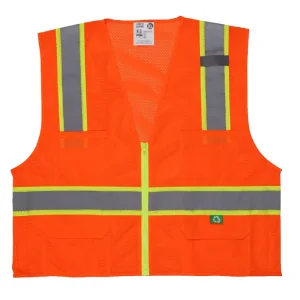
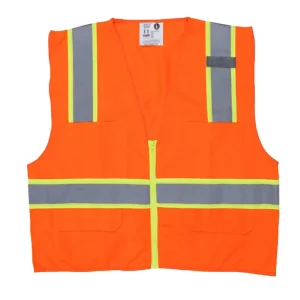
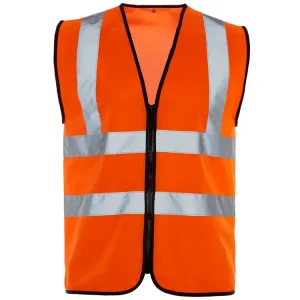
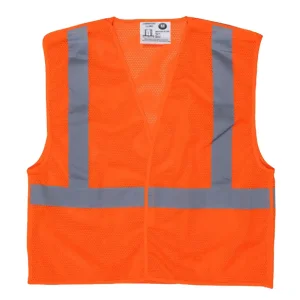
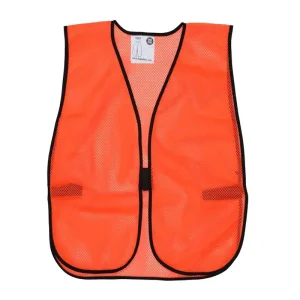
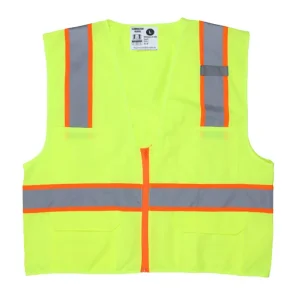
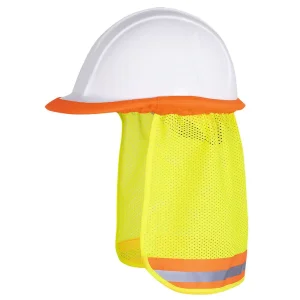
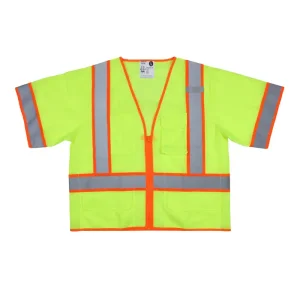
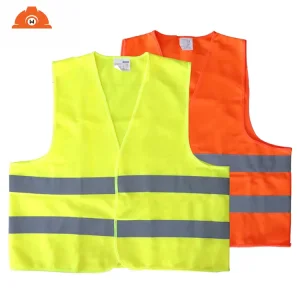
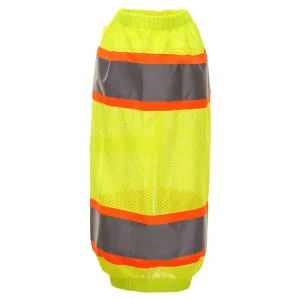
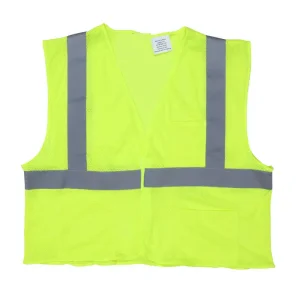
Explore our full ecosystem of high-visibility safety vests, mesh gear, headwear, and protective leg covers for complete enterprise fleet outfitting.
Expert responses to critical questions regarding standards, OEM customization, fabric specs, and wholesale factory ordering.