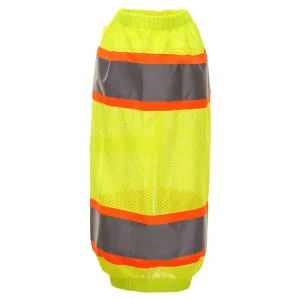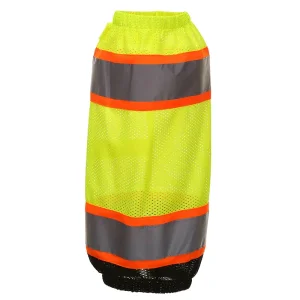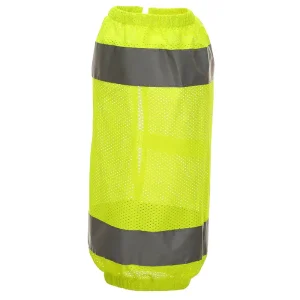
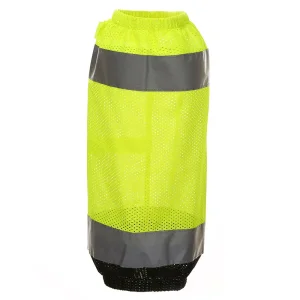
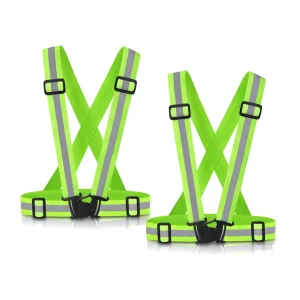
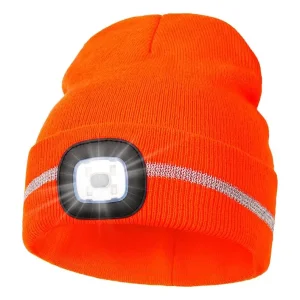
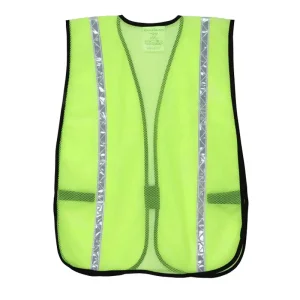
In modern occupational safety engineering, lower-limb visibility represents a critical yet frequently overlooked component of personal protective equipment (PPE). While upper-body safety vests and ANSI-rated high-visibility jackets dominate standard safety programs, physiological research into human biomechanics demonstrates that motion conspicuity—specifically the movement of lower extremities—is processed significantly faster by the human visual cortex than stationary torso elements. For heavy industrial, mining, railway maintenance, and hazardous outdoor operations, high-visibility (Hi-Vis) leg gaiters bridge the gap between foot protection and upper-torso warning gear.
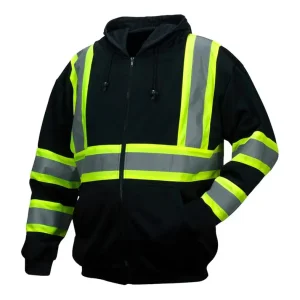
As professional Hi Vis Leg Gaiter manufacturers and factories, modern manufacturing enterprises such as Yongkang Wow Safety Products Co., Ltd. have elevated these specialized items from simple dust sleeves into high-performance, multi-hazard protective components. Today's commercial procurement teams no longer view gaiters merely as incidental accessories; they are vital line items specified under ANSI/ISEA 107-2020 Class E regulations and EN ISO 20471:2013+A1 standards to transform standard pants into Class 3 ensemble compliance.
Equipping moving legs with 360-degree micro-prismatic or glass-bead retroreflective bands alerts heavy vehicle operators up to 300 meters earlier than static upper-torso gear alone under low-beam headlight conditions.
Beyond visibility, industrial-grade gaiters prevent abrasive debris, mud, water ingress, molten slag, venomous bites, and chemical splashes from entering work boots and damaging pant cuffs.
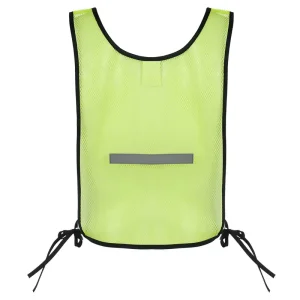
Pairing an ANSI Class 2 vest with certified Class E Hi-Vis leg gaiters elevates the worker’s overall protection standard to full Class 3 compliance without requiring expensive full-body coveralls.
Producing durable, compliant high-visibility gaiters requires sophisticated textile engineering. Unlike static safety vests, leg gaiters operate in extreme mechanical stress environments—subjected to continuous friction, flexing, mud splatter, UV radiation, and laundering cycles. Premium Chinese original equipment manufacturers (OEMs) employ layered composite fabric structures that balance breathability, hydrostatic water resistance, and retroreflective performance.
| Performance Feature | Material / Construction Standard | Technical Benchmark | Industrial Benefit |
|---|---|---|---|
| Fluorescent Base Shell | 300D - 600D Oxford Polyester / Cordura® Nylon with TPU Lamination | EN ISO 20471 Chromaticity Coordinates (Yellow/Orange/Red-Orange) | High tensile strength, puncture resistance, and vibrant daytime conspicuity. |
| Retroreflective Tape | Glass Bead / Micro-prismatic High Gloss Tape (e.g., 3M™ Scotchlite™ equivalent) | $R_A > 330 \text{ cd}/(\text{lx}\cdot\text{m}^2)$ certified to ANSI/ISEA 107 Level 2 | 360° night-time retroreflection visible across 300+ meters under vehicular lights. |
| Waterproofing & Breathability | Microporous Hydrophobic TPU Membrane Coating | Hydrostatic Head > 10,000 mm ($H_2O$); $RET < 12 \text{ m}^2\text{Pa}/W$ | Keeps lower legs completely dry in heavy rain/slurry while allowing sweat evacuation. |
| Abrasion Resistance | Reinforced Bottom Hem Patch (1000D Ballistic Nylon) | Martindale Abrasion Test ISO 12947-2 > 50,000 Rub Cycles | Prevents tearing caused by boot buckles, sharp rocks, thorn bushes, or equipment contact. |
| Closure & Hardware | Heavy-duty YKK® Zipper, Hook-and-Loop Flap, Hypalon Underfoot Strap | Sub-zero temperature flexibility down to -35°C; Corrosion-proof metal hooks | Secure boot connection preventing slip-up during intense movement in snow/mud. |
Modern factory production offers both prismatic reflection (ideal for wet weather performance due to internal light reflection prisms) and micro-glass bead technology (ideal for wide-angle reflectivity). Specifying the correct tape technology guarantees safety standard adherence.
Leading manufacturers utilize 3D digital pattern grading to construct gaiters that conform perfectly to calf curvature and heavy work boots. Top drawstring toggles and elasticated ankle bands prevent dust migration and slippage.
For oil & gas or utility sectors, factories integrate inherently flame-retardant fibers (Modacrylic/Cotton blends) with anti-static grid threads (EN 1149-5), ensuring protection in explosive atmospheric zones.
China’s manufacturing ecosystem in Zhejiang Province (specifically the Jinhua and Yongkang industrial hubs) offers an unmatchable competitive edge for global safety buyers, distributors, and brand owners. Over the last two decades, this region has developed an end-to-end supply chain integration model that connects raw material yarn spinning, high-visibility dyeing, TPU coating, retroreflective tape slitting, automated sewing, and international compliance testing within a 50-kilometer radius.
Automated laser fabric cutters, pattern sewing machines, and ultrasonic seam-sealing units allow Chinese factories to execute large-scale OEM orders (100,000+ pairs) with consistent millimeter precision.
Direct access to raw material mills reduces fabric acquisition costs by 15-25% compared to non-integrated regions, allowing overseas distributors to maximize gross operating margins.
In-house laboratories conduct spectrophotometer color space testing, retroreflectometer checks ($R_A$), hydrostatic pressure tests, and tensile pull tests prior to shipment dispatch.
From custom screen-printed corporate branding and rubberized logo patches to special sizing, specialized colors, and unique packaging, custom sampling cycles take as few as 3–5 business days.
Environmental conditions across global job sites vary dramatically, dictating specialized functional requirements for Hi-Vis leg gaiters. Understanding these localized application scenarios allows sourcing directors to procure exact technical specifications for their respective regions:
Heavy open-cut and underground mining operations require ruggedized 600D water-repellent gaiters with heavy-duty underfoot TPU straps. High abrasion resistance against sharp ore, mud, and dust contamination is paramount, coupled with extra-wide 50mm reflective stripes to withstand intense dust build-up.
Railway linesmen and highway crews operate close to high-speed vehicular traffic. ANSI Class E fluorescent orange and yellow gaiters equipped with micro-prismatic tape guarantee biological movement recognition for oncoming train operators and motorists even in low light and heavy rain.
Outdoor workers in dense brush environments demand thorn-proof and snake-resistant gaiter builds. Utilizing multi-layer canvas/cordura hybrids, these gaiters keep moisture, ticks, and brush from entering boots while ensuring worker visibility across dense forest canopies.
Procurement officers managing enterprise safety tenders or retail safety supply catalogs must evaluate several non-negotiable parameters when selecting a manufacturing partner for Hi Vis leg gaiters:
Ensure the factory provides accredited third-party test reports (from SATRA, SGS, or TÜV) verifying compliance with ANSI/ISEA 107-2020 (Class E) and EN ISO 20471. Confirm background fabric chromaticity after 25+ or 50+ wash cycles.
The underfoot strap is the most vulnerable failure point on any gaiter. Insist on high-tensile TPU-coated webbing, Hypalon straps, or stainless-steel wire rope systems paired with reinforced rust-proof metallic instep lace hooks.
Industrial laundering can quickly degrade low-quality reflective tape. Reliable factories specify heat-transfer or stitched retroreflective tapes certified for ISO 6330 industrial washing at 60°C for up to 50 wash cycles.
The occupational PPE sector is undergoing a rapid technological evolution. As a forward-thinking Hi Vis Leg Gaiter factory, continuous research and development are driving innovations that enhance both wearer protection and environmental sustainability:
Leading global brands are transitioning toward eco-friendly safety gear. Modern manufacturers now offer high-visibility fabrics spun from 100% post-consumer recycled plastic bottles (GRS certified), reducing carbon footprints without sacrificing tear strength or color fastness.
Combining passive retroreflection with active electroluminescent or ultra-bright flexible LED light strips provides active illumination even in absolute pitch-black environments where ambient vehicle light beams are absent.
Phasing out traditional PFAS and PFC fluorocarbon water-repellent finishes in favor of eco-friendly bio-based fluorine-free DWR treatments ensures compliance with emerging global chemical environmental regulations (REACH & OEKO-TEX® Standard 100).
Under ANSI/ISEA 107-2020 standards, leg gaiters are classified as Class E apparel. When worn independently, Class E items do not satisfy overall high-visibility compliance; however, when combined with a Class 2 garment (such as a safety vest), the combined ensemble achieves full Class 3 certification—the highest level of worker protection available.
Standard OEM production MOQs typically start at 500 to 1,000 pairs per style/color for custom fabric dye lots and printed branding. For standard catalog colors (Fluorescent Yellow and Fluorescent Orange), smaller trial orders (100–300 pairs) can be accommodated to support initial market testing.
Yes. As a direct manufacturer, we offer comprehensive ODM/OEM capabilities. We can apply screen-printed logos, heat-transfer vinyl, or woven rubber badges, customize dimensions for oversized work boots, and provide customized retail display cards, polybags, or eco-friendly kraft boxes.
Our factory utilizes hydrostatic pressure testing equipment (ISO 811) to confirm fabric waterproofness (rated from 5,000mm to 10,000mm $H_2O$). All stitched seams undergo hot-melt TPU tape sealing to prevent water leakage through needle perforations during heavy rain exposure.
Pre-production prototype samples with custom logos are generally completed within 3 to 7 working days. Once bulk order approval and deposit are finalized, full production lead times range from 20 to 35 days depending on total order volume and material availability.