Direct-from-factory solutions engineered for ANSI/ISEA and EN ISO 20471 global standards compliance.
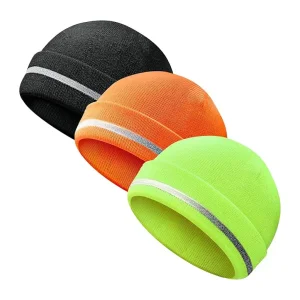
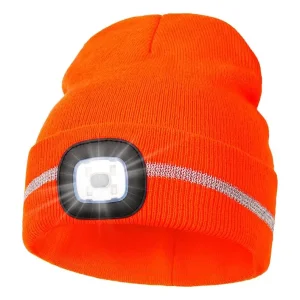
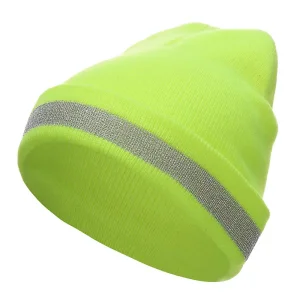
In the modern occupational health and safety landscape, high-visibility winter headwear has evolved from a basic accessory to a critical component of personal protective equipment (PPE). The shift toward stringent regional regulatory standards, combined with expanded night-shift infrastructure work, logistics expansion, and harsh seasonal climates, has dramatically escalated global demand for enterprise-grade hi-vis beanies. Modern procurement managers no longer look for simple acrylic knits; they require photometric compliance, thermal regulation engineering, active LED illumination integration, and verified supply chain transparency.
Enforcement of ANSI/ISEA 107-2020 (USA) and EN ISO 20471:2013+A1 (Europe) across construction, municipal service, and aviation sectors mandates headwear with proven retroreflective performance in low-light environments.
The safety paradigm has shifted from passive retroreflectivity (which relies on external vehicle light beams) to hybrid systems combining micro-prismatic tapes with active, USB-rechargeable ultra-bright LED modules for 360-degree illumination.
Sub-zero work conditions in Northern Europe, North America, and East Asia require high clo-value thermal isolation (Thinsulate™ linings, dual-layer fleece) without restricting auditory awareness or helmet compatibility.
Achieving maximum performance in high-visibility beanie manufacturing requires precise material selection and advanced textile engineering. Below is the technical breakdown utilized by top-tier suppliers like Yongkang Wow Safety Products Co., Ltd. to ensure lifetime durability and safety compliance.
| Performance Vector | Standard Specification | Advanced Enterprise Grade | Compliance Test Method |
|---|---|---|---|
| Base Fabric Composition | 100% High-Density Acrylic (120g-150g) | Acrylic/Merino Wool Blend + Polar Fleece Lining | ISO 1833-1 Textiles Quantitative Analysis |
| Fluorescent Chromaticity | High-Visibility Yellow / Orange (Pantone 13-0630 / 16-1356) | UV-Stabilized Fluorescent Lime-Green & Vivid Orange | EN ISO 20471 Section 5.1 Photometric Test |
| Reflective Media | Standard Glass-Bead Thermal Transfer Film | 3M™ Scotchlite™ Micro-Prismatic High-Stretch Tape | ANSI/ISEA 107 Section 9.1 Retroreflective Test |
| Active Light Emission | Passive Reflective Only | 4-SMD LED, 150 Lumens, USB Rechargeable Li-Po | IP65 Dust/Water Ingress Protection (IEC 60529) |
| Thermal Insulation Rating | 0.8 Clo (Basic warmth) | 1.8 - 2.4 Clo (Extreme cold engineered) | ASTM F1868 Thermal Resistance Test |
Standard beanie fabrics stretch up to 40% under normal usage. Traditional rigid reflective films crack, peel, and delaminate after minimal wear. Advanced factories employ elasticated, segmented retroreflective heat-transfer films applied under precise pneumatically controlled temperatures (150°C - 165°C) and pressure parameters (4 bar for 12 seconds). This allows the reflective media to expand dynamically with the knitted yarn without structural degradation.
For beanies equipped with integrated headlamps, safety extended beyond visibility to include battery enclosure integrity. Integrated LED units feature ultra-thin, sealed Lithium-Polymer cells certified under UN38.3 standards to prevent thermal runaway in sub-zero or humid industrial conditions. Removable light modules ensure the textile carrier can undergo standard 40°C - 60°C commercial laundering cycles.
Navigating customs regulations and workplace safety compliance is a critical priority for bulk buyers, distributors, and safety equipment OEMs. Purchasing non-compliant headwear risks legal liability, site shut-downs, and failed customs clearances. Partnering with experienced export factories guarantees alignment with international framework benchmarks:
Defines headwear under High-Visibility Headwear Accessories. Requirements include minimum square inches of background fluorescent yellow-green or orange-red material combined with 360-degree horizontal retroreflective striping visible from a distance of 1,000 feet.
Classifies headwear performance under supplementary protective garments. Requires strict colorfastness to light, rubbing, and perspiration, alongside photometric luminance checks after a defined number of industrial laundry cycles.
To safeguard wearers against skin irritation and toxic absorption, high-quality beanies pass SVHC (Substances of Very High Concern) screening, azo-dye bans, and OEKO-TEX® Standard 100 chemical safety tests.
With over 15 years of OEM/ODM manufacturing capability, Yongkang Wow Safety Products Co., Ltd. operates a 6,000 m² automated production facility equipped to handle complex private-labeling, wholesale customization, and high-volume fulfillment.
High-speed Tajima multi-head machines allow high-density corporate logo placement via direct embroidery, woven patch application, or silicone tactile badges without degrading fabric stretch.
Choose from virgin acrylic, recycled PET eco-yarns, anti-static carbon fiber blends, or flame-retardant (FR) treated fibers for specialized utility and oil/gas industry deployments.
Full retail-ready solutions including custom hangtags, UPC/EAN barcoding, anti-moisture polybagging, and FSC-certified display boxes for distributors and hardware chains.
Every batch undergoes inline tensile, colorfastness, retroreflection, and electronic module testing backed by complete ISO 9001:2015 documentation and third-party audit access.
As the safety apparel sector accelerates toward sustainability and smart-workwear integration, the next decade of hi-vis beanie development will focus on three key technological pillars:
Integration of microencapsulated paraffin waxes inside the knit lining. PCMs absorb excess body heat during strenuous activity and release stored heat when body movement stops, keeping the worker at a stable 37°C microclimate.
Transitioning standard synthetic acrylic to post-consumer recycled plastic yarn. Each hi-vis beanie diverts up to 6 plastic bottles from ocean landfills while maintaining identical dye retention and high-visibility properties.
Next-gen prototypes feature flexible, micro-thin solar photovoltaic ribbons embedded into the turn-up cuff, trickling charge to the front LED module during daytime shift work for infinite nighttime runtimes.
Direct technical insights answered by our Senior Apparel Engineers and Compliance Specialists.
Explore our comprehensive OEM manufacturing catalog of safety vests, gaiters, and reflective novelties.