Certified high-visibility outerwear engineered specifically for extreme tropical humidity, monsoon rain, and heavy industrial environments across the Indonesian archipelago.
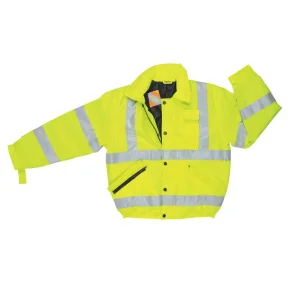
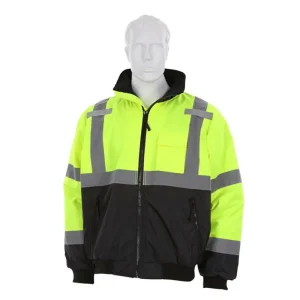
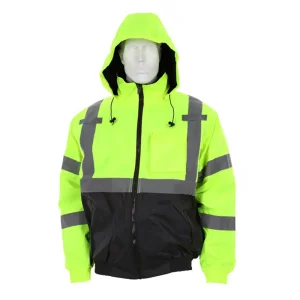
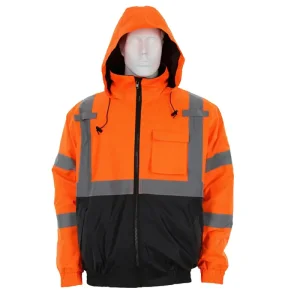
Indonesia is undergoing an unprecedented industrial expansion. Fueled by massive nickel processing operations in Morowali and Halmahera, extensive open-pit mining initiatives across East Kalimantan, deep-sea port developments in Tanjung Priok, and the ambitious capital city mega-project (Nusantara - IKN), the nation’s demand for certified Personal Protective Equipment (PPE) has reached historic highs. High-Visibility (Hi-Vis) safety apparel—specifically heavy-duty waterproof safety jackets, multi-norm insulated coats, and high-contrast reflective workwear—serves as the primary line of passive defense for millions of industrial personnel facing complex working environments.
However, supplying Hi-Vis safety clothing to Indonesia is not merely a matter of bulk garment export. The Indonesian tropical climate presents unique stress factors: relative humidity exceeding 85%, frequent tropical torrential downpours, ambient working temperatures rising above 35°C, and heavy exposure to corrosive mud, mineral dust, and maritime salt spray. Sourcing low-grade safety garments often leads to rapid retroreflective tape degradation, fabric delamination, severe wearer thermal exhaustion, and non-compliance with national workplace safety regulations (K3 - Keselamatan dan Kesehatan Kerja).
Direct B2B procurement from certified OEM/ODM manufacturers in Yongkang, Zhejiang—China’s premier PPE manufacturing cluster—enables Indonesian EPC contractors and safety equipment distributors to bypass intermediary markups while obtaining custom-engineered Hi-Vis jackets optimized specifically for tropical breathability (ISO 11092 / RET < 15) and extreme hydrostatic head waterproof ratings (>10,000 mm H₂O).
Safety compliance in high-risk zones requires absolute adherence to standardized photometric and chromaticity thresholds. When procuring Hi-Vis safety jackets from China suppliers for deployment in Indonesian industrial sites, buyers must navigate three core performance pillars:
High-visibility outer shells rely on fluorescent fabrics (fluorescent yellow, orange-red, or lime green) that convert invisible ultraviolet radiation into visible light. Under EN ISO 20471 and ANSI/ISEA 107-2020 standards, Class 3 garments must provide a minimum of 0.80 m² of background material and 0.20 m² of retroreflective material. For tropical Indonesian usage, 300D Polyester Oxford with microporous Polyurethane (PU) coating is favored over PVC coating to prevent fabric stiffness and cracking under prolonged sun exposure.
Retroreflective tapes bounce light back directly to the light source (vehicle headlights or mining equipment lamps). Standard glass-bead tapes (e.g., 3M Scotchlite silver tape) offer superb retroreflection coefficient (>330 cd/lx/m²). However, for extreme weather and heavy rain scenarios in Indonesian monsoon seasons, high-intensity microprismatic silver tape (Prismatic structure) is superior as it maintains reflectivity even when totally submerged or soaked in surface water film.
| Technical Parameter | Standard Commercial Jackets | China OEM Export Grade (Indonesia Specs) | Safety Benefit in Field Operations |
|---|---|---|---|
| Outer Shell Fabric | 190T Polyester / Basic PVC Film | 300D/600D Polyester Oxford + Breathable PU | Puncture resistant, tear proof in dense forest/mining zones. |
| Waterproof Rating | 1,500 mm H₂O (Light rain) | 8,000 - 12,000 mm H₂O (Seam sealed) | Protects workers during multi-hour monsoon downpours. |
| Breathability Index | < 1,000 g/m²/24h (Causes sweating) | > 5,000 g/m²/24h (Mesh lined ventilation) | Prevents heat exhaustion & hyperthermia in 35°C heat. |
| Retroreflective Tape | Generic TC tape (100 cd/lx/m²) | High-Gloss Microprismatic / Glass Bead (330-500 cd/lx/m²) | Visible up to 350 meters in low-light night shifts. |
| Industrial Wash Cycles | 5 - 10 Wash Cycles | 25 - 50 Wash Cycles (EN ISO 6330) | Extends garment lifecycle by 300%, cutting operational cost. |
As Indonesian infrastructure projects enforce strict K3 compliance, procurement managers face the dual challenge of controlling operational costs while ensuring uncompromised worker safety. Purchasing localized retail safety stock within Jakarta or Surabaya often carries heavy importer markups (40% to 70%). By establishing direct supply lines with specialized manufacturers in Yongkang, Zhejiang, China, enterprise buyers achieve massive economies of scale.
China’s safety apparel cluster integrates every tier of the manufacturing supply chain: from high-visibility yarn extrusion and fluorescent dye houses to automatic seam-taping machine factories and ISO-accredited testing laboratories. This complete vertical integration guarantees:
Indonesian mining conglomerates and construction firms frequently require localized branding, specific pocket configurations (e.g., radio loop, clear ID badge holder, heavy-duty chest pockets), multi-language care labels, and flame-retardant (FR) anti-static treatments certified to NFPA 2112 / EN 11612. China suppliers offer flexible OEM/ODM runs with customized colorways (Lime/Navy, Orange/Black two-tone).
Under the ASEAN-China Free Trade Area (ACFTA) framework, direct imports from China accompanied by a valid Certificate of Origin (Form E) qualify for preferential zero or significantly reduced import duty tariffs entering Indonesian sea ports (Tanjung Priok, Tanjung Perak, Belawan). This regulatory tax saving directly enhances distributor profit margins.
From remote nickel mines in Sulawesi to offshore gas platforms in the Natuna Sea—exploring how specialized Hi-Vis jacket engineering meets localized job-site challenges.
Heavy machinery operating 24/7 in dusty, muddy nickel/coal mines requires maximum contrast apparel to prevent vehicle strike accidents.
Urban highway expansion and capital city construction involve intense nighttime road paving, crane operations, and civil engineering.
Port handlers in Tanjung Priok and offshore rigs face saltwater corrosion, high winds, and turbulent sea spray conditions.
The global protective workwear industry is evolving rapidly from passive reflective clothing toward active smart protection and sustainable circular manufacturing. Leading Chinese export manufacturers are pioneering several key technological breakthroughs currently being adopted by forward-thinking Indonesian enterprises:
Traditional passive reflective tape relies on external light. Next-gen jackets feature integrated flexible LED light strips powered by rechargeable lithium packs, providing active illumination up to 800 meters even in total darkness. Furthermore, low-power Bluetooth (BLE) or RFID beacons embedded in jacket linings enable real-time personnel tracking and man-down alerts across large mining sites.
To meet global ESG goals, modern factories utilize 100% recycled post-consumer plastic bottles (rPET yarn) to weave high-strength 300D Oxford shells. Additionally, eco-friendly PFC-free Durable Water Repellent (DWR) surface treatments replace legacy C8 fluorocarbons, eliminating hazardous chemical runoff while maintaining exceptional oil and water resistance.
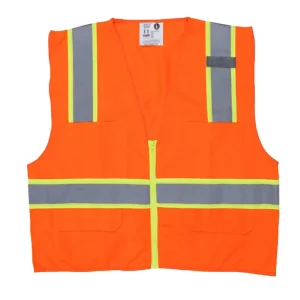
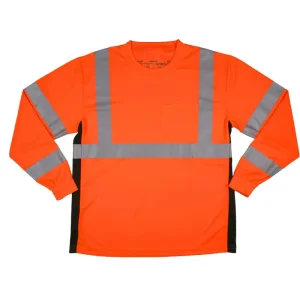
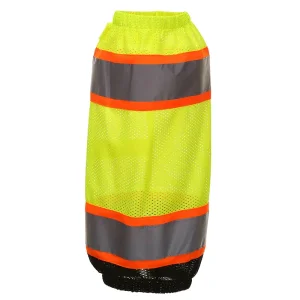
Browse our comprehensive range of ANSI/EN ISO compliant reflective vests, long-sleeve work shirts, gaiters, hard hat sun shields, and rain apparel available for wholesale export to Indonesia.
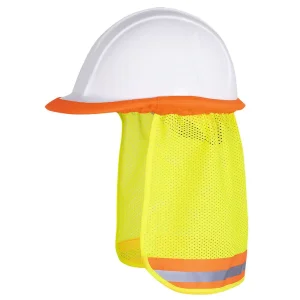
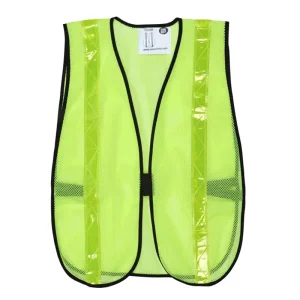
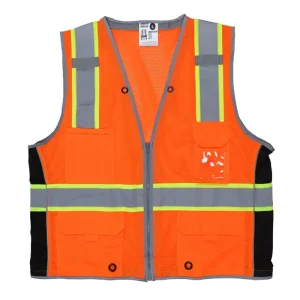
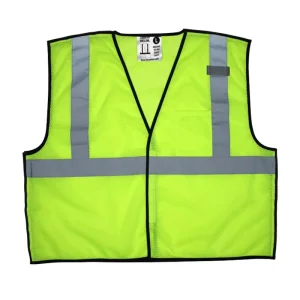
Expert answers regarding compliance, shipping, OEM customization, and quality control protocols when importing Hi-Vis apparel from China to Indonesia.
Our Hi-Vis safety jackets are manufactured strictly to global benchmarks, including ANSI/ISEA 107-2020 (Class 2 and Class 3) and EN ISO 20471:2020. These international certifications fulfill and exceed Indonesian Ministry of Manpower (KEMENAKER) K3 safety requirements for industrial, construction, and mining operations.
For standard stock models, our MOQ starts as low as 200–500 units. For fully customized OEM orders involving custom Pantone color dyeing, specialized logo screen printing/embroidery, and specific tape placement, our standard MOQ is 1,000 units per style.
Yes. As a registered China exporter, we provide official Form E Certificates of Origin under the ASEAN-China Free Trade Agreement. This enables Indonesian importers to benefit from preferential zero or substantially reduced import tariffs upon customs clearance at ports such as Tanjung Priok or Surabaya.
We utilize 300D Oxford polyester outer fabrics with a breathable Microporous Polyurethane (PU) backing, combined with fully taped waterproof heat-sealed seams. This delivers a hydrostatic pressure resistance rating exceeding 10,000 mm H₂O while maintaining high water vapor permeability (>5,000 g/m²/24h) to keep workers dry and comfortable without overheating.
Production lead time typically ranges between 20 to 30 days depending on order volume. Transit time via direct ocean freight from Ningbo or Shanghai port to Jakarta (Tanjung Priok) or Surabaya (Tanjung Perak) takes approximately 9 to 14 days, providing a fast and dependable supply chain turnaround.
Absolutely. We produce specialized multi-norm Hi-Vis rainwear and jackets using treated FR cotton or synthetic blend fabrics rated to EN ISO 11612, EN 1149-5 (Anti-static), and NFPA 2112, engineered specifically for high-risk petrochemical and mining environments across Indonesia.
Looking to optimize your industrial safety supply chain in Indonesia? Contact our technical engineering team today for factory-direct quotes, product samples, and customized OEM solutions.
Send Inquiry Now