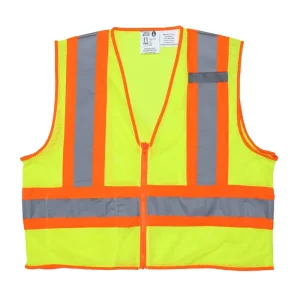
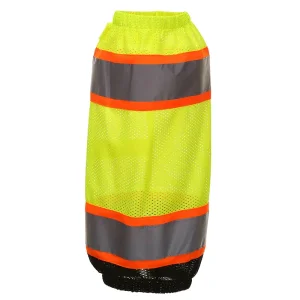
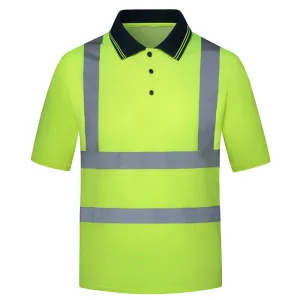
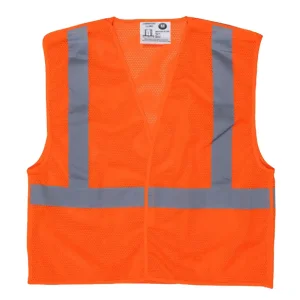
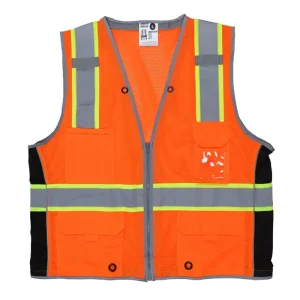
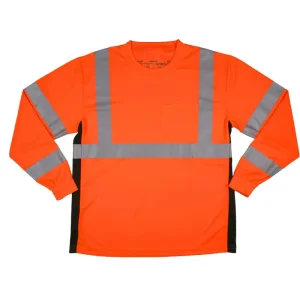
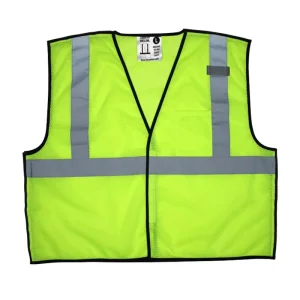
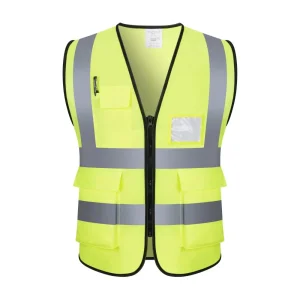
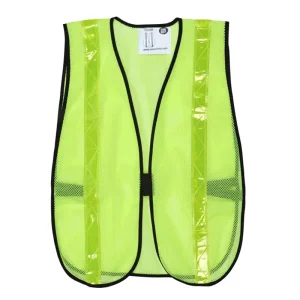
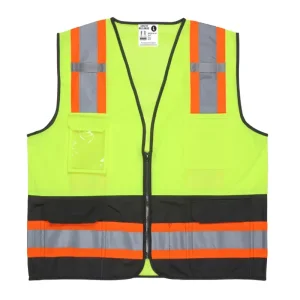
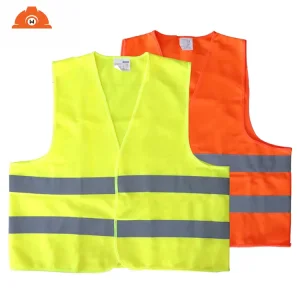
Direct factory supply featuring ANSI/EN ISO 20471 certified high-visibility outerwear, reflective safety vests, and specialized protective equipment.
An authoritative evaluation of insulated high-visibility workwear engineering, thermal dynamics, certification criteria, and bulk supply chain optimization.
In modern industrial operations, occupational safety requires equipment capable of mitigating dual hazards: extreme thermal vulnerability and low-visibility environmental risk. While traditional safety vests provide high visibility under daytime sunlight and retroreflective illumination under night searchlights, standard mesh or solid polyester fabrics fail to safeguard workers against acute thermal stress in sub-zero working conditions. B2B procurement managers, safety program directors, and industrial distributors globally are increasingly turning to wholesale safety vest insulated manufacturers to deliver specialized high-visibility outerwear integrated with high-performance thermal insulation layers.
Key Insight for Procurement Officers: Thermal high-visibility PPE must achieve a precise balance between CLO value (thermal resistance), garment weight, moisture vapor transmission rate (MVTR), and photometric retroreflection standards (ANSI/ISEA 107-2020 & EN ISO 20471:2013+A1:2016). Sourcing directly from verified Chinese industrial clusters yields up to a 35% cost optimization while maintaining strict compliance with international safety benchmarks.
An insulated safety vest is not simply a standard hi-vis vest with added lining; it is a multi-layered thermal defense system. Engineering high-performance cold-weather workwear demands rigorous material selection across three functional layers:
Constructed from 300D to 600D Oxford Polyester with polyurethane (PU) or polyvinyl chloride (PVC) backing. Treated with Durable Water Repellent (DWR) coatings to deliver 5,000mm to 10,000mm hydrostatic head rating, preventing moisture ingress while offering tear and abrasion resistance.
Utilizing high-loft synthetic microfiber insulation (ranging from 120 GSM to 240 GSM) or fleece linings. Microfiber matrixes trap static air molecules to generate elevated CLO ratings (0.8 to 2.5 CLO) without adding unwieldy bulk, ensuring unrestricted movement for workers.
Engineered with 100% breathable polyester taffeta, anti-pilling fleece, or moisture-wicking mesh linings. This layer facilitates internal vapor dissipation, preventing sweat condensation build-up that leads to rapid post-exertion hypothermia.
To qualify as certified high-visibility safety clothing, insulated vests must incorporate retroreflective materials certified to coefficient of retroreflection values ($R_A$) exceeding $330 \text{ cd/lx}\cdot\text{m}^2$. Premium manufacturers utilize glass-bead micro-structure tape or micro-prismatic synthetic tape. These tapes are double-stitched or heat-sealed across the torso, shoulders, and back in compliant 2-inch or 4-inch bands (such as 4-inch contrast lime/orange stripes with 2-inch silver tape), guaranteeing 360-degree visibility at distances exceeding 1,000 feet.
| Technical Parameter | Standard Insulated Safety Vest | Heavy-Duty Surveyor / Cold-Store Vest | Flame-Retardant (FR) Insulated Vest |
|---|---|---|---|
| Outer Fabric Shell | 300D Oxford Polyester + DWR | 600D Ripstop Oxford / Nylon | Modacrylic / FR Treated Cotton Canvas |
| Insulation Weight | 120 - 160 GSM Synthetic Fill | 180 - 240 GSM Thermal Fleece / Fill | 160 - 200 GSM Inherently FR Insulation |
| Reflective Material | Class 2 Micro-Glass Bead Tape | Prismatic High-Gloss Waterproof Tape | FR Silver Glass Bead Reflective Trim |
| Thermal Rating (CLO) | 1.0 - 1.4 CLO (-5°C to 5°C) | 1.8 - 2.6 CLO (-25°C to -5°C) | 1.2 - 1.8 CLO (-10°C to 5°C) |
| International Certifications | ANSI/ISEA 107 Class 2, EN ISO 20471 | ANSI Class 3, EN 342 Cold Protection | NFPA 2112, ASTM F1506, ANSI Class 2/3 |
Analyzing the industrial cluster synergy, automated production capabilities, and raw material integration in Yongkang, Zhejiang.
Yongkang Wow Safety Products Co., Ltd. leverages Zhejiang's complete textile and safety equipment ecosystem. From yarn spinning, fluorescent dyeing, and retroreflective film coating to precision quilting and computerized laser cutting, full supply chain localization eliminates component bottlenecks and reduces unit lead times by up to 40%.
Leading Chinese suppliers maintain in-house testing laboratories equipped with spectrophotometers, hydrostatic pressure testers, thermal resistance apparatus, and retroreflectometers. Every production lot undergoes 100% inspection for seam strength, colorfastness after 50+ wash cycles, and retroreflection retention.
Equipped with 6,000 m² of modern manufacturing space and 150+ skilled technicians, China’s specialized safety manufacturers accommodate flexible minimum order quantities (MOQs), specialized logo screen-printing/embroidery, custom pocketing (radio tabs, tablet slots), and tailored sizing charts (S through 7XL).
Tailoring protective outerwear to specialized operational environments, weather challenges, and regulatory mandates.
Workers operating in commercial walk-in freezers (-25°C to -30°C) require insulated safety vests with high CLO fleece linings and heavy-duty zippers that will not jam under freezing temperatures. High visibility fluorescent lime or orange colorways ensure equipment operators in forklifts spot personnel in narrow aisles instantly.
Road crews working nighttime highway repairs require ANSI Class 2 or Class 3 certified insulated vests featuring 4-inch contrast retroreflective tape. The outer shell must resist oil, dirt, and heavy precipitation while preserving thermal comfort during static standing and high-exertion shoveling.
Ground crews exposed to sub-zero jet blast winds and inclement winter weather demand windproof insulated safety vests. Features include dual mic tabs for radio equipment, multi-pocket configurations for inspection devices, and breakaway side seams for snag protection near machinery.
Offshore marine operations mandate thermal insulation integrated with chemical resistance and flame-retardant (FR) properties. Micro-prismatic reflective trim retains retroreflective efficiency even when submerged or coated in sea spray and heavy downpours.
A structured operational methodology for supply chain managers specifying thermal hi-vis safety garments.
When selecting a wholesale safety vest insulated manufacturer, international procurement officers must implement a thorough qualification matrix that goes beyond unit pricing. To avoid compliance liabilities, delivery delays, and quality degradation, evaluate potential suppliers across five critical audit vectors:
Verify that test certificates for EN ISO 20471, ANSI/ISEA 107-2020, and EN 342 are issued by accredited third-party laboratories (such as SGS, SATRA, or Intertek). Ensure test reports match current material compositions.
Request lab testing on thermal insulation retention following 25 to 50 industrial washing cycles. Cheap fill materials collapse after washing, reducing CLO protection and creating cold spots within the garment.
Audit manufacturing facilities for ISO 9001 quality management system certification, BSCI (Business Social Compliance Initiative) compliance, or SMETA audits to safeguard global brand reputation.
OEM/ODM Procurement Checklist: Prior to placing bulk container orders, request production pre-shipment samples to evaluate zipper pull durability under cold stress, pocket reinforcement bartacking, seam tape sealing integrity, and retroreflective tape elasticity.
Exploring next-generation technologies shaping the personal protective equipment (PPE) industry.
Incorporating flexible graphene heating elements powered by lightweight lithium-ion power packs. Workers can toggle between thermal settings, enabling lighter vest construction while maintaining warm thermal protection down to -30°C.
Global ESG mandates are driving demand for high-visibility garments manufactured from 100% recycled post-consumer plastic bottles. Advanced rPET fabrics match virgin polyester in tensile strength, color brilliance, and retroreflective bonding.
Combining retroreflective technology with photoluminescent materials that absorb environmental light and emit a glow in complete darkness. This ensures worker visibility even when no external light source (such as headlights) is striking the vest.
Explore our broader wholesale product line engineered for specialized industrial safety applications.
Addressing key technical, compliance, and ordering queries for wholesale safety vest buyers.
ANSI Class 2 garments require a minimum of 775 sq. in. of background fabric and 201 sq. in. of retroreflective material, making them suitable for traffic zones where speeds do not exceed 25-50 mph. ANSI Class 3 garments require a minimum of 1,240 sq. in. of background fabric and 310 sq. in. of reflective material, incorporating sleeves or longer profiles for high-speed zones (>50 mph) or ultra-hazardous cold environments.
Insulation padding adds thickness, which can alter the dimensional stability and surface area of the fluorescent outer shell. Professional manufacturers ensure that despite the inner quilting, the exposed outer fluorescent area strictly meets the minimum surface area requirements of EN ISO 20471 or ANSI 107.
Yes. We offer complete OEM/ODM solutions including screen printing, heat transfer reflective logos, customized pocket configurations, breakaway Velcro seams, and tailored contrast tape colorways to align with your corporate branding and regional regulatory standards.
Standard OEM production lead times range between 25 to 35 days post-sample approval. Our standard MOQ starts at 500 pcs per style for customized garments, with stock-supported fabrics accommodating lower quantities for quick-turnaround orders.
We specify certified retroreflective glass bead and prismatic tapes designed to endure up to 50 home wash cycles or 25 industrial laundering cycles at 60°C without dropping below the baseline requirement of 100 cd/lx·m² prescribed by EN ISO 20471.