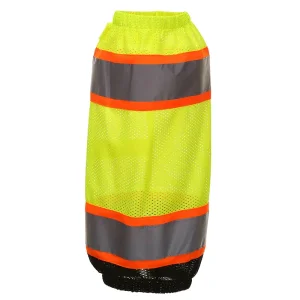
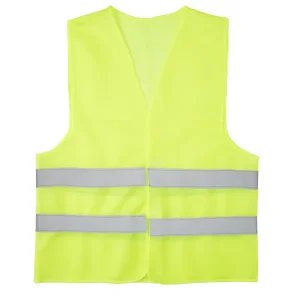
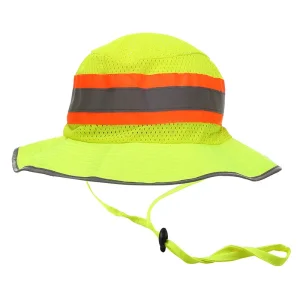
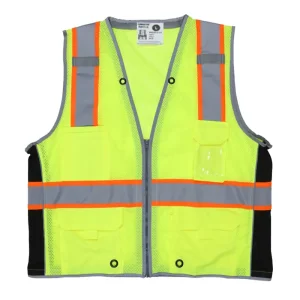
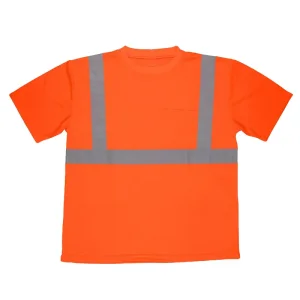
Explore our foundational range of certified high-visibility reflective apparel, multi-pocket surveyor vests, and protective accessories manufactured for international compliance.
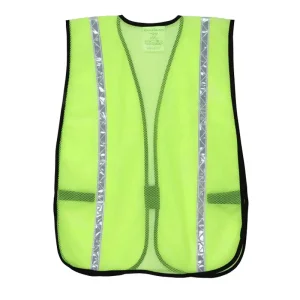
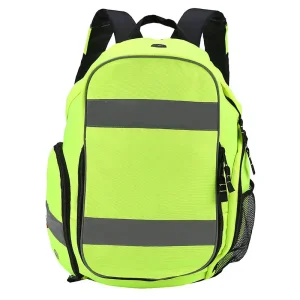
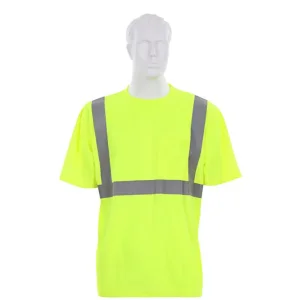
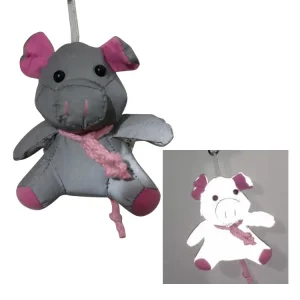
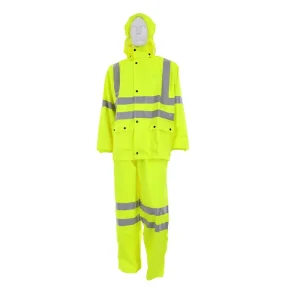
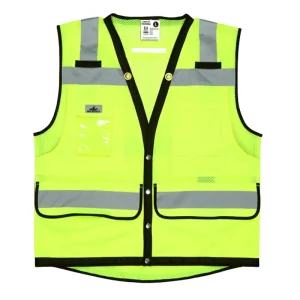
Understanding the transition from basic high-visibility vests to ergonomic, multi-functional pocket vests across global supply chains and regulatory environments.
The international industrial workwear sector is undergoing a profound structural evolution. Modern procurement officers, EHS (Environmental Health and Safety) managers, and commercial distributors no longer view high-visibility reflective vests merely as passive compliance garments. Instead, enterprise buyers evaluate reflective safety vests with pockets as active workplace productivity tools. In complex work environments—ranging from massive civil engineering infrastructure projects to fast-paced automated fulfillment centers—field personnel must carry mobile communication devices, handheld barcode scanners, laser measuring tools, ID credentials, and field tablets without compromising personal safety or range of motion.
Occupational safety governing bodies worldwide—including OSHA in the United States, EU-OSHA in Europe, and Safe Work Australia—have intensified jobsite enforcement. Compliance audits strictly enforce mandatory Class 2 and Class 3 high-visibility standards, driving bulk orders for certified reflective vests equipped with dedicated storage for safety documentation and inspection passes.
The rapid expansion of global mega-hubs and cross-docking warehouses requires workers to remain visible while constantly accessing RF scanners and inventory hardware. Pocketed hi-vis vests with specialized radio loops and padded tablet compartments significantly reduce device drop damage and boost operational throughput.
Enterprise procurement teams are moving away from disposable single-use vests. Sourcing strategy now focuses on reinforced warp-knit polyester fabrics, heavy-duty resin zippers, and bar-tacked pocket seam stress points that survive 50+ commercial wash cycles, delivering a far lower cost per wear.
An in-depth technical analysis of pocket configuration engineering, load distribution mechanics, and specialized compartment functionality in modern surveyor and executive safety vests.
Designing an industrial-grade reflective vest with pockets requires balancing ergonomic weight distribution with non-obstructed retroreflective surface area. According to ANSI/ISEA 107-2020 guidelines, pocket stitching, flaps, and attachments must not compromise the minimum required square inches of fluorescent background material ($775\text{ in}^2$ for Class 2) or retroreflective tape ($201\text{ in}^2$ for Class 2). Premium direct-factory manufacturers utilize anatomical load-mapping to engineer pocket placement across five distinct zones:
| Pocket Zone | Architectural Engineering | Recommended Functional Payload | Industrial Application |
|---|---|---|---|
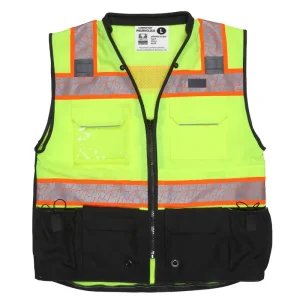
| Upper Right Tier | Dual-cell 2-tier design with divided pen/marker slots and heavy-duty utility clip point. | Architect pens, inspection markers, laser measure gauges, small flashlight. | Surveyors, Engineers, Building Inspectors |
| Upper Left Chest | Expandable gusseted pocket with hook-and-loop flap closure + shoulder microphone loops. | Walkie-talkie, smart radio, mobile phones (up to 6.8"), jobsite communicators. | Logistics Operators, Foremen, Traffic Controllers |
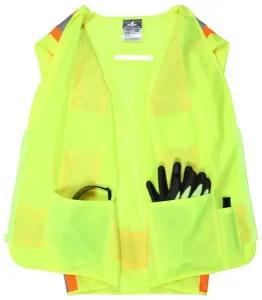
| Lower Front Cargo (L/R) | Large gusseted billowed pockets with grommet drainage eyelets & reinforced snap flaps. | 10" field tablets, survey notebooks, work gloves, safety goggles. | Civil Construction, Roadworks, General Contractors |
| Clear Vinyl Badge Holder | UV-stabilized anti-yellowing transparent window pocket with sealable top barrier. | Proximity RFID cards, identification badges, visitor security credentials. | High-Security Facilities, Airports, Mining Sites |
| Concealed Interior Patch | Internal double-stitched drop pockets attached directly to main structural side seams. | Blueprint schematics, personal items, tablet styluses, confidential docs. | Project Directors, Site Supervisors |
When workers carry heavy field equipment in vest pockets, uneven tension can cause neckline sag and seam tearing over time. Advanced manufacturing involves applying high-density polyester bias binding around pocket perimeters and executing bar-tack reinforcement stitching at all stress corners with a minimum tension threshold of 180 Newtons.
Customized high-visibility pocket vest configurations tailored to the distinct operational hazards and tool requirements of global industries.
Recommended Spec: ANSI Class 2/3 Heavy-Duty Surveyor Vest (9 to 11 Pockets). Manufactured from 150GSM solid polyester tricot front for weight stability paired with breathable back mesh. Includes large rear zipper plan pocket for blue prints, dual mic tabs, and 2-inch silver retroreflective tape.
Recommended Spec: Lightweight Air-Mesh Pocket Vest with 5-Point Breakaway Velcro. Designed with self-separating shoulder and side seams to prevent worker entanglement in moving conveyor belts, sorting machinery, or forklift components.
Recommended Spec: Flame-Resistant (FR) Modacrylic Multi-Pocket Vest. Compliant with NFPA 2112 and EN ISO 11612 standards. Uses inherent FR thread, anti-static carbon filaments, and flame-retardant retroreflective striping to protect against flash fires and electrical arcs.
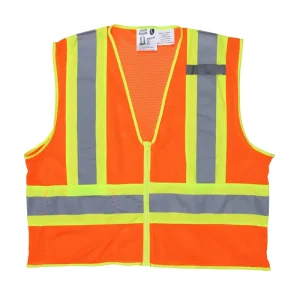
Recommended Spec: Public Safety Vest (ANSI 107 Type P). Features cutaway sides for tactical belt access, high-contrast two-tone trim (Lime/Orange combination), radio clip points, and reflective badges for multi-agency identification.
Recommended Spec: High-Visibility Fluorescent Orange Vest with Class 2 reflective pattern meeting RIS-3279-TOM (UK Railway Standard). Orange color spectrum provides optimal contrast against green foliage and railway ballast backgrounds.
Recommended Spec: All-Weather Water-Resistant Executive Pocket Vest. Constructed from 300D Oxford polyester fabric with PU waterproof coating, radio pocket, zipper front, and storm flap for outdoor municipal teams.
Deconstructing the raw material inputs, optical physics of glass-bead retroreflection, and dye chemistry required for enterprise-grade safety garments.
High-visibility background fabrics are dyed using specialized fluorescent pigments (Fluorescent Yellow-Green, Fluorescent Orange-Red, and Fluorescent Red). These dyes absorb invisible ultraviolet (UV) light wavelength radiation from the sun and re-emit it as visible light, creating intense daytime luminescence.
Reflective stripes utilize microscopic glass spheres embedded in a mirror-backed polymer layer. When vehicle headlights shine on the tape, the microscopic glass lenses bend (refract) the light rays, focus them onto the mirrored back layer, and bounce (reflect) them directly back toward the driver's eye level.
For wet-weather and extreme long-distance performance, micro-prismatic reflective film uses precision-molded corner-cube prisms. Unlike glass beads, micro-prisms maintain high retroreflective brightness even during heavy rain, as light reflects off internal prismatic facets rather than relying on external air-glass interfaces.
| Fabric Type | Weight (GSM) | Breathability Index | Tensile Strength | Primary Use Case |
|---|---|---|---|---|
| Solid Warp-Knit Tricot | 120 - 160 GSM | Medium (Comfortable indoor/outdoor) | Very High (> 450 N) | Heavy multi-pocket surveyor vests, general construction. |
| Polyester Birdseye Mesh | 110 - 130 GSM | Ultra-High (Air-permeable) | High (> 350 N) | Summer climate workwear, high-exertion logistics. |
| 300D Waterproof Oxford | 180 - 220 GSM | Low (Waterproof PU coating) | Extreme (> 700 N) | Winter reflective jackets, municipal rainwear vests. |
| FR Modacrylic Blend | 160 - 200 GSM | High (Natural touch) | High (> 400 N) | Petrochemical, electrical utility, welding safety. |
Next-generation innovations shaping the future of high-visibility safety clothing, active illumination, smart wearables, and sustainable manufacturing.
Transitioning global bulk production to 100% GRS (Global Recycled Standard) certified rPET yarn derived from recycled post-consumer plastic bottles. Achieving zero loss in chromaticity, colorfastness, or tensile durability.
Integrating ultra-thin, washable LED/OLED strip lighting powered by micro-rechargeable lithium powerpacks into vest piping to provide active visibility in zero-ambient-light tunnels and dense fog.
Embedding flexible IoT sensors into pocket linings for real-time worker fatigue monitoring, ambient gas detection alerts, heat-stress tracking, and automatic man-down emergency GPS broadcasting.
Navigating international safety standards for reflective workwear across North America, Europe, Australia, and Asia-Pacific markets.
Defines performance criteria for High-Visibility Safety Apparel (HVSA). Classifies garments into Type R (Roadway), Type P (Public Safety), and Type O (Off-Roadway). Mandates minimum background fabric ($775\text{ in}^2$) and retroreflective tape ($201\text{ in}^2$) for Class 2 vests.
The European standard specifying high-visibility clothing requirements. Garments are graded into Class 1, Class 2, or Class 3 based on photometric performance, colorfastness after laundering, and surface area ratios of fluorescent vs. retroreflective materials.
Australian/New Zealand standards governing high-visibility safety garments for traffic and industrial applications. Mandates strict chromaticity coordinates for fluorescent yellow/orange and requires Class D/N (Day/Night) rating for reflective pocket vests.
Enterprise direct-factory suppliers enforce strict AQL 2.5 (Acceptable Quality Limit) standards. Every bulk production run undergoes mandatory laboratory audits including spectrophotometer color testing, retroreflectivity coefficient measurement ($cd/lx/m^2$), 50-cycle industrial wash durability tests, and pocket seam tensile pull tests.
Detailed technical answers for global procurement directors, buyers, and safety supply wholesalers.
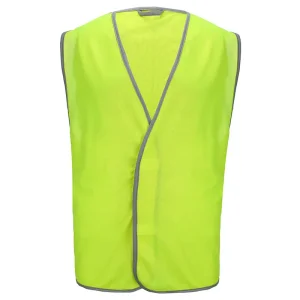
The primary distinction lies in payload capacity, structural load balancing, and functional target applications. A basic 2-pocket vest is intended for temporary site visitors or low-duty general work. In contrast, 6-pocket and 9-pocket vests (often classified as Surveyor or Executive Vests) integrate dual-tier chest pockets, radio/mic loops, clear ID windows, and large internal blueprint drop pockets. High-pocket-count vests utilize heavier warp-knit fabrics (120-160 GSM) to prevent sagging when carrying tools and mobile devices.
Custom branding (screen printing, heat transfer, or embroidery) must not reduce the compliant background fabric area below mandatory thresholds ($775\text{ in}^2$ for Class 2). Printing on solid pocket flaps or non-reflective back mesh zones is standard practice. If a large corporate logo covers compliant fluorescent area, the total background area must be re-calculated or balanced by expanding garment dimensions to maintain full ANSI Class 2 or Class 3 certification.
For warm-weather industrial operations and logistics hubs, 110-120 GSM 100% polyester birdseye mesh provides superior breathability while retaining high tear strength. For heavy construction, land surveying, and municipal utility repair, 140-160 GSM 100% solid polyester warp-knit tricot is optimal because it resists snagging, supports heavy pocket payloads, and maintains structural integrity through repeated laundering cycles.
For level 2 retroreflective silver glass-bead tape under both ANSI/ISEA 107 and EN ISO 20471, the minimum retroreflective coefficient must equal or exceed $330\text{ cd/lx/m}^2$ at a $5^\circ$ entrance angle and $0.2^\circ$ observation angle. Premium grade reflective stripes exceed $400 - 500\text{ cd/lx/m}^2$, ensuring 360-degree visibility at distances exceeding 1,000 feet in low-light headlights.
As an established direct manufacturer supplier, standard wholesale MOQs typically range from 500 to 1,000 units per style for standard stock colors (Lime Green / Orange). Full OEM services include custom Pantone fabric dyeing, custom pocket configuration tooling, personalized woven neck labels, hangtags, barcodes, and custom-printed reflective tape with company names.
Every industrial safety vest features a certified wash rating (typically 25 to 50 wash cycles under ISO 6330 laundering testing). Over repeated washing, mechanical abrasion and harsh detergent chemicals can degrade the micro glass beads on retroreflective tape and diminish fluorescent brightness. Specifying industrial-launderable reflective materials ensures vests maintain full compliance over prolonged multi-year service lifespans.
Browse our expanded selection of high-visibility surveyor vests, multi-stripe safety waistcoats, rainwear suits, and compliant workwear accessories.