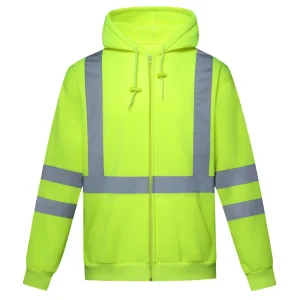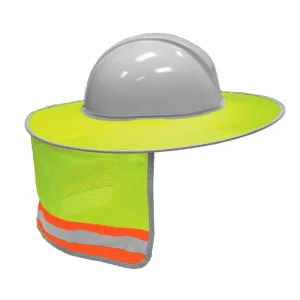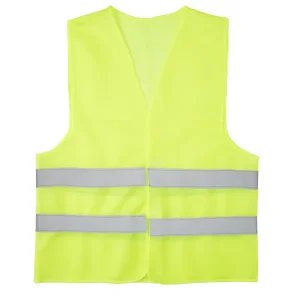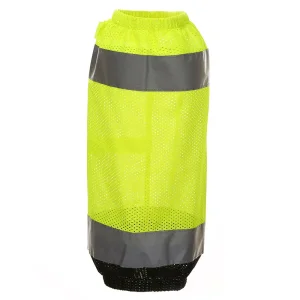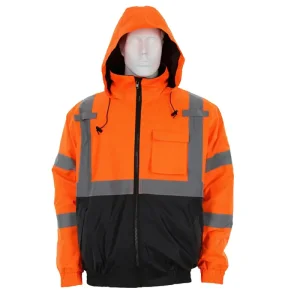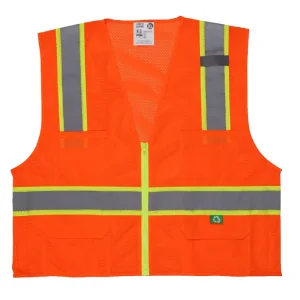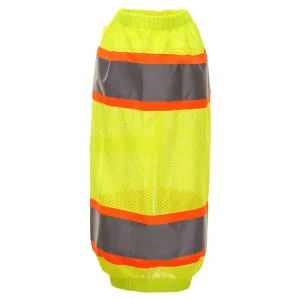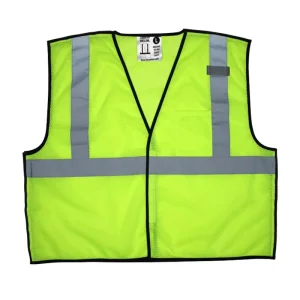
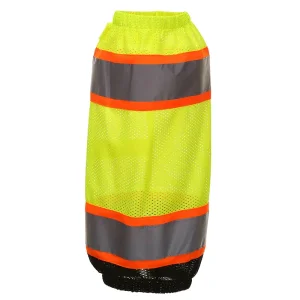
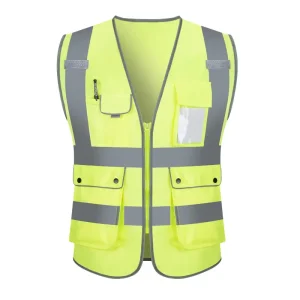
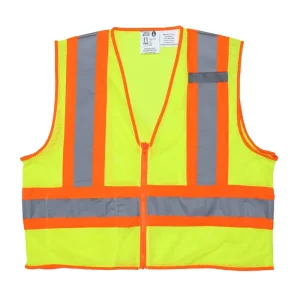
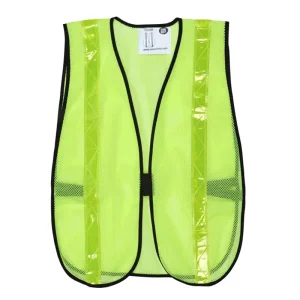
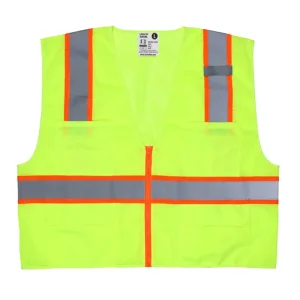
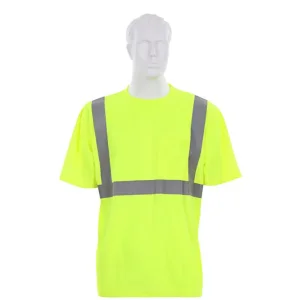
In the contemporary occupational health and safety (OHS) environment, the global market demand for specialized Personal Protective Equipment (PPE) has evolved beyond basic compliance toward high-performance ergonomic optimization. Among the fastest-growing categories in tropical, sub-tropical, and high-heat work environments is the High Visibility Sleeveless Shirt (frequently specified by procurement managers as hi-vis safety tank tops, athletic-fit reflective cut-off tees, or sleeveless work shirts). These garments bridge the crucial operational gap between traditional full-sleeved hi-vis shirts and lightweight polyester safety vests.
Industrial workforces operating in elevated ambient temperatures—such as highway asphalt paving crews, desert solar farm installation technicians, maritime container yard handlers, and summer municipal maintenance teams—face dual physiological hazards: heat stress (hyperthermia) and vehicle/equipment strike hazards. Traditional long-sleeve or short-sleeve high-visibility shirts, while providing full arm coverage, can trap microclimatic heat around the torso and upper extremities, causing thermal discomfort, excessive perspiration, and cognitive fatigue, which directly increases workplace incident rates.
| Garment Style | Cooling Efficiency | ANSI/ISEA 107 Class | EN ISO 20471 Class | Primary Industrial Use Case | Flexibility & Range of Motion |
|---|---|---|---|---|---|
| Hi-Vis Sleeveless Shirt | Optimal (95%) | Type R Class 2 / Type O Class 1 | Class 1 / Class 2 (Size Dependent) | High-Heat Construction, Logistics, Yard Work | Maximum (Unrestricted Scapular Movement) |
| Hi-Vis Short Sleeve Tee | Moderate (70%) | Type R Class 2 / Class 3 | Class 2 | General Roadworks, Utilities, Warehousing | Standard Upper Arm Coverage |
| Hi-Vis Long Sleeve Shirt | Low (45%) | Type R Class 3 | Class 3 | Night Highway Construction, Mining, Rail | Full Arm Protection / Thermal Insulation |
| Standard Safety Vest | Variable (65%) | Type R Class 2 | Class 2 | Layering Over Outerwear, Visitors, Surveyors | Dependent on Undergarment Selection |
Classifies high-visibility garments into Types (R for Roadway, P for Public Safety, O for Off-Roadway). Wholesale sleeveless shirts engineered for Class 2 require minimum 775 in² of background fluorescent fabric and 201 in² of retroreflective tape, ensuring 360-degree night visibility at distances up to 1,000 feet.
European standard specifying mandatory performance requirements for background material chromaticity coordinates ($x, y$) and luminance factors ($\beta \ge 0.70$ for Fluorescent Yellow, $\beta \ge 0.40$ for Fluorescent Orange). Premium sleeveless shirts utilize dye formulations tested under ISO 105 xenon arc light fastness.
Incorporates premium micro-glass bead or micro-prismatic retroreflective films (such as 3M Scotchlite or customized OEM prismatic films). Provides coefficient of retroreflection $R_A > 500\text{ cd/(lx}\cdot\text{m}^2)$ at $5^\circ$ entrance and $0.2^\circ$ observation angles for maximum low-beam headlight reflection.
The performance of a wholesale high-visibility sleeveless shirt depends fundamentally on texturing, yarn density, and chemical finishing. Leading Chinese OEM manufacturers employ engineered synthetic formulations designed to maximize evaporative cooling while guaranteeing structural integrity after repeated industrial laundering.
Constructed with a 3D micro-porous pin-hole knit structure that creates active chimney-effect airflow. The hydrophobic polyester fibers channel sweat away from the epidermis to the outer garment layer where rapid ambient evaporation occurs.
Integrated into the fiber spinning process or padding bath, bio-compatible silver ions suppress the metabolic reproduction of odor-causing bacteria (e.g., Staphylococcus aureus), extending freshness during long 12-hour shifts.
Utilizes post-consumer recycled polyethylene terephthalate (bottles) converted into high-tenacity filament yarn. Offers identical tensile strength, colorfastness, and luminance as virgin polyester while reducing carbon footprints by 32%.
Sourcing wholesale high visibility sleeveless shirts directly from established Chinese manufacturers (specifically centered in the Yongkang and Jinhua industrial safety hubs in Zhejiang Province) provides global enterprise distributors and brand owners with distinct competitive advantages in cost, scale, speed, and customization flexibility.
From local yarn texturing mills and circular knitting facilities to specialized fluorescent dyeing vats and high-speed automated laser cutting tables, the Yongkang industrial cluster houses an end-to-end ecosystem within a 30-mile radius. This eliminates international raw material freight lag and guarantees stable fabric lot consistency.
Equipped with in-house photometric test darkrooms, Xenon light-fastness chambers, tensile testers, and industrial washing stations. Every production lot undergoes Acceptable Quality Limit (AQL 1.5 / 2.5) sampling, ensuring zero defect rates for retroreflective tape adhesion, seam burst strength, and ANSI color compliance.
Asphalt surfacing exposes workers to ambient radiation exceeding 45°C (113°F). Sleeveless hi-vis shirts engineered with moisture-wicking birdseye mesh minimize heat stroke risks while compliant 2-inch glass bead retroreflective tape ensures visibility near heavy steam rollers.
Forklift operators and dock workers constantly move between air-conditioned warehouses and hot loading bays. Sleeveless athletic safety tees offer unrestricted shoulder movement during manual lifting without binding around biceps.
Ground crews operate in high-noise, high-heat environments surrounded by heavy jet tugs and baggage conveyors. Dual-tone fluorescent yellow/orange sleeveless tees provide visual contrast against tarmac concrete in bright daylight.
When placing bulk commercial orders for high-visibility sleeveless shirts, enterprise procurement directors, safety distributors, and government contract suppliers must evaluate key customization parameters to balance brand identification with regulatory compliance.
Screen printing, heat-transfer vinyl, or reflective logo application must be strategically positioned within designated non-reflective zones (chest pocket area or upper back) to prevent reducing the minimum required background fluorescent material below ANSI/EN ISO thresholds.
Full support for retail-ready packaging including individual polybags with custom warning labels, Gtin-13 / UPC barcode sticker placement, branded hangtags, and heavy-duty corrugated export cartoning optimized for container volume maximization.