Direct factory production models certified for extreme low-light visibility, weather protection, and ergonomic workplace performance.
Deconstructing the textile science, retroreflective physics, and thermal regulation mechanisms engineered into modern industrial safety sweatshirts.
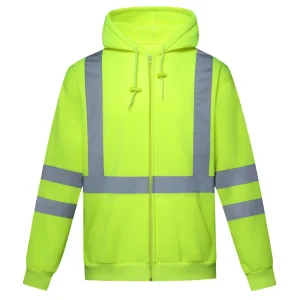
In modern industrial safety, the wholesale hi vis workwear hoodie represents a vital evolutionary step over standard lightweight safety vests. Designed for transitional weather, autumn-to-winter shifts, and hazardous low-light environments, high-visibility hoodies provide a critical dual-action solution: maintaining 360-degree photometric conspicuity while serving as high-performance thermal insulation for workers in high-risk sectors.
Industrial hi-vis workwear hoodies produced by leading China factories utilize specialized synthetic knitted fleece structures engineered to balance thermal retention, tensile strength, and colorfastness. The foundational fabric standard is 100% spun polyester fleece, typically ranging from 280 GSM to 380 GSM (grams per square meter).
To resist fabric deterioration from industrial friction and repetitive laundry cycles, premium factories apply anti-pilling treatments (singeing and shearing processes) alongside Durable Water Repellent (DWR) hydrophobic surface treatments.
Conspicuity is governed by retroreflective performance—the ability of micro-prismatic or micro-glass bead tapes to return light back toward its original source (e.g., vehicle headlights). High-quality wholesale hoodies incorporate certified retroreflective tapes achieving retroreflectivity values exceeding 330 to 500 cd/(lx·m²) under ANSI/ISEA 107 Level 2 and EN ISO 20471 Class 2/3 parameters.
Traditional 2-inch silver retroreflective tape stitched onto the fleece garment. Exceptionally durable against mechanical abrasion and tear stresses, making it ideal for physical labor in rugged industrial sites.
Thermally bonded patterned reflective segments that stretch dynamically with the fleece fabric. Offers up to 30% enhanced wearer breathability and mobility while eliminating tape cracking over prolonged use.
Standard commercial safety apparel often suffers rapid degradation after 10-15 wash cycles. Advanced China factories utilize high-density polyurethane (PU) reflective films capable of maintaining certified photometric compliance over 25 to 50+ industrial wash cycles at 60°C (140°F).
Navigating international high-visibility safety requirements across major enterprise procurement regions.
| Standard | Target Region | Primary Classification | Key Garment Requirement | Application Environment |
|---|---|---|---|---|
| ANSI/ISEA 107-2020 | North America (USA) | Type R, Class 2 & Class 3 | Min. 1,240 sq. in. base fabric / 310 sq. in. tape (Class 3) | Highway Construction, Road Work, Rail Operations |
| EN ISO 20471:2013 | European Union & UK | Class 1, Class 2, Class 3 | Strict colorimetry coordinates (x,y) & full torso enclosure | High-Speed Traffic Corridors, Ports, Airport Aprons |
| AS/NZS 1906.4 / 4602.1 | Australia & New Zealand | Class D/N (Day & Night) | High fluorescent intensity + UPF 50+ UV rating | Mining, Infrastructure, Outdoor Forestry Work |
| CSA Z96-15 | Canada | Class 2 & Class 3 Level 2 | Mandatory "X-Pattern" on rear torso side | Sub-Zero Municipal Maintenance, Logistics, Freight |
| RIS-3279-TOM | United Kingdom Rail | Rail Standard | Exclusive use of High-Visibility Orange Fluorescent Dye | UK National Rail & Transport Infrastructure |
When enterprise procurement managers submit tenders for high-visibility workwear hoodies, understanding the distinction between ANSI/ISEA 107 Class 2 and Class 3 is critical to preventing regulatory fines and workplace hazards:
Leveraging the world's most concentrated textile ecosystem in Zhejiang Province for cost efficiency, capacity, and strict quality control.
From raw polyester yarn extrusion and fluorescent fabric dyeing to automated pattern laser cutting and seam sealing, China's safety hubs eliminate third-party markup delays.
Rigorous multi-point quality control procedures. Garments undergo spectral chromaticity testing, tensile strength checks, and retroreflectometer measurements prior to export.
Complete brand customization including corporate logo embroidery, screen printing, custom zipper pullers, private labeling, and specialized pocket configurations.
Tailored high-visibility safety clothing solutions designed to meet the strict demands of diverse industrial work environments.
Construction crews working adjacent to high-speed traffic demand Class 3 high-vis hoodies with soil-release coatings. Heavyweight fleece guarantees worker warmth while fluorescent lime/orange ensures long-range identification.
Logistics personnel operating forklift trucks in refrigerated facilities benefit from thermal fleece linings, heavy-duty full zippers, and non-snagging elastic cuffs that retain core body heat.
Ramp agents operating under low ambient lighting and extreme jet turbine noise require windproof hi-vis hoodies equipped with radio loops, ID card holders, and high-contrast reflective taping.
Next-generation apparel technology elevating wearer safety, sustainability, and ergonomic comfort.
Environmental, Social, and Governance (ESG) mandates are driving global corporate buyers toward sustainable PPE. Premium factories now offer high-visibility fleece woven from rPET (Recycled Polyethylene Terephthalate) yarns derived from post-consumer plastic bottles. These fabrics maintain identical tensile strength, UV resistance, and dye receptivity as virgin polyester while drastically reducing carbon footprints.
Passive reflective tape requires an external light source (headlights) to illuminate the wearer. Cutting-edge factory developments integrate ultra-thin, flexible LED lighting strips directly into the hoodie structure. Powered by lightweight rechargeable lithium-ion packs, active lighting ensures worker conspicuity even in total dark zones without ambient light sources.
Physical exertion during cold weather work creates internal moisture buildup. Modern hi-vis hoodie construction incorporates dual-knit fleece matrices with interior capillary channels that wick sweat away from the skin, preventing post-exertion hypothermia and inhibiting odor-causing bacteria growth during extended shifts.
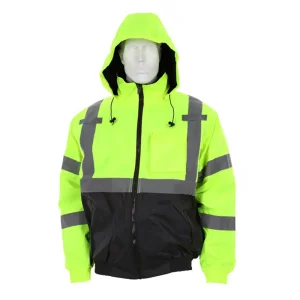
Industrial work environments subject apparel to oil, grease, and dirt. Strategic color-blocking places durable dark navy or black panels at high-soiling zones (sleeves, lower torso, and waistbands), preserving the certified high-vis surface area across rest of the garment and extending product life.
Addressing key operational, technical, and logistics questions for enterprise safety buyers.
Standard MOQs for custom-dyed or bespoke logo-printed hi-vis hoodies typically start at 500 to 1,000 units per colorway. However, for stock fluorescent lime or orange fleece fabrics with standard reflective taping layouts, factory order volumes can be negotiated as low as 200 units.
Adding large screen-printed or embroidered logos can reduce the total area of certified fluorescent background fabric. ANSI and EN ISO standards mandate minimum square inch thresholds of unobstructed fluorescent material. Professional manufacturers recommend placing logos on dedicated chest print zones or non-certified dark contrast panels to maintain full compliance.
For severe cold weather or outdoor winter construction, a 320–350 GSM polyester fleece shell paired with a 180 GSM Sherpa or thermal waffle lining is recommended. This composite structure provides excellent thermal insulation without restricting wearer mobility.
Once pre-production samples are approved, bulk production typically requires 25 to 35 business days. Fast-track production runs can be arranged for recurring contract orders using pre-certified raw fabric reserves.
Quality heat-transferred segmented tape handles stretch-and-recovery cycles exceptionally well, minimizing stress cracking. Premium segmented tapes withstand 25 to 50 home wash cycles at 40°C–60°C while maintaining photometric values above 330 cd/(lx·m²).
Yes, customized pre-production samples with complete material specification sheets, lab test certificates (SGS, TUV, SATRA), and retroreflective photometric reports are provided for buyer evaluation prior to full production.
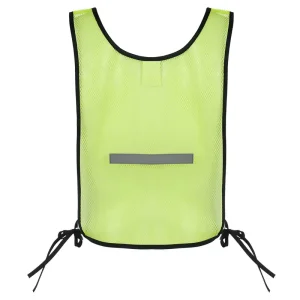
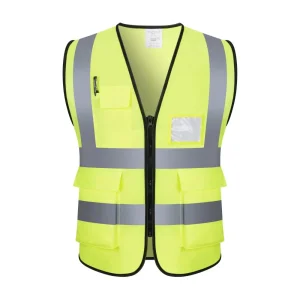
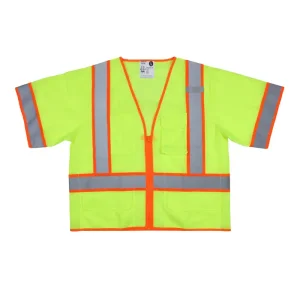
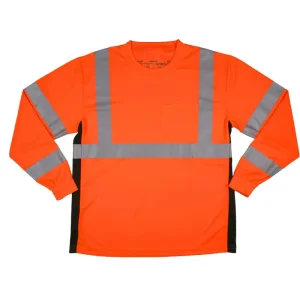
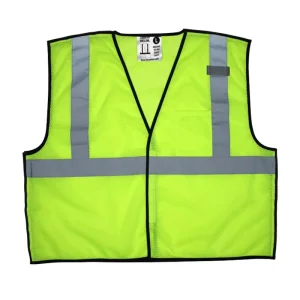
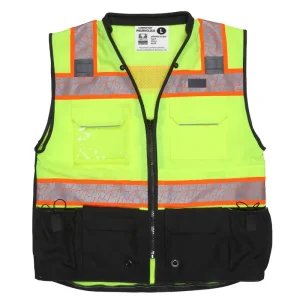
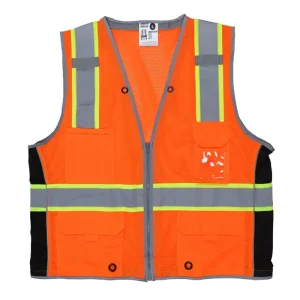
Expanding your procurement options across lightweight mesh vests, multi-pocket surveyor vests, and all-weather work shirts.