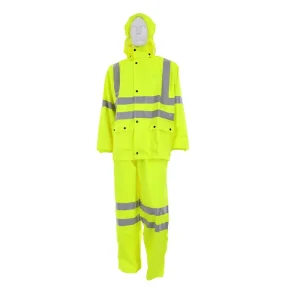
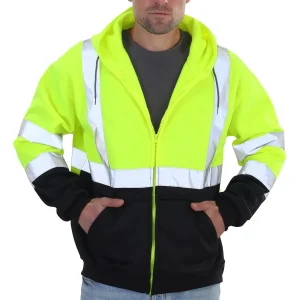
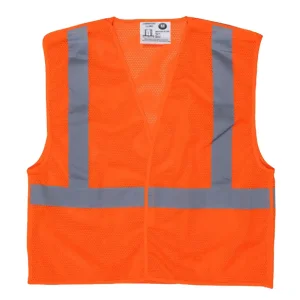
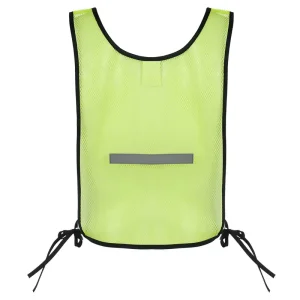
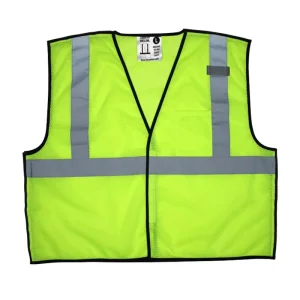
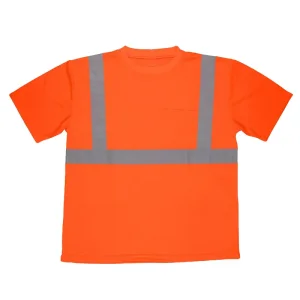
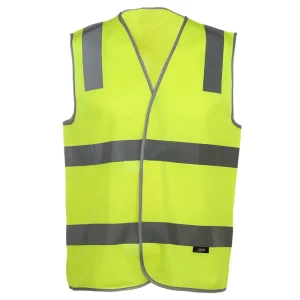
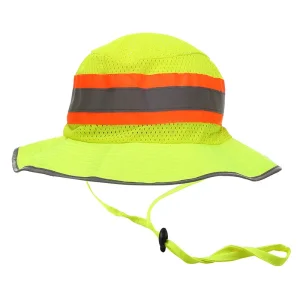
High-performance reflective safety garments engineered for municipal transit, utility engineering, offshore operations, and logistics infrastructure.
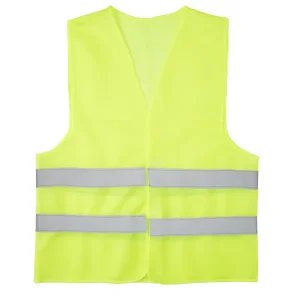
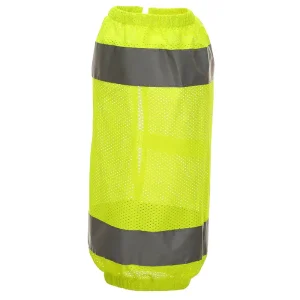
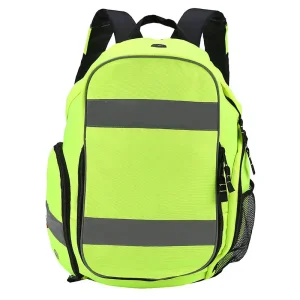
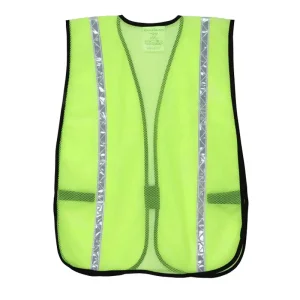
Strategic analysis of occupational safety mandates, environmental adaptability, and B2B procurement dynamics across international industrial sectors.
The global high-visibility (Hi-Vis) protective apparel market is undergoing a structural paradigm shift driven by stringent regulatory frameworks, accelerating infrastructure projects, and heightened awareness of occupational ergonomics. Historically classified as basic reflective vests, modern Hi Vis Walking Jackets have evolved into sophisticated multi-layer protective systems tailored for mobile workforces, highway maintenance crews, civil engineers, railway inspection teams, and municipal emergency responders who navigate high-risk environments under variable microclimatic conditions.
In modern industrial operations, a walking jacket serves as the frontline defense against vehicular strikes, extreme weather, and mechanical hazards. Unlike stationary worker apparel, high-visibility walking jackets must balance 360-degree photometric conspicuity with uncompromised range of motion, thermal regulation, and water-vapor permeability. Global B2B buyers—ranging from regional safety distributors to multinational government contractors—are increasingly scrutinizing total cost of ownership (TCO), garment lifecycle durability, and factory-level compliance credentials when selecting manufacturing partners.
Global labor protection authorities (OSHA in North America, EU-OSHA in Europe, and Safe Work Australia) strictly mandate ISO 20471 and ANSI/ISEA 107 compliance for active roadway workers, driving sustained demand for certified Class 2 and Class 3 walking jackets.
Integration of 300D/600D Oxford polyester matrix fabrics, breathable microporous PTFE/PU membrane laminates, and eco-friendly rPET recycled yarns has transformed walking jackets into dynamic microclimate chambers.
Direct manufacturer partnerships enable distributors to bypass intermediary markups, achieve bespoke OEM branding, secure custom colorway dyes (fluorescent lime-yellow, high-conspicuity orange-red), and maintain resilient buffer stocks.
An architectural deep-dive into retroreflective technology, fabric hydrophobicity, thermal layering, and mechanical tear strength.
The primary safety indicator of a Hi-Vis walking jacket is its Coefficient of Retroreflection ($R_A$), measured in $cd/(lx\cdot m^2)$. Premium jackets manufactured by Yongkang Wow Safety Products Co., Ltd. incorporate high-grade glass-bead micro-lens array tapes or micro-prismatic synthetic films. Under ISO 20471 Class 2 and Class 3 guidelines, retroreflective materials must maintain an initial coefficient exceeding $330\ cd/(lx\cdot m^2)$ at an entrance angle of $+5^\circ$ and observation angle of $12'$.
Our engineering ensures that even after undergoing rigorous mechanical abrasion, flexing, and 50+ industrial wash cycles at 60°C, the retroreflective tape retains over 75% of its original photometric performance, guaranteeing night-time conspicuity under low-beam vehicle headlights up to 300 meters away.
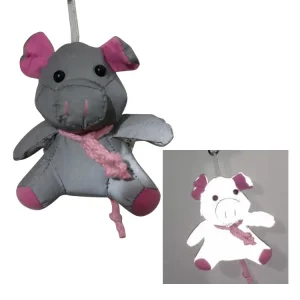
Information Gain Benchmark: Retroreflective strips must be positioned strategically around the torso, arms, and over shoulders to form a recognized human silhouette (biomotion geometry) that accelerates driver perception-reaction time by up to 3.2 seconds.
Walking jackets are frequently subjected to harsh precipitation and atmospheric shifts. We utilize a 300D Polyester Oxford substrate bonded with a hydrostatic Polyurethane (PU) or Polytetrafluoroethylene (PTFE) membrane back-coating. Sealed with hot-melt seam-taping machine technology, the assembly achieves water resistance ratings exceeding 10,000mm H₂O hydrostatic head (EN 343 Class 4 standard).
To eliminate moisture buildup caused by physical exertion during walking, the membrane structure feature micro-pores engineered to be 20,000 times smaller than a water droplet, yet 700 times larger than a water vapor molecule, achieving a Ret breathability index of $< 15\ Pa\cdot m^2/W$.
| Parameter | EN ISO 20471 / ANSI 107 Spec | Wow Safety Factory Benchmark | Operational Benefit |
|---|---|---|---|
| Background Material Area | Class 3: $\ge 0.80\ m^2$ | $0.85\ m^2 - 0.92\ m^2$ High Yield | Maximum daylight visibility from all 360-degree angles |
| Retroreflective Tape Area | Class 3: $\ge 0.20\ m^2$ | $0.22\ m^2$ (2" Premium Glass Bead) | Enhanced nighttime silhouette recognition for oncoming motorists |
| Hydrostatic Head (Waterproof) | EN 343 Class 3: $\ge 13,000\ Pa$ | $\ge 100,000\ Pa$ ($10,000\ mm\ H_2O$) | Total rain protection during continuous storm exposure |
| Tear & Tensile Strength | Warp/Weft: $\ge 100\ N$ | Warp: $1,400\ N$ / Weft: $1,200\ N$ | Prevents garment tearing in rugged industrial environments |
| Color Fastness to Washing | Grade 4 Minimum | Grade 4-5 (ISO 105-C06) | Zero dye bleed; maintains vibrant fluorescent hue after prolonged use |
Integrating 15+ years of specialized workwear manufacturing experience with automated machinery and stringent quality control protocols.
Our 6,000 square meter manufacturing plant is equipped with computerized Gerber pattern cutting systems that eliminate dimensional variance, maximizing fabric yield efficiency and ensuring perfect ergonomic fitting across sizes S to 7XL.
To guarantee absolute water impermeability, all stitch seams on our walking jackets and rain suits undergo high-temperature pneumatic hot-air sealing tape pressing, verified via hydrostatic water pressure testers at 0.05 MPa.
We provide complete private labeling services including screen printing, heat transfer reflective logos, custom zipper pullers, detachable fleece liners, radio loops, multi-pocket utility configurations, and custom retail packaging.
Tailoring workwear engineering to regional climate conditions, jurisdictional safety mandates, and industry-specific operational requirements.
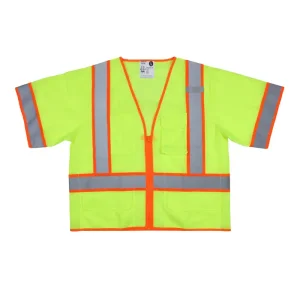
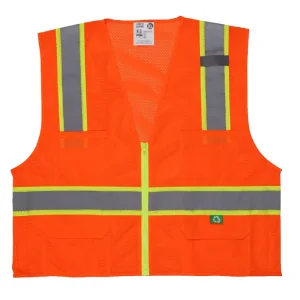
In the United States and Canada, walking jackets destined for DOT highway construction, railway maintenance (FRA), and municipal utility work must strictly conform to ANSI/ISEA 107-2020 Type R (Roadway) or Type P (Public Safety) standards. Our Class 2 and Class 3 walking jackets feature vertical and horizontal 2-inch silver retroreflective striping, heavy-duty double-way front zippers, and breakaway safety side seams designed to prevent entanglement in rotating equipment.
European PPE procurement demands dual-certification under EN ISO 20471 (Conspicuity) and EN 343 (Rainfall Protection). Walking jackets engineered for Nordic and Western European markets require high-vis fluorescent yellow or orange hues with strict color coordinates after xenon arc exposure. Additionally, these garments feature thermal quilted or fleece detachable liners (3-in-1 modular systems) to combat harsh winter environments while maintaining Class 3 compliance.
Ergonomic lightweight jackets designed for traffic wardens and urban security personnel, offering rain protection, mic loops, and hidden badge holders.
FOD-free (Foreign Object Debris) walking jackets with high abrasion-resistant 600D knee/elbow reinforcements, compliant with high-visibility apron standards.
Windproof micro-porous membrane jackets insulated with 160g/m² thermal padding, providing thermal retention in sub-zero working conditions down to -20°C.
Pioneering eco-friendly fabric technologies, smart active illumination, and circular lifecycle manufacturing for next-generation PPE.
As global ESG mandates tighten, Yongkang Wow Safety Products Co., Ltd. is leading the transition toward 100% recycled polyester (rPET) derived from post-consumer plastic bottles. Furthermore, we are replacing traditional C6/C8 fluorocarbon water-repellent treatments with PFC-free Bionic-Finish® ECO technology, drastically reducing environmental bioaccumulation without sacrificing stain and water resistance.
Passive retroreflective tape relies on external light sources. Our R&D pipeline features active LED lighting strips and electroluminescent (EL) piping integrated seamlessly along the jacket perimeter. Powered by rechargeable lithium-polymer micro-packs, these active jackets ensure continuous conspicuity even in total pitch-black environments without oncoming traffic lights.
Addressing key technical procurement inquiries, certification verifications, OEM minimums, and factory logistics.
Our standard MOQ for custom OEM jacket production (custom fabric colorways, custom pocketing, and private branding) is typically 500 to 1,000 units per style. For stock fabric formulations with standard screen printing, smaller trial batch orders starting from 200 units can be accommodated.
To achieve Class 3 compliance, a garment must incorporate at least 0.80 m² of fluorescent background fabric and 0.20 m² of retroreflective tape. We ensure full coverage by using long-sleeve jacket designs with continuous torso and sleeve reflective banding, validated through third-party test reports from accredited labs such as SATRA, SGS, or TÜV.
Yes, placing large non-reflective logos over background fluorescent fabric reduces the total certified fluorescent surface area. Our technical team calculates total area yields before printing to ensure logo placement remains within standard tolerance limits, preserving the jacket’s official EN ISO / ANSI certification.
Proto-samples and counter-samples with custom logos are produced within 5 to 7 working days. Once samples and tech-packs are approved, full mass production cycles typically range from 25 to 35 days depending on total order volume and fabric custom dye requirements.
Explore our full manufacturing range, from weatherproof rain suits to high-visibility headwear and protective gaiters.