Direct-from-factory certified protective apparel designed for extreme industrial performance and multi-hazard compliance.
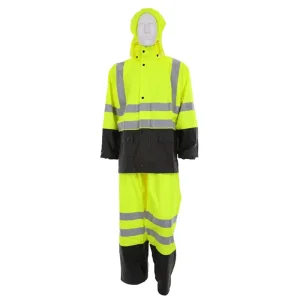
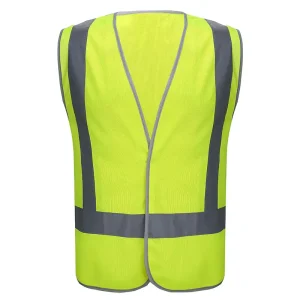
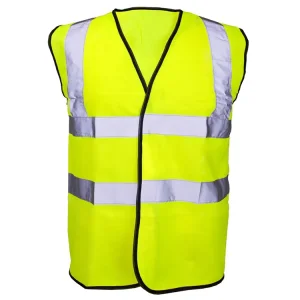
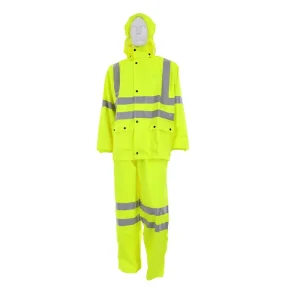
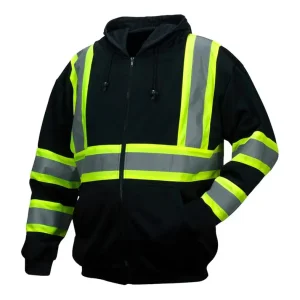
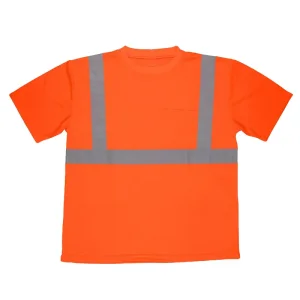
The global market for Personal Protective Equipment (PPE) is undergoing a structural transition. Modern industrial enterprises, municipal agencies, infrastructure conglomerates, and logistics operators are rapidly replacing traditional single-layer heavy outer garments with multifunctional, high-visibility softshell outerwear systems. Driven by stringent occupational health and safety regulations—including OSHA mandates in North America, EU Regulation 2016/425, and AS/NZS standards across Australasia—the demand for high-performance wholesale Hi Vis softshell jackets has escalated dramatically.
Modern work environments require apparel that bridges the gap between extreme weather protection and high ergonomic agility. Unlike conventional rigid PVC/PU rainwear or bulky unbonded parkas, modern Hi Vis softshell apparel manufactured in specialized B2B facilities combines windproofing, water repellency, thermal insulation, and breathability into a single lightweight 3-layer laminated textile matrix. As a premier source factory and specialized wholesale supplier, our manufacturing ecosystem addresses critical corporate procurement imperatives: operational safety, thermal equilibrium, regulatory compliance, and total lifecycle cost efficiency.
Global enforcement of ANSI/ISEA 107-2020 Class 2/3 and EN ISO 20471 Class 3 standards demands precision engineering in chromaticity coordinates ($x, y$) and retroreflective coefficient ($R_A$) metrics.
4-way stretch mechanical polyester fabrics coupled with TPU micro-porous membranes reduce worker fatigue while delivering superior weather barrier resistance in sub-zero and wet climates.
Direct OEM/ODM enterprise sourcing offers large distributors scale economics, customized private labeling, low defect rates (AQL 1.5), and streamlined international compliance testing documentation.
A deep engineering breakdown of high-visibility softshell construction, membrane bonding, and glass-bead/micro-prismatic optical science.
At the core of a professional-grade Wholesale Hi Vis Softshell Jacket is a sophisticated 3-layer bonded composite fabric engineered to withstand extreme environmental stress. Each layer performs a distinct mechanical and physiological function, optimized for durability, breathability, and active moisture management.
| Layer Identification | Material Composition | Physical Specs & GSM | Primary Technical Function |
|---|---|---|---|
| Outer Shell (Face Fabric) | 100% Polyester / Poly-Spandex Woven 75D/150D Mechanical Stretch | 150 - 180 g/m² + C6 / Eco-PFC DWR Finish | Fluorescent chromaticity backdrop, high abrasion resistance, rip-stop structural durability, water-beading hydrophobic barrier. |
| Middle Layer (Functional Core) | Microporous Thermoplastic Polyurethane (TPU) Membrane | 15 - 25 g/m² (15-20 μm thickness) | Hydrostatic head barrier (up to 10,000mm H₂O) blocking rain/wind while venting water vapor moisture (RET < 12 / WVP > 5000g/m²/24h). |
| Inner Layer (Backing) | 100% Polyester Micro-Fleece or Honeycomb Grid Fleece | 120 - 160 g/m² Anti-Pilling Fleece | Thermal insulation via dead-air entrapment, rapid sweat wicking, soft tactile skin contact, anti-static execution. |
In technical softshell manufacturing, balance between waterproofing (Hydrostatic Head) and breathability (Water Vapor Permeability) is achieved via thermal hot-melt lamination technology. Our factory utilizes solid-state hydrophilic and microporous polyurethane films that maintain a pore size of 0.2 micrometers—large enough for gaseous vapor molecules ($0.0004\, \mu\text{m}$) to escape, yet 20,000 times smaller than liquid water droplets ($100\, \mu\text{m}$). This guarantees complete stormproofing without causing interior condensation build-up during strenuous labor.
High-visibility softshells rely on two complementary mechanisms to preserve wearer conspicuity across 24-hour shift cycles:
Tailored hi-vis softshell engineering optimized for specialized sector-specific hazards and operational environments.
Required Class: ANSI Class 3 / EN ISO 20471 Class 3.
Workers operating in close proximity to traffic travelling in excess of 50 mph (80 km/h) require continuous 360° visibility. Softshells built for this sector feature full sleeve reflective bands, drop-tail hem coverage, reinforced abrasion panels at elbows, and dirt-resistant dark contrast panels at wrists and waistbands.
Required Class: RIS-3279-TOM High-Vis Orange.
UK and European rail networks mandate specific high-visibility orange hues to prevent confusion with trackside signaling greens. Softshells in this domain incorporate specialized radio loops, internal mic tabs, heavy-duty YKK zippers, and anti-snag external fabrics tailored for track maintenance crews.
Required Class: ANSI Class 2 / Class 3 with Anti-Static Features.
Ramp agents and logistics personnel facing high wind shear and fuel vapors benefit from windproof TPU membrane softshells integrated with conductive anti-static yarns. Segmented heat-transfer reflective tape enhances body mobility during manual baggage handling.
Required Class: EN 342 Thermal Insulation + EN ISO 20471.
Operatives moving between ambient loading bays and -25°C deep-freeze zones require thermal softshell jackets equipped with heavyweight fleece linings (300gsm+), storm cuffs with thumb holes, and insulated fleece-lined collars.
From CAD pattern generation to ultrasonic seam welding and ISO-standard lab testing—how our factory guarantees batch consistency.
As a specialized factory and direct wholesale supplier, our manufacturing infrastructure operates under stringent ISO 9001 and BSCI ethical standards. Producing reliable high-visibility softshell jackets demands meticulous control over every stage of assembly.
Incoming fabric rolls undergo rigorous testing for weight (GSM), color fastness to light/rubbing, hydrostatic head pressure (AATCC 127), and chromaticity coordinates via Datacolor spectrophotometers prior to cutting.
Automated laser cutting tables guarantee pattern precision within ±0.5mm, eliminating structural distortion. Segmented retroreflective heat-transfer tapes are applied using pneumatic heat presses with calibrated temperature, time, and pressure parameters.
Critical structural seams are stitched with high-tenacity hydrophobic polyester threads. For premium waterproof models, hot-air seam-sealing machines apply 3-layer TPU seam tape across all needle holes to prevent water penetration under hydrostatic head conditions.
100% of finished softshells undergo visual inspection for thread tension, zipper smooth-run, reflective alignment, and dimension fidelity before final polybag packaging and export carton loading.
Understanding regional high-visibility outer garment standards for global B2B procurement officers and brand distributors.
| Standard Jurisdiction | Garment Class | Min. Fluorescent Base Area | Min. Retroreflective Area | Typical Industrial Target Application |
|---|---|---|---|---|
| ANSI/ISEA 107-2020 (USA) | Type R, Class 2 | 0.50 m² (775 sq in) | 0.13 m² (201 sq in) | Construction, traffic control in speeds < 50 mph, logistics centers. |
| ANSI/ISEA 107-2020 (USA) | Type R, Class 3 | 0.80 m² (1240 sq in) | 0.20 m² (310 sq in) | High-speed roadway work (>50 mph), emergency responders, utility line work. |
| EN ISO 20471:2013 (EU) | Class 2 Outerwear | 0.50 m² | 0.13 m² | Delivery drivers, municipal workers, harbor logistics operators. |
| EN ISO 20471:2013 (EU) | Class 3 Softshell Jacket | 0.80 m² | 0.20 m² | Motorway maintenance, railway operations, airport tarmac handling. |
| AS/NZS 4602.1:2011 (AU/NZ) | Class D/N (Day/Night) | Full torso coverage | 50mm wide reflective strips | Mining operations, civil engineering, Australian transport corridors. |
Strategic technological developments reshaping the next generation of high-visibility protective outerwear.
Integrating ultra-thin, flexible LED lighting strips powered by rechargeable lithium polymer packs into softshell sleeve and back channels. Provides active illumination even in zero-light environments without external reflection sources.
Transitioning outer softshell faces to 100% GRS-certified Recycled Polyethylene Terephthalate (rPET) derived from post-consumer plastic bottles, paired with C0 non-fluorinated bio-based Durable Water Repellent (DWR) treatments.
Incorporating graphene nanoplatelets into internal fleece linings to dramatically boost heat dissipation, static dispersion, and antimicrobial performance without adding physical garment weight.
Key commercial metrics and logistics strategies for volume procurement managers, safety distributors, and enterprise buyers.
When procuring bulk safety apparel, enterprise buyers must evaluate beyond the initial FOB unit cost. Calculating Total Cost of Ownership (TCO) involves assessing fabric longevity, wash-durability thresholds, certification documentation, and supplier OEM flexibility.
Expert insights into wholesale hi-vis softshell manufacturing, certification compliance, and OEM capabilities.
Our standard factory MOQ for fully customized OEM Hi-Vis softshell jackets (custom colors, custom pocket layouts, private labeling) is typically 500 units per colorway. For standard stock fabric colors (Fluorescent Yellow-Green and Fluorescent Orange-Red) with standard logo printing, lower trial quantities starting at 200 units can be accommodated.
A 3-layer bonded softshell offers significantly higher mechanical stretch, lower garment weight, and superior breathability (RET < 12), making it ideal for active labor in temperate to cold weather (-5°C to 15°C). Traditional 3-in-1 parkas offer extreme thermal protection for severe sub-zero weather but are bulkier and restrict rapid movement. Softshells are increasingly preferred for general construction, logistics, and site management.
Yes. However, under ANSI/ISEA 107 and EN ISO 20471 standards, applying large screen prints or embroidery patches over the fluorescent base fabric reduces the certified minimum background area. Our technical team calculates total surface area to ensure screen printing, transfer logos, or badge applications remain within safety limits, or places them on non-certified dark contrast accent panels.
Every production batch can be supplied with certified lab test reports from accredited bodies (such as SGS, TÜV, or SATRA) confirming ANSI/ISEA 107-2020 compliance, EN ISO 20471 certificate, Hydrostatic Head Water Pressure test results, Water Vapor Permeability reports, and OEKO-TEX Standard 100 eco-safety certification.
Sewn micro-glass bead tape consists of fabric-backed retroreflective bands stitched onto the garment. It offers robust mechanical durability. Heat-transfer segmented tape consists of thermal adhesive reflective plots applied directly to the softshell face; its segmented structure allows the underlying stretch fabric to expand, improving flexibility, wearer comfort, and ventilation across reflective zones.
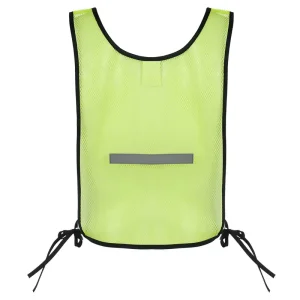
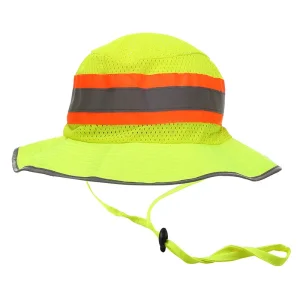
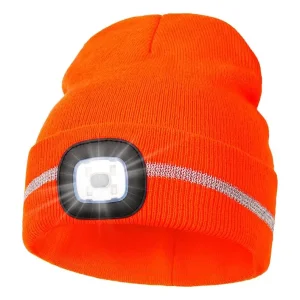
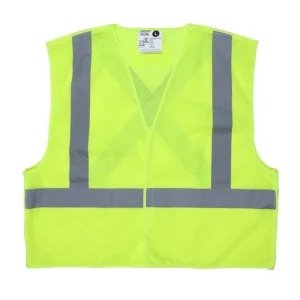
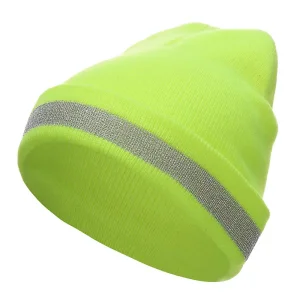
Explore our extended range of safety vests, headwear, gaiters, and high-conspicuity accessories direct from the source factory.