Engineered for extreme industrial environments, high-consequence transportation corridors, and hazardous work zones.
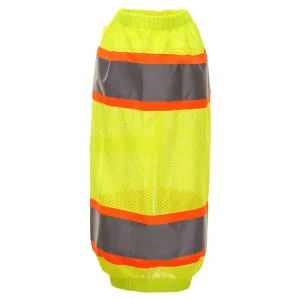
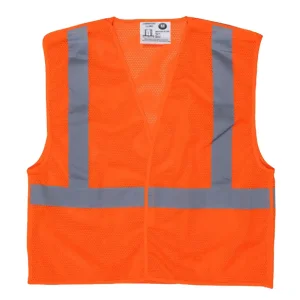
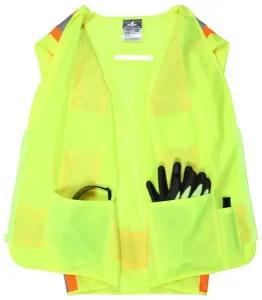
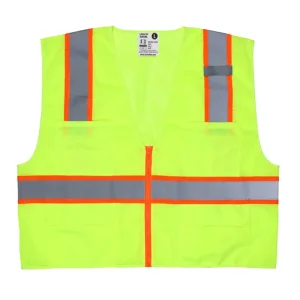
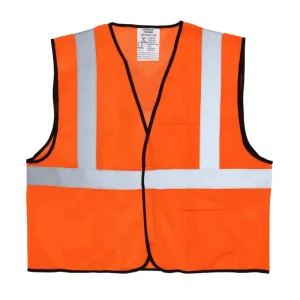
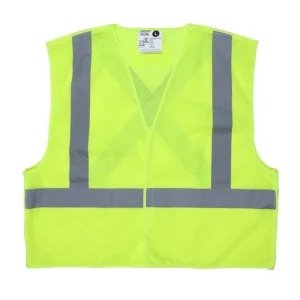
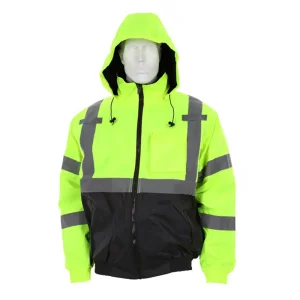
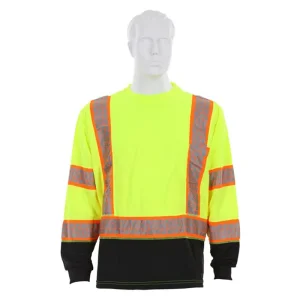
High-visibility personal protective equipment (PPE), specifically fluorescent yellow safety vests, represents the frontline defense against struck-by accidents across construction, logistics, utility engineering, and municipal services globally. As international occupational health and safety (OHS) legislation undergoes systemic tightening—led by updates in ANSI/ISEA 107-2020 in North America, EN ISO 20471:2013+A1:2016 in Europe, and AS/NZS 1906.4:2010 in Australasia—enterprise buyers and distributors face growing challenges regarding technical compliance, supply chain transparency, and fabric durability.
Sourcing from a established China yellow safety vest supplier and factory like Yongkang Wow Safety Products Co., Ltd. provides B2B buyers with direct access to advanced industrial clusters in Zhejiang Province. By combining state-of-the-art weaving automation with high-gain retroreflective film lamination, Chinese manufacturing ecosystems deliver an unmatched balance of cost-efficiency, strict international compliance, and customization agility.
Understanding the exact science behind high-visibility apparel is critical for contract bidding and enterprise risk reduction. A compliant yellow safety vest relies on a dual-performance system: chromatic background fabric for daytime conspicuity and retroreflective tape for nighttime visibility.
To qualify as certified fluorescent yellow under EN ISO 20471 and ANSI/ISEA 107, background materials must meet precise color space boundaries defined by the CIE 15:2004 chromaticity diagram. The material must fall within specific x, y coordinates and satisfy a minimum luminance factor ($Y \ge 0.70$), which measures how efficiently the dye converts invisible ultraviolet radiation into visible light.
Retroreflective tapes utilize either micro-glass bead technology or micro-prismatic structures to return ambient light back toward its original source (e.g., vehicle headlights). High-performance vests manufactured by top Chinese factories incorporate Level 2 reflective tapes boasting a retroreflection coefficient ($R_A$) exceeding $330 \text{ cd}/(\text{lx}\cdot\text{m}^2)$ at an entrance angle of $+5^\circ$ and observation angle of $12'$.
| Regulatory Standard | Geographic Region | Class 1 (Low Risk) | Class 2 (Medium Risk) | Class 3 (High Risk) |
|---|---|---|---|---|
| ANSI/ISEA 107-2020 | North America | Bg: 0.14 m² | Tape: 0.10 m² | Bg: 0.50 m² | Tape: 0.13 m² | Bg: 0.80 m² | Tape: 0.20 m² |
| EN ISO 20471:2013 | European Union | Bg: 0.14 m² | Tape: 0.10 m² | Bg: 0.50 m² | Tape: 0.13 m² | Bg: 0.80 m² | Tape: 0.20 m² |
| AS/NZS 1906.4:2010 | Australia / NZ | Class F (Day) / Class R | Class D/N (Day & Night) | Class D/N High Speed |
The global workwear and protective apparel market is undergoing a structural shift towards sustainability, smart technology integration, and ergonomic optimization. Enterprise procurement directors must factor these dynamic shifts into their multi-year supply chain strategies.
Transitioning to Global Recycled Standard (GRS) certified rPET yarn spun from post-consumer plastic bottles. Reduces carbon footprint by up to 45% while retaining tear resistance.
Incorporating ultra-high frequency (UHF) RFID laundry tags into seam binding, enabling automated inventory tracking, wash cycle counting, and worker location safety checks.
Integration of Modacrylic/Cotton flame-retardant blends with dielectric zippers, designed specifically for electrical utility linemen and petrochemical workers exposed to arc-flash risks.
For multinational corporations and large-scale safety equipment distributors, procuring safety vests involves more than securing competitive unit pricing. It demands rigorous auditability, supply chain security, and absolute compliance consistency across thousands of production units.
When participating in public infrastructure tenders or enterprise supply contracts, buyers must request comprehensive documentation verifying the technical integrity of the garments:
Custom branding must never compromise the certified minimum area of fluorescent backing or reflective tape. China's leading factories utilize CAD-assisted layout optimization to apply corporate logos via silkscreen printing, heat transfer, or embroidery within non-certified zones (e.g., chest pockets, back shoulders) while retaining full Class 2 or Class 3 compliance.
How Zhejiang's advanced safety equipment manufacturing ecosystem delivers unmatched industrial scalability and cost advantages.
China remains the undisputed epicenter of global high-visibility apparel manufacturing. Specialized industrial clusters, particularly in Yongkang and Jinhua City, Zhejiang Province, integrate every phase of the supply chain—from chemical raw material synthesis to high-speed computerized stitching.
Yongkang Wow Safety Products leverages immediate geographic proximity to yarn spinning mills, retroreflective film lamination plants, and specialized hardware suppliers, cutting material lead times by up to 60%.
Computer vision-guided automatic cutters achieve micro-millimeter precision when slicing fluorescent rolls and glass bead tape, ensuring flawless seam assembly and zero material waste.
In-line optical sensors test stitch density (stitches per inch), retroreflective brightness, and color consistency in real-time, eliminating non-compliant units prior to export packaging.
Matching yellow safety vest specifications to distinct physical working environments and regional hazard profiles.
Required Standard: ANSI Class 2 or Class 3 / EN ISO 20471 Class 2.
Key Features: Heavy-duty 120gsm solid polyester front, breathability back mesh, 2-inch wide silver retroreflective stripes, radio loops, and 5-point breakaway zippers to prevent machinery snagging.
Required Standard: ANSI Type R Class 2 / EN ISO Class 2.
Key Features: Dielectric non-metallic zipper closures to prevent FOD (Foreign Object Debris) spark hazards near refueling stations, clear ID badge holders, and dual pen pockets.
Required Standard: High-Contrast Two-Tone (Lime & Orange).
Key Features: Reinforced 300D Oxford fabric with water-repellent (DWR) coating, micro-prismatic tape resistant to mud and abrasion, and heavy-duty brass zippers.
Comprehensive safety solutions manufactured to international regulatory standards for bulk global supply.
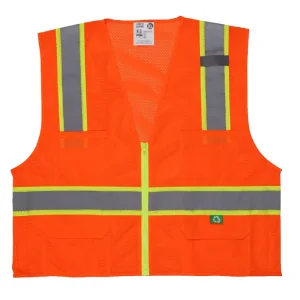
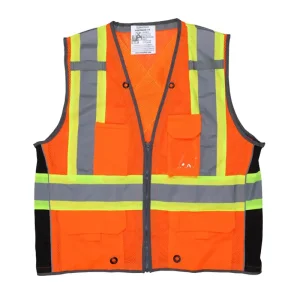
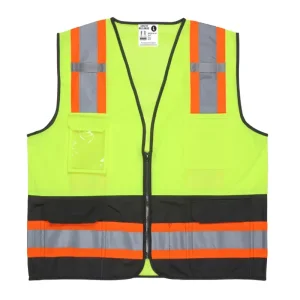
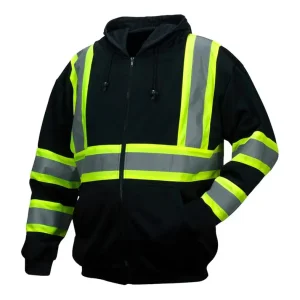
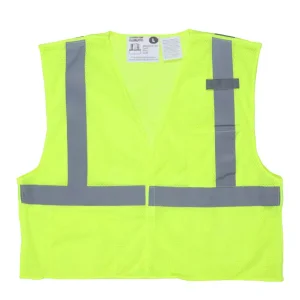
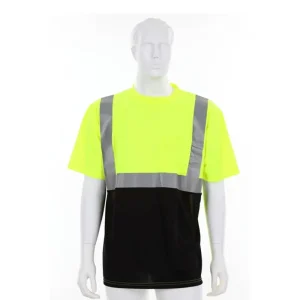
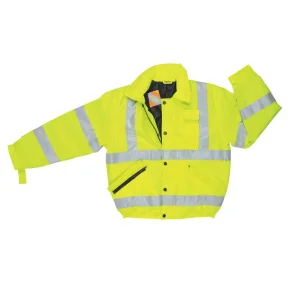
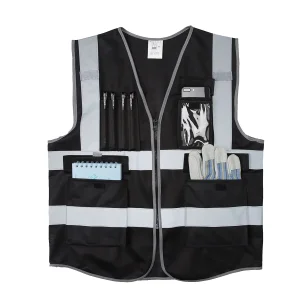
Addressing critical technical, regulatory, and procurement questions for enterprise buyers.
The fundamental difference lies in the minimum required surface area of fluorescent background fabric and retroreflective tape. ANSI Class 2 garments require at least 775 sq. inches (0.50 m²) of background fabric and 201 sq. inches (0.13 m²) of reflective material, intended for task areas where traffic speeds range between 25 mph and 50 mph. ANSI Class 3 garments require 1,240 sq. inches (0.80 m²) of background fabric and 310 sq. inches (0.20 m²) of reflective tape, requiring full sleeves with reflective bands to define the human outline in high-speed traffic zones exceeding 50 mph.
Leading manufacturers like Yongkang Wow Safety Products execute strict batch-level Quality Assurance (QA). Raw materials (both polyester mesh and glass-bead tapes) are pre-tested in lab conditions for chromaticity coordinates, tensile strength, and initial retroreflective gain ($R_A \ge 330 \text{ cd}/(\text{lx}\cdot\text{m}^2)$). Finished lots undergo ISO 6330 industrial wash testing to ensure certification parameters remain compliant after 25 to 50 wash cycles.
Yes. Custom branding (silk printing, heat transfer, embroidered badges) can be positioned on non-critical panels such as front pocket flaps or upper shoulder areas. The key rule is that the area occupied by the logo must not diminish the total visible fluorescent background material below the standard's certified minimum threshold. Our engineering team provides pre-production CAD proofs calculating exact square inch coverage for absolute compliance.
Standard OEM production lead times range from 15 to 25 business days depending on order complexity and total volume. Standard factory MOQ begins at 500 to 1,000 units per style for customized colors, customized tape configurations, or private label packaging. Stock garment styles can be dispatched in accelerated timelines.
Fluorescent Yellow operates at a peak wavelength of approximately 555 nm, which aligns directly with the human eye’s maximum photopic sensitivity under daylight conditions. It provides superior visual contrast against dark pavement, concrete barriers, and urban structural backgrounds. However, Fluorescent Orange is often specified in maritime, forestry, or work zones where heavy orange/yellow machinery is present to ensure distinct visual separation.