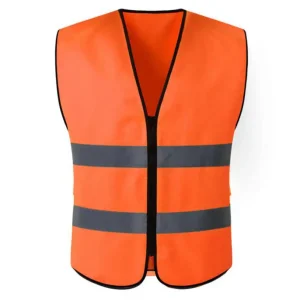
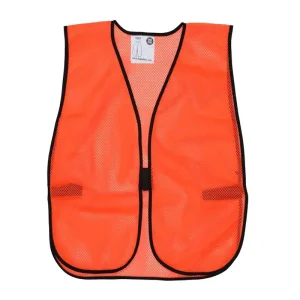
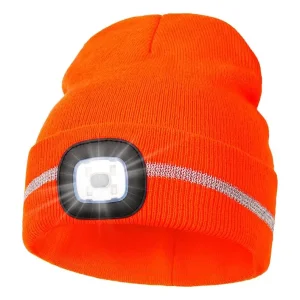
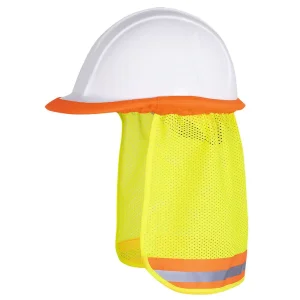
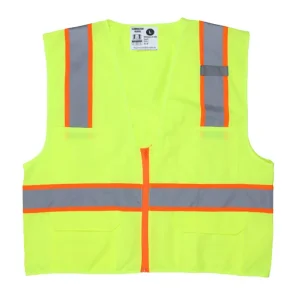
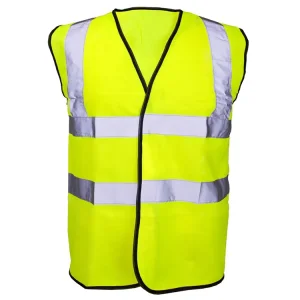
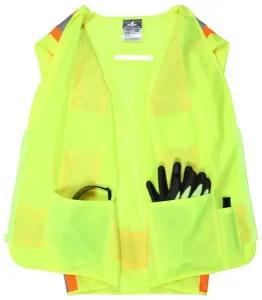
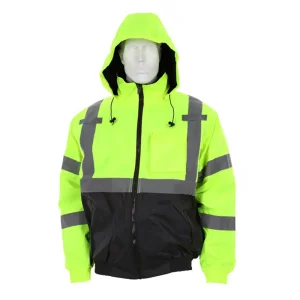
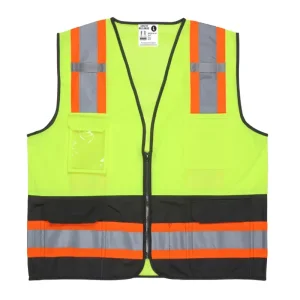
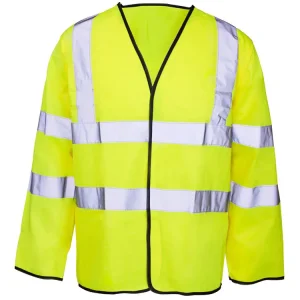
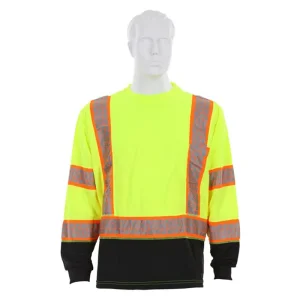
Explore our flagship high-visibility protective equipment manufactured to international photometric and ergonomic standards.
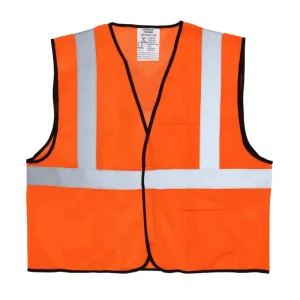
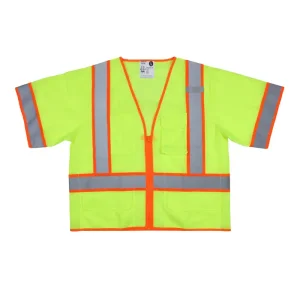
In modern industrial infrastructure, safety vests are no longer basic reflective waistcoats—they are vital Personal Protective Equipment (PPE) engineered to preserve lives across low-contrast environments.
Global industrial expansion across transport networks, automated logistics terminals, and renewable energy sites has intensified safety regulations worldwide. Safety vest reflectors must perform across extreme photometric variables—from intense daylight solar UV radiation to rainy midnight roadworks.
Yongkang Wow Safety Products Co., Ltd. stands at the forefront of China's high-visibility apparel manufacturing ecosystem. Operating from Jinhua City, Zhejiang, our modern manufacturing complex integrates material physics, micro-prismatic optics engineering, and lean garment assembly. We engineer safety solutions that strictly align with ANSI/ISEA 107-2020 (USA), EN ISO 20471:2013+A1:2016 (Europe), and AS/NZS 4602.1 (Australasia).
Core Technical Value: Our micro-glass bead and micro-prismatic retroreflective tapes achieve retroreflectivity coefficients exceeding 330 to 500 cd/(lx·m²), far outpacing basic baseline requirements to guarantee 360-degree detection at distances exceeding 300 meters.
Navigating high-visibility safety standards requires precision in background fabric chromaticity, luminance factors, and retroreflective material surface area coverage.
| Standard Code | Geographic Focus | Garment Classifications | Minimum Fluorescent Fabric | Minimum Reflective Tape Area | Primary Industrial Application |
|---|---|---|---|---|---|
| ANSI/ISEA 107-2020 | North America / Global | Type O (Off-Road), Type R (Roadway), Type P (Public Safety) | Class 2: 0.50 m² Class 3: 0.80 m² |
Class 2: 0.13 m² Class 3: 0.20 m² |
Highway Construction, Municipal Maintenance, Railway Workers |
| EN ISO 20471:2013 | European Union / International | Class 1 (Low Risk), Class 2 (Medium Risk), Class 3 (High Risk) | Class 1: 0.14 m² Class 2: 0.50 m² Class 3: 0.80 m² |
Class 1: 0.10 m² Class 2: 0.13 m² Class 3: 0.20 m² |
Airport Tarmac Personnel, High-Speed Railway, Freight Terminals |
| AS/NZS 4602.1:2011 | Australia & New Zealand | Class D (Day Only), Class N (Night Only), Class D/N (Day/Night) | Day/Night: 0.40 m² High-Vis Area | 50mm Retroreflective Strips (Hoop or X-Pattern) | Mining Operations, Heavy Civil Works, Agricultural Transportation |
| CSA Z96-15 | Canada | Class 1, Class 2, Class 3 (Full body coverage requirements) | Class 2: 0.50 m² Class 3: 0.80 m² |
Bright retroreflective harness strip configuration | Oil & Gas Infrastructure, Cold-Climate Forestry, Logistics |
Fluorescent colors (Fluorescent Yellow-Green, Fluorescent Orange-Red, Fluorescent Red) absorb non-visible ultraviolet radiation from sunlight and re-emit it as visible light, creating high contrast during daytime, twilight, and overcast weather conditions.
Retroreflection directs light back toward its original source rather than scattering it. We utilize both glass bead technology (microscopic spheres acting as lenses) and micro-prismatic synthetic arrays to achieve maximum coefficient of retroreflection ($R_A$).
Safety garments must retain compliance across multiple wash cycles. Our heavy-duty industrial safety vests are engineered to withstand up to 50 ISO 6330 wash cycles at 60°C while retaining greater than 100 cd/(lx·m²) reflectivity.
How Yongkang Wow Safety Products Co., Ltd. leverages advanced industrial clusters, automation, and end-to-end quality control to serve international buyers.
Located in Yongkang, Jinhua City, Zhejiang, our factory benefits from immediate access to world-class synthetic textile weaving mills, fluorescent dye houses, retroreflective tape coaters, and precision hardware suppliers. This concentrated ecosystem drastically reduces raw material lead times.
We deploy computer-controlled multi-layer laser fabric cutters to guarantee precision patterning with zero edge-fraying on polyester mesh and solid tricot. Automated stitching stations maintain uniform thread tension, doubling seam strength against high stress.
Every raw material batch undergoes strict laboratory verification. Our quality control protocol includes retroreflectometer calibration, spectrophotometer colorimetry matching, tensile strength testing, and hydrostatic pressure testing for water-resistant rainwear.
For procurement officers, sourcing safety vests requires balancing initial unit purchase price against long-term durability, compliance liability, and brand reputational risk.
Selecting the right fabric weight—ranging from lightweight 110 gsm polyester cooling mesh for tropical climates to heavy-duty 160 gsm solid tricot for surveyor vests—impacts garment lifespan and worker comfort directly.
Adding corporate logos must respect certified high-visibility zones. We guide buyers on non-compliant print placement risk, ensuring heat transfer vinyl or screen printing does not reduce the required minimum area of fluorescent background fabric.
Modern international tenders increasingly mandate sustainable procurement. We offer GRS-certified (Global Recycled Standard) recycled polyester fabrics derived from post-consumer plastic bottles without compromising colorfastness or ANSI certification.
Engineered solutions for specific workplace hazards, microclimates, and operational requirements.
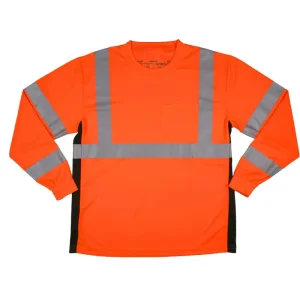
Requirement: ANSI Class 3 / EN ISO Class 3 compliance with high-contrast 3-inch or 4-inch two-tone tape configurations. Workers operating near traffic traveling above 50 mph require full-body movement detection with sleeve reflectivity.
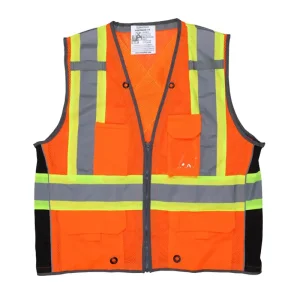
Requirement: Heavy-duty multi-pocket surveyor vests. Features include reinforced tablet pockets, padded collar cushions, mic tabs, grommets for tape dispenser leads, and clear ID badge windows.
Requirement: Flame Retardant (FR) safety vests utilizing modacrylic blended fabrics or treated cotton alongside NFPA 2112 certified retroreflective trims for oil, gas, and electrical utility workers.
Integrating active illumination, micro-prismatic optics, and wearable safety technology into traditional passive reflective garments.
Combining retroreflective passive silver tape with active LED fiber optic strips. This ensures visibility even when no external vehicle light beams are directed at the wearer in total darkness.
Standard glass beads lose reflectivity when covered by water film during heavy downpours. Sealed micro-prismatic technology maintains total internal light reflection regardless of surface moisture.
Integrating conductive carbon filaments into polyester yarn eliminates electrostatic discharge risks around volatile materials while maintaining airflow in hot environments.
Detailed technical answers to common queries regarding customization, standard compliance, shipping, and quality assurance.
The primary difference lies in the total surface area of visible materials and the required garment coverage. Class 2 vests require a minimum of 775 sq. in. (0.50 m²) of fluorescent background fabric and 201 sq. in. (0.13 m²) of retroreflective material. They are designed for environments where traffic speeds exceed 25 mph. Class 3 garments require 1,240 sq. in. (0.80 m²) of background fabric and 310 sq. in. (0.20 m²) of reflective tape. Class 3 garments must feature body coverage such as sleeves with reflective bandings to outline human motion at higher vehicle speeds (50+ mph).
We source raw fluorescent fabrics tested for color chromaticity and luminance factors before and after exposure to xenon light. Our reflective tapes undergo rigorous photometer testing to confirm retroreflectivity ($R_A$) values exceed 330 cd/(lx·m²). Every garment design is audited for continuous horizontal reflective banding around the torso without design breaks that compromise compliance.
We offer full OEM/ODM manufacturing services, including custom Pantone color dyeing for background fabrics, customized pocket layouts, breakaway 5-point velcro seams, radio clips, clear badge holders, screen printing, heat-transfer logos, woven labels, and custom retail or industrial bulk packaging.
Our standard MOQ for stock fabric configurations is typically 500 to 1,000 units per style. For fully custom-dyed fabrics or specialized flame-retardant materials, MOQ may adjust to 2,000 units. Standard production lead time ranges from 15 to 25 days following sample approval and deposit confirmation.
Glass bead tapes utilize microscopic spherical lenses glued to a fabric substrate, offering wide-angle light return at a cost-effective price point. Micro-prismatic tapes utilize precision-molded synthetic prisms. Micro-prismatic material provides higher initial brightness (often exceeding 500 cd/lx·m²) and superior performance under wet weather conditions, making it ideal for high-risk maritime, heavy highway, and emergency responder applications.
Yes. If a large, non-reflective logo is printed over the fluorescent background fabric, it reduces the total compliant surface area. If the remaining fluorescent area falls below the minimum square inches required for Class 2 or Class 3, the garment loses certification. Our design team reviews all artwork mockups to ensure logo placement remains within safe dimensions.
Discover specialized high-visibility accessories, insulated jackets, and multi-stripe safety waistcoats for global supply chains.