- Yongkang, Jinhua City, Zhejiang, China
- [email protected]
- +86-0579-87121726


Precision-engineered high-visibility protective gear compliant with international safety classes for infrastructure, logistics, and heavy industrial deployment.
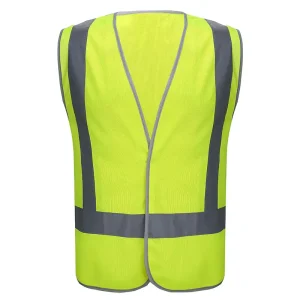
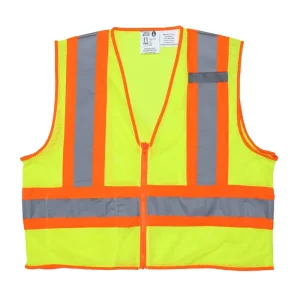
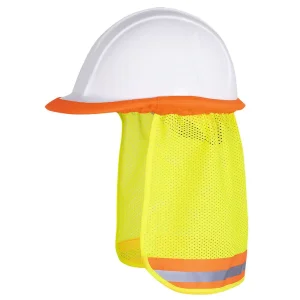
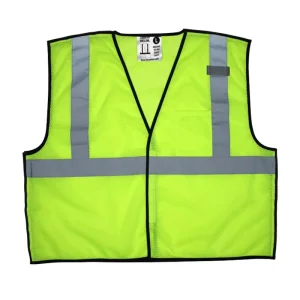
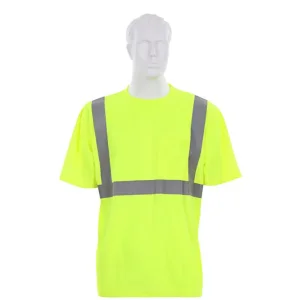
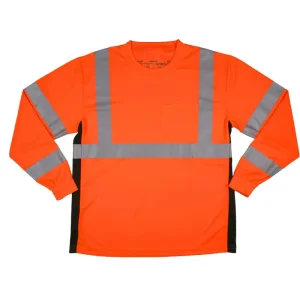
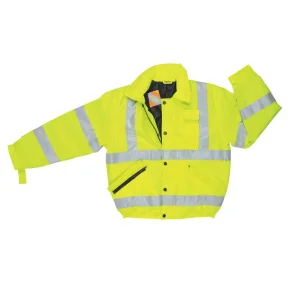
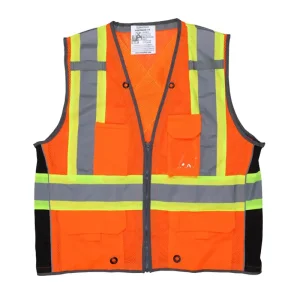
Evaluating China's industrial ecosystem, material innovations, and OEM/ODM manufacturing metrics in response to stringent international occupational safety regulations.
The global high-visibility safety apparel market is undergoing a paradigm shift driven by legislative mandates, massive civil infrastructure initiatives, and escalating corporate commitment to zero-accident workplace safety standards. As corporate buyers, government procurement agencies, and international PPE distributors seek reliable, cost-engineered sourcing solutions, searching for qualified China safety vest for work suppliers and factories has evolved from basic price discovery into an exhaustive technical risk management process.
China remains the undisputed epicenter of global safety textile manufacturing, accounting for over 65% of global high-visibility workwear output. The concentration of advanced synthetic weaving, specialized fluorescent dyeing, glass-bead retro-reflective coating chemistry, and high-speed automated stitching within key industrial hubs such as Zhejiang (specifically Yongkang and Jinhua) provides unprecedented supply chain integration. This vertical integration allows specialized facilities like Yongkang Wow Safety Products Co., Ltd. to deliver superior technical performance at scale while adhering to strict environmental and labor standards.
SEO Intent Insight & E-E-A-T Value: Global procurement teams searching for safety vest manufacturers do not merely want product catalogs; they require verifiable data on compliance parameters (ANSI/ISEA 107-2020, EN ISO 20471:2013+A1:2016), material degradation curves under UV exposure, and total cost of ownership (TCO) optimization models.
A detailed comparative analysis of visible material requirements, chromaticity boundaries, and photometric performance metrics.
Governs the North American market. Categorizes safety vests into Type R (Roadway), Type O (Off-Roadway), and Type P (Public Safety), spanning Performance Classes 1, 2, and 3 based on background fluorescent and retro-reflective tape surface area.
Mandatory across the European Union and UK (UKCA). Divides protective garments into Class 1, Class 2, and Class 3 depending on risk levels determined by vehicle travel speeds (<30 km/h, <60 km/h, or >60 km/h).
Covers Canadian and Australasian territories, demanding specialized "X-back" retro-reflective configurations on the rear torso to signify worker directionality in dark conditions.
| Garment Class & Type | Min. Fluorescent Background | Min. Retro-Reflective Tape | Typical Vehicle Risk Speed | Primary Industrial Applications |
|---|---|---|---|---|
| Class 1 (Low Risk / Type O) | 0.14 m² (217 sq. in.) | 0.10 m² (155 sq. in.) | < 40 km/h (25 mph) | Warehousing, parking attendants, indoor fulfillment centers. |
| Class 2 (Medium Risk / Type R) | 0.50 m² (775 sq. in.) | 0.13 m² (201 sq. in.) | 40 km/h to 80 km/h (25–50 mph) | Urban roadway maintenance, municipal workers, surveyors. |
| Class 3 (High Risk / Type R) | 0.80 m² (1240 sq. in.) | 0.20 m² (310 sq. in.) | > 80 km/h (50+ mph) | Highways, emergency response crews, night railway operations. |
| Public Safety (Type P Class 2/3) | 0.50 m² / 0.80 m² | 0.20 m² (310 sq. in.) | Variable / Emergency | Law enforcement, firefighters, first responders (breakaway design). |
Compliance is not merely about stitching silver tape onto bright cloth. Color science dictates that fluorescent fabrics—available primarily in Fluorescent Yellow-Green, Fluorescent Orange-Red, and Fluorescent Red—must fall within precise trichromatic coordinates $(x, y)$ measured by a spectrophotometer before and after xenon arc light fastness testing (ISO 105-B02). The fluorescent property converts invisible ultraviolet light into visible wavelength radiation, maximizing daytime conspicuity against natural foliage or urban concrete backdrops.
Understanding light redirection performance under extreme weather, rain attenuation, and industrial laundering stress.
Engineered by embedding high-refractive-index microscopic glass spheres (index $n \approx 1.9$) into a metallic aluminum vapor-coated backing resin layer. Incoming vehicle light beams enter each spherical bead, refract, reflect off the mirrored rear mirror layer, and return directly toward the driver's eye line. Excellent cost-efficiency, suitable for 25–50 standard home washes.
Utilizes micro-engineered vinyl or polyurethane synthetic sheeting featuring millions of internal cube-corner prisms per square inch. Light bounces off three mutually perpendicular surfaces via Total Internal Reflection (TIR). Delivers retro-reflection coefficients ($R_A$) exceeding 500 cd/(lx·m²) and retains performance even during heavy rainfall.
100% Recycled Post-Consumer Polyethylene Terephthalate yarns, cutting carbon footprint by 38% while meeting GRS 4.0 certification.
Flexible, washable surface-mounted electroluminescent strips and micro-LED loops powered by rechargeable ultra-thin lithium polymer packs.
Real-time worker vital monitoring, fall detection sensors, and ultra-wideband (UWB) proximity alerts for autonomous heavy equipment zones.
Custom engineering tailored to specific working conditions, weather extremes, and ergonomic operational requirements.
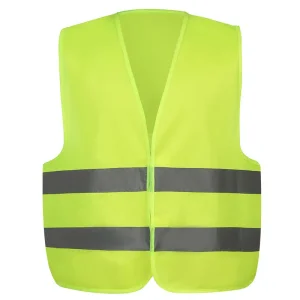
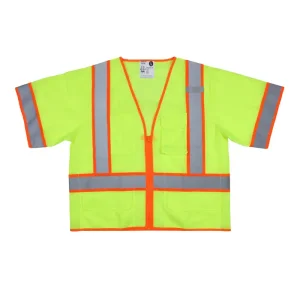
Demands ANSI Class 2 or Class 3 vests constructed with high-density 120GSM-160GSM 100% Polyester Warp-Knitted Tricot or breathable Air-Mesh. Features heavy-duty resin zippers, mic tabs, radio pockets, and 5-point breakaway Velcro seams to prevent entanglement in moving vehicle machinery.
Constructed with Modacrylic/Cotton blend fabrics rated under NFPA 2112 and ASTM F1506 for arc flash protection (ATPV ratings). Outfitted with flame-retardant retro-reflective tapes that do not melt, drip, or ignite under intense heat exposure.
Multi-functional 3-in-1 insulated safety jackets combining 300D Oxford Polyester outer shells with PU/PVC waterproof back-coatings (>5000mm hydrostatic head rating), fully taped waterproof seams, and removable quilted thermal fleece liners certified to EN 343 and EN 342.
A critical technical challenge for enterprise procurement is placing corporate branding without violating certified minimum fluorescent area ratios. Under EN ISO 20471 and ANSI 107 guidelines, logo printing (screen printing, heat-transfer vinyl, silicone printing, or direct embroidery) on background materials decreases the certified visible square footage. Experienced OEM suppliers utilize specialized pattern-grading algorithms to adjust background fabric cut sizes across the entire grading curve (S to 7XL), ensuring that even smaller sizes retain absolute compliance after applying wide chest or back logos.
How leading Chinese safety vest factories ensure consistent lot-to-lot quality and seamless customs clearance.
Tier-1 manufacturers implement a comprehensive Acceptable Quality Limit (AQL) framework across three distinct operational stages:
Navigating international trade compliance requires manufacturers to hold updated ethical audit accreditations, including BSCI (Business Social Compliance Initiative), SEDEX SMETA 4-Pillar, and ISO 9001:2015 Quality Management Systems.
Localization support services include:
Direct technical answers to common questions raised by enterprise purchasing officers, safety directors, and PPE distributors.
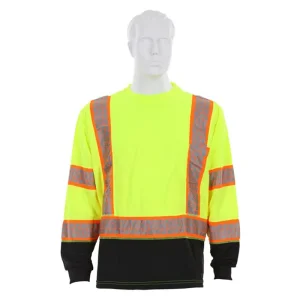
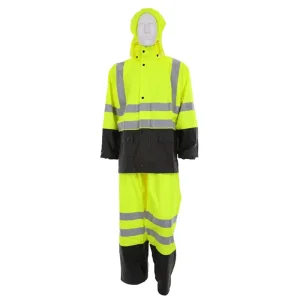
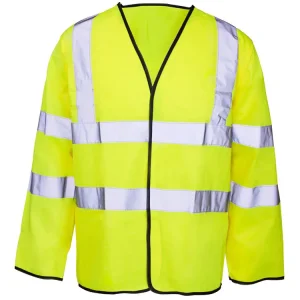
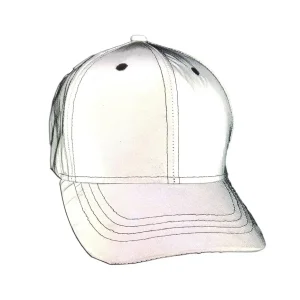
Explore our broader range of EN ISO 20471 and ANSI Class 2/3 certified garments, long-sleeve shirts, rain gear, and headwear accessories.