Explore our industrial-grade safety vests engineered for maximum photometric performance, operational durability, and full regulatory compliance across North American, European, and Asia-Pacific markets.
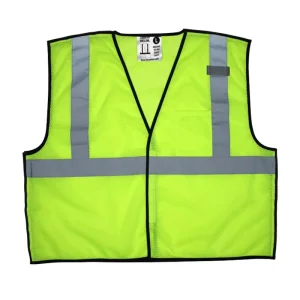
A comprehensive examination of global regulatory frameworks, photometric engineering standards, and supply chain strategies for corporate EHS procurement managers.
In modern industrial job sites, municipal infrastructure developments, and emergency incident command zones, the role of a Safety Officer extends far beyond routine supervision. Environmental Health and Safety (EHS) officers are responsible for enforcing strict risk-mitigation protocols, coordinating emergency responses, and remaining unmistakably visible across complex visual backgrounds. Consequently, the Safety Officer Vest serves not merely as basic Personal Protective Equipment (PPE), but as a tactical command interface and critical visual marker designed to withstand severe industrial environments.
Global procurement teams sourcing high-visibility apparel from Chinese manufacturing centers face a highly dynamic landscape. While China's textile clusters—particularly concentrated in Zhejiang, Yongkang, and surrounding industrial hubs—offer unprecedented scaling efficiencies and custom OEM flexibility, evaluating tier-1 manufacturing partners requires deep technical scrutiny. B2B buyers must navigate complex photometric performance specs, fabric chromaticity limits, wash cycle longevity requirements, and strict international standardizations including ANSI/ISEA 107-2020 (USA), EN ISO 20471:2013+A1:2016 (Europe), and AS/NZS 1906.4:2010 (Australia/New Zealand).
Standard high-visibility vests designed for general labor often lack the structural load-bearing capacity, tactical pocket layout, clear incident command color coding, and breakaway safety mechanisms required for site safety personnel. Sourcing dedicated Safety Officer Vests from specialized factories ensures compliance with dual-performance criteria: high retroreflective coefficient retention ($R_A \ge 330 \text{ cd}/(\text{lx}\cdot\text{m}^2)$) and ergonomic load balance for radios, gas detectors, and mobile tablet terminals.
Understanding regional technical disparities is paramount when issuing international manufacturing RFPs (Request for Proposals). The table below highlights key engineering distinctions across dominant safety garment standards:
Visual identification matrices utilized by major construction conglomerates, petrochemical complexes, and municipal emergency management agencies.
Utilized by Safety Chiefs, Fire Officers, and HazMat Response Unit Leaders. Red vests provide immediate visual dominance during high-stress critical incidents, featuring high-contrast silver retroreflective banding and clear legend print zones.
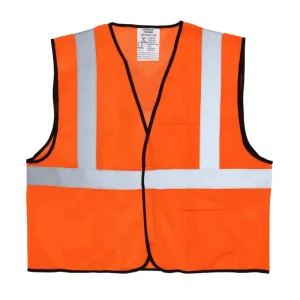
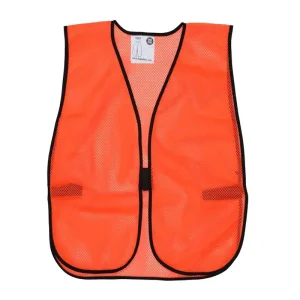
Fluorescent Orange-Red (ANSI Class 2/3 compliant) is the globally accepted standard for site safety engineers and road construction safety supervisors. High luminance contrast against green foliage and gray urban concrete backgrounds.
Bright green or emerald vests signify First Aid Responders, Environmental Health Inspectors, and Triage Leads. Allows injured workers or emergency crews to locate medical support instantaneously across vast construction footprints.
Assigned to General Contractors, Site Superintendents, and Logistics Coordinators. Royal Blue vests maintain clear chain-of-command distinctions while incorporating 2-inch wide reflective trim for full twilight compliance.
How leading Chinese manufacturers engineer high-performance safety vests for extreme thermal resilience, mechanical tear strength, and retroreflective durability.
Constructed using 100% warp-knitted polyester tricot (120–160 GSM) or open-cell breathable birdseye mesh. Provides exceptional tensile strength ($\ge 450 \text{ N}$) preventing snag-tears while allowing maximum heat dissipation during extreme humid operations.
Utilizing high-coefficient microprismatic structures (e.g., 3M™ Scotchlite™ or certified domestic equivalents) delivering retroreflective performance up to $500 \text{ cd}/(\text{lx}\cdot\text{m}^2)$. Microprismatic arrays outperform traditional glass-bead tapes during heavy rainfall events.
Integrated heavy-duty hook-and-loop fasteners situated at the shoulders, sides, and front closure. Designed to release instantaneously under a pull force threshold of $40-60 \text{ N}$, eliminating entangling hazards near heavy machinery rotators.
Featuring reinforced dual chest mic tabs, clear transparent PVC badge sleeves, 2-tier pen stalls, expandable radio pockets with antenna grommets, and tablet-sized lower cargo pockets lined with 300D Oxford nylon reinforcements.
Engineered to endure 50+ industrial washing cycles at 60°C ($140^\circ\text{F}$) according to ISO 6330 test protocols. Special colorfast disperse dyes prevent fluorescent bleed and retain chromaticity boundary values across extended operational lifespans.
Available with Modacrylic blend fabrics or NFPA 2112 certified Pyrovatex® cotton treatments. Delivers self-extinguishing protection against flash fires and electrical arc flashes without compromising high-visibility photometric values.
Why corporate enterprise buyers choose specialized production clusters in Zhejiang Province for mass customization, quality assurance, and OEM reliability.
China remains the undisputed epicenter of safety apparel manufacturing, accounting for over 70% of global high-visibility workwear production. Within Zhejiang Province, cities like Yongkang have evolved into specialized industrial clusters housing end-to-end supply chains—from raw PET yarn spinning and fluorescent dyeing mills to automated laser-cutting facilities and specialized retroreflective tape laminators.
Working directly with established manufacturers such as Yongkang Wow Safety Products Co., Ltd. provides global buyers with distinct operational advantages over generic trading intermediaries:
Tier-1 factories operate internal quality assurance laboratories equipped with spectrophotometers and retroreflectometers, ensuring every batch meets ANSI Class 2/3 and EN ISO 20471 photometrics prior to shipment clearance.
Advanced CAD pattern-making and automated laser cutters allow factory engineers to produce physical samples, custom logo heat-transfers, and custom pocket arrangements within 48 to 72 hours from artwork approval.
With a 6,000 m² facility producing over 500,000 safety garments monthly, large-scale fabric purchasing power drastically lowers unit costs for international government tenders and corporate fleet re-outfitting programs.
The evolution of high-visibility safety clothing toward IoT-enabled active safety, thermal regulation, and recycled polyester (rPET) manufacturing.
Modern Safety Officer Vests are increasingly retrofitted with lightweight IoT sensor modules, fall-detection accelerometers, and real-time RFID asset management tags for tracking personnel presence in hazardous sub-surface construction sites.
To combat zero-ambient light hazards where passive retroreflective tapes lack headlight beams to bounce reflection back, smart vests integrate flexible LED fiber-optic light strips powered by rechargeable lithium-polymer battery packs.
Corporate ESG mandates are driving adoption of 100% Recycled Polyester (rPET) derived from post-consumer plastic bottles. GRS (Global Recycled Standard) verified fabrics deliver identical tensile strength and colorfastness while reducing carbon footprints by 35%.
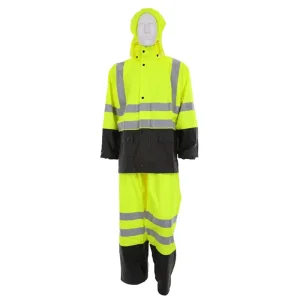
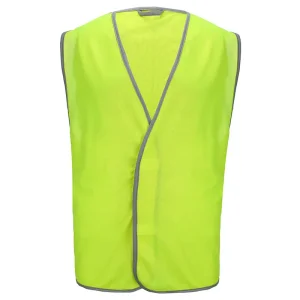
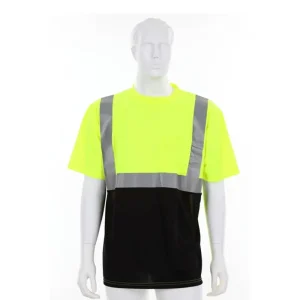
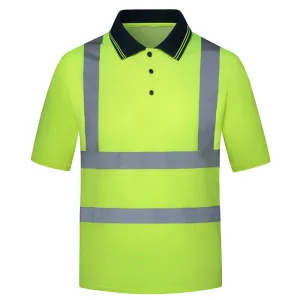
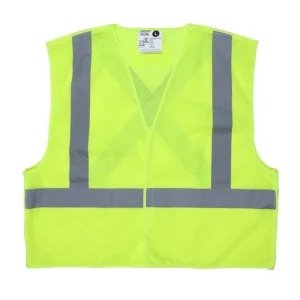
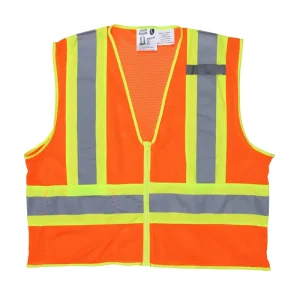
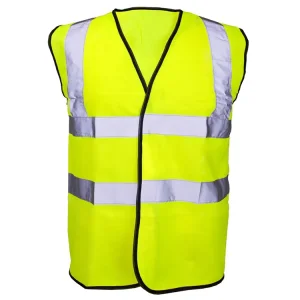
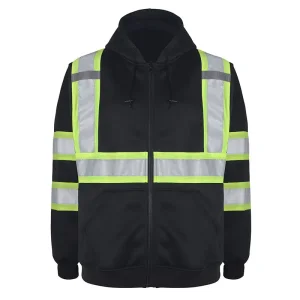
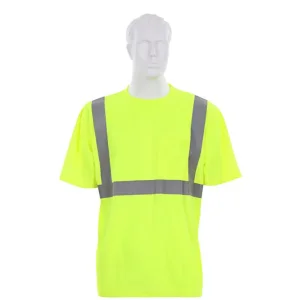
Browse our expanded line of safety vests, work shirts, weather-resistant jackets, and high-visibility accessories engineered to ISO and ANSI compliance metrics.
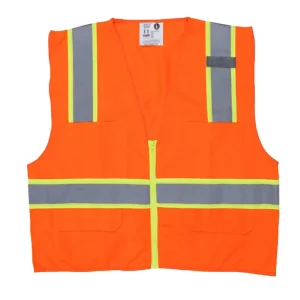
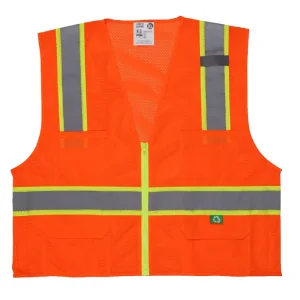
How Yongkang Wow Safety Products simplifies global import clearance, customs documentation, and international safety certification compliance for enterprise importers.
Every production batch includes comprehensive third-party test reports issued by accredited laboratories (such as SGS, TÜV Rheinland, or SATRA). Certificates verify compliance with ANSI/ISEA 107-2020, EN ISO 20471, OEKO-TEX® Standard 100 (for harmful chemical safety), and REACH compliance for European imports.
Navigating HS Code classifications (e.g., HS 6114.30 for knitted synthetic apparel or HS 6211.33 for woven protective garments) requires expert logistics coordination. Our international trade department assists buyers with Certificate of Origin (Form A, Form E, RCEP) issuance to optimize duty tariffs across global entry ports.
Expert technical answers to high-intent questions asked by safety Directors, tender contractors, and global apparel distributors.