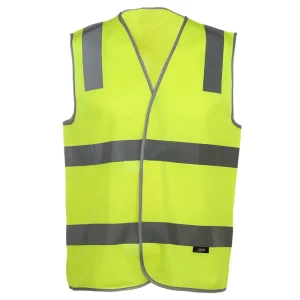
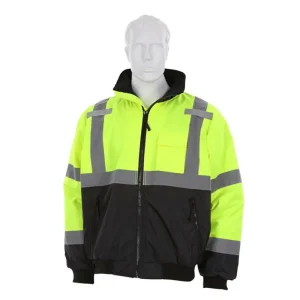
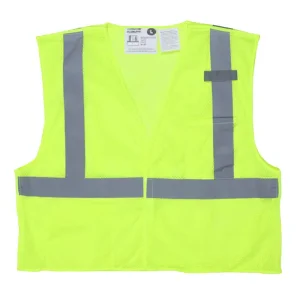
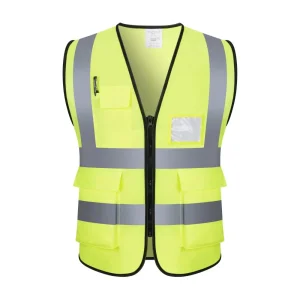
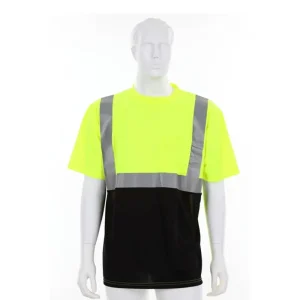
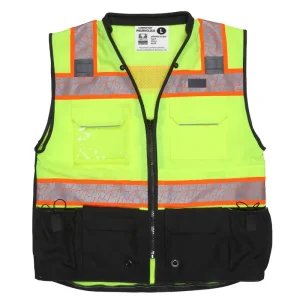
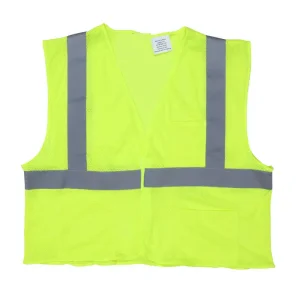
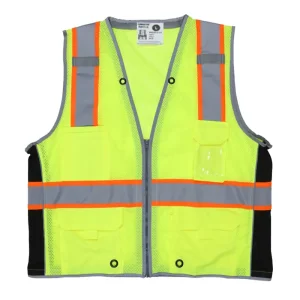
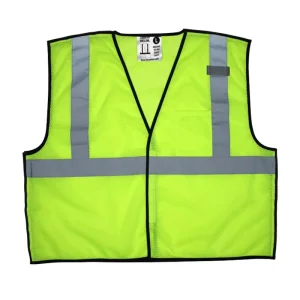
Factory-direct high-visibility gear engineered for severe meteorological and industrial operational conditions.
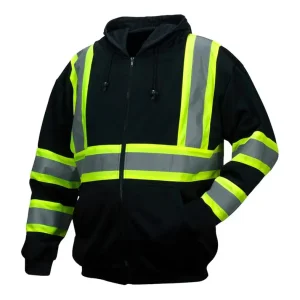
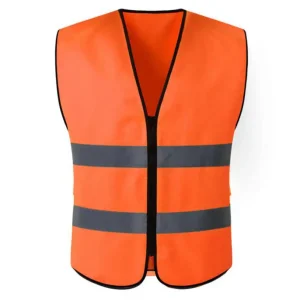
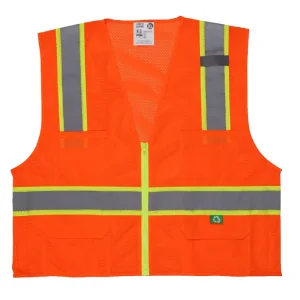
Operating from Yongkang, Jinhua City, Zhejiang — powering global safety garment distribution with audited technical excellence.
In the contemporary industrial safety domain, the global demand for high-visibility rainwear has transcended basic moisture protection. Today’s industrial enterprises, municipal utility providers, maritime operators, and infrastructure contractors require multi-hazard protective rain suits that integrate absolute hydrostatic waterproofing, high-performance breathability, and certified retroreflective properties under severe outdoor illumination conditions.
As a premier manufacturer based in Zhejiang, China, Yongkang Wow Safety Products Co., Ltd. serves as a direct factory engine for global B2B procurement leaders. By orchestrating advanced textile lamination (TPU, PU, PVC), micro-prismatic glass bead technology, and computer-automated seam-sealing sealing lines, Chinese manufacturing hubs provide unmatched cost-to-performance ratios without compromising global regulatory compliance such as ANSI/ISEA 107-2020 Type R Class 3 and EN ISO 20471:2013+A1:2016.
Market dynamics, regulatory drivers, and corporate risk management shaping high-visibility protective apparel demand.
Global regulatory enforcement by OSHA (USA), the European Agency for Safety and Health at Work (EU-OSHA), and Safe Work Australia mandate certified Class 3 high-visibility rain suits for personnel operating near heavy machinery or moving traffic exceeding 50 mph (80 km/h) in low-visibility precipitation events.
The industrial market has shifted from heavy, non-breathable rubberized PVC coatings toward lightweight, high-tenacity 300D Oxford Polyester laminated with hydrophobic Thermoplastic Polyurethane (TPU) membranes, drastically improving worker ergonomics and heat dissipation during intense physical exertion.
Direct integration with Chinese OEM manufacturing facilities allows corporate procurement divisions and safety distributors to bypass multiple intermediary markup layers, capturing superior unit pricing, custom dye lot matching, and tailored branding options on bulk orders.
Dissecting the physics of retroreflectivity, water column resistance, and breathability rating matrices.
| Performance Parameter | Standard Entry Level (PVC / Polyester) | Advanced Industrial (PU Coating) | Next-Gen Wow Safety Whitepaper Spec (TPU Membrane) |
|---|---|---|---|
| Hydrostatic Head Rating (ISO 811) | < 3,000 mm H₂O | 5,000 mm – 8,000 mm H₂O | > 10,000 mm H₂O (Storm-Proof) |
| Breathability Index (RET / ISO 11092) | Non-breathable (RET > 40) | Moderate (RET 15 - 25) | Ultra-Breathable (RET < 10 / WVP > 5000g/m²/24h) |
| Retroreflective Coefficient (R') | 330 cd/(lx·m²) (Class 2 Spec) | 400 cd/(lx·m²) (Standard Tape) | > 500 cd/(lx·m²) (Micro-Prismatic Premium) |
| Cold-Flex Crack Resistance | Cracks below -5°C | Durable to -15°C | Sub-Zero Flex to -35°C (Extreme Climates) |
| Industrial Wash Durability | 15 - 25 Cycles @ 40°C | 25 - 35 Cycles @ 60°C | 50+ Certified Wash Cycles (EN ISO 20471) |
Traditional glass bead retroreflective tapes reflect light back to source via refraction. Micro-prismatic tapes utilize microscopic acrylic prisms molded into synthetic sheeting, yielding up to 80% higher light return efficiency during oblique angle illumination and torrential rainfall.
Stitching fabric creates thousands of needle punctures per garment. China’s advanced rain suit factories employ high-frequency hot-air seam taping machines using three-layer TPU sealing tapes, completely eliminating water ingress across armholes, crotch seams, and hood joins.
Engineered solutions customized for distinct global industry sectors, climate profiles, and operational hazards.
Nighttime road paving and highway incident response demand maximum Class 3 visual signatures. Rain suits for this sector integrate 360° retroreflective banding across torso, sleeves, and legs, ensuring full 1,000-foot vehicular recognition even during heavy downpours.
Harsh marine environments expose garments to saltwater corrosion, high winds, and petroleum splatter. Specialized rain suits use heavy-duty 300D polyester with anti-static treatments, flame-resistant coatings (FR), and storm cuffs with internal neoprene seals.
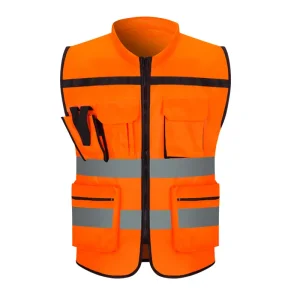
First responders and utility repair crews require high-conspicuity fluorescent lime-yellow or orange-red rainwear featuring multi-functional radio pockets, mic tabs, detachable storm hoods, and pass-through pockets for easy tool belt access.
Pioneering smart safety apparel, sustainable bio-polymers, and active illumination integration.
Transitioning base fabrics to 100% GRS (Global Recycled Standard) certified rPET derived from ocean-bound plastics, drastically reducing carbon footprint while maintaining high tensile strength.
Incorporating flexible, washable electroluminescent wire loops into rain suit shoulder seam channels to provide self-powered active visibility in zero-ambient-light environments.
Replacing petroleum-derived polyurethane laminates with plant-based bio-TPU derived from non-food agricultural waste, offering 100% industrial biodegradability at end-of-life.
Deploying embedded IoT sensor patches capable of monitoring ambient gas exposure, body temperature, and rain saturation metrics relayed directly to job site safety control hubs.
Seamless supply chain integration for international brands, wholesalers, and government tenders.
Our Yongkang R&D department provides 48-hour digital tech-pack creation and rapid physical sample dispatch within 5-7 working days, accommodating custom pocket configurations, Pantone-matched fluo colors, and private labeling.
Every manufacturing lot undergoes in-house batch testing prior to container loading, ensuring full compliance with international safety standard thresholds.
Extensive experience handling international shipping protocols, customs clearance documentation, and multi-market certifications.
Technical and commercial clarity for industrial safety apparel buyers and procurement specialists.
ANSI Class 2 apparel is designed for workers in activities where traffic speeds do not exceed 25 mph (40 km/h) and background environments are uncomplicated. ANSI Class 3 garments provide the highest level of conspicuity, requiring full body coverage including sleeves or trouser legs, designed for hazardous weather conditions and traffic speeds exceeding 50 mph (80 km/h). Class 3 rain suits mandate a minimum of 1,240 square inches of background fabric and 310 square inches of retroreflective striping.
All seam joints are double-stitched and subsequently covered on the interior fabric side with a thermal-bonded polyurethane or TPU seam sealing tape applied by automated hot-air sealing machinery at controlled pressure and temperature. Each batch is sampled and subjected to a hydrostatic pressure tester to guarantee seam strength under 10,000 mm water column pressure.
Yes. However, European (EN ISO 20471) and American (ANSI 107) standards restrict the maximum area of non-compliant background fabric (such as dark logos). We assist buyers in placing screen-printed or heat-transferred logos in certified designated logo zones (such as pocket flaps or designated back panels) without reducing the minimum required fluorescent surface area.
Thermoplastic Polyurethane (TPU) lamination is vastly superior to traditional PVC for freezing conditions. While PVC becomes brittle and cracks below 0°C, TPU retains high flexibility, tear strength, and soft hand-feel down to -35°C, making it the preferred material for winter storm utility work and cold-storage operations.
Standard OEM production lead time is typically 30 to 45 days following sample approval and deposit confirmation. For stock items or recurring catalog models, lead times can be compressed to 15-20 days. Sample production takes approximately 5 to 7 working days.
Explore our full wholesale product catalog designed for maximum safety across industrial applications.