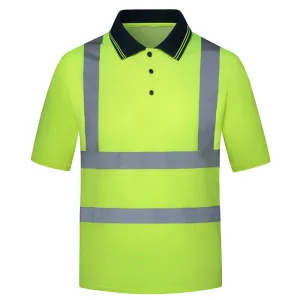
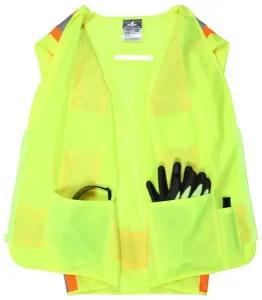
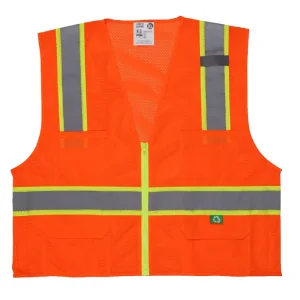
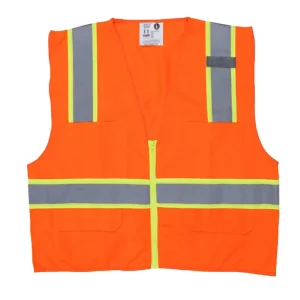
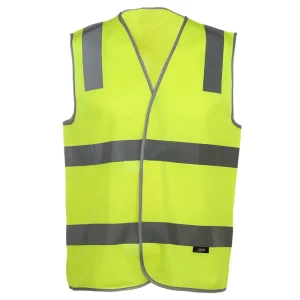
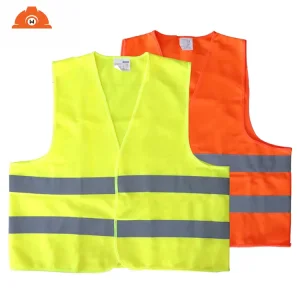
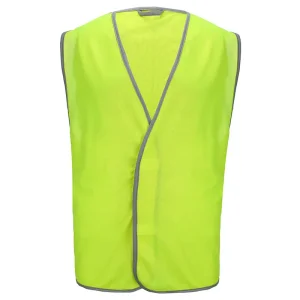
Precision-engineered high visibility safety apparel manufactured in compliance with strict international safety standards.
Empowering global B2B procurement with proven capacity, rapid turnaround, and uncompromised compliance.
In modern industrial occupational safety, high-visibility (hi-vis) protective apparel serves as the primary barrier against workplace fatalities caused by low-light conditions and heavy machinery collisions. However, when work environments drop below freezing temperatures—such as in cold-chain logistics, sub-zero infrastructure construction, municipal winter road clearing, and offshore polar installations—standard lightweight safety vests fall drastically short. This technical whitepaper delves into the engineering, manufacturing physics, material science, and global compliance frameworks surrounding Insulated Reflective Vests sourced from leading OEM/ODM suppliers in China.
Procurement teams, safety engineers, and global B2B distributors searching for reliable China Insulated Reflective Vest Suppliers & Suppliers require more than generic product catalogs. Modern procurement strategies necessitate deep visibility into thermal insulation metrics (measured in CLO values and thermal resistance R-values), retroreflective photometric performance (measured in cd/lx/m² under ASTM and EN standards), fabric hydrostatic head capabilities, and structural garment durability after multiple industrial laundering cycles.
Core Procurement Insight: Sourcing high-performance thermal safety vests from China's industrial cluster (specifically Yongkang and Jinhua City, Zhejiang) provides enterprise buyers with an optimized ratio of manufacturing agility, custom compliance engineering (ANSI/ISEA 107-2020 & EN ISO 20471), and cost efficiency derived from fully integrated raw-material ecosystems.
An effective insulated reflective vest must perform two distinct, non-negotiable functions simultaneously: photopic/scotopic optical warning and thermodynamic thermal retention. Light reflectivity is governed by micro-prismatic optical lenses or high-index glass bead technology embedded onto retroreflective films. Thermodynamic insulation relies on trapped dead air pockets within multi-layered synthetic fills (such as fleece, quilted polyfill, or advanced phase change material linings) that minimize conductive and convective thermal transfer without restricting ergonomic mobility.
Exploring next-generation thermal fabrics, micro-prismatic optics, active heating integration, and eco-friendly recycled PET materials.
Integration of Phase Change Materials (PCM) and graphene thermal conductivity prints that distribute core body heat evenly, eliminating hot/cold spots while maintaining ultra-lightweight profiles.
Low-voltage (5V/7.4V USB power bank compatible) flexible carbon fiber heating elements embedded in front chest and upper back panels for extreme low-temperature protection.
Adoption of Global Recycled Standard (GRS) 100% rPET (recycled polyethylene terephthalate) shell and insulation, significantly lowering corporate scope 3 carbon footprints.
In cold sub-zero outdoor applications, moisture condensation and frost formation on reflective strips can severely degrade photometric performance. The table below highlights key performance differences between standard glass-bead technology and advanced micro-prismatic films utilized by top Chinese manufacturers.
| Performance Metric | Standard Glass-Bead Tape | Micro-Prismatic Technology | Engineering Recommendation |
|---|---|---|---|
| Initial Retroreflectivity ($R_A$) | 330 – 400 cd/(lx·m²) | 500 – 700+ cd/(lx·m²) | Micro-Prismatic for extreme visibility |
| Wet & Cold Performance | Reflectivity drops 30-50% when wet/frosted | Maintains > 80% retroreflection under rain/frost | Essential for polar/winter maritime use |
| Abrasion & Flex Resistance | Moderate wear after 25 wash cycles | High durability, 50+ industrial wash cycles | Recommended for heavy construction workwear |
| Sub-Zero Flexibility (-20°C) | Prone to cracking under sharp bending | Cold-crack treated polymer backing | Mandatory for freezer warehouses & mining |
Tailoring insulated hi-vis garments to strict operational requirements across diverse global industrial environments.
Operatives working in automated freezer distribution centers face constant ambient temperatures between -18°C and -30°C. Standard bulky winter coats impair agility inside narrow aisles. Insulated safety vests provide optimal core torso heat retention while keeping arms unencumbered for rapid barcode scanning and forklift operation. Integrated mic tabs and oversized zippered pockets accommodate industrial handheld terminals.
Road crews performing emergency asphalt repairs or snowplow operations at night work in close proximity to high-speed vehicular traffic. ANSI/ISEA Class 2 or Class 3 certified insulated vests utilizing fluorescent yellow-green or orange-red base fabrics paired with 360° reflective striping ensure early detection by motorists at distances exceeding 1,000 feet.
Rig technicians and deck crews operating in North Sea or Arctic maritime sectors encounter gale-force freezing winds and saltwater spray. Insulated vests for marine application incorporate heavy-duty 600D Oxford shells with water-repellent (DWR) surface treatments, corrosion-resistant resin zippers, and storm flaps to prevent moisture ingress.
Paramedics, traffic police, and search-and-rescue teams operating during winter blizzards require rapid identification and quick-donning garments. Customized insulated vests feature breakaway 5-point velcro closures to prevent entanglement in machinery or wreckage, combined with radio harness loops and badge holders.
Why Yongkang and Jinhua City represent the strategic core for global B2B safety clothing manufacturing.
The global protective apparel supply chain has faced unprecedented disruption in recent years. In response, Chinese high-visibility clothing manufacturers—anchored in the manufacturing hub of Yongkang Wow Safety Products Co., Ltd. in Jinhua City, Zhejiang—have evolved advanced supply chain resilience models. Sourcing directly from premier Chinese suppliers offers distinct structural and economic advantages:
Zhejiang province houses complete industrial eco-clusters for polyester yarn spinning, fluorescent dyeing, PU coating lamination, and retroreflective film manufacturing within a 50-mile radius. This eliminates multi-tier international transit delays for raw components.
Modern 6,000+ m² facilities utilize automated CAD pattern cutters, computer-controlled laser quilting machines for thermal insulation filling, and spectrophotometers to verify fluorescent chromaticity coordinates before batch production.
From small-batch specialized tenders (500 units) to large-scale retail programs (100,000+ units), Chinese production lines maintain scalable capacity with rapid lead times (sample turnaround in 3-5 days).
Direct sourcing from China manufacturers bypasses multi-tier export brokers, trading intermediaries, and regional markup layers. As illustrated in procurement analyses, factory-direct partnership reduces overall unit procurement costs by 25% to 40% while ensuring direct engineering oversight and batch-level quality control testing.
Quality Assurance Guarantee: Every production lot undergoes rigorous in-house lab testing, including hydrostatic head water resistance testing (ISO 811), retroreflectivity measurement post-wash (ISO 6330), tear strength testing (ISO 13937), and colorfastness evaluations under daylight exposure.
Navigating North American, European, and Australian high-visibility and thermal safety certifications.
To ensure smooth customs clearance, legal compliance, and worker protection, insulated reflective vests must strictly adhere to the governing safety standards of the target export market. Reputable Chinese suppliers provide full third-party test reports from accredited bodies such as SGS, TÜV Rheinland, UL, and SATRA.
| Standard Designation | Geographic Region | Core Focus & Requirements | Garment Design Criteria |
|---|---|---|---|
| ANSI/ISEA 107-2020 | North America (USA) | High-Visibility Safety Apparel (HVSA) Class 1, 2, and 3 | Minimum background fabric area ($0.77 m^2$ for Class 2) & reflective tape area ($0.13 m^2$) |
| EN ISO 20471:2013+A1 | European Union / UK (UKCA) | High visibility warning clothing for professional use | Strict photometric chromaticity box (x, y coordinates) and retroreflection post 50 washes |
| EN 342 / EN 14058 | European Union | Protection against cold environments (< -5°C / -5°C to +10°C) | Thermal insulation $I_{cler}$, air permeability (Class 1-3), and water penetration resistance |
| CSA Z96-15 | Canada | High-visibility safety apparel for industrial workers | Mandatory "X" back reflective configuration pattern for rear warning signal |
| AS/NZS 4602.1:2011 | Australia / New Zealand | High visibility safety garments for high risk applications | Class D/N (Day/Night use) requirements, UV sun protection factor UPF 50+ fabrics |
End-to-end customization, private labeling, and global logistics coordination.
Precision silk-screen printing, thermal transfer printing, and direct embroidery for corporate logos without violating certified fluorescent area minimums.
Graded patterns engineered specifically for North American (US Sizing), European (EU Slim Fit), and Asian body dimensions, ensuring outer fit over heavy winter parkas.
Complete logistics management including FOB, CIF, DDP (Delivered Duty Paid) shipping options by ocean freight, air express, or trans-Eurasian rail corridors.
Answers to common B2B technical queries regarding insulated safety vest manufacturing, compliance, and ordering.
A standard safety vest is typically constructed from lightweight single-layer polyester mesh or solid fabric designed strictly for high visibility during warm or moderate temperatures. An insulated reflective vest incorporates an internal thermal layer (such as quilted polyfill fleece, down-alternative, or graphene lining) combined with a windproof/waterproof outer shell (e.g., 300D Oxford with PU coating), providing certified thermal insulation against sub-zero cold while maintaining ANSI/EN ISO high-visibility compliance.
Leading Chinese manufacturers like Wow Safety Products use high-grade glass-bead or micro-prismatic reflective tapes certified for 25 to 50 industrial wash cycles under ISO 6330 standards. The tapes are hot-melt heat transfer applied or double-needle lock-stitched using UV-resistant polyester thread, preventing delamination and ensuring retroreflectivity remains above the mandatory 100 cd/(lx·m²) threshold even after prolonged laundering.
Yes. OEM factories routinely customize reflective strip layouts to meet specific regional requirements, such as the mandatory "X" pattern on the back required by CSA Z96 in Canada, or additional horizontal body bands required by AS/NZS standards in Australia. Custom pocket layouts, clear ID badges, and mic tabs can also be integrated into the design.
Standard Minimum Order Quantities (MOQs) for factory-direct insulated safety vests start at 500 to 1,000 pieces per color/style. Sample prototyping typically takes 3 to 5 business days, while full mass production lead times range from 20 to 35 days depending on material customization and order volume.
Higher CLO ratings require thicker insulation fill layers, which reduce the inner volume of the vest. Professional suppliers automatically adjust technical sizing patterns (grading up by 1.5 to 2 inches in chest width) so workers can comfortably wear the insulated vest over heavy base layers or thermal sweaters without restricting movement.
Explore our full line of safety polos, multi-norm reflective vests, eco-friendly workwear, and cooling accessories.