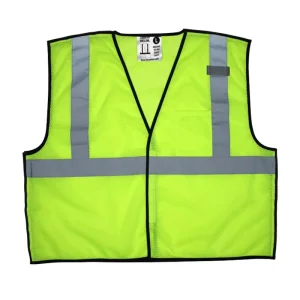
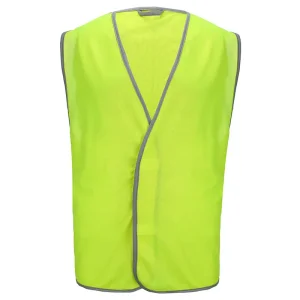
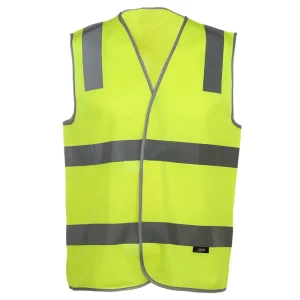
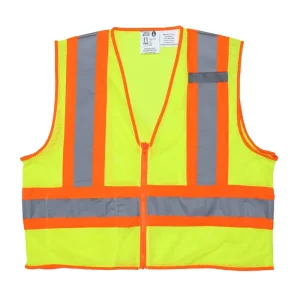
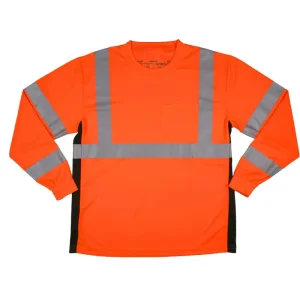
Certified to ANSI/ISEA 107-2025 and EN ISO 20471 standards, designed for extreme durability, ergonomic mobility, and optimal photometric retroreflectivity.
Macroeconomic forces, stringent workplace occupational health mandates, and rapid infrastructure buildouts are re-shaping the global demand for high-visibility PPE equipment.
The global high-visibility clothing market is undergoing a structural paradigm shift. Driven by expanding global infrastructure initiatives, stringent enforcement of occupational health and safety (OHS) legislation, and elevated safety protocols across logistics and emergency management sectors, the market size is projected to expand from USD 2.85 Billion in 2024 to USD 4.42 Billion by 2032, maintaining a robust Compound Annual Growth Rate (CAGR) of 5.6%.
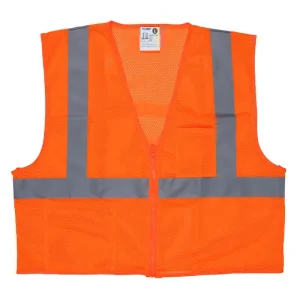
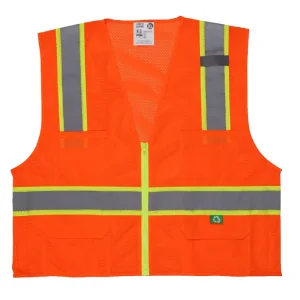
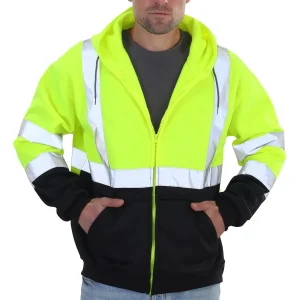
Highway expansion, railway modernization, and mega-urban developments necessitate ANSI Class 2 and Class 3 high-reflectivity vests. Workers exposed to high-speed vehicular traffic require multi-angle 360° retroreflective warning systems to prevent workplace struck-by casualties.
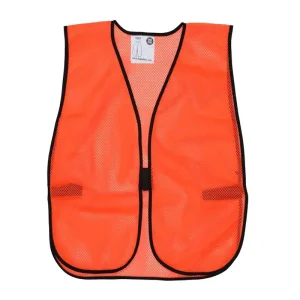
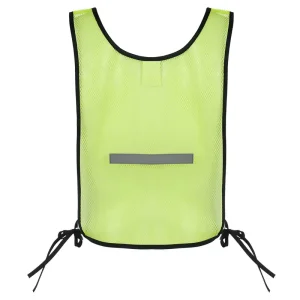
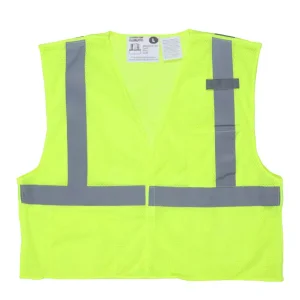
The rapid proliferation of automated fulfillment centers, cross-docking hubs, and container ports has scaled the adoption of lightweight, highly breathable fluorescent mesh safety vests with breakaway safety mechanisms to mitigate mechanical snagging risks.
First responders, traffic police, and municipal sanitation crews require specialized multi-pocket utility reflective vests configured with dielectric zippers, radio clips, and clear ID badges to facilitate seamless field communication while ensuring compliance.
China accounts for over 70% of the world’s high-visibility garment manufacturing capacity. What structural factors drive this global dominance?
The enterprise competitive advantage of sourcing reflective safety apparel from specialized Chinese manufacturing hubs—most notably centered in Zhejiang (Yongkang, Jinhua, Taizhou) and Fujian provinces—is rooted in unmatched industrial cluster density. Unlike isolated manufacturing facilities in emerging markets, Chinese manufacturers operate within fully integrated 30-kilometer supply chain ecosystems.
From raw virgin or GRS-certified recycled PET polymer chips to high-speed yarn spinning, warp-knitting, fluorescent dyeing, and retroreflective bead coating, every processing stage is physically co-located. This eliminates multi-tier international transit delays, guarantees batch-to-batch colorimetric consistency, and lowers raw material costs by 18-25% relative to non-clustered supply bases.
Modern Chinese high-reflective vest factories utilize multi-ply computer-aided manufacturing (CAM) laser cutting beds, automated pocket-sewing workstations, and ultrasonic reflective stripe bonding machines. High capital expenditure in factory automation maximizes yield per square meter, ensures precise dimensional tolerance (±2mm), and drastically reduces sewing defect rates.
For global brands participating in municipal or corporate tenders, sample velocity determines bid success. Leading Chinese factories maintain vast inventories of certified fluorescent base fabrics (lime-yellow, orange-red, high-vis pink) and standard retroreflective tapes, enabling custom sample dispatch within 48 to 72 hours.
With facilities operating over 10,000 m² and staffing 150+ skilled garment technicians, top-tier factories effortlessly scale monthly production from 50,000 units during standard procurement cycles to over 1,500,000 units during peak governmental safety equipment contract rollouts.
A detailed technical comparison of retroreflective optics, fabric weave engineering, and eco-friendly polymer innovations.
Understanding the physics of optical retroreflection is critical for safety officers and enterprise buyers. High-visibility vests rely on two distinct optical components: a fluorescent base fabric that converts invisible ultraviolet radiation into visible light during daytime, and a retroreflective tape mechanism that bounces vehicle headlight beam rays directly back to the driver’s eyes at night.
| Technology Category | Microscopic Mechanism | Photometric Level ($R_A$) | Wet Performance Rating | Primary Industrial Application |
|---|---|---|---|---|
| Glass Bead Retroreflective Tape | High-index micro glass spheres embedded in metallic polymer film | 330 – 450 cd/lx/m² | Moderate (Reflectivity drops when wet unless sealed) | Standard ANSI Class 2 Vests, Warehousing, General Utility |
| Micro-Prismatic Vinyl Film | Precision-molded retroreflective micro-prisms (cube-corner geometry) | 500 – 900+ cd/lx/m² | Superior (Unaffected by surface water film) | Severe Weather, Off-Shore Oil Rigs, High-Speed Highway Maintenance |
| Flame-Resistant (FR) Reflective Tape | Aramid base ribbon combined with heat-resistant glass bead retroreflectors | 350 – 500 cd/lx/m² | High Thermal & Chemical Wash Resistance | Petrochemical Refineries, Arc Flash Environments, Firefighting Support |
| Active LED-Integrated Strips | Electroluminescent / Surface-mounted mini LED circuitry powered by Li-ion | Active Illumination + Passive Reflection | IP65 Waterproof Encapsulation Required | Ultra-Low-Light Tunnels, Night Construction, Zero-Ambient Signal Operations |
Global ESG mandates have accelerated demand for sustainable high-vis workwear. Leading Chinese factories manufacture vests utilizing 100% Post-Consumer Recycled (PCR) polyester derived from plastic bottle waste certified under the Global Recycled Standard (GRS). These eco-fabrics deliver identical tensile strength, color fastness, and luminance indices as virgin polyester while reducing carbon footprints by up to 45%.
In hazardous environments containing combustible dust or volatile gases (ATEX zones), standard synthetic vests can generate electrostatic discharge sparks. High-tier Chinese manufacturers weave conductive carbon core yarns into modified modacrylic/cotton blends, yielding certified anti-static (EN 1149-5) and flame-resistant (NFPA 2112 / EN ISO 11612) safety vests.
Procurement managers must audit products against regional legal benchmarks to protect workers and avoid costly import rejections.
A high-visibility safety vest is an essential piece of life-saving Personal Protective Equipment (PPE). Substandard products failing photometric or colorimetric tests pose catastrophic risks. Reputable Chinese factories maintain strict in-house laboratory testing procedures matched by international third-party certification (SGS, TÜV Rheinland, SATRA, UL).
Defines performance garments based on workplace hazard exposure: Type O (Off-road), Type R (Roadway & traffic), and Type P (Public safety). Vests are categorized into Class 1, Class 2, or Class 3 depending on the minimum square meters of fluorescent background fabric and retroreflective trim incorporated into the design.
Harmonized European standard dictating three performance classes. Requires strict chromaticity coordinates ($x, y$) for fluorescent yellow, orange-red, and red base materials before and after artificial xenon light aging tests, alongside rigorous colorfastness to rubbing, perspiration, and industrial laundering.
Specifies high-visibility materials for outdoor traffic control applications in Australasia. Mandates ultra-high UV durability tests to prevent premature fabric fading under intense Southern Hemisphere solar radiation profiles.
How global buyers can mitigate procurement risks, verify factory credentials, and execute seamless OEM/ODM customization contracts.
Before issuing Purchase Orders (PO), international buyers should demand verified factory audit reports:
When submitting Request for Quotes (RFQs), provide clear tech packs detailing:
Expert answers to complex queries raised by safety directors, supply chain executives, and wholesale distributors.
The fundamental difference lies in minimum required area of retroreflective trim and fluorescent background fabric, tied directly to worker vehicle speed exposure. ANSI Class 2 vests require a minimum of 775 sq. inches of background fabric and 201 sq. inches of reflective tape, designed for workers near traffic traveling above 25 mph. ANSI Class 3 garments require 1,240 sq. inches of background fabric and 310 sq. inches of reflective tape, requiring full sleeve coverage to ensure silhouette definition for workers exposed to traffic exceeding 50 mph in extreme risk environments.
Fluorescent lime-yellow operates at peak human visual sensitivity wavelength (~555 nanometers) during daylight hours, rendering it more visually conspicuous against complex urban, industrial, and concrete construction backgrounds. However, fluorescent orange-red provides superior color contrast in natural green foliage, forestry, and rural road environments. Many highway authorities specify two-tone vests (lime base with orange borders) to maximize contrast versatility across all backdrops.
Adding large custom company logos onto a safety vest can reduce the net surface area of certified fluorescent background fabric. Experienced Chinese manufacturers conduct digital layout calculations prior to printing to ensure custom logos do not encroach into mandatory fluorescent print-exclusion zones. Furthermore, breathable heat-transfer vinyl or water-based screen printing inks are utilized to maintain flexibility, breathability, and wash durability.
Standard factory MOQs for custom-manufactured reflective vests generally range from 500 to 1,000 units per color/style when using stock-dyed fabric. For fully custom Pantone-matched fluorescent fabrics or specialized FR treatments, MOQs start at 3,000 units. Sample production takes 3 to 7 business days, while bulk mass production lead times typically range from 20 to 35 calendar days depending on order complexity and shipping terms (FOB, CIF, DDP).
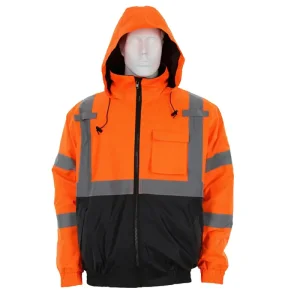
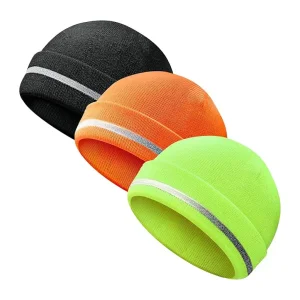
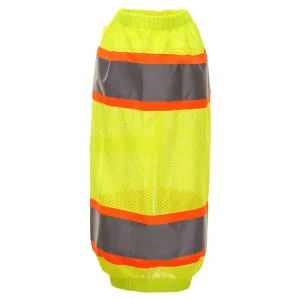
Browse specialized outerwear, winterized jackets, leg gaiters, and reflective safety accessories manufactured direct from our Chinese facilities.