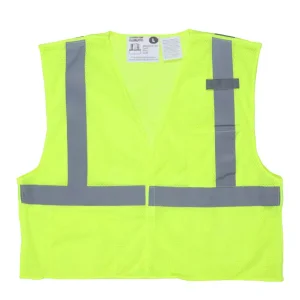
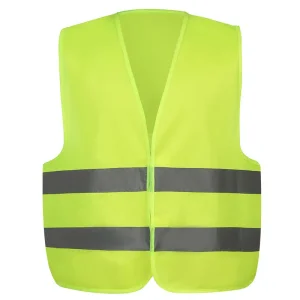
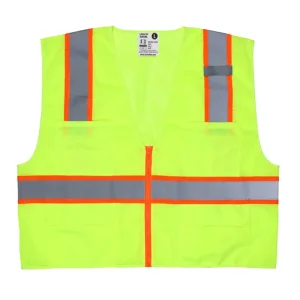
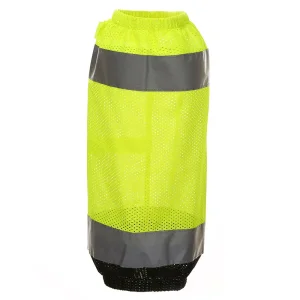
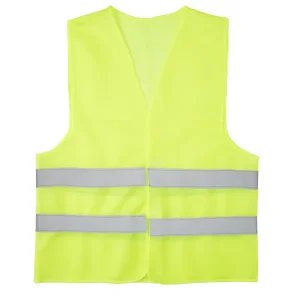
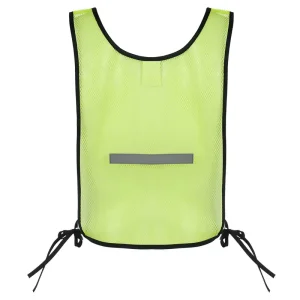
Explore our precision-engineered high-visibility products designed for industrial compliance, extreme durability, and ergonomic comfort.
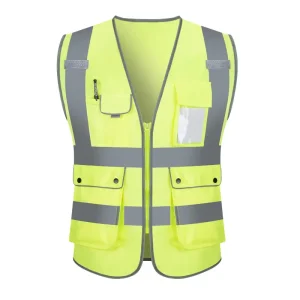
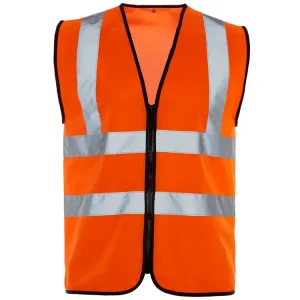
How modern industrial safety standards and material science are redefining the role of softshell safety apparel in global enterprise supply chains.
As global infrastructure projects expand across complex environmental zones, enterprise health and safety (EHS) managers face increasing pressure to optimize Total Cost of Ownership (TCO) without compromising regulatory compliance. High-visibility softshell vests produced by advanced Chinese manufacturing hubs represent a critical intersection of technical apparel engineering and cost efficiency. By utilizing automated lamination, micro-prismatic glass bead technology, and recycled polymer substrates, leading Chinese factories are setting new benchmarks for workwear longevity and worker safety performance.
A deep dive into 3-layer thermal lamination, breathability physics, and retroreflective glass bead optics.
High-density 92% Polyester woven with 8% Elastane/Spandex (280–320 g/m²). Engineered with a Durable Water Repellent (DWR) C6/PFC-free coating to resist oil, dirt, and hydrostatic liquid pressure up to 8,000mm H₂O.
Monolithic Thermoplastic Polyurethane (TPU) membrane featuring micro-pores smaller than liquid water droplets but larger than water vapor molecules, providing breathability ratings exceeding 5,000 g/m²/24h (RET < 12).
100% Micro-polar fleece (140–180 g/m²) treated with anti-pilling technology. Traps dead air molecules to deliver exceptional thermal insulation while actively wicking internal body moisture away from the skin.
Certified retroreflective heat-transfer tape (e.g., 3M™ Scotchlite™ 8712 or proprietary glass bead alternatives) delivering retroreflection values > 330 cd/(lx·m²) for maximum 360-degree night-time safety visual range.
Navigating complex international safety garment standards across North American, European, and Asia-Pacific industrial sectors.
| Standard | Garment Class | Background Fabric (Min) | Reflective Tape (Min) | Primary Industrial Use Case |
|---|---|---|---|---|
| ANSI/ISEA 107-2020 | Type R, Class 2 | 0.50 m² (775 in²) | 0.13 m² (201 in²) | Construction, Traffic Control, Airport Ground Staff |
| ANSI/ISEA 107-2020 | Type R, Class 3 | 0.80 m² (1240 in²) | 0.20 m² (310 in²) | High-Speed Highway Work, Emergency Response |
| EN ISO 20471 | Class 2 Vest | 0.50 m² | 0.13 m² | Logistics, Municipal Maintenance, Railway Operations |
| EN ISO 20471 | Class 3 (Combined) | 0.80 m² | 0.20 m² | Severe Weather & Complex Cold-Zone Work Sites |
How modern Chinese textile OEMs utilize digital workflows, automated cutting, and vertical integration to optimize lead times and scale capacity.
Computer-controlled laser cutting tables reduce fabric waste by up to 14% while achieving precision accuracy within ±0.5mm across multi-layered softshell panels. This guarantees seamless fit consistency across all size ranges from S to 7XL.
To prevent water entry through needle holes, automated seam-sealing machines apply hot-melt polyurethane seam tape along all critical stitching zones, enabling garments to achieve zero-leakage hydrostatic pressure testing.
Manufacturing Execution Systems (MES) digitize every production line stage. Enterprise buyers gain real-time transparency into raw material dyeing, assembly status, inline inspection (AQL 1.5/4.0 standard), and shipment timelines.
Located in Zhejiang and Jiangsu textile hubs, Chinese manufacturers benefit from ultra-localized raw material supply chains—sourcing yarn, TPU laminates, zippers, retroreflective tapes, and hardware within a 50km radius.
Tailoring softshell safety vest specifications to the unique environmental demands of modern workplace sectors.
Environment: High vehicular traffic speed, dust, abrasion, wind exposure.
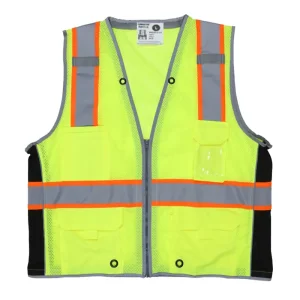
Garment Needs: ANSI Class 2/3 Fluorescent Yellow-Green with segmented stretch reflective tape, heavy-duty resin zippers, multi-utility radio pockets, and reinforced shoulder seams.
Environment: Refrigerated distribution hubs (-5°C to 5°C), rapid forklift movement.
Garment Needs: High thermal insulation fleece backing, flexible softshell shell allowing unrestricted arm movement, mic tabs, clear badge holder inserts, and stain-resistant dark lower accents.
Environment: Saltwater spray, high wind, humidity, chemical mist.
Garment Needs: Membrane hydrostatic rating > 10,000mm, corrosion-resistant nylon zippers, DWR finish, optional Flame-Resistant (FR) outer shell treatment, and high-contrast orange background.
Emerging innovations in circular economy fabrics, smart active illumination, and ergonomic modularity.
Global corporate ESG mandates are driving demand for Global Recycled Standard (GRS) certified rPET softshell fabrics derived from recycled post-consumer plastic bottles. Chinese factories are pioneering low-carbon dyeing processes that reduce water consumption by 40% while maintaining radiant color fastness.
Passive retroreflective tape relies on external vehicle headlights to reflect light. Next-generation softshell vests incorporate ultra-thin, flexible LED light strips powered by rechargeable micro-lithium batteries, offering active visual safety in pitch-black environments without needing direct light sources.
Expert guidance on minimum order quantities, custom branding, compliance lab test reports, and factory auditing.
Standard factory MOQs typically start at 500 to 1,000 units per colorway for customized fabric weights, corporate color-blocking, and specialized brand trims. For stock fabric formulations (e.g., standard Hi-Vis Yellow or Hi-Vis Orange), lower MOQs of 200–300 units can often be accommodated.
Direct embroidery can puncture the inner TPU waterproof membrane. To maintain high waterproof ratings, enterprise suppliers utilize heat-transfer vinyl graphics or seam-sealed embroidered patches. Furthermore, logo placement must not cover more than the maximum allowable square area of fluorescent background fabric to preserve compliance.
Reputable suppliers provide third-party test reports from accredited bodies (such as SGS, Intertek, or TÜV Rheinland) verifying chromaticity, retroreflectivity before and after wash cycles, hydrostatic pressure, water vapor permeability, and tensile strength according to ANSI/ISEA 107 or EN ISO 20471 standards.
Softshell vests offer significantly greater breathability, flexibility, and dynamic range of motion due to spandex integration, making them ideal for active physical work in moderate cold. 300D Oxford jackets offer higher abrasion resistance and heavy insulation for extreme static cold or severe rain.
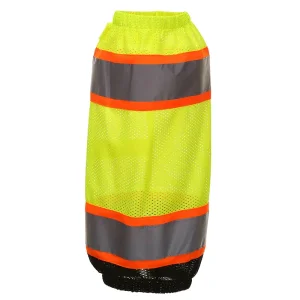
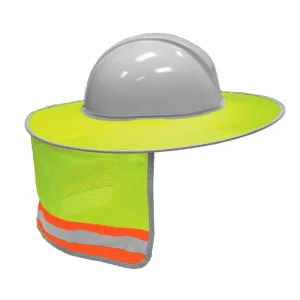
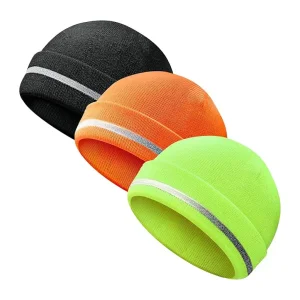
Discover our extended line of high-visibility safety vests, leg gaiters, beanies, and compliant workwear accessories.