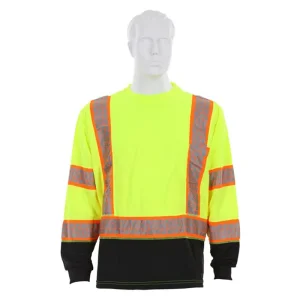
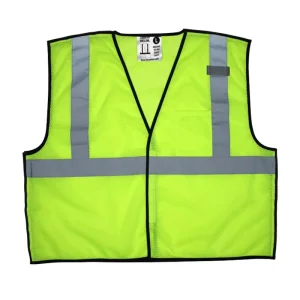
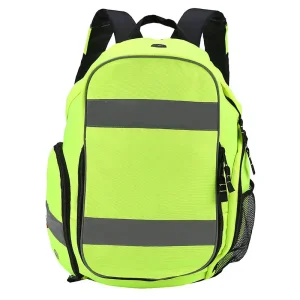
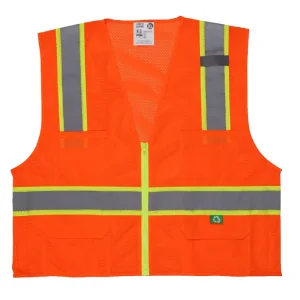
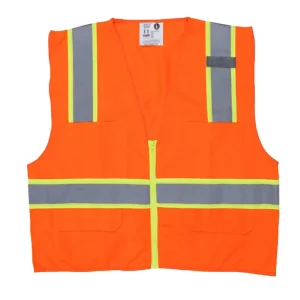
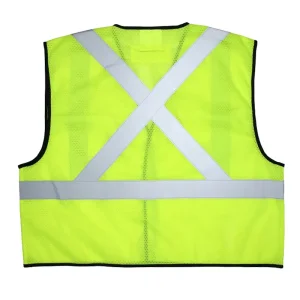
Explore our baseline certified protective wear, engineered with premium retroreflective tapes and lightweight breathable textiles.
Analyzing occupational health imperatives, thermal stress mitigation, and regulatory shifts across North America, Europe, and Asia-Pacific regions.
The global Personal Protective Equipment (PPE) sector is undergoing a fundamental structural transformation. Historically, industrial high-visibility apparel was dominated by heavy-gauge woven polyester canvas and dense solid knits. While durable, these traditional materials created acute operational challenges in hot, humid, or high-exertion working environments. Modern industrial safety science has established a direct link between occupational thermal stress, worker fatigue, and increased accident rates on construction sites, highway infrastructure projects, and industrial logistics facilities.
As a result, enterprise procurement directors, safety officers, and distributor networks across the globe are aggressively prioritizing lightweight high-visibility shirts. Designed to offer maximum breathability without compromising fluorescent luminance or retroreflective tape compliance, these garments represent the new baseline in modern occupational workwear.
Lightweight hi-vis workwear (120–160 GSM) reduces heat index impact by up to 35% compared to standard heavy vests over cotton tees, significantly lowering heat-exhaustion liabilities for large-scale enterprise employers.
When sourcing from China hi vis lightweight shirts manufacturers, understanding international certification protocols is non-negotiable. Leading Chinese factories engineering high-end safety t-shirts adhere to rigid international testing protocols:
Deconstructing the textile technologies that achieve 120–160 GSM lightness, moisture wicking, and high-luminance stability.
Features a 3D honeycomb micro-perforated structure that maximizes passive air convection while preventing transparency. Ideal for extreme heat environments, offering rapid evaporation and minimal skin adhesion.
A double-knit smooth fabric providing superior hand-feel, enhanced snag resistance, and an optimal smooth surface for custom logo screen printing and heat transfer branding without compromising breathability.
Replaces rigid solid glass-bead sewing tapes with laser-cut, segmented micro-prismatic heat transfer films. Restores 100% fabric elasticity and diagonal stretch across seams, eliminating wearer restriction.
| Fabric Property | Birdseye Polyester Mesh | Micro-Interlock Smooth Poly | Recycled PET (GRS Mesh) | Flame Resistant Modacrylic |
|---|---|---|---|---|
| Gram Weight (GSM) | 120 - 135 GSM | 140 - 160 GSM | 130 - 150 GSM | 160 - 180 GSM |
| Moisture Wicking Rate | Ultra-Fast (< 2.5s) | Fast (< 4.0s) | Ultra-Fast (< 2.8s) | Moderate (< 6.0s) |
| Breathability (Air Permeability) | > 280 mm/s | > 180 mm/s | > 250 mm/s | > 120 mm/s |
| Color Fastness to Light | Grade 4.0+ | Grade 4.5+ | Grade 4.0+ | Grade 4.0+ |
| UPF Rating Options | UPF 30+ | UPF 50+ | UPF 30+ to 40+ | UPF 50+ |
| Primary Application | High Temp Outdoor Work | Corporate Logistics & Drivers | Eco-Friendly Enterprise Brands | Oil, Gas & Utility Electric Arc |
Unpacking the industrial clustering in Zhejiang (Yongkang/Jinhua hubs), raw material supply chain integration, and automated production scalability.
China continues to maintain an unmatched competitive moat in high-visibility safety clothing manufacturing. The concentration of specialized raw material dyeing mills, retroreflective material producers, computer-controlled embroidery plants, and dedicated sewing hubs in provinces like Zhejiang (specifically Jinhua and Yongkang) creates an integrated ecosystem that cannot be easily replicated elsewhere in the global market.
From yarn extrusion and circular knitting to specialized fluorescent dyeing compliant with REACH and OEKO-TEX Standard 100, Chinese suppliers control every production link. This vertical alignment eliminates lead-time friction and component mismatch.
Modern factories utilize automated template sewing machines, ultrasonic reflective band cutters, and pneumatic heat-sealers. This guarantees consistent seam strength, precise retroreflective alignment, and minimal margin of error across 100,000+ unit production runs.
Tier-1 factories house in-house testing labs equipped with spectrophotometers for color chromaticity coordinate verification, retroreflectometers for coefficient measurements, and washing machinery for 25–50 cycle durability validation prior to export.
Matching specific technical features to diverse industrial operational environments worldwide.
A single specification does not fit all global buyers. Modern safety apparel manufacturers offer highly customized configurations optimized for specific industry verticals:
Chinese manufacturers offer extensive customization: silk screen printing, screen-printed reflective logos, custom neck labels, hangtags, barcodes, and individual eco-friendly polybag packaging tailored for Amazon FBA or direct corporate delivery.
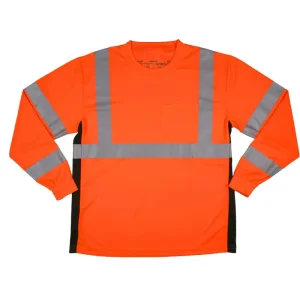
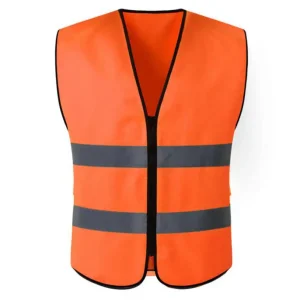
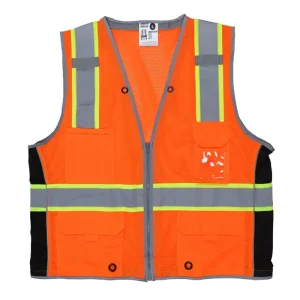
Explore our complete range of certified vests, long-sleeve safety tees, and reflective accessories tailored for bulk sourcing.
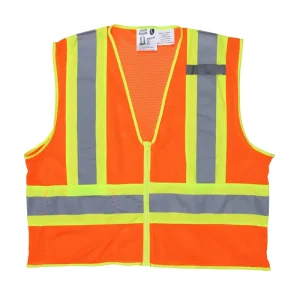
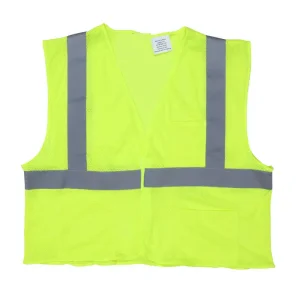
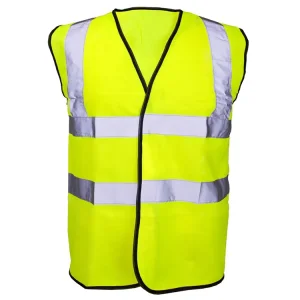
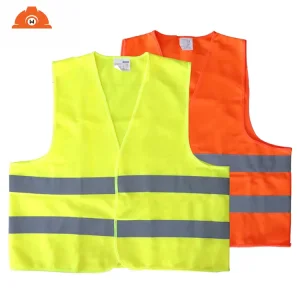
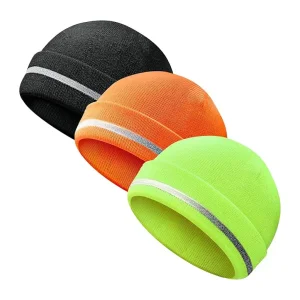
Key technological evolution vectors driving the next decade of hi-vis garment design and manufacturing.
The demand for Global Recycled Standard (GRS) certified post-consumer recycled PET polyester is accelerating. Manufacturers are producing 100% rPET hi-vis mesh shirts that match virgin polyester in color fastness and tensile strength while reducing carbon footprints by up to 45%.
Next-generation lightweight shirts are incorporating flexible, washable ultra-thin LED strip elements along reflective borders. This ensures active illumination even in zero-light environments where passive retroreflectivity lacks incoming headlight sources.
Legacy boxy cuts are being replaced by contoured, athletic-fit patterns featuring articulated underarm gussets and drop-tail hems, enhancing mobility and professional presentation for modern field workers.
Essential guidance on fabric selections, certification compliance, minimum order quantities, and custom production.