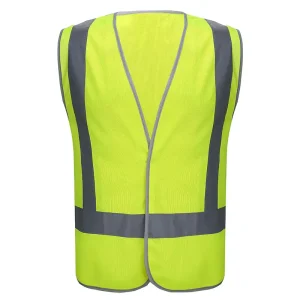
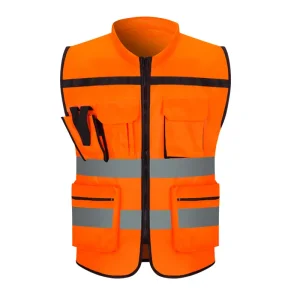
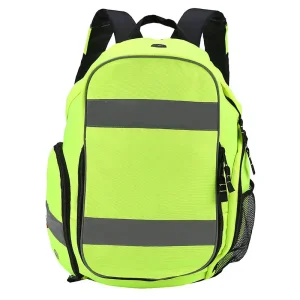
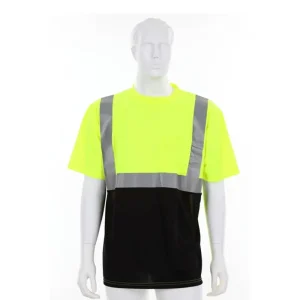
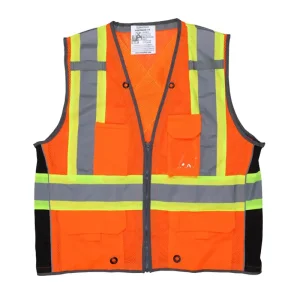
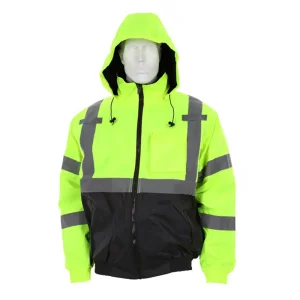
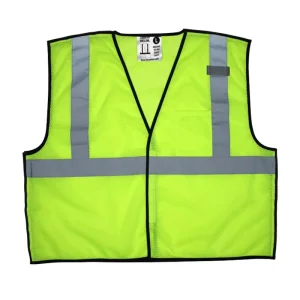
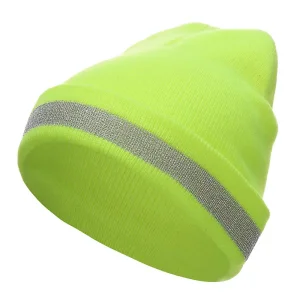
Engineered for extreme conspicuity, environmental protection, and corporate identity integration. Tested against rigorous international safety standards.
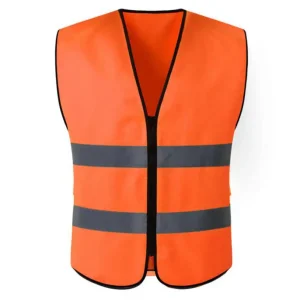
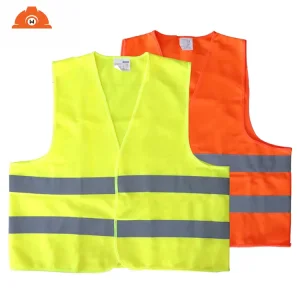
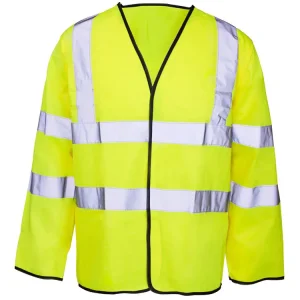
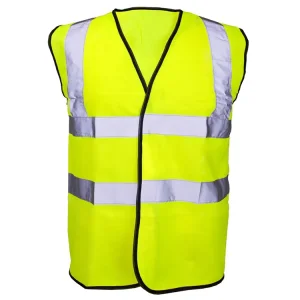
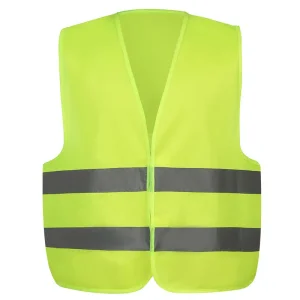
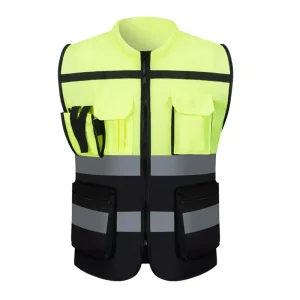
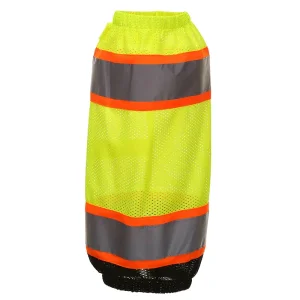
Modern high-visibility jackets have evolved beyond basic regulatory mandates into multi-functional technical apparel that serves as both life-saving Personal Protective Equipment (PPE) and a mobile showcase for corporate identity.
In the contemporary industrial sector—spanning civil infrastructure, cold-chain logistics, offshore energy, and municipal services—the demand for high-visibility garments (Hi-Vis) featuring customized corporate logos has witnessed exponential growth. B2B procurement managers are no longer looking for off-the-shelf, low-cost safety vests. Instead, global buyers demand technical Hi-Vis jackets engineered with customized brand elements that maintain structural integrity across harsh environmental conditions.
Driven by strict occupational health and safety (OH&S) enforcement across North America (ANSI/ISEA 107-2020), Europe (EN ISO 20471:2013+A1), and Australia/New Zealand (AS/NZS 4602.1:2011), enterprise procurement teams face a dual challenge: ensuring absolute optical compliance (photometric performance and minimum background fabric area) while seamlessly integrating corporate logos via heat transfer vinyl, screen printing, or 3D embroidery.
Applying a corporate logo to a Class 2 or Class 3 high-visibility jacket is not merely aesthetic—it is a precise science governed by photometric area calculations and fabric chemistry.
Under safety standards such as EN ISO 20471, Class 3 garments require a minimum of 0.80 m² of fluorescent background material and 0.20 m² of retroreflective tape. When a procurement team requests a large corporate logo across the back or chest of a jacket, non-compliant placing can obscure the background fabric, rendering the garment non-compliant and exposing the enterprise to regulatory penalties and liability risks.
| Logo Printing Technology | Best Applied Fabric Type | Industrial Wash Endurance | Waterproof Seam Seal Impact | Certification Risk |
|---|---|---|---|---|
| Reflective Heat Transfer (HTV) | 300D Oxford / Softshell Polyester | 50+ Cycles @ 60°C | Zero Ingress Impact | None (Adds Retroreflectivity) |
| Direct-to-Film (DTF) Transfer | Fleece / Tricot / Birdseye Mesh | 30+ Cycles @ 40°C | Minimal Heat Impact | Low (If within allowable non-bg area) |
| Direct Screen Printing (Silicone/PU Inks) | 100% Woven Polyester / Nylon | 40+ Cycles @ 40°C | None | Requires Migration Bleed-Blocker Layer |
| 3D Direct Embroidery & Badging | Heavyweight Winter Parkas / Canvas | 50+ Cycles @ 60°C | Requires Internal PU Hot-Melt Seam Taping | Needle Punctures Destroy Waterproofing if Untaped |
How modern Chinese safety apparel manufacturing hubs in Zhejiang leverage integrated industrial ecosystems, automation, and economies of scale to deliver superior cost-to-quality ratios.
Leading Chinese exporters implement a Manufacturing Execution System (MES) that tracks each garment batch from yarn extrusion to final carton packaging. Spectrophotometers verify that fluorescent colors fall within specified CIE chromaticity coordinates ($L^*a^*b^*$) before dyeing, while retroreflectometers ensure retroreflective strips perform above 330 cd/lx·m² under ambient and wet test conditions.
Different industrial working conditions mandate distinct technical specs. Here is how custom branded Hi-Vis jackets adapt to specialized operating environments globally.
| Standard Region | Code & Classification | Minimum Background Material | Minimum Reflective Material | Mandatory Design Feature |
|---|---|---|---|---|
| North America | ANSI/ISEA 107-2020 Class 3 | 0.80 m² (540 sq in.) | 0.20 m² (310 sq in.) | Sleeves with continuous retroreflective bands |
| European Union | EN ISO 20471:2013 Class 2 / 3 | 0.50 m² (Class 2) / 0.80 m² (Class 3) | 0.13 m² (Class 2) / 0.20 m² (Class 3) | 360° horizontal bands plus shoulder vertical bands |
| Australia / NZ | AS/NZS 4602.1:2011 Class D/N | 0.40 m² front and rear | 0.10 m² high photometric grade | Strict "Hoop" or "X" back tape pattern configuration |
| United Kingdom | RIS-3279-TOM (Railways) | 0.80 m² (Fluorescent Orange Only) | 0.20 m² micro-prismatic tape | Exclusive orange dye requirement (CIE color space) |
Direct factory sourcing from experienced Chinese manufacturers reduces unit price while extending garment operational lifespan through superior raw material selection.
When placing OEM/ODM orders for customized safety jackets, enterprise purchasers must balance up-front unit costs with long-term wearability. Understanding the core manufacturing cost drivers prevents premature garment breakdown and costly compliance failures:
Answers to complex technical, legal, and operational questions asked by global safety directors and purchasing professionals.
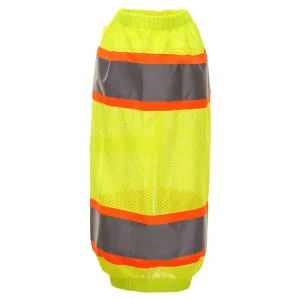
Explore our extended catalog of reflective protective wear, gaiters, safety vests, and weatherproof accessories designed for complete worker protection.