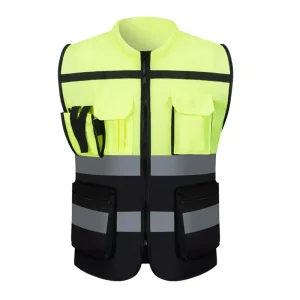
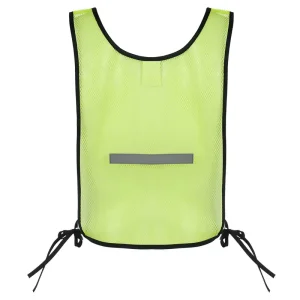
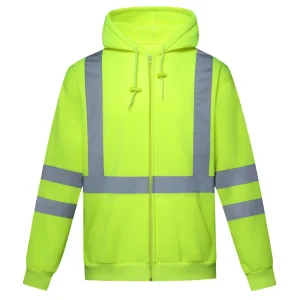
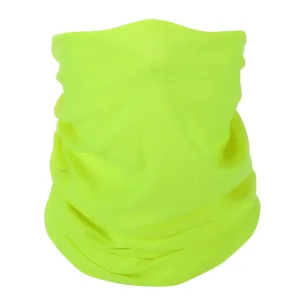
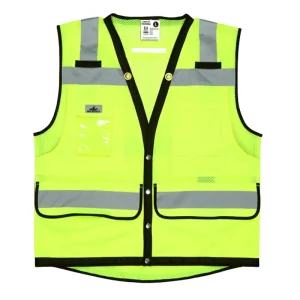
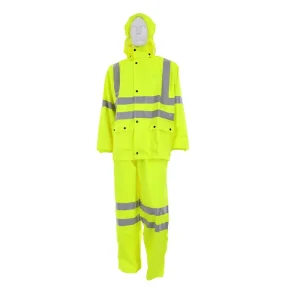
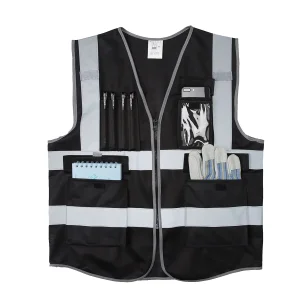
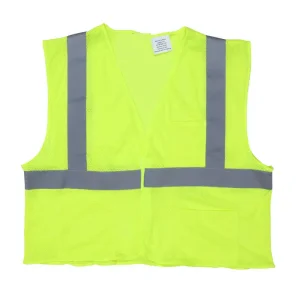
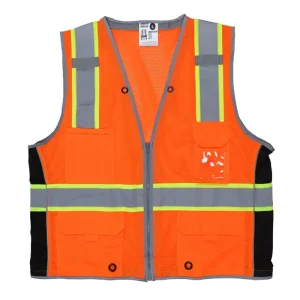
In the contemporary heavy industrial sector—spanning offshore petrochemical exploration, electrical utility transmission, metallurgy, and high-speed rail construction—the requirement for specialized Personal Protective Equipment (PPE) has evolved beyond single-hazard mitigation. Industrial workforces face simultaneous operational hazards: high-voltage electric arc flashes, hydrocarbon flash fires, unpredictable ambient thermal spikes, and severe low-visibility conditions. Consequently, the global market for China Hi Vis FR Jacket Manufacturers & Factories has shifted toward advanced multi-norm protective garments that seamlessly integrate High Visibility (Hi-Vis) and Flame-Resistant (FR) engineering.
Flame-Resistant High-Visibility outerwear must adhere strictly to overlapping regulatory frameworks. In North America, mandates enforced by the Occupational Safety and Health Administration (OSHA 1910.269) dictate that workers exposed to electric arcs and flame hazards must wear compliant clothing rated under NFPA 70E and NFPA 2112, alongside chromaticity compliance under ANSI/ISEA 107-2020. In European markets, the PPE Regulation (EU) 2016/425 sets binding directives requiring dual certification under EN ISO 11612 (protective clothing against heat and flame) and EN ISO 20471 (high-visibility clothing).
Information Gain Insight: Achieving dual compliance in a single fabric structure is a major technical challenge. High-visibility fluorescent dyes (fluorescent yellow-green, orange-red) often break down at temperatures lower than the pyrolysis point of flame-resistant fibers. Tier-1 Chinese manufacturers like Yongkang Wow Safety Products Co., Ltd. use specialized molecular dyestuffs and advanced fiber blends to maintain high visibility even after thermal exposure.
Utilizing Meta-Aramid (e.g., Nomex®), Para-Aramid (Kevlar®), and Modacrylic blends where flame-retardant properties are built directly into the molecular backbone. IFR fabrics offer permanent flame resistance that cannot be degraded by repeated industrial laundering cycles.
Long-staple cotton treated with organophosphorus flame retardants (e.g., Pyrovatex® or Proban®). Provides exceptional breathability, superior comfort in warm climates, and high protection against molten metal splashes at a cost-effective price point.
Integrating 3M™ Scotchlite™ 8935/9920 FR retroreflective trim composed of wide-angle glass beads bonded to a flame-resistant fabric backing, delivering retroreflective coefficients ($R_a$) exceeding 330 cd/(lx·m²).
| Fabric Technology | Composition Ratio | Thermal Protection (TPP) | Arc Flash Value (ATPV) | Laundering Life (ISO 15797) | Primary Industrial Application |
|---|---|---|---|---|---|
| Inherent Modacrylic / Cotton Blend | 48% Modacrylic, 37% Cotton, 13% Aramid, 2% Antistatic | > 18 cal/cm² | 12.4 cal/cm² (CAT 2) | 100+ Industrial Washes | Utility Grid Maintenance, Petrochemical Operations |
| Meta-Aramid Outer Shell | 93% Nomex®, 5% Kevlar®, 2% P-140 Carbon Fiber | > 28 cal/cm² | 16.8 cal/cm² (CAT 2) | Permanent (Lifetime of Garment) | Offshore Oil Platforms, High-Risk Flash Fire Zones |
| FR-Treated Cotton / Poly Canvas | 88% FR Cotton, 12% High-Tenacity Nylon | > 15 cal/cm² | 9.8 cal/cm² (CAT 2) | 50 to 75 Industrial Washes | Heavy Machinery Construction, Foundry Welding |
| Tri-Layer FR Waterproof Laminate | FR Polyester Shell + ePTFE Membrane + FR Grid Fleece | > 22 cal/cm² | 21.0 cal/cm² (CAT 2/3) | 50 Domestic / Industrial Washes | Cold-Climate Infrastructure, Offshore Wind Turbines |
Manufacturing high-performance Hi-Vis FR Jackets requires precise production controls. Standard workwear facilities cannot produce true FR PPE; every step—from digital CAD pattern engineering to specialized seam sealing—demands dedicated machinery and trained technical staff.
Automated digital layout nesting guarantees high fabric yield while keeping structural pattern grain alignment perfectly true, preventing garment torque and ensuring comfort during active wear.
All load-bearing structural seams are stitched with 100% Para-Aramid (Kevlar®) thread using ISO 4915 class 516 safety stitches, guaranteeing structural integrity under intense thermal shock.
For waterproof Hi-Vis FR rain jackets, micro-porous FR seam sealing tape is applied via computerized hot-air welding machines, achieving hydrostatic resistance exceeding 10,000mm H₂O.
Yongkang Wow Safety Products Co., Ltd. maintains a dedicated internal testing laboratory where every production batch of raw materials and finished outerwear undergoes rigorous physical and thermal screening prior to global dispatch:
Hazards: Hydrocarbon flash fire, sea spray, low ambient lighting.
Solution: Outer shell featuring inherent Nomex®/Kevlar® with an anti-static EN 1149-5 carbon grid and oil/water-repellent fluorocarbon-free finish.
Hazards: High-voltage arc flash, high-speed traffic zones.
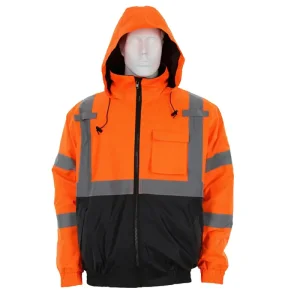
Solution: Modacrylic-cotton fleece-lined bomber jacket with ATPV $\ge 20 \text{ cal/cm}^2$ (CAT 2/3) and 360-degree Class 3 ANSI/ISEA reflective striping.
Hazards: Heavy equipment collision, snagging, abrasive wear.
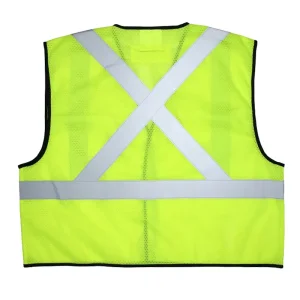
Solution: Heavy-weight FR cotton-duck canvas jacket with reinforced Cordura® FR elbow patches and X-back reflective pattern for Canada CSA Z96 compliance.
Eliminating per- and polyfluoroalkyl substances (PFAS) in favor of bio-based hydrophobic coatings that maintain flame retardancy and oil stain resistance without environmental bioaccumulation.
Incorporating recycled inherently FR polyesters (rFR-PET) derived from post-consumer plastic waste, reducing carbon footprint by up to 40% while preserving EN ISO 11612 performance.
Embedding ultrathin flexible LED optical strips, NFC garment life tracking microchips, and body heat monitoring sensors directly into the structural layers of industrial jackets.
Inherently FR fibers (such as Meta-Aramid or Modacrylic) have flame resistance built directly into their molecular structure. This protection can never be washed out or worn away. Chemically Treated FR fabrics (like FR cotton) start as natural fibers and are treated with flame-retardant chemistry. Treated fabrics are generally more budget-friendly and softer, but their FR properties can degrade over time if washed with harsh industrial chemicals, bleach, or optical brighteners.
Dual compliance requires precise raw material selection. The outer shell fabric must utilize high-luminance fluorescent dyes engineered to withstand thermal testing without melting or charring. Additionally, retroreflective tapes must be certified FR (such as 3M™ Scotchlite™ 8935). Finally, garment design must satisfy minimum surface area requirements for fluorescent background fabric (e.g., $\ge 0.80\text{ m}^2$ for Class 3) while keeping burn area below 50% during ASTM F1930 thermal mannequin testing.
Yes, but standard screen printing or vinyl heat transfers cannot be used because traditional inks are flammable and will void safety certifications. Custom logos must be applied using certified FR embroidery threads (Nomex® thread) with FR backing patches, or through specialized flame-retardant screen printing inks that pass ASTM D6413 vertical flame testing.
Standard Minimum Order Quantity (MOQ) for custom OEM Hi Vis FR jackets is typically 500 units per style/colorway. Sample development takes 7–10 days, while full bulk production ranges between 30 and 45 days depending on material specifications and lab-dip approvals.
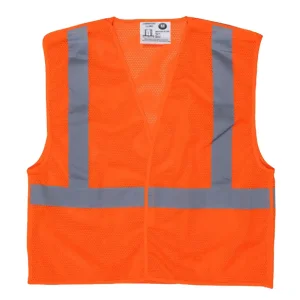
Yongkang Wow Safety Products Co., Ltd.
Address: No.5, Building 6, Lane 2, Wenhuagong Road, Xicheng Street, Yongkang, Jinhua City, 321300 Zhejiang, China
Direct Telephone: +86-0579-87121726
Email Inquiry: [email protected]