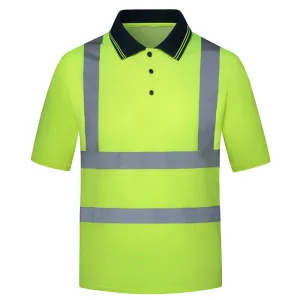
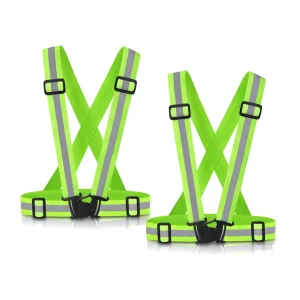
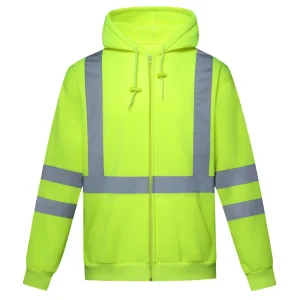
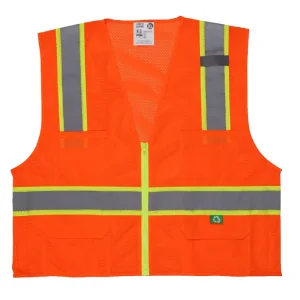
In ultra-hazardous operational environments—ranging from municipal firefighting response and petrochemical refining to electrical utility maintenance—the personal protective vest must serve as a dual-barrier system. It must simultaneously mitigate radiant/convective thermal transfer while ensuring optical retroreflectivity under adverse zero-light and heavy-smoke scenarios.
A premier China Fire Reflective Vest Factory leverages two primary material tracks: Inherent Flame-Retardant (IFR) synthetic fibers like Aramid (Nomex®/Kevlar®) and Modacrylic/Cotton blends (60/40), alongside chemically treated FR cottons (PYROVATEX® / PROBAN®). Inherent polymers possess permanent flame retardancy within their molecular structure, ensuring the Limited Oxygen Index (LOI > 28%) never degrades despite 100+ commercial wash cycles.
Standard reflective tapes melt under extreme heat. Advanced fire-grade vests utilize glass-bead or vinyl microprismatic technology laminated onto an aramid backing. These retroreflective strips deliver an initial coefficient of retroreflection ($R_A$) exceeding 500 cd/(lx·m²) at a $0.2^\circ$ entrance angle, maintaining optical structural integrity up to peak radiant temperatures of 260°C (500°F).
TPP rating quantifies the time elapsed before a wearer suffers second-degree burn injuries. Modern fire reflective vest designs achieve TPP values between 13 and 35 cal/cm² when integrated into multi-layer turnout ensembles. Key structural innovations include breakaway side seams (5-point breakaway) to prevent mechanical entrapment during emergency egress.
During vertical flame testing under ASTM D6413, high-specification flame-retardant fabric produced in top-tier Zhejiang factories exhibits an average char length under 50 mm with zero after-flame time and zero melt-drip behavior. This performance exceeds standard municipal and industrial procurement mandates.
Located within the world's dense hardware and protective safety equipment cluster in Yongkang, Jinhua, Zhejiang, specialized China Fire Reflective Vest factories leverage immediate access to upstream weaving, dyeing, and chemical finishing mills. This geographic concentration reduces raw material lead times by up to 65% compared to non-clustered global competitors.
Direct factory procurement from Chinese manufacturing ecosystems provides substantial cost efficiencies without compromising E-E-A-T (Experience, Expertise, Authoritativeness, Trustworthiness) or international safety certifications.
Engineered to prevent flash fire ignition caused by static discharge. Fabrics incorporate anti-static carbon grid yarns (Negastat® / Bekinox®) achieving surface resistivity below $10^9 \ \Omega$, complying fully with EN 1149-5 anti-static mandates.
Targeted for linesmen working near high-voltage distribution networks. Configured to meet NFPA 70E Arc Thermal Performance Value (ATPV) Category 2 requirements (≥ 8 cal/cm²), protecting against electrical arc explosions.
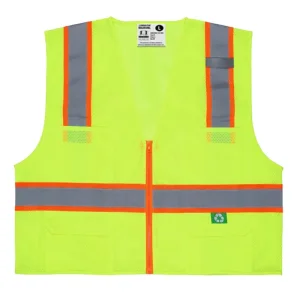
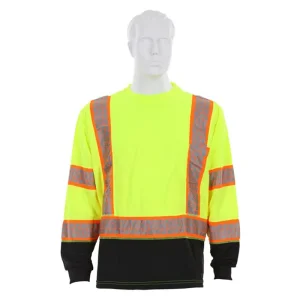
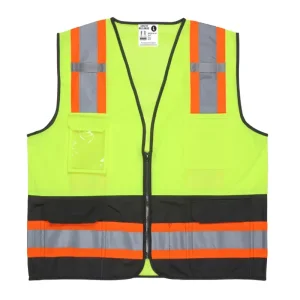
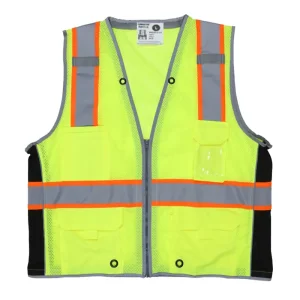
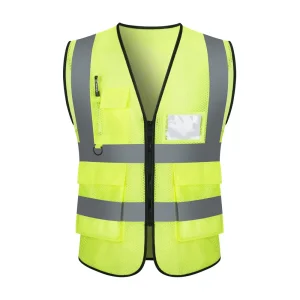
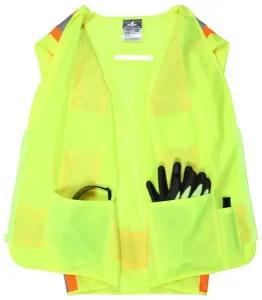
Features multi-functional utility pockets, radio harness loops, gas detector clips, and heavy-duty flame-resistant zippers. Bright fluorescent lime-yellow and orange-red contrast paneling maximizes day-time recognition.
Designed for steel mills, glass foundries, and heavy forging plants where molten metal splash is a constant operational hazard. Specially treated fabrics shed liquid aluminum and molten iron splashes without sticking.
Navigating regional compliance is critical for enterprise procurement officers. OEM/ODM production from certified Chinese factories provides complete conformity documentation, laboratory test reports from accredited third parties (SGS, SATRA, UL, TUV), and CE mark certifications.
| Standard Code | Geographic Region | Core Protection Target | Key Metrics / Requirements | Compliance Status |
|---|---|---|---|---|
| ANSI/ISEA 107-2020 | North America (USA) | High-Visibility Safety Apparel | Type R Class 2/3 background fabric area > 0.77 m², tape reflectivity > 330 cd/lx | Fully Certified |
| EN ISO 20471:2013+A1 | European Union (EU) | High Visibility Warning Clothing | Class 1, 2, or 3 design criteria, chromaticity coordinates, retroreflection after wash | Fully Certified |
| NFPA 2112 | Global / North America | Flame-Resistant Garments for Industry | Flash fire exposure < 50% predicted body burn during 3-second thermal mannequin test | Fully Certified |
| NFPA 70E / ASTM F1506 | Global Electrical Utilities | Arc Flash Hazard Protection | ATPV rating determination (Cal/cm²), self-extinguishing flame test, arc rating label | Fully Certified |
| AS/NZS 1906.4 & 4602.1 | Australia & New Zealand | High Visibility Garments for Risk | Class D/N (Day/Night) retroreflective layout, UV protection factor (UPF 50+) rating | Fully Certified |
| EN ISO 11612 / 11611 | Europe / International | Heat, Flame & Welding Protection | Limited flame spread (A1/A2), Convective Heat (B), Radiant Heat (C), Molten Metal (D/E) | Fully Certified |
Passive retroreflective materials require external vehicle headlights to reflect light. Next-generation smart vests engineered in Chinese R&D centers incorporate flexible, heat-resistant Electroluminescent (EL) light strips and micro-LED active illumination arrays powered by rechargeable lithium-polymer micro-packs, emitting light independently over 800 meters.
Integrating smart sensors directly into the vest lining to monitor real-time heart rate, core body temperature, and external toxic gas concentrations (H2S, CO). Utilizing low-power Bluetooth Mesh or NB-IoT connectivity, vital data is transmitted to incident command posts, drastically improving firefighter situational awareness.
Pioneering the synthesis of bio-based flame-retardant polymers derived from agricultural waste lignin and 100% recycled post-consumer PET (rPET). This eliminates reliance on toxic halogenated chemical finishes while achieving zero-carbon manufacturing footprints across China's modernized eco-certified facilities.
Enterprise buyers work alongside factory technical directors to outline fiber composition (e.g., 93% Nomex / 5% Kevlar / 2% Carbon), fabric GSM weight (160gsm to 350gsm), retroreflective tape dimensions (2-inch vs 4-inch contrast), and pocket layout schematics.
Spectrophotometric color matching ensures fluorescent yellow/orange base shades align exactly with EN ISO 20471 chromaticity boxes. Prototype samples undergo vertical burn testing, tensile tear tests, and ISO 6330 washing fastness evaluations prior to bulk sign-off.
During bulk assembly, raw materials undergo 100% digital fabric inspection for weave defects. Stitch density is locked at 12–14 stitches per 3 cm. Third-party auditors (SGS/Intertek) perform random sampling according to ISO 2859-1 standards.
High-density vacuum compression packaging reduces bulk transport volume by up to 40%, optimizing container loading factors. Complete export documentation—including Certificates of Origin (Form E/Form F), HS Code optimization, and REACH compliance declarations—is supplied seamlessly.
Standard hi-vis safety vests are manufactured using regular polyester or nylon fabrics which melt, drip, and ignite rapidly when exposed to flame or electric arc flash, causing catastrophic skin burn injuries. Fire-Resistant (FR) reflective vests utilize inherent aramid fibers, modacrylic blends, or chemically treated FR cotton combined with certified heat-resistant retroreflective tape. They self-extinguish immediately upon removal of the ignition source and do not melt or drip.
Reputable manufacturers maintain in-house testing laboratories equipped with vertical flame test apparatuses, retroreflectometer readers, hydrostatic head testers, and wash testing drums. Furthermore, production batches are submitted to ISO 17025 accredited global inspection bodies (such as UL, SGS, SATRA, or TUV Rheinland) to issue formal type-examination certificates valid across North American and European markets.
Yes. Premium fire vests specified for heavy industry utilize industrial-wash retroreflective trims (such as 3M™ Scotchlite™ 8935/9920 or equivalent Chinese domestic high-grade aramid-backed tapes). These tapes retain a retroreflective coefficient ($R_A$) above 100 cd/(lx·m²) even after 50 to 100 industrial wash cycles at 60°C (140°F) and tunnel drying.
Standard OEM minimum order quantities typically start at 500 to 1,000 units per style, depending on fabric dye lot requirements. Fast-track prototyping takes 3 to 5 business days, while full bulk production runs generally range between 15 and 25 days post sample approval.
Inherent FR fabrics (such as Nomex® or Modacrylic) have thermal protection built directly into the polymer chain; their protection lasts indefinitely for the life of the garment, but they carry a higher initial unit cost. Treated FR cotton is more economical initially, but its flame resistance can diminish over time if subjected to improper laundering with chlorine bleaches or harsh oxidizers.