Explore our flagship ANSI/ISEA & EN ISO 20471 certified safety vests, solar shields, and pocket shirts designed for industrial durability and photometric compliance.
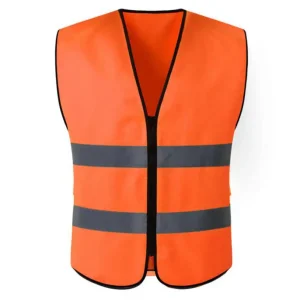
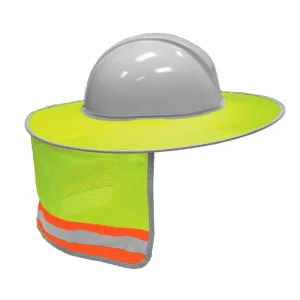
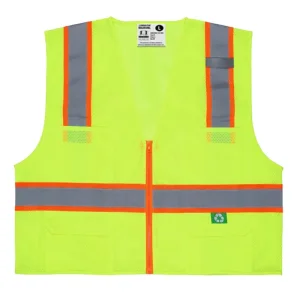
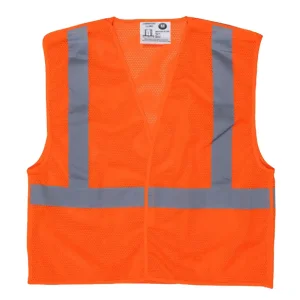
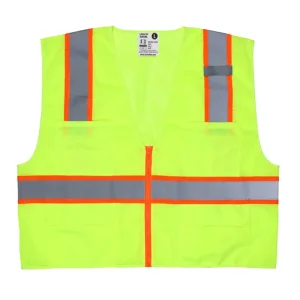
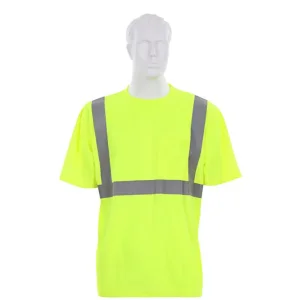
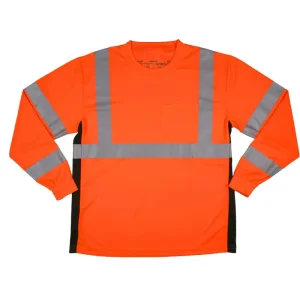
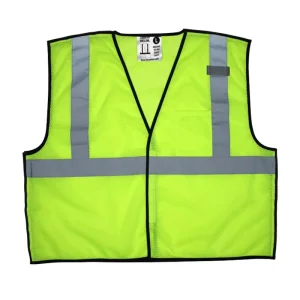
An authoritative engineering breakdown on how high-visibility workwear has evolved from basic occupational safety requirements into sophisticated, multi-hazard engineering platforms.
Modern engineering projects require strict compliance with updated international standards such as ANSI/ISEA 107-2020 (Type R/P/O) and EN ISO 20471:2013+A1:2016. Regulators now mandate minimum retroreflective surface area metrics, precise chromaticity coordinates (x,y) for fluorescent lime and orange base fabrics, and 360-degree night visibility angles.
As tier-1 EPC (Engineering, Procurement, Construction) contractors scale global operations, procurement teams must ensure that Chinese manufacturing partners possess full ISO 17025 laboratory test certificates rather than basic self-declarations.
The modern site engineer no longer wears a single-purpose high-visibility vest. The industry demands technical convergence: Flame Retardant (FR) NFPA 2112 rating, Anti-Static grid weaving (EN 1149-5), and Arc Flash protection (ASTM F1506) integrated directly into high-vis vest chassis.
Yongkang Wow Safety Products Co., Ltd. addresses this requirement by embedding inherently flame-retardant (IFR) modacrylic fibers and continuous metallic filament threads directly into fluorescent Oxford fabrics.
Global buyers in North America, Europe, Australia, and the Middle East face mounting scrutiny over supply chain transparency. Achieving BSCI, Sedex (SMETA), and ISO 9001:2015 compliance is mandatory for tier-1 supply agreements.
Our manufacturing workflow incorporates digitized ERP tracking from yarn dyeing, fabric coating, retroreflective tape heat transfer, to final 100% optical inspection, ensuring seamless batch traceability for global enterprise clients.
Quantifying our engineering throughput and global manufacturing reliability across 15+ years of specialized high-visibility protective wear production.
Understanding retroreflection coefficients, fluorescent polymer chemistry, and ergonomic structural design for severe engineering environments.
High-visibility performance relies on returning incident light rays back toward the original source (vehicle headlights). We utilize two primary reflection technologies:
Fluorescence transforms invisible ultraviolet (UV) radiation into visible light, providing daytime contrast. ANSI/ISEA 107 mandates strict minimum luminance factors ($\beta$):
Professional site engineers carry specialized field apparatus including tablets, laser distance meters, multi-channel radios, and structural blueprints. Standard safety vests lack structural reinforcement for heavy gear.
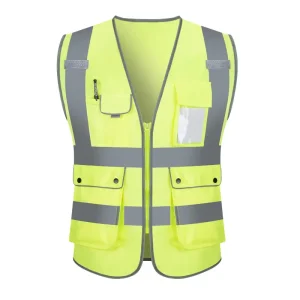
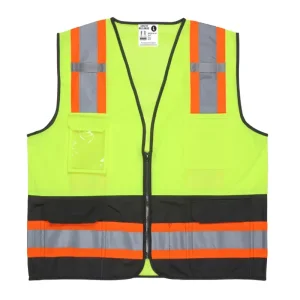
Our Engineer Multi-Pocket Vests feature double-stitched 300D Oxford fabric pocket linings, reinforced tablet pockets with heavy-duty hook-and-loop flaps, dual mic tabs on chest seams, transparent vinyl ID badge windows, and pen/tool compartments reinforced with bartack stitching at all high-stress points.
For engineers working around heavy rotating machinery, conveyors, automated sorting gantries, or railway tracks, garment entanglement poses severe risks. Standard zippers or heavy seams can trap a worker.
We manufacture 5-Point Breakaway Vests utilizing engineered hook-and-loop closure strips along both shoulders, both side flanks, and the front closure. Under a tensile force exceeding 15–20 kg, the vest instantly disengages from the worker's body, preventing entanglement accidents.
A detailed comparative reference guide for procurement officers, safety directors, and compliance auditors when sourcing high-visibility apparel.
| Standard Region | Classification | Min. Fluorescent Base Fabric ($m^2$) | Min. Retroreflective Tape ($m^2$) | Typical Application / Risk Level |
|---|---|---|---|---|
| ANSI/ISEA 107-2020 (USA) | Type R, Class 2 | 0.50 m² (775 sq in) | 0.13 m² (201 sq in) | Roadway construction, traffic direction, utility crews exposed to vehicle speeds > 25 mph. |
| ANSI/ISEA 107-2020 (USA) | Type R, Class 3 | 0.80 m² (1240 sq in) | 0.20 m² (310 sq in) | High-speed highways, night operations, emergency response teams requiring full-body silhouette visibility. |
| EN ISO 20471:2013 (EU) | Class 1 (Low Hazard) | 0.14 m² | 0.10 m² | Off-road areas, warehouse logistics, low-speed industrial internal yards (< 30 km/h). |
| EN ISO 20471:2013 (EU) | Class 2 (Medium Hazard) | 0.50 m² | 0.13 m² | Civil construction sites, railway maintenance engineers, port crane operators. |
| EN ISO 20471:2013 (EU) | Class 3 (High Hazard) | 0.80 m² | 0.20 m² | Motorway inspection, airport runway operations, extreme weather high-hazard zones. |
| AS/NZS 4602.1:2011 (AU/NZ) | Class D/N (Day & Night) | 0.40 m² | 50mm wide tape layout | Australian mining, heavy haulage corridors, infrastructure projects with strict solar UV exposure rules. |
Inside Yongkang Wow Safety Products Co., Ltd.: Standardized production controls guaranteeing zero-defect compliance for global buyers.
Every batch of dyed polyester fabric undergoes lab-grade spectrophotometer analysis before cut-and-sew operations. We verify chromaticity coordinates against the strict ANSI and EN ISO color boxes to eliminate batch-to-batch shade variation.
Adding corporate logos must not infringe upon the minimum certified area of background fluorescent fabric. Our CAD engineering team designs custom heat transfer print placements that maximize brand visibility while maintaining 100% ANSI Class 2 or Class 3 compliance.
Engineering safety vests are subjected to severe mechanical stress. We perform automated grab-tensile and trapezoidal tear resistance testing on all raw materials, ensuring ripstop fabrics withstand forces up to 150 N without seam slippage.
The future of personal protective equipment lies in active illumination, IoT sensor integration, and 100% recycled circular polymers.
Passive retroreflective tape requires an external light source to function. In extreme zero-light tunnels or fog conditions, passive tape remains invisible until light strikes it. Our R&D division has commercialized Active LED Mesh Vests powered by flexible rechargeable lithium polymer batteries, offering 500 meters of independent visibility.
Furthermore, we are partnering with smart site management platforms to embed micro-BLE (Bluetooth Low Energy) tags and fall-detection accelerometers into vest back-panels, enabling real-time worker tracking in hazardous industrial zones.
As global ESG (Environmental, Social, and Governance) mandates accelerate, corporate procurement departments require low-carbon safety apparel. We produce eco-friendly safety vests spun from 100% post-consumer recycled plastic bottles (rPET), certified by the Global Recycled Standard (GRS).
Every rPET engineer vest diverts approximately 10 to 14 plastic bottles from landfills while delivering identical tensile strength, UV colorfastness, and photometric performance as virgin polyester.
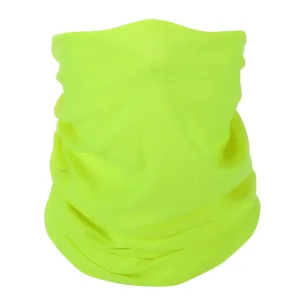
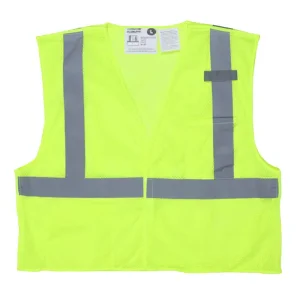
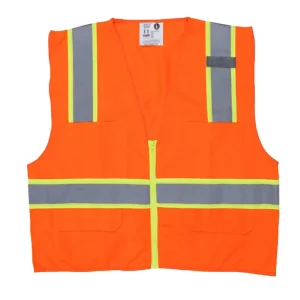
Complete your workforce safety apparel lineup with high-vis hooded sweatshirts, polo shirts, cooling neck gaiters, and breakaway engineer vests.
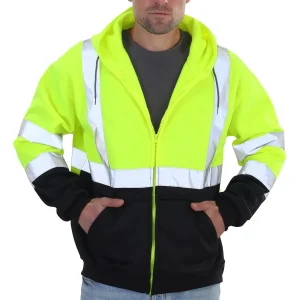
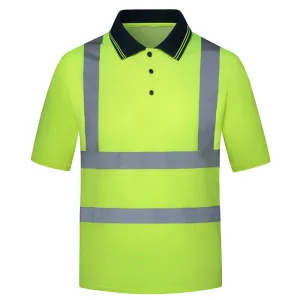
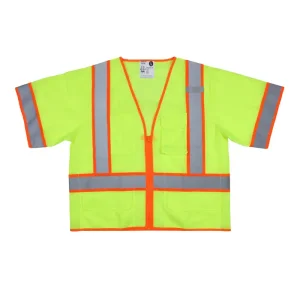
Addressing complex technical inquiries, certification requirements, minimum order quantities, and OEM customized production processes.
ANSI Class 2 garments require a minimum of 775 sq inches ($0.50 \text{ m}^2$) of fluorescent background fabric and 201 sq inches ($0.13 \text{ m}^2$) of retroreflective material, typically suitable for workers exposed to traffic traveling over 25 mph. Class 3 garments require 1,240 sq inches ($0.80 \text{ m}^2$) of background fabric and 310 sq inches ($0.20 \text{ m}^2$) of reflective tape, providing full body-silhouette recognition through long sleeves or combination garments for high-speed roadways (> 50 mph) or extreme hazard environments.
Printing large non-reflective corporate logos on fluorescent fabric reduces the total visible compliant surface area. If a printed logo covers too much background material, the vest may fail Class 2 or Class 3 minimum area thresholds. Yongkang Wow Safety Products Co., Ltd. utilizes certified CAD placement templates, using reflective ink or strategic pocket positioning to ensure customized branded vests maintain full ANSI/ISEA 107 and EN ISO 20471 compliance.
Our standard Minimum Order Quantity (MOQ) for custom OEM safety vests is typically 500 to 1,000 units per style depending on specialized fabric requirements (e.g., Flame Retardant, Eco-rPET). Production lead time ranges from 15 to 25 business days post sample approval. We also maintain rolling stock of standard ANSI Class 2 lime and orange mesh vests for rapid dispatch.
Our heavy-duty industrial reflective tapes are rated for 25 to 50 ISO 6330 washing cycles at 60°C while retaining retroreflective performance above $100 \text{ cd/(lx}\cdot\text{m}^2)$. For extreme industrial laundering, we offer specialized flame-retardant aramid-backed reflective tapes rated for dry cleaning and high-temperature industrial wash tunnels.
We maintain ISO 9001:2015 Quality Management Certification, BSCI (Business Social Compliance Initiative) social audit approval, and Sedex SMETA compliance. All raw materials undergo regular Oeko-Tex Standard 100 chemical testing to ensure freedom from harmful AZO dyes and heavy metals.
Contact our engineering sales team today to request technical data sheets, certified laboratory test reports, or physical sample kits for your upcoming B2B procurement tenders.