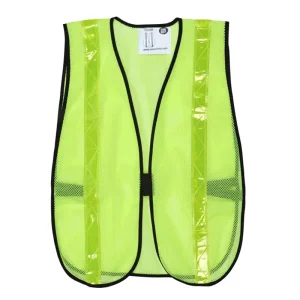
In the contemporary industrial sector, the operational environment for outdoor workforces—spanning civil infrastructure construction, logistics, mining, utility engineering, and maritime cargo management—has undergone a critical shift. Accelerating global climate volatility and rising summer temperatures have elevated occupational heat stress from a mere comfort inconvenience to an acute enterprise liability and compliance vulnerability. Traditional Personal Protective Equipment (PPE), historically characterized by heavy, non-breathable 100% solid polyester fabrics, is rapidly becoming obsolete. Global procurement officers and safety directorates now demand sophisticated, dual-function workwear: garments that guarantee uncompromising chromatic photopic visibility under ANSI/ISEA 107-2020 and EN ISO 20471:2013+A1:2016 while actively reducing core body temperature through thermodynamic textile engineering.
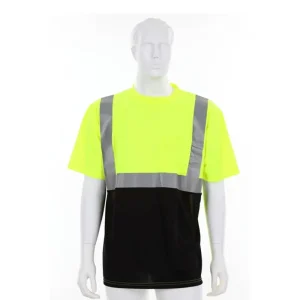
China’s specialized safety textile manufacturing ecosystem has responded to this global shift by engineering Cool Hi Vis Shirts. Integrating advanced micro-denier synthetic fibers, open-cell birdseye jacquard structures, hydrophilic capillary finishes, and segmented micro-glass bead retroreflective tapes, leading manufacturers in Zhejiang and Jiangsu provinces are producing high-performance garments that redefine industrial safety standards. Transitioning from basic reflective vests to lightweight, evaporative cooling hi-vis t-shirts and polo shirts allows enterprise buyers to achieve higher compliance rates, lower heat-fatigue incidents, and optimized Total Cost of Ownership (TCO).
Information Gain Key Insight: Empirical laboratory testing demonstrates that replacing traditional solid 150 GSM polyester safety vests with modern 130 GSM moisture-wicking cool hi-vis shirts reduces cutaneous relative humidity beneath the garment by up to 34%, effectively reducing perceived worker fatigue by 2.8°C (5.0°F) in ambient environments exceeding 32°C (89.6°F).
Engineered with a 3D honeycomb or mesh-weave structure, birdseye knit maximizes surface area contact while leaving 40% of the fabric matrix as microscopic air channels. This geometry increases ASTM D737 air permeability ratings beyond 180 CFM.
Utilizing cross-section synthetic filaments (such as cross-shaped or trilobal micro-polyester), the fabric pulls perspiration away from the epidermis via capillary pressure, spreading liquid evenly across the outer surface for near-instant evaporative cooling.
Incorporating Titanium Dioxide ($TiO_2$) particles directly into the polymer melt prior to extrusion ensures permanent ultraviolet protection factor (UPF 50+), blocking 98% of harmful UVA and UVB radiation without degrading after industrial laundering.
Replacing continuous rigid retroreflective bands with heat-applied, segmented micro-glass bead or prismatic tape eliminates fabric stiffness. Segmented patterns stretch dynamically with worker movement while preserving breathability across tape zones.
Premium shirt lines feature micro-encapsulated organic PCMs embedded into the inner collar and underarm panels, absorbing latent body thermal energy as ambient temperatures rise and stabilizing skin microclimate.
Silane-quaternary ammonium or silver-ion non-migrating antimicrobial finishes are integrated into the fiber structure to prevent bacterial proliferation and odor retention during extended 12-hour operational shifts.
| Performance Metrics | Legacy 100% Solid Polyester Vest | Standard Hi-Vis Cotton Tee | Advanced China Cool Hi-Vis Shirt |
|---|---|---|---|
| Fabric Weight (GSM) | 160 - 180 GSM (Heavy) | 180 - 200 GSM (Absorbent) | 130 - 140 GSM (Ultra-Light) |
| Air Permeability (ASTM D737) | < 45 CFM | 80 - 100 CFM | > 185 CFM |
| Moisture Drying Rate (AATCC 199) | Slow (> 45 Mins) | Extremely Slow (> 90 Mins) | Rapid (< 14 Mins) |
| Ultraviolet Protection (UPF Rating) | UPF 15 - 20 | UPF 10 - 15 (Degrades Wet) | UPF 50+ (Permanent TiO2) |
| Retroreflective Tape Flexibility | Rigid (Solid PVC/Bead Band) | Medium (Stitched Solid) | 360° Flex (Segmented Heat-Transfer) |
| Industrial Wash Durability (ISO 6330) | 25 Cycles | 15 Cycles (Color Fading) | 50+ Cycles @ 60°C |
For global enterprise buyers, purchasing managers, and safety apparel brands, technical compliance is non-negotiable. Importing high-visibility garments into North America, the European Union, Australia, or the Gulf Cooperation Council (GCC) mandates strict adherence to regional safety standards governing chromaticity, total fluorescent background area, retroreflectivity luminance, and mechanical garment strength.
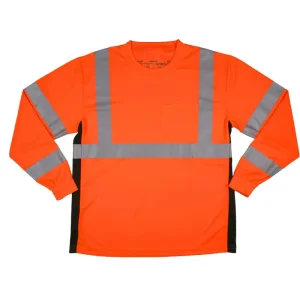
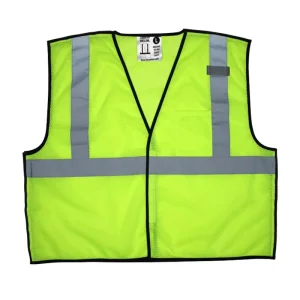
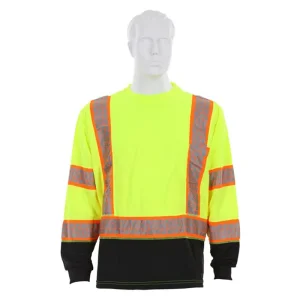
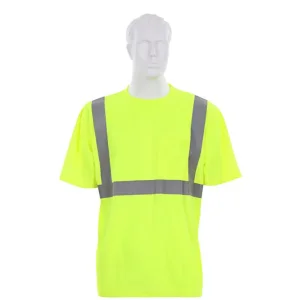
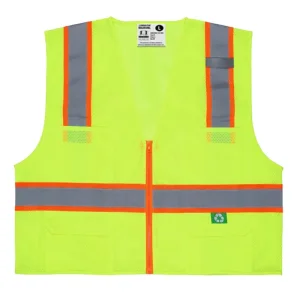
The American National Standard for High-Visibility Safety Apparel specifies three occupational types (O, R, P) and performance classes (Class 1, Class 2, Class 3). Cool Hi Vis Short Sleeve Shirts manufactured in top-tier Chinese facilities generally achieve Class 2 compliance (requiring minimum 775 $in^2$ of fluorescent background fabric and 201 $in^2$ of retroreflective material), while Long Sleeve Cool Hi-Vis Shirts achieve Class 3 compliance (requiring 1,240 $in^2$ of background material and 310 $in^2$ of reflective trim).
EN ISO 20471 mandates photopic chromaticity coordinates $(x,y)$ and luminance factors $(\beta)$ for fluorescent Yellow, Orange-Red, and Red fabrics. Certified Chinese manufacturers utilize spectrophotometer-controlled dyeing processes to ensure that lightweight cooling birdseye fabrics maintain color fastness to rubbing, perspiration, and industrial washing without losing fluorescence under UV exposure.
Given the severe UV exposure in Australasia, AS/NZS standards require Class F (Fluorescent) or Class NF (Non-Fluorescent High Visibility Day Use) materials paired with UPF 50+ solar protection testing under AS/NZS 4399. Chinese export-oriented factories design dedicated product lines for the Australian mining and construction sectors featuring high-contrast two-tone designs and underarm mesh venting.
Chinese manufacturing hubs in Zhejiang (e.g., Yongkang, Jinhua, Ningbo) bring yarn spinning, birdseye circular knitting, disperse dye houses, retroreflective tape slitting, and garment assembly together into ultra-dense regional clusters. This vertical concentration reduces production lead times by up to 40%.
Modern China 4.0 factories replace manual lay-cutting with computer-controlled multi-head laser cutter beds. This ensures sub-millimeter dimensional precision across thousands of garment panels, guaranteeing consistent sizing compliance (S through 7XL) for enterprise contracts.
Leading export factories maintain comprehensive international certifications, including BSCI (Business Social Compliance Initiative), SMETA 4-Pillar, ISO 9001 (QMS), and OEKO-TEX Standard 100 certification, proving zero harmful substances in skin-contact cooling fabrics.
Hazard Profile: Ambient heat exceeding 40°C combined with asphalt radiance up to 150°C, extreme high-speed vehicular traffic.
Optimal Configuration: Class 3 Long-Sleeve Hi-Vis Orange Shirts with segmented heat-applied tape, UPF 50+ UV shielding, and dark grey soil-hiding lower panels.
Hazard Profile: Fast-paced indoor/outdoor movements, forklift traffic, constant bending and stretching.
Optimal Configuration: Class 2 Short-Sleeve Tagless Birdseye T-Shirts featuring chest pockets for scanner devices and 4-way stretch mechanical yarn construction.
Hazard Profile: Intense mineral dust accumulation, extreme sun exposure, heavy machinery hazards.
Optimal Configuration: Heavy-duty 140 GSM birdseye polos with anti-microbial treatments, reinforced drop-tail hems, and high-contrast two-tone lime/navy color blocking.