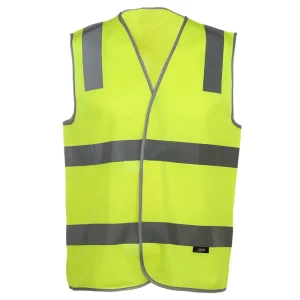
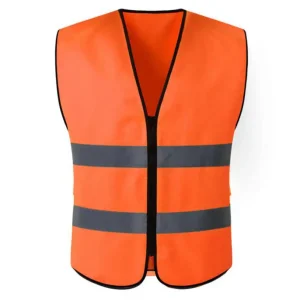
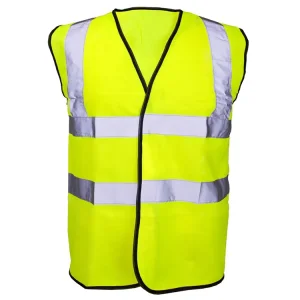
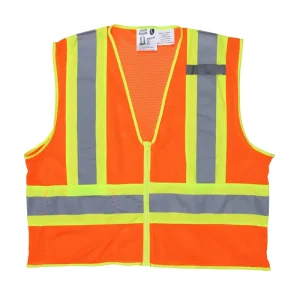
Industrial-grade certified safety wear engineered for heavy civil, utility, and infrastructure construction environments.
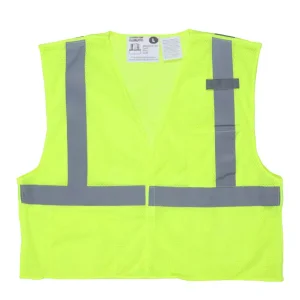
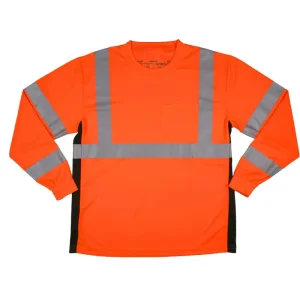
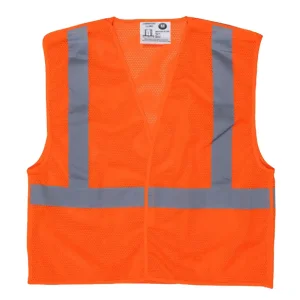
In modern heavy civil engineering, industrial contracting, highway maintenance, and mega-scale infrastructure initiatives, personal protective equipment (PPE) is no longer categorized as a secondary operational consumable. It represents a vital layer of life-critical risk mitigation. At the forefront of this industrial protection paradigm stands the Contractor Safety Vest. Historically viewed as simple, low-cost high-visibility waistcoats, contemporary contractor safety vests have evolved into sophisticated engineering solutions engineered to withstand extreme thermal, mechanical, and photometrical demands.
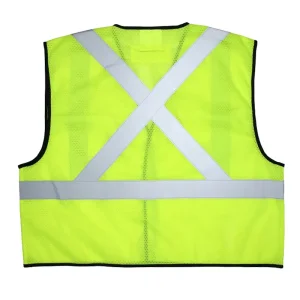
Navigating the complex global regulatory landscape requires a granular understanding of global standards. Chief among these are ANSI/ISEA 107-2020 (American National Standard for High-Visibility Safety Apparel and Accessories) in North America and EN ISO 20471:2013+A1:2016 across Europe and international trade zones. In these standards, high-visibility garments are categorized based on strict photometric performance criteria, total background material surface area, and retroreflective material placement. For instance, ANSI Class 2 requirements dictate a minimum of $775\text{ in}^2$ ($0.50\text{ m}^2$) of background fluorescent fabric alongside $201\text{ in}^2$ ($0.13\text{ m}^2$) of retroreflective material, whereas Class 3 mandates $1240\text{ in}^2$ ($0.80\text{ m}^2$) of background fabric combined with $310\text{ in}^2$ ($0.20\text{ m}^2$) of high-grade reflective striping.
Retroreflection in modern contractor safety vests relies on either micro-glass bead technology or micro-prismatic optical matrices. Glass beads use refractive index matching to reflect incident light directly back along the vector of origin (such as heavy equipment LED headlights). Micro-prismatic arrays provide up to $500\text{ cd/lx}\cdot\text{m}^2$ of retroreflectivity, ensuring that workers operating within high-speed construction corridors ($>45\text{ mph}$) remain visible to operators from distances exceeding 1,000 feet, even under rain, fog, or low-light twilight conditions.
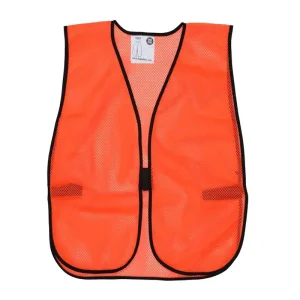
Furthermore, chromaticity coordinates for fluorescent background fabrics—specifically Safety Yellow/Lime ($x, y$ coordinates bounded by ANSI chromaticity boxes) and Safety Orange/Red—must maintain intense luminosity factors ($Y \ge 70\%$ for yellow; $Y \ge 40\%$ for orange). Leading Chinese safety apparel manufacturers, such as Yongkang Wow Safety Products Co., Ltd., utilize advanced spectrophotometric testing to ensure that fluorescent polyester formulations resist UV degradation, atmospheric pollutants, and color fastness degradation across extended field deployments.
Search intent mining and global B2B procurement data reveal a structural shift in how international buyers evaluate a China Contractor Safety Vest Factory. Procurement directors from major Engineering, Procurement, and Construction (EPC) firms in North America, Europe, Australia, and the Middle East are moving away from spot-market, transaction-based purchasing toward integrated multi-year contract manufacturing partnerships.
Modern construction sites frequently merge multiple environmental hazards. Enterprise buyers demand hybrid vests that combine ANSI/EN ISO high-visibility compliance with flame-resistant (FR) performance (conforming to NFPA 2112 and ASTM F1506) as well as arc-flash protective dielectric hardware.
Environmental, Social, and Governance (ESG) compliance has become non-negotiable. Global contractors require products certified under OEKO-TEX Standard 100 Class I, guaranteeing the complete absence of harmful azo dyes, heavy metals, and per- and polyfluoroalkyl substances (PFAS).
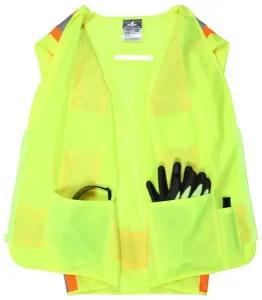
Standard waistcoats are inadequate for general contractors, site supervisors, and surveyor engineers who carry mobile tablets, two-way radios, blueprints, and multi-meters. Demand has surged for heavy-duty 9-pocket and 11-pocket utility vests with reinforced weight-distribution webbing.
As mega-projects under the US Infrastructure Investment and Jobs Act (IIJA), the European Green Deal, and Middle Eastern mega-developments (such as Saudi Arabia's NEOM and UAE infrastructure expansions) scale rapidly, safety managers require workwear suppliers capable of delivering high-volume orders without compromising quality consistency across production batches.
The global competitiveness of a premier China Contractor Safety Vest Factory stems from the deep integration of industrial clusters in Zhejiang Province, particularly within the Yongkang and Jinhua manufacturing hubs. Yongkang Wow Safety Products Co., Ltd. exemplifies this industrial transformation by combining over 15 years of OEM/ODM expertise with a modern 6,000 m² facility staffed by more than 150 highly skilled workers.
Replacing traditional manual die-cutting, automated multi-layer laser cutting beds ensure geometric precision down to $\pm 0.5\text{ mm}$. This eliminates fraying along polyester tricot edges and guarantees that every pattern panel matches engineered safety dimensions.
To satisfy ANSI Class 2 and Class 3 fluorescence thresholds, raw polyester dyeing processes are monitored via continuous spectrophotometric sensors. Color space variance ($\Delta E$) is maintained below 1.0 across tens of thousands of yards of fabric.
By maintaining direct equity and long-term contracts with regional yarn spinning, weaving, micro-bead coating, and dyeing facilities, Chinese manufacturing ecosystems buffer fluctuations in international polyester resin prices.
This industrial concentration enables lead-time compression of up to 35% compared to emerging manufacturing regions that rely on imported raw materials. Furthermore, strict factory audits—including BSCI (Business Social Compliance Initiative), ISO 9001:2015 quality management systems, and ISO 14001 environmental compliance—provide global buyers with complete transparency into ethical labor practices and quality control standards.
Designing an enterprise-grade contractor safety vest requires striking a precise balance between thermal breathability, mechanical tear resistance, load-bearing structure, and high-visibility compliance. Below is an engineering comparison table detailing standard material specifications across major safety vest classifications manufactured in our factory hubs:
| Garment Class / Type | Primary Fabric Specs | Reflective Tape Specs | Closure Mechanisms | Target Work Environments |
|---|---|---|---|---|
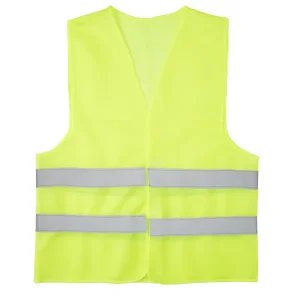
| ANSI Class 2 Economy Vest | 120 GSM 100% Polyester Tricot (Solid / Warp-Knit) | 2-inch Glass-Bead Retroreflective Tape ($R_A \ge 330\text{ cd/lx}\cdot\text{m}^2$) | Heavy-Duty Nylon Zipper or Hook & Loop (Velcro) | Traffic Control (<25 mph), Warehouse Operations, Parking Attendants |
| ANSI Class 2 Heavy Duty Contractor Vest | 150–160 GSM Breathable Mesh with Reinforced Solid Pockets | 2-inch High-Gloss Micro-Prismatic or 3M 8906 Silver Tape | Dielectric Non-Conductive Zipper / Heavy Duty Brass Zipper | General Commercial Construction, Earthmoving, Civil Engineering |
| ANSI Class 3 Surveyor / Executive Vest | 300D Durable Oxford Waterproof Fabric or 160 GSM Tricot | 2-inch Contrast Color Backing with Silver Reflective Stripes | Reinforced Front Zipper with Grommets & Lanyard Loops | Highway Construction (>45 mph), Utility Line Inspection, Railway Operations |
| 5-Point Breakaway Hazardous Vest | 120 GSM Light-Weight Polyester Breathable Mesh Grid | 2-inch Tear-Away Reflective Striping Configuration | 5-Point Velcro Breakaway (Shoulders, Sides, Front Closure) | Manufacturing Facilities, Moving Machine Operations, Railway Couplings |
| Flame-Resistant (FR) Contractor Vest | Modified Acrylic / Modacrylic-Cotton Blend (NFPA 2112 certified) | 2-inch Flame-Resistant Retroreflective Trim (UL Certified) | FR-Treated Melamine Zipper or Nomex Binding Hook & Loop | Petrochemical Refineries, Oil & Gas Platforms, Arc-Flash Sub-Stations |
Critical design features also include functional structural additions such as mic tabs double-stitched into the upper chest shoulders, clear PVC ID badge holders with anti-yellowing additives, padded collars to prevent neck chafing during extended shifts, and reinforced grommets for surveyors' tape distribution.
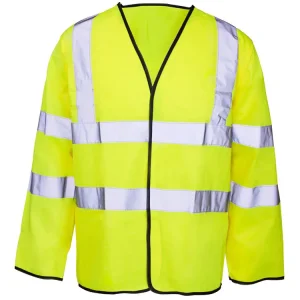
Workers on high-speed roadway expansions face constant collision threats from both passing motorists and heavy equipment like excavators and pavers. Vests specified for these zones require 360-degree reflectivity with 4-inch contrast trim (orange-on-lime or lime-on-orange) and full ANSI Class 3 compliance. Long-sleeve configurations ensure visual recognition of human motion at distances exceeding 1,200 feet.
In environments where electrical arc flashes or high-voltage discharge risks exist, standard zippers, metal snaps, or conductive materials can pose severe hazards. Factories manufacture specialized dielectric safety vests featuring non-conductive plastic zipper closures, covered hook-and-loop fasters, and flame-retardant modacrylic mesh fabrics that comply with NFPA 70E guidelines.
Dock workers, crane spotters, and forklift drivers operate in dense, fast-paced logistics environments. High-airflow 100% polyester mesh vests prevent thermal exhaustion during summer months while maintaining high tear strength. 5-point breakaway designs ensure that if a vest catches on moving conveyors, container locks, or mechanical riggings, the garment releases instantly to prevent worker entanglements.
Marine contractors and offshore wind turbine technicians require vests designed to perform in humid, salt-spray environments. Specialized waterproofing polyurethane (PU) back coatings, marine-grade anti-corrosive hardware, and salt-fog resistant retroreflective tapes ensure visibility and structural integrity remain uncompromised despite high salinity exposure.
To mitigate supply chain risks, international procurement directors must establish robust verification frameworks when auditing potential factory partners in China. A reliable China Contractor Safety Vest Factory must validate product quality through third-party lab certifications (such as SATRA, SGS, TÜV Rheinland, or UL Laboratories) across five core testing parameters:
Verification that reflective tape maintains $R_A > 100\text{ cd/lx}\cdot\text{m}^2$ after 25 to 50 standardized industrial wash cycles at 60°C ($140^\circ\text{F}$) in accordance with ISO 6330 testing standards.
Evaluating fabric tear propagation via ASTM D2261 (Tongue Tear Method). Polyester mesh fabrics must withstand minimum tearing forces of 25 Newtons to prevent ripping on jagged rebar or scaffolding.
Testing under ISO 105-B02 artificial weathering guarantees that fluorescent background dyes will not fade or shift color coordinates under prolonged exposure to intense sunlight.
Screen printing or heat-transferring custom contractor logos must be engineered carefully. If logo placement covers certified fluorescent background fabric, total remaining visible background area must still satisfy ANSI/EN ISO minimum square-inch thresholds.
Direct technical answers to common procurement, compliance, and custom manufacturing inquiries.
Explore our full range of high-visibility safety clothing, rainwear, long-sleeve shirts, and protective accessories.