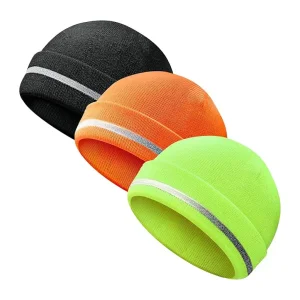
Certified PPE headwear, reflective apparel, and high-visibility work shirts engineered for peak compliance and worker comfort in heavy construction, logistics, and maritime zones.
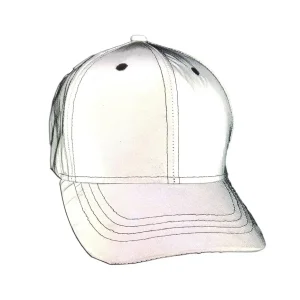
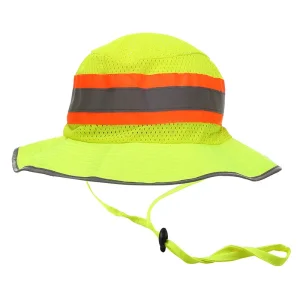
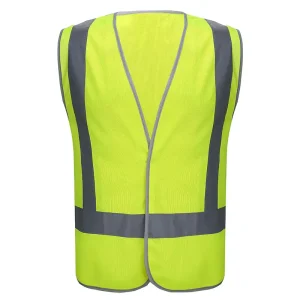
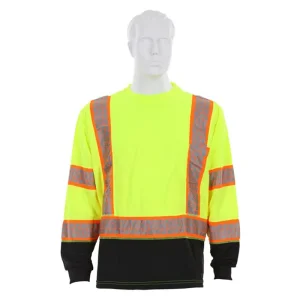
Osaka serves as the economic engine of Western Japan and the apex of the Hanshin Industrial Region. As the city undergoes unprecedented infrastructure transformation—driven by the massive civil engineering developments at Yumeshima Island for World Expo 2025, ongoing expansions across the Osaka Port waterfront, and continuous transit network modernization by Osaka Metro and JR West—the demand for high-grade Personal Protective Equipment (PPE) has reached historic highs. High-visibility headwear, specifically hi-vis hats, reflective sun shields, and industrial safety beanies, sits at the critical intersection of occupational safety compliance and ergonomic worker endurance.
Historically, domestic production facilities within Osaka Prefecture—concentrated around industrial clusters in Sakai, Higashiosaka, and Kadoma—have excelled in specialized manufacturing, machinery, and precision optics. However, the labor-intensive textile assembly sector for high-visibility garments has shifted toward international strategic partnerships. Modern procurement officers in Osaka face a dual mandate: adhering strictly to Japanese Industrial Standards (JIS T 8127 for high-visibility warning clothing and JIS T 8131 for industrial protective helmets) while managing severe unit cost pressures, erratic post-pandemic supply chain lead times, and extreme climatic seasonal shifts.
The structural engineering of high-visibility hats has evolved from passive fluorescent head coverings to sophisticated photometric systems. When evaluating a Hi Vis Hat Factory or Suppliers serving Osaka, technical buyers must scrutinize three fundamental material metrics:
Fluorescent background material functions by converting invisible ultraviolet light into visible spectrum wavelength radiation. According to international standards (EN ISO 20471 and ANSI/ISEA 107, which inform JIS T 8127), base materials must fall within strict chromaticity coordinates $(x, y)$ under standard illuminant D65. For Fluorescent Yellow headwear, the minimum luminance factor ($\beta$) must exceed $0.70$, whereas Fluorescent Orange-Red demands $\beta \ge 0.40$. Premium suppliers utilize 100% dope-dyed high-tenacity polyester fibers that resist color fading despite long-term exposure to intense ultraviolet radiation on Kansai construction sites.
Reflective trim on safety headwear provides night-time visibility by directing light beams straight back toward the illumination source (automobile headlights or heavy machinery floodlights). Advanced headwear incorporates micro-glass bead technology embedded in weather-sealed resin matrices, yielding retroreflectivity performance coefficients ($R_A$) surpassing $400 \text{ cd/(lx}\cdot\text{m}^2)$ at a $5.0^\circ$ entrance angle and $0.2^\circ$ observation angle. Micro-prismatic tapes are increasingly deployed on hard-hat sun shields for superior wide-angle angularity when workers lean forward during track maintenance or structural welding operations.
| Technical Characteristic | Standard Commercial Grade | Industrial Osaka Specification | Testing / Standard Protocol |
|---|---|---|---|
| Retroreflective Coefficient ($R_A$) | 150 – 250 cd/(lx·m²) | > 400 cd/(lx·m²) (Class 2 Tape) | CIE 54.2 / JIS T 8127 |
| Fabric UV Protection Factor | UPF 15+ to 30+ | UPF 50+ (Blocks 98%+ UV Rays) | AS/NZS 4399:2017 |
| Industrial Wash Longevity | 15 – 25 Wash Cycles | 50+ Cycles @ 60°C Thermal Wash | ISO 6330 / ISO 15797 |
| Base Fabric Weight | 160 – 200 gsm solid | 120 – 140 gsm Hydrophobic Mesh | EN 12127 Airflow Permeability |
| Color Fastness to Light | Grade 3 – 4 | Grade 5 (Xenon Arc Lamp Test) | JIS L 0843 / ISO 105-B02 |
Worksite conditions across Osaka vary widely, requiring procurement specialists to tailor their safety apparel orders based on localized operational hazards:
Stevedores, crane operators, and container yard crews working along Nanko and Sakishima docks face salt fog, high humidity, and continuous machinery traffic. Headwear for maritime logistics requires anti-corrosive synthetic trims, hydrophobic quick-dry polyester linings, and high-contrast two-tone designs (e.g., Fluorescent Yellow combined with Navy Blue brim highlights) to prevent salt stain visibility while preserving high-conspicuity sightlines from elevated container gantry cabs.
Night-time track maintenance along Osaka’s dense rail corridors (Hankyu, Hanshin, Keihan, and Osaka Metro) demands maximum retroreflectivity in low-light environments. Headwear solutions must feature 360-degree continuous reflective bands, integrated LED active light channels for zero-light zones, and breakaway chin-strap mechanisms to eliminate entanglement hazards around automated machinery.
In the heavy industrial belt of the Sakai-Senboku coastal area, workers operate near blast furnaces and metal stamping plants. Safety headgear deployed here must incorporate flame-retardant (FR) treated cotton-synthetic blends (compliant with ISO 11612) paired with heat-resistant reflective striping that will not delaminate under radiant heat exposure.
While Japanese safety distributors in Osaka maintain high quality standards, local apparel factories in Kansai face severe structural headwinds: aging specialized labor forces, constrained factory footprints, and elevated domestic production overheads. This reality has driven strategic alliances between Osaka safety supply brands and state-of-the-art Chinese manufacturing hubs, most notably Yongkang Wow Safety Products Co., Ltd. in Zhejiang.
Integrating China's Industry 4.0 textile ecosystem into Osaka’s supply network yields massive strategic advantages:
To mitigate risk during high-volume OEM/ODM procurement, enterprise buyers in Osaka should establish a rigorous specification matrix before issuing RFQs (Request for Quotations). Key verification steps include:
Combining 15+ years of specialized manufacturing experience with world-class quality assurance and seamless export capabilities.
Fully compliant with JIS T 8127, EN ISO 20471, and ANSI/ISEA 107 standards. Guaranteed audit-ready certification documentation for every batch.
Complete custom manufacturing support including bespoke logo application, customized head circumference sizing, brim geometry tweaks, and customized packaging.
Strategic manufacturing hub in Zhejiang enables streamlined ocean freight to Osaka Port within 3 to 4 days, minimizing warehouse buffer requirements.
Integration of moisture-wicking mesh grids and UPF 50+ fabrics tailored specifically for hot, high-humidity Japanese summer construction seasons.
Every lot undergoes 4-stage inspection: incoming fabric colorfastness, retroreflectivity testing, seam tension checks, and final packaging audits.
Eliminate unnecessary regional broker markups through factory-direct procurement, giving Osaka distributors a decisive competitive edge.
Explore our full line of safety vests, weather-resistant jackets, gaiters, and thermal headwear engineered for global B2B procurement programs.
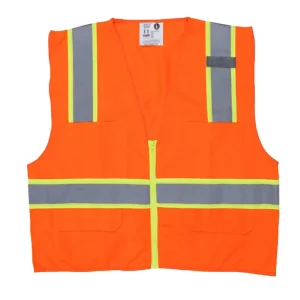
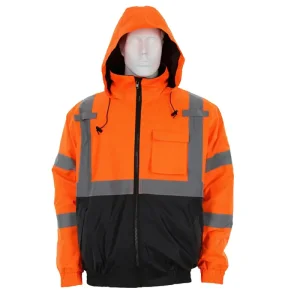
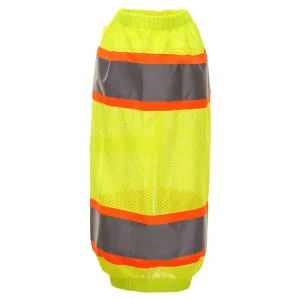
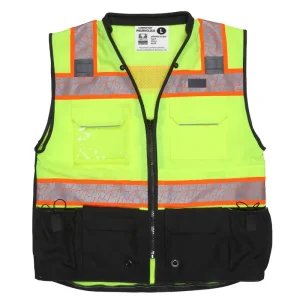
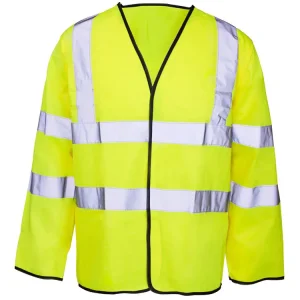
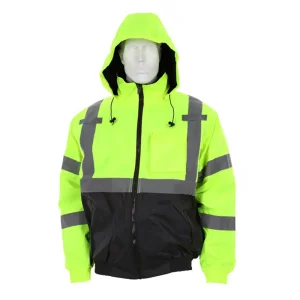
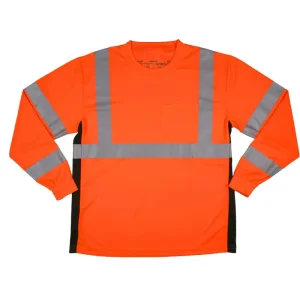
Detailed technical and commercial answers for Japanese distributors, safety officers, and general contractors importing high-visibility apparel.
Our high-visibility garments and headwear accessories are designed to meet or exceed JIS T 8127 guidelines, which align closely with ISO 20471. We ensure our fluorescent base fabrics fall within strict CIE chromaticity coordinates and maintain a minimum retroreflective coefficient ($R_A$) above $400 \text{ cd/(lx}\cdot\text{m}^2)$. Complete third-party laboratory test reports (SGS/TÜV) are provided with every wholesale shipment.
For standard stock colorways (Fluorescent Yellow and Fluorescent Orange), our minimum order quantity starts as low as 500 units per style. For custom-dyed fabrics, specialized Japanese logo screen-printing, or custom headband dimensioning, our MOQ typically ranges between 1,000 and 2,000 units depending on raw material specifications.
Thanks to our strategic manufacturing base in Zhejiang, ocean freight from Ningbo or Shanghai port directly to Osaka Port takes only 3 to 4 days. Including customs clearance and local container drayage, door-to-door delivery to your Osaka warehouse can be achieved within 7 to 10 business days post-production.
We engineer our summer hi-vis bucket hats and hard-hat sun shields using lightweight 120gsm polyester mesh weaves featuring rapid-dry moisture management. Micro-porous air channels allow body heat to dissipate quickly, while wide brims offer UPF 50+ rating to protect outdoor infrastructure workers from severe sun exposure.
Yes. We provide pre-production sample development within 5 to 7 business days. Samples include your specified logo embroidery or transfer printing, retroreflective trim layouts, and custom hangtags for complete review and sign-off by your quality assurance team before bulk execution.
Our premium heat-applied micro-prismatic and sewn glass-bead tapes maintain compliance through 50 industrial wash cycles at 60°C (ISO 6330). The fluorescent base fabrics resist color fading and bleed, ensuring extended garment lifecycle under heavy industrial laundering.