Engineered specifically for high-intensity industrial corridors, port logistics, and automotive assembly facilities in Aichi Prefecture. Fully compliant with international safety benchmarks and JIS standards.
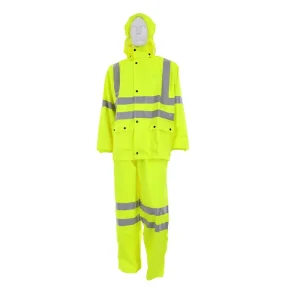
The Greater Nagoya metropolitan area—spanning Aichi, Gifu, and Mie Prefectures—serves as Japan’s absolute manufacturing powerhouse, generating over 40% of the nation's industrial output. As the global epicenter for automotive engineering (anchored by Toyota Motor Corporation and its tier-1 suppliers), aerospace manufacturing, robotics, and heavy port logistics, Nagoya presents a unique set of occupational safety challenges.
Nagoya’s geographical location in the Nobi Plain creates extreme seasonal contrasts. Summers in Aichi are characterized by intense, humid heatwaves with temperature spikes frequently surpassing 38°C (100.4°F) and relative humidity exceeding 75%. For outdoor workers at the Port of Nagoya, construction personnel on the Meishin Expressway, and technicians inside non-air-conditioned stamping plants, heat-induced fatigue, UV radiation, and dust inhalation are constant threats.
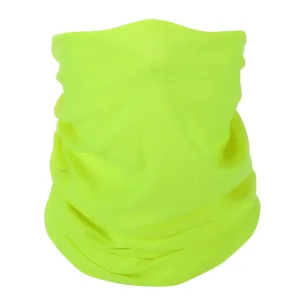
Conversely, winter maintenance work along JR Tokai rail networks requires protection against piercing winds. High-visibility neck gaiters have emerged as essential personal protective equipment (PPE), acting as multi-functional barriers that provide thermal regulation, UV isolation, particulate defense, and 360-degree optical visibility.
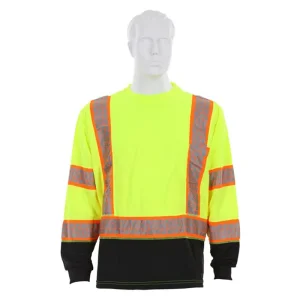
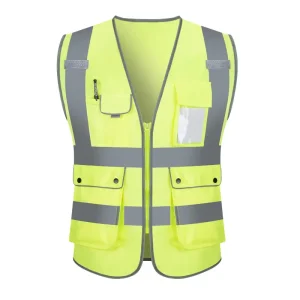
In accordance with Japan’s Ministry of Health, Labour and Welfare (MHLW) workplace safety directives and the revised JIS T 8127 high-visibility standards, modern enterprises in Nagoya can no longer rely solely on traditional safety vests. Modular protective gear—specifically high-visibility gaiters and neck shades—is now integrated into mandatory safety uniforms for highway work, rail track construction, and dockside freight handling.
This technical document serves procurement directors, safety compliance officers, and industrial distributors across Nagoya with an exhaustive blueprint for sourcing, evaluating, and customizing high-visibility gaiters engineered to survive rigorous Japanese workplace requirements.
Procuring safety apparel for the Japanese market requires strict adherence to photometric performance standards. Understanding how Japanese Industrial Standards (JIS) align with global criteria ensures zero regulatory bottlenecks during industrial compliance audits.
| Compliance Parameter | JIS T 8127 (Japan) | EN ISO 20471 (Europe) | ANSI/ISEA 107 (USA) |
|---|---|---|---|
| Primary Application Scope | Professional High-Visibility Safety Apparel for Japanese Highways, Rail & Industry | High Visibility Warning Clothing for High-Risk Traffic & Construction Zones | American National Standard for High-Visibility Safety Apparel and Accessories |
| Minimum Luminance Factor ($\beta$) | Fluorescent Yellow: $\ge 0.70$ Fluorescent Orange-Red: $\ge 0.40$ |
Fluorescent Yellow: $\ge 0.70$ Fluorescent Orange-Red: $\ge 0.40$ |
Fluorescent Yellow-Green: $\ge 0.70$ Fluorescent Orange-Red: $\ge 0.40$ |
| Retroreflective Coefficient ($R_A$) | Premium Grade: $\ge 330 \text{ cd/lx}\cdot\text{m}^2$ (at 5°/0.2° observation angle) | Class 2 Tape: $\ge 330 \text{ cd/lx}\cdot\text{m}^2$ | Type R Class 2/3: $\ge 330 \text{ cd/lx}\cdot\text{m}^2$ |
| Color Fastness to Industrial Laundering | Grade 4-5 after 50 cycles under JIS L 0844 testing protocols | Grade 4 after 50 ISO 6330 wash cycles | Grade 4 after 30 AATCC 61 wash cycles |
| Modular Accessory Category | Recognized as Supplementary Class 1 / Head & Neck Protection System | Supplementary Accessory Certification under ISO 20471 Annex | Headwear & Accessory Classification (Type O / Type R) |
For a high-visibility gaiter to perform effectively in low-light environments around Nagoya’s industrial docks or nighttime roadworks along Route 23, the fabric must fall strictly within the defined chromaticity coordinates $(x, y)$ specified by JIS T 8127. Cheap polyester gaiters available on mass markets often degrade rapidly under daylight UV exposure, shifting from compliant fluorescent yellow to non-compliant dull yellow within weeks. Our manufacturing facility utilizes high-colorfast dispersible dyes with specialized UV-stabilizers to ensure chromaticity retention through over 50 industrial wash cycles.
A high-visibility gaiter engineered for Nagoya must do far more than reflect light—it must actively manage moisture, heat transfer, skin friction, and atmospheric pollutants.
Utilizing a proprietary cross-section polyester-polyamide micro-channel yarn, our cooling gaiters accelerate moisture wicking by 300% compared to standard cotton. When saturated with water or sweat, the cross-channel fiber structure regulates rapid evaporation, dropping skin temperature by up to 3°C to 5°C—a crucial feature during Nagoya's scorching August summer shifts.
Prolonged exposure to ultraviolet solar radiation causes severe skin trauma and accelerated worker weariness. Our fabrics undergo dense weave matrix compression to block 98%+ of harmful UVA and UVB rays, meeting both AS/NZS 4399 and JIS L 1925 standards without relying on chemical coatings that wash out over time.
Instead of rigid glass-bead transfer tapes that crack upon extension, our gaiters feature high-stretch micro-prismatic segmented reflective stripes. These continuous stretch reflective heat transfers expand seamlessly with the 4-way stretch fabric, offering uncompromised 360-degree retroreflection even when fully extended across the wearer's head or face.
In Nagoya's extensive automotive painting facilities (such as Toyota's Takaoka and Tsutsumi plants), static discharge can trigger volatile organic compound (VOC) ignition or attract airborne dust particles onto unpainted vehicle chassis. We manufacture specialized ESD high-visibility gaiters incorporating continuous conductive carbon filament grids (less than $10^7 \ \Omega/\text{sq}$ surface resistance). Furthermore, for welding and heavy metal stamping shops in Kariya and Hekinan, we supply inherently flame-retardant (Arimid/Modacrylic blends) gaiters that comply with ISO 11612 standards.
Tailoring protective equipment to the micro-demands of specific Nagoya industrial sectors enhances compliance rates, wearer comfort, and workplace efficiency.
Primary Hubs: Toyota City, Kariya, Anjo, Komaki.
Operational Threat: Repetitive heat strain, fine particulate matter from machining, overhead lighting glare, electrostatic interference.
Gaiter Solution: Seamless, lint-free fluorescent lime-green neck gaiters with anti-static ESD fibers. Used as hair coverings, neck coolers, or dust masks to maintain ultra-clean paint shop standards while keeping maintenance crews visible to internal AGVs (Automated Guided Vehicles).
Primary Hubs: Tobishima Container Terminal, Meiko Bridge Logistics Complexes.
Operational Threat: Extreme maritime sun glare, salt-spray corrosion, heavy gantry crane traffic, night container loading maneuvers.
Gaiter Solution: High-chroma fluorescent orange gaiters featuring 360° wide micro-prismatic silver reflective tape. Salt-spray resistant finish prevents reflective degradation, ensuring crane operators spot deck workers from heights over 40 meters.
Primary Hubs: JR Tokai Lines, Meitetsu Rail System, Nagoya Municipal Subway.
Operational Threat: Ultra-fast transit hazards, severe low-light night conditions, brake dust inhalation during tunnel inspections.
Gaiter Solution: JIS T 8127 Class-compliant gaiters with high-density particulate filtration pocket inserts. Ensures crew members remain visible under intense train headlights while guarding lungs against iron micro-particles inside rail conduits.
Primary Hubs: Nagoya Station West Gate Redevelopment, Nagoya Expressway Extensions.
Operational Threat: Asphalt radiant heat, heavy machinery blind spots, urban concrete airborne dust.
Gaiter Solution: Dual-zone cooling neck gaiters integrated with hard hat sun shields. Provides total neck-to-collar UV cover, preventing sunburn on exposed neck skin during summer paving projects.
As a direct-from-factory safety apparel manufacturer with over 15 years of international export experience, Yongkang Wow Safety Products Co., Ltd. delivers streamlined OEM/ODM manufacturing partnerships optimized for Japanese procurement protocols.
Japanese manufacturing thrives on lean inventory practices. We support custom buffer-stock agreements and structured partial-shipment schedules directly into Port of Nagoya or bonded warehouses in Aichi Prefecture, minimizing your storage costs while protecting against supply disruptions.
From custom Pantone color matching (for corporate brand identity) to reflective screen-printed corporate logos, custom barcode hangtags, Japanese-language wash care labels (JIS L 0001 compliant), and individual retail-ready eco-packaging, every gaiter unit is produced exact to specification.
Operating under ISO 9001 certified quality management systems, our internal QA laboratory performs mandatory batch testing for color fastness, retroreflective output ($R_A$), tensile elasticity, and seam strength prior to packing. We maintain a zero-defect policy for Japanese industrial clients.
We offer fast physical sample dispatch within 3 to 5 business days for verified corporate buyers and safety equipment distributors in Japan.
Send Inquiry NowThe industrial safety landscape is rapidly evolving with smart textiles, green carbon-neutral initiatives, and micro-climate control technologies. Our R&D team is pioneering next-generation workwear technologies tailored for forward-thinking Japanese corporations.
Integrating bio-based Phase Change Material microcapsules inside neck gaiter fibers allows automatic thermal regulation. PCMs absorb thermal energy during sudden heat spikes inside steel works or foundries and release stored heat during cool night shifts, maintaining skin temperature in the optimal comfort range (28°C–32°C).
In alignment with Japan's "Green Growth Strategy Through Achieving Carbon Neutrality in 2050", our manufacturing lines are transitioning to Global Recycled Standard (GRS) certified post-consumer recycled polyester. This reduces carbon footprint per gaiter by 42% while preserving identical strength and high-visibility fluorescence.
Combining passive retroreflection with active photoluminescent (glow-in-the-dark) pigments ensures visibility even in total power blackout situations inside industrial complexes or underground subway tunnels. Future iterations incorporate micro RFID chips for automated uniform laundering tracking and worker entry verification.
Detailed technical answers to common questions raised by corporate safety managers, trade importers, and procurement buyers across the Chubu region.
Our hi-vis gaiters are engineered using base fabrics that meet the exact chromaticity coordinates and minimum luminance factors ($\beta \ge 0.70$ for Fluorescent Yellow) required under JIS T 8127. When used as part of a modular workplace uniform ensemble (combined with Class 2 or Class 3 vests/jackets), they provide certified supplementary head and neck protection, enhancing total wearer visibility in high-risk zones.
For standard production items, our typical MOQ is 500 units per style. For custom corporate colorways, private labels, or custom logo heat transfers, the standard MOQ is 1,000 units. Production lead time generally ranges from 15 to 25 days depending on quantity, with ocean shipping from Ningbo/Shanghai port to Port of Nagoya taking approximately 3 to 5 transit days.
Yes. We manufacture specialized anti-static gaiters infused with continuous carbon conductive yarns specifically designed for automotive paint shops and electronic component assembly plants in Aichi Prefecture. Additionally, we produce inherent flame-retardant (FR) gaiters certified to ISO 11612 standards for foundry, welding, and heavy machinery operations.
Our cooling neck gaiters utilize a 3-layer cross-channel micro-polyester structure. The inner layer wicks sweat away from the skin, the core layer retains moisture without feeling heavy, and the outer mesh accelerates evaporation. When activated with water, the endothermic evaporative reaction reduces fabric surface temperature by 3°C to 5°C below ambient air temperature for up to 2 to 3 hours per wetting cycle.
We utilize segmented retroreflective thermal transfer films rated for up to 50 industrial wash cycles at 60°C (140°F) in compliance with ISO 6330 and JIS L 0844. The segmented design allows the underlying 4-way stretch fabric to expand without cracking or delaminating the reflective surface.
Explore our full line of safety workwear manufactured by Yongkang Wow Safety Products Co., Ltd. Fully customizable for OEM bulk orders across the Greater Nagoya area.
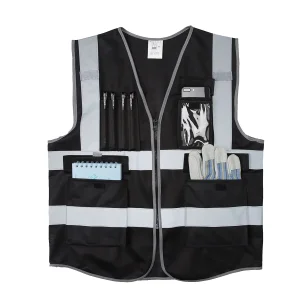
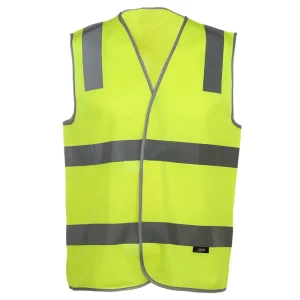
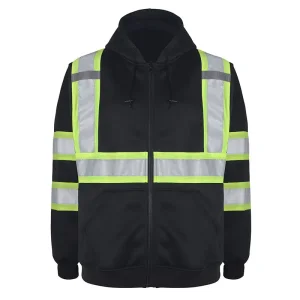
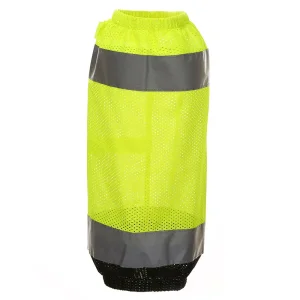
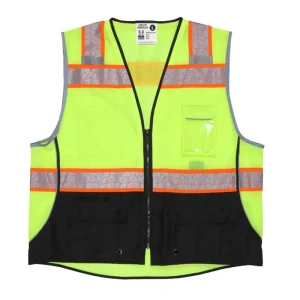
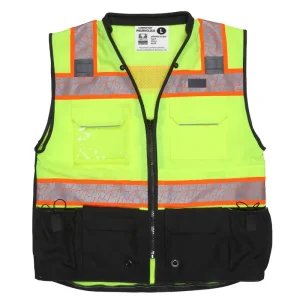
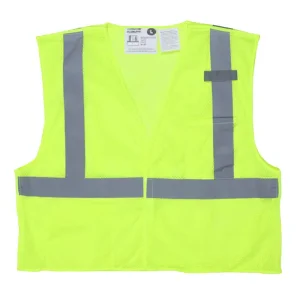
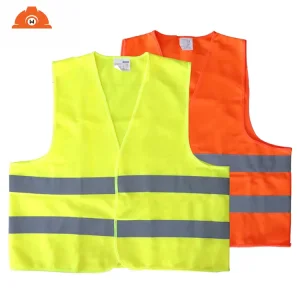
Get competitive direct-from-factory pricing, customized technical specifications, and reliable shipping to Port of Nagoya and across Japan. Request your comprehensive digital catalog and OEM quotation today.