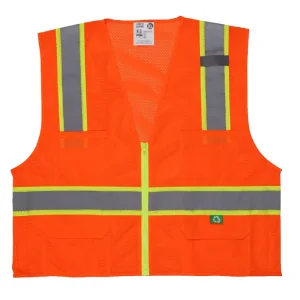
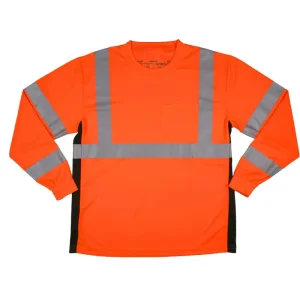
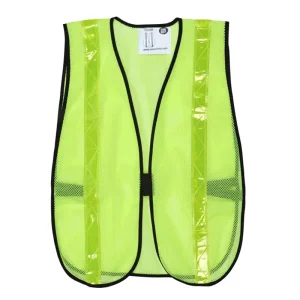
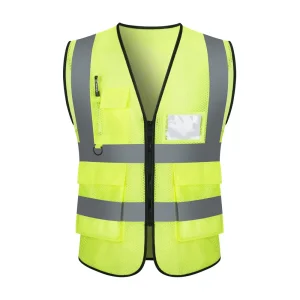
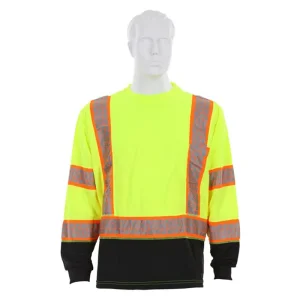
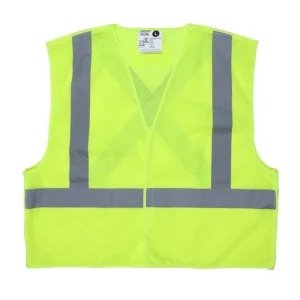
Explore our core certified industrial work vests, T-shirts, and reflective gear produced to stringent global safety specifications.
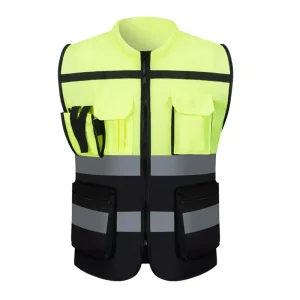
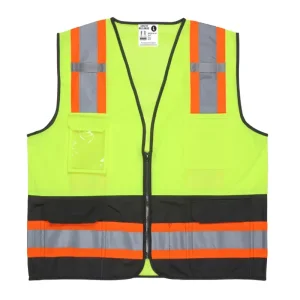
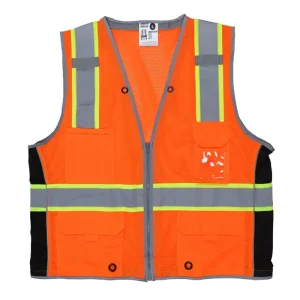
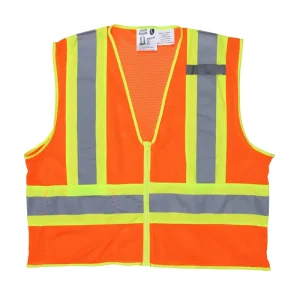
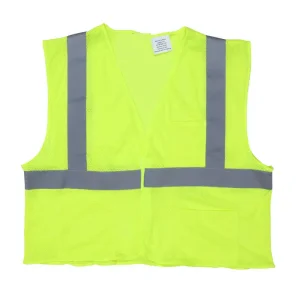
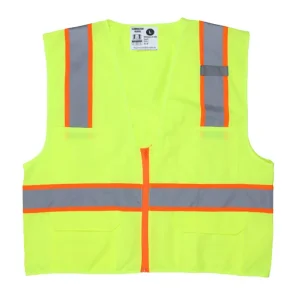
Analyzing global regulatory forces, photopic visual ergonomics, and the shift toward technical multi-hazard high-visibility apparel.
In modern industrial safety, the high-visibility work vest (Hi-Vis Work Vest) has evolved from a basic compliance garment into a sophisticated component of personal protective equipment (PPE). As international regulatory bodies such as the U.S. Occupational Safety and Health Administration (OSHA), European Agency for Safety and Health at Work (EU-OSHA), and Safe Work Australia mandate stringent visibility requirements across civil infrastructure, logistics, energy, and mining, global procurement officers face complex purchasing decisions. Sourcing from qualified wholesale work vest hi vis suppliers and factories requires evaluating raw material photometry, retroreflective physics, supply chain stability, and multi-jurisdictional compliance.
The global high-visibility workwear market is expanding rapidly, driven by multi-trillion-dollar infrastructure investments and rising corporate compliance standards. Procurement strategies must look beyond initial unit cost to consider total life-cycle performance. Garments must maintain visual conspicuity through harsh UV exposure, industrial laundering, abrasion, and microclimatic extremes. Partnering directly with experienced original equipment manufacturers (OEM) in China provides commercial buyers with the technological agility, material innovation, and manufacturing scale needed to win tenders and lower risk across enterprise supply chains.
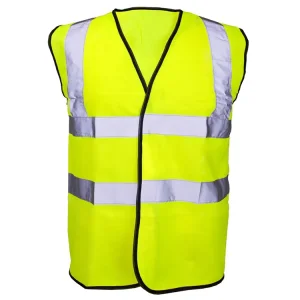
Human visual perception under daylight relies on photopic vision, which peaks at a wavelength of approximately 555 nanometers. Fluorescent yellow-green fabrics align precisely with this sensitivity peak, yielding a luminance factor ($\beta \ge 0.70$) significantly higher than fluorescent orange-red ($\beta \ge 0.40$). However, fluorescent orange provides superior visual contrast against natural green vegetation and overcast sky backgrounds. Professional procurement specifications often utilize dual-tone configurations to optimize conspicuity across complex operational environments.
Unpacking retroreflective physics, textile engineering, and sustainable polymer chemistry.
Utilizing glass bead catadioptric systems ($N_r = 1.90 - 1.93$) and micro-prismatic corner-cube reflectors. Micro-prismatic tapes achieve coefficient of retroreflection values ($R_A$) exceeding $500 \text{ cd}/(\text{lx}\cdot\text{m}^2)$, ensuring extreme distance visibility under vehicle headlamps.
Engineered from 100% continuous filament polyester (120-160 GSM). The warp-knitted structure prevents laddering or tearing when punctured, while providing high tensile strength (ASTM D5034 > 600N) and low shrinkage under high-temperature washing.
Integrating modacrylic blends and continuous carbon conductive yarns (ESD grids complying with EN 1149). Designed for utility maintenance, petrochemical refineries, and arc-flash environments requiring NFPA 2112 and EN ISO 11612 certification.
| Parameter / Specification | Standard Warp-Knitted Vest | Heavy-Duty Surveyor Vest | FR / Anti-Static Work Vest |
|---|---|---|---|
| Primary Material Composition | 100% Warp-Knitted Polyester (120 GSM) | 300D Oxford Polyester with PU Coating | 60% Modacrylic / 39% Cotton / 1% Carbon (180 GSM) |
| Reflective Tape Technology | Class 2 Glass Bead Silver Tape ($R_A > 330$) | High-Gloss Micro-Prismatic PVC Striping | Flame Retardant Aramid Backing Silver Tape |
| Color Chromaticity & Luminance | Fluorescent Yellow ($\beta \ge 0.70$) / Orange ($\beta \ge 0.40$) | Dual-Tone Lime/Black or Orange/Navy | Fluorescent Yellow / Navy Blue Accent |
| Industrial Wash Durability | 25 Cycles @ 60°C (ISO 6330) | 50 Cycles @ 60°C (ISO 6330) | 50+ Cycles @ 75°C Industrial Laundering |
| Tensile & Tear Strength | Warp > 500N, Weft > 450N | Warp > 1200N, Weft > 980N | Warp > 800N, Weft > 750N |
| International Certifications | ANSI/ISEA 107 Class 2, EN ISO 20471 Class 2 | ANSI/ISEA 107 Class 2/3, CSA Z96 Class 2 | EN ISO 20471, EN ISO 11612, EN 1149-5 |
Tailoring high-visibility specifications to regional environmental and operational risk profiles.
For highway maintenance and roadway construction where vehicle approach speeds exceed 50 mph (80 km/h), workers require 360-degree visibility vectors. Class 3 high-visibility garments incorporating full sleeve retroreflective striping and dual 2-inch vertical/horizontal bands ensure driver detection at distances exceeding 300 meters.
Operational environments with explosive vapor risks or electrical arc hazards require work vests manufactured from inherently flame-retardant modacrylic fibers and anti-static grid weaves. Hardware must feature plastic non-conductive zippers or concealed FR hook-and-loop closures to eliminate spark generation risks.
Port operations expose safety vests to saltwater corrosion, oil contamination, and mechanical entanglement risks. Heavy-duty 300D Oxford polyurethane-coated vests feature 5-point breakaway mechanisms (shoulders, sides, front) that disengage quickly if caught in conveyor belts or container handling machinery.
Underground mining and cold storage facilities require high-contrast dual-tone vests with integrated fleece liners and micro-prismatic reflective strips. Micro-prismatic optics outperform traditional glass beads in wet, muddy, or dusty environments by maintaining optical reflectance even when coated with surface moisture.
Understanding the competitive advantages of Zhejiang's integrated PPE industrial cluster.
Our facility in Jinhua, Zhejiang, benefits from immediate access to local raw material ecosystems—ranging from PET chip polymerization, yarn spinning, and fluorescent dyeing to specialized retroreflective tape slitting. This localized synergy minimizes material lead times to under 7 days.
Integrating computerized CAD pattern nesting software and multi-head CNC laser cutters optimizes fabric utilization rate (>96%). Ultrasonic seam welding and computerized automatic pocket sewing machines maintain stitching precision within $\pm 0.5\text{mm}$ across high-volume production runs.
Every batch of raw fluorescent fabric and retroreflective tape undergoes rigorous internal testing. Our laboratory utilizes Datacolor spectrophotometers for chromaticity coordinate verification and retroreflectometers to validate ANSI/ISEA and EN ISO compliance prior to mass production.
As a direct factory supplier, we offer end-to-end customization services for global enterprise accounts and safety equipment distributors:
Navigating international safety standards, social audits, and quality management systems.
Defines garment performance by Type (Type R - Roadway, Type P - Public Safety, Type O - Off-Roadway) and Class (Class 1, 2, 3). Mandates minimum background material area ($0.50 \text{ m}^2$ for Class 2) and retroreflective material area ($0.13 \text{ m}^2$).
European standard categorizing garments into 3 classes based on risk levels. Enforces strict color fastness to washing, rub fastness, perspiration fastness, and retroreflective performance following 25 to 50 wash cycles.
Specifies garments for Day Only (Class D), Night Only (Class N), or Day/Night (Class D/N) usage. Requires specific upper-torso coverage and strict UV protection factors (UPF 50+) for outdoor sun protection.
Our manufacturing facility operates under audited ISO 9001:2015 Quality Management Systems and ISO 14001:2015 Environmental Management Systems, holding full BSCI and SMETA (Sedex) social compliance certifications.
Direct answers from engineering and global supply chain directors.
The primary distinction lies in total surface area coverage of fluorescent background fabric and retroreflective tape. An ANSI Class 2 vest requires a minimum of 775 sq inches ($0.50 \text{ m}^2$) of background fabric and 201 sq inches ($0.13 \text{ m}^2$) of reflective tape, suitable for workers exposed to traffic exceeding 25 mph. ANSI Class 3 requires 1,240 sq inches ($0.80 \text{ m}^2$) of background fabric and 310 sq inches ($0.20 \text{ m}^2$) of reflective tape, mandating full upper-torso and sleeve coverage to provide 360-degree body contour recognition for high-speed traffic zones (>50 mph).
Glass bead tape relies on microscopic glass spheres coated with aluminum on the bottom surface to refract light back to the source. It provides excellent flexibility, cost-effectiveness, and typical brightness ($R_A \approx 330 - 500 \text{ cd}/(\text{lx}\cdot\text{m}^2)$). Micro-prismatic tape uses molded polymer corner-cube pyramids that achieve higher retroreflection ($R_A > 700 \text{ cd}/(\text{lx}\cdot\text{m}^2)$) and superior performance under wet weather conditions, though it has higher material rigidity and cost.
Standard high-visibility work vests are certified for 25 to 50 washing cycles according to ISO 6330 or AATCC 135 standards at 40°C to 60°C. Industrial laundering can degrade the fluorescent dyes and retroreflective optical layer over time. For heavy industrial accounts, we supply industrial-laundry-grade reflective tapes engineered to withstand 50+ wash cycles at 75°C along with tunnel drying.
Yes, provided the printed logo area does not exceed the maximum allowed reduction of compliant background material. Standards allow small non-compliant areas (such as screen-printed chest or back logos) provided the minimum square inches of certified fluorescent background fabric remain intact. Our engineering team calculates logo positioning and printable area surface dimensions to guarantee full compliance before printing.
Our standard OEM order MOQ is 500 to 1,000 units per style for customized fabric colors or bespoke pocket designs. Stock items with custom logo printing can be produced from 200 units. Prototype physical samples are dispatched within 3 to 5 business days, and mass production container shipments generally take 20 to 30 calendar days upon sample approval.
Explore additional certified high-visibility products, shirts, mesh vests, and safety accessories.