Explore our factory-direct wholesale high-visibility vests, hats, and protective accessories manufactured for peak industrial performance.
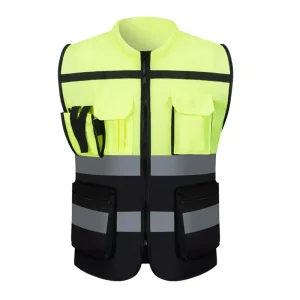
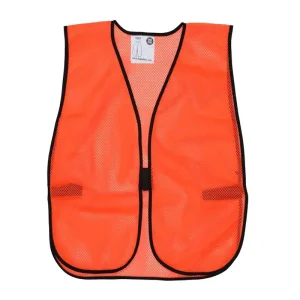
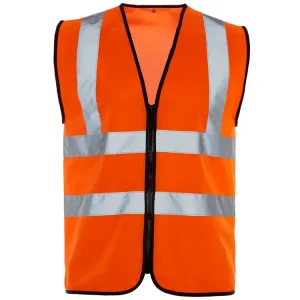
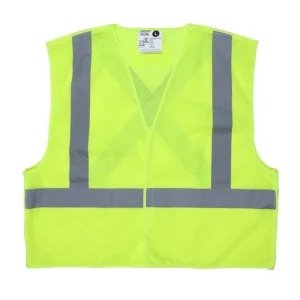
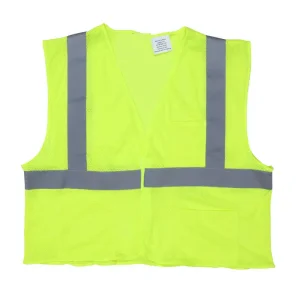
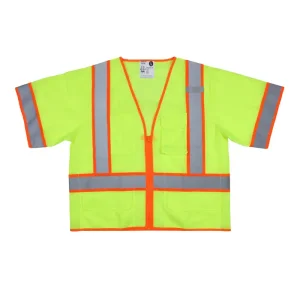
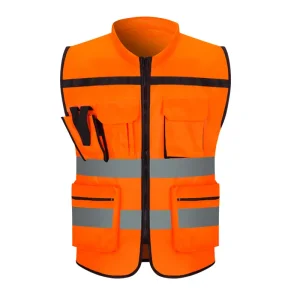
In modern industrial occupational safety, the transition from conventional rigid rain parkas and basic polyester vests to advanced soft shell high-visibility (Hi-Vis) garments represents a fundamental paradigm shift. Today’s industrial workforce—spanning civil infrastructure, offshore wind energy installations, cold-chain logistics, and emergency municipal services—demands protective apparel that seamlessly unifies three critical vectors: certified optical visibility, all-weather microclimate regulation, and uncompromised ergonomic mobility.
As leading wholesale soft shell Hi Vis suppliers and OEM/ODM factory partners, we observe an accelerating global demand for technical workwear. Traditional heavy PVC or polyurethane-coated jackets, while waterproof, suffer from severe lack of breathability, leading to internal moisture condensation, heat stress, and worker fatigue. High-performance Hi-Vis softshell fabrics solve this industrial challenge by utilizing laminated multi-tier membrane assemblies that provide dynamic windproofing, water repellency, and vapour permeability without restricting physical movement.
Full compliance with stringent global standards including ANSI/ISEA 107-2020 (Type R Class 2 & Class 3), EN ISO 20471:2013+A1:2016, and AS/NZS 1906.4:2010. Engineered to meet strict minimum surface areas for fluorescent base fabric and retroreflective trim.
Direct-from-factory volume pricing structures tailored for Tier-1 safety equipment distributors, institutional procurement managers, and private-label apparel brands seeking scalable production and optimized land costs.
Formulated with high-tenacity 75D/100D mechanical stretch polyester faces and reinforced thermoplastic polyurethane membranes certified to retain structural integrity and retroreflectivity across 25 to 50 industrial laundering cycles.
The technical superiority of a premium wholesale Hi-Vis softshell garment lies within its tri-laminate composite structure. Each layer is engineered with specific physical properties to maintain bodily thermoregulation while resisting aggressive environmental exposures.
A central compliance requirement for high-visibility garments is night-time retroreflectivity. Softshell garments are subjected to severe bending and stretch forces during active physical labor. Therefore, selecting the correct retroreflective trim technology is paramount:
Comparative engineering parameters for B2B buyers, sourcing engineers, and institutional tender specifiers.
| Performance Standard / Parameter | Standard Softshell (Mid-Tier) | Pro All-Weather Softshell | Extreme Industrial & FR Softshell |
|---|---|---|---|
| Fabric Weight (GSM) | 280 – 300 g/m² | 310 – 340 g/m² | 350 – 380 g/m² |
| Waterproof Rating (Hydrostatic Head) | 5,000 mm H₂O | 10,000 mm H₂O | 15,000+ mm H₂O |
| Breathability Rating (MVTR) | 3,000 g/m²/24h | 5,000 – 8,000 g/m²/24h | 8,000+ g/m²/24h |
| Color Fastness to Light (ISO 105-B02) | Grade 4.0 | Grade 4-5 | Grade 5.0 (UV Inhibited) |
| Reflective Trim Technology | Standard Glass Bead Tape | Segmented Heat Transfer Film | FR Micro-Prismatic Trim |
| Laundering Endurance (ISO 6330) | 25 Cycles @ 40°C | 50 Cycles @ 60°C | 50+ Industrial Wash Cycles |
| Compliance Certification | ANSI Class 2 / EN ISO 20471 Cl 2 | ANSI Class 3 / EN ISO 20471 Cl 3 | NFPA 2112 / EN 1149-5 / EN 20471 |
Deploying specialized Hi-Vis softshell workwear engineered for harsh working environments worldwide.
For highway repair crews, freight terminal operators, and rail maintenance workers operating near high-speed traffic, Class 3 Hi-Vis softshells featuring full-sleeve retroreflective striping ensure 360-degree recognition. The windproof TPU membrane prevents body heat loss caused by high velocity wind shears along transit corridors.
Construction sites present dynamic hazard profiles involving heavy machinery, scaffolding, and changing ambient light. Softshell jackets equipped with mechanical 4-way stretch fabrics provide construction managers and technicians full arm movement without garment ride-up, while contrast two-tone dirt-masking panels keep garments presentable.
Salt spray, relentless humidity, and extreme squalls require high hydrostatic head ratings (10,000+ mm) and storm-proof zippers. Softshell workwear with rust-resistant hardware, storm flaps, and adjustable storm hoods provide coastal and offshore technicians maximum defense against cold water dampness.
In environments with potential arc flash or flammable vapor hazards, specialized softshell lines integrate flame-retardant (FR) treated outer shells combined with antistatic carbon threads (EN 1149-5 certified). These high-end technical softshells ensure dual protective capability: high visibility coupled with thermal arc protection.
The high-visibility garment manufacturing industry is undergoing rapid innovation driven by smart textiles, sustainability imperatives, and advanced human-factors engineering. B2B buyers and brand owners looking to maintain market dominance must align with factories engaged in the following technical vectors:
While passive retroreflective tape relies entirely on external vehicle headlights, next-generation softshell jackets incorporate flexible, ultra-thin LED filament strips and electroluminescent (EL) piping powered by compact, rechargeable lithium-ion battery packs. This active illumination guarantees visibility even when zero ambient light sources strike the worker (e.g., pitch-black mining tunnels, unlit rural highways, or power outage situations).
Global environmental mandates and corporate ESG commitments are reshaping raw material specification. Sourcing strategies are moving rapidly toward 100% Recycled Polyethylene Terephthalate (rPET) softshell faces produced from post-consumer plastic bottles. Simultaneously, legacy fluorinated water-repellent treatments (C6/C8 chemistry) are being replaced by eco-compliant PFAS-free C0 DWR coatings that deliver superior hydrophobic barrier properties without persistent bioaccumulative chemicals.
Biomechanical research proves that arranging retroreflective tape in patterns that highlight human joint movement—such as biological movement configurations across arms, elbows, and knees—allows approaching vehicle drivers to identify human presence 3 seconds faster than static straight bands. OEM factories are utilizing ergonomic 3D body-mapping laser cutting to fit segmented tapes perfectly along muscle flex lines.
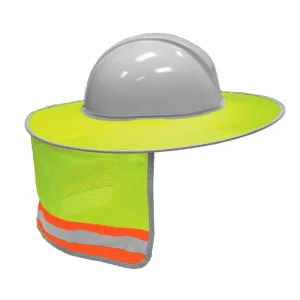
Browse our broader range of high-visibility safety clothing, insulated jackets, gaiters, and protective accessories available for bulk B2B order.
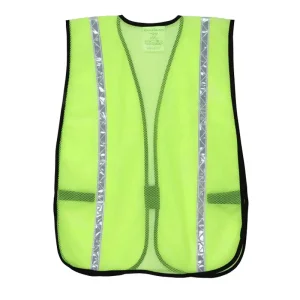
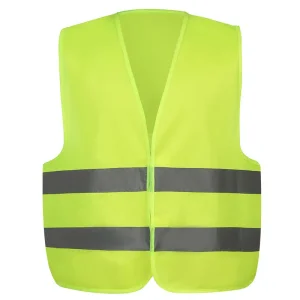
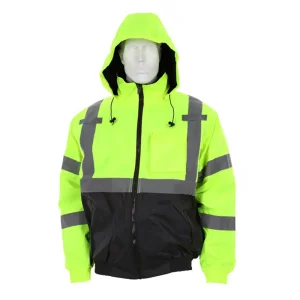
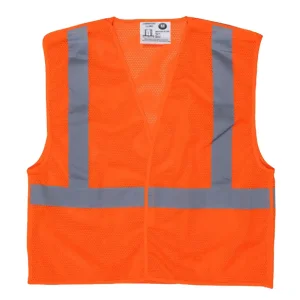
Collaborating directly with an experienced China-based safety wear manufacturer ensures consistent quality standards, rapid custom prototyping, and substantial cost advantages. Our 6,000 square meter facility employs over 150 skilled garment technicians operating automated pattern cutters, seam-sealing machinery, and computerized embroidery lines.
We provide comprehensive white-label and private-label customization services to meet specific brand requirements:
Every production batch undergoes strict quality control testing in accordance with ISO 9001 protocols:
Essential guidance on wholesale procurement, minimum order quantities, certification compliance, and manufacturing lead times.
Our standard MOQ for wholesale custom softshell garments is 500 units per style/colorway for fully customized OEM orders (including custom dyeing, custom printing, and tailored brand trims). For standard stock fabric colors with standard logo printing, we offer flexible low-volume MOQs starting at 200 units per order to support emerging safety brands and targeted trial orders.
Yes, all our high-visibility softshell garments are engineered to meet or exceed ANSI/ISEA 107-2020 (Type R Class 2 and Class 3) and European EN ISO 20471:2013+A1 standards. We work closely with internationally recognized third-party testing laboratories (such as SGS, TÜV Rheinland, and SATRA) to issue official test reports and CE/ANSI certificate documentation for tender submissions.
A 3-layer softshell garment offers vastly superior breathability, thermal comfort, and stretch mobility compared to standard PVC or heavy polyurethane rain parkas. While traditional parkas create an impenetrable moisture barrier that traps body sweat inside, a 3-layer softshell utilizes a breathable microporous TPU membrane ($5,000\text{g/m}^2/24\text{h}$) that expels interior body vapor while blocking exterior wind and rain, making it the preferred choice for physically active workers.
For waterproof softshell jackets, direct embroidery punches thousands of micro-holes through the inner membrane, which can result in water leakage unless back-taped. We recommend high-grade silicone heat transfer printing, industrial screen printing, or laser-cut reflective vinyl transfers. If embroidery is specifically required for branding, our factory applies hot-melt seam sealing tape over the interior stitching area to guarantee 100% waterproof performance.
Pre-production sample development typically takes 7 to 10 working days after tech pack approval. Upon sample sign-off and deposit confirmation, bulk mass production standard lead time ranges between 30 to 45 calendar days, depending on order quantity, fabric dyeing schedules, and specialized trim sourcing.
Our standard reflective softshell lines are certified for 25 wash cycles at 40°C in accordance with ISO 6330 standards. For heavy industrial workwear requirements, we utilize premium heat-transfer segmented glass bead or micro-prismatic tapes engineered to maintain retroreflection coefficient ($R_A > 100 \text{ cd/lx/m}^2$) across 50 industrial laundering cycles at 60°C.
Elevate your safety apparel product line with high-margin, fully certified, dynamically engineered softshell workwear. Contact our technical sales engineering team today to request fabric swatches, OEM pricing catalogs, and rapid sample prototyping.