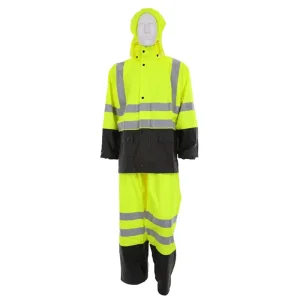
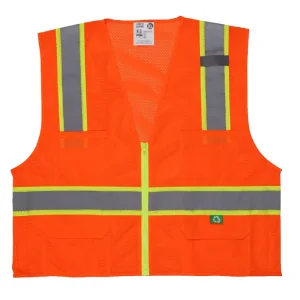
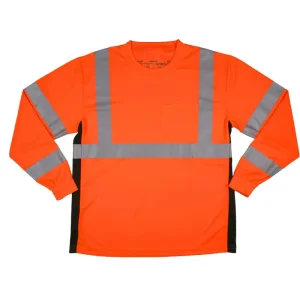
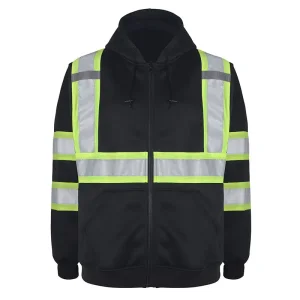
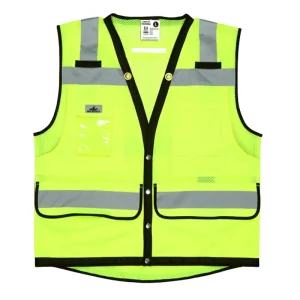
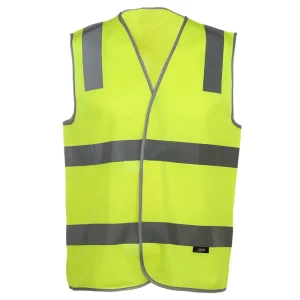
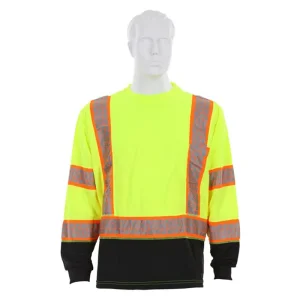
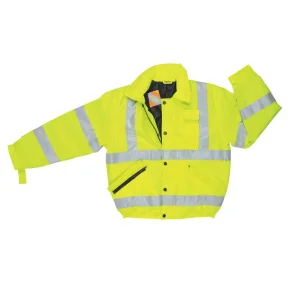
Engineered to meet rigorous ANSI/ISEA 107-2020 and EN ISO 20471 parameters. Explore our premier inventory designed for high-risk security environments.
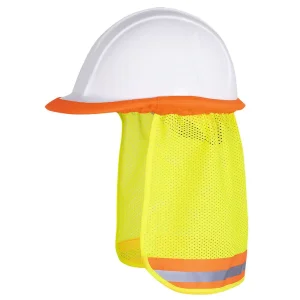
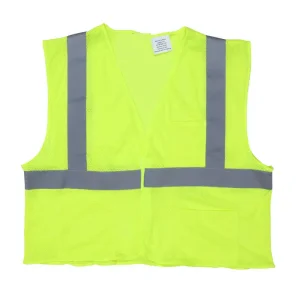
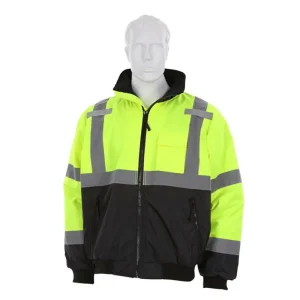
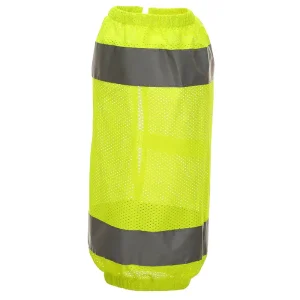
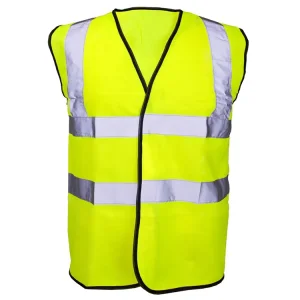
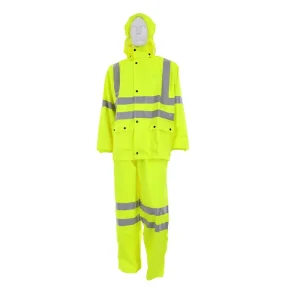
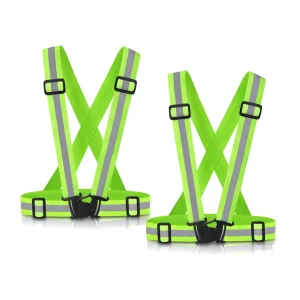
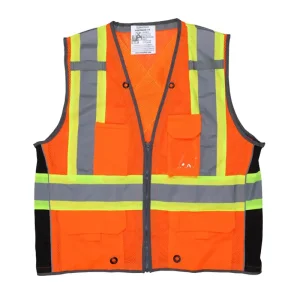
Navigating complex international regulations, multi-hazard work environments, and large-scale contract procurement dynamics.
The global security services and industrial risk protection market is experiencing unprecedented demand, expanding at an estimated CAGR of 6.8%. Driven by global infrastructure projects, commercial real estate growth, and heightened night-shift logistics, procurement officers face increasing pressure to equip security teams with outerwear that balances high optical conspicuity, ergonomic agility, and climate resilience.
Modern enterprise safety officers no longer accept single-function high-visibility vests for security personnel. Today’s tender specifications dictate high-visibility jackets featuring integrated weatherproofing (hydrostatic head rating >10,000mm), arc flash resistance, flame retardancy (FR), and tactical modularity (detachable linings, dual radio loops, badge holders, and weapon belt access ports).
Partnering directly with specialized wholesale security hi vis jacket suppliers eliminates distributor markups, accelerates custom OEM/ODM turnarounds, and provides enterprise buyers direct access to certified laboratory testing reports. Vertical manufacturing guarantees strict control over fabric yarn counts, dye-lot consistency, and retroreflective bead adhesion.
Deconstructing the photometric properties, substrate coatings, and ergonomic features that define industrial security jacket performance.
The core efficacy of high-visibility security outerwear lies in its retroreflective coefficient ($R_A$). Professional grade security jackets incorporate micro-prismatic arrays or high-index glass bead tape (3M™ Scotchlite™ 8906 or equivalent). Micro-prismatic technologies reflect light directly back to vehicle headlamp source angles up to 500 $cd/(lx\cdot m^2)$, ensuring personnel are identifiable at distances exceeding 300 meters during low-light nighttime operations.
Furthermore, fluorescent background textiles—specifically Fluorescent Yellow-Green ($x,y$ chromaticity coordinates within ISO 20471 boundaries) and Fluorescent Orange-Red—utilize active UV conversion to produce daytime optical conspicuity, ensuring 24/7 continuous worker visual presence.
Security jackets engineered for harsh environments utilize 300D to 600D Poly Oxford fabric woven with continuous filament polyester yarns. Thermoplastic Polyurethane (TPU) or Polyurethane (PU) micro-porous back-coatings provide robust barrier defenses against heavy downpours, wind shear, and abrasion.
Critical structural metrics specified in B2B contract tenders include:
Engineering Insight for Procurement Officers: Always specify sealed, taped seams (hot-melt TPU tape) across all shoulder and armhole stitches. Unsealed seams under heavy rainfall lead to internal moisture seepage, compromising thermal insulation layers and reducing security officer field efficiency.
| Performance Specification | Standard Commercial Work Jacket | Enterprise Security Hi Vis Jacket | Compliance Test Benchmark |
|---|---|---|---|
| Retroreflective Performance | 150 - 250 $cd/(lx\cdot m^2)$ | 330 - 500+ cd/(lx·m²) | ANSI/ISEA 107-2020 / EN ISO 20471 |
| Base Textile Construction | 150D Polyester / Cotton Blend | 300D / 600D Oxford + TPU Membrane | ISO 13934-1 Tensile Testing |
| Waterproofness (Hydrostatic) | 1,500 - 3,000 mm $H_2O$ | 10,000+ mm H₂O (Seam Sealed) | EN 343:2019 Class 4 rating |
| Tactical Ergonomics | Standard Hand Pockets | Mic Tabs, Radio Loops, Duty Belt Access | Security Field Operation Standards |
| Industrial Laundering Life | 15 - 25 Wash Cycles | 50+ Heavy Industrial Cycles | ISO 6330 / ISO 15797 Method |
Tailored high-visibility garment configurations engineered for distinct operational hazards and commercial infrastructure environments.
Operational Hazards: Nighttime perimeter patrols, low-light vehicle inspection points, public venue access management.
Configured Solution: Two-tone Hi-Vis Black/Lime or Black/Orange Security Jackets. Dark lower body panels resist grease and soil accumulation, maintaining a crisp professional look, while Class 2 or Class 3 upper fluorescent panels maintain compliance. Features include dual radio chest loops, clear ID badge holders, and side-zipper pass-throughs for instant sidearm or tool belt access.
Operational Hazards: High-speed motor vehicle traffic, tarmac machinery proximity, extreme weather exposure.
Configured Solution: ANSI/ISEA 107-2020 Type R Class 3 All-Weather Bomber Jackets. Equipped with 360-degree continuous 2-inch silver retroreflective striping over arms, chest, and back. Includes removable 3-in-1 thermal fleece liners, drop-down storm hoods, and storm flap zipper enclosures to resist wind pressures up to 60 mph.
Operational Hazards: Marine humidity, salt-spray oxidation, heavy container crane operations, sub-zero oceanic winds.
Configured Solution: Heavy-duty 600D Poly Oxford jackets coated with marine-grade waterproof polyurethane coatings. Fitted with salt-resistant nylon zippers, corrosion-free brass snaps, thermal Thinsulate™ filling, and EN 342 cold-certified liners ensuring thermal preservation down to -20°C.
Operational Hazards: Chemical exposure, combustible dust, heavy machinery entanglement risks.
Configured Solution: Flame-Retardant (FR) treated Hi Vis Security Jackets (modacrylic/cotton blends or treated polyester) meeting NFPA 2112 and ASTM F1506 standards. Built with 5-point breakaway Velcro seams to prevent worker entanglement in moving conveyor systems.
Navigating North American, European, and Asia-Pacific high-visibility PPE regulations to ensure full legal compliance across municipal tenders.
Specifies requirements for high-visibility safety apparel in North America. Categorizes garments by Performance Class (Class 1, Class 2, Class 3) and Type:
The standard mandatory standard across the European Union and the UK (UKCA). Divides high-visibility clothing into three risk-based classes:
Covers Canadian and Australian/New Zealand regional safety rules:
How smart textiles, IoT telematics, and eco-sustainable polymers are redefining the wholesale safety outerwear market.
Traditional passive retroreflective tapes depend entirely on external illumination (vehicle headlights). The future of security hi vis jackets incorporates flexible, ultra-thin LED light strips powered by rechargeable lithium-polymer battery packs. Active lighting guarantees visibility even when vehicle headlights are turned off or obscured by heavy fog and smoke.
Enterprise buyers are adopting smart jackets featuring embedded RFID chips for automatic inventory control and laundering tracking. Advanced prototypes feature built-in accelerometers for "man-down" fall detection and integrated heart-rate monitoring sensors that transmit real-time telemetry to security command dispatch centers.
Environmental, Social, and Governance (ESG) mandates are driving global buyers toward circular textiles. Modern security jackets are increasingly specified with 100% GRS (Global Recycled Standard) certified post-consumer PET polyester and eco-friendly C0 Fluorocarbon-free Durable Water Repellent (DWR) coatings, reducing toxic PFAS environmental footprint.
Key quality assurance metrics, factory auditing protocols, and supply chain verification strategies for enterprise procurement directors.
Ensure the prospective manufacturing partner operates under verifiable quality management systems. Verify valid certificates for ISO 9001 (Quality Management), ISO 14001 (Environmental Management), and social compliance audits such as BSCI (Business Social Compliance Initiative) or Sedex SMETA. Direct factory capabilities should include automated pattern cutting, ultrasonic seam welding, and computer-guided embroidery machines.
Require third-party test reports (SGS, TÜV Rheinland, Intertek, or SATRA) for every fabric roll lot. Critical verification parameters include colorfastness to light (ISO 105-B02), colorfastness to washing (ISO 105-C06), dimension stability after laundering, and retroreflective coefficient maintenance after 50 dry-cleaning or industrial laundering cycles.
Confirm the manufacturer supports private labeling, custom silicone/screen printing, reflective heat-transfer logo application, and specialized sizing scale adjustments (S to 7XL). Evaluate Minimum Order Quantities (MOQs)—professional suppliers typically accommodate MOQs starting at 500 units per style with tiered volume pricing discounts.
Assess supplier lead times (sample prototyping in 7–10 days; mass production in 30–45 days). Ensure the manufacturer provides DDP (Delivered Duty Paid), FOB, or CIF shipping terms with pre-cleared customs documentation to avoid tariff delays across North American and European ports.
Answers to common technical, legal, and operational questions asked by wholesale buyers and safety managers.
Specialized security hi-vis jackets integrate tactical functional features not usually found on standard construction outerwear. These include dual-tone color blocking (such as high-contrast black bottoms to conceal grime while retaining a authoritative uniform look), specialized radio mic loops, clear ID/badge windows, side-seam zipper access for quick equipment belt access, and breakaway anti-entanglement closures. Additionally, security jackets frequently require custom velcro loop patches for security agency branding.
ANSI/ISEA 107-2020 specifies precise square inches of background fluorescent material (minimum 1,240 $in^2$ for Class 3) and retroreflective material (minimum 310 $in^2$). If large custom logos are screen-printed over the fluorescent fabric area, they reduce the net compliant background surface area. Professional suppliers conduct CAD surface measurements prior to printing to ensure custom logos remain within legal safety margins without voiding certification.
High-grade glass bead or micro-prismatic retroreflective tapes (certified under ISO 20471 / ANSI 107) are designed to withstand 25 to 50 home wash cycles at 40°C or 60°C. For heavy industrial laundering programs, specialized flame-retardant and industrial-wash reflective tapes are used, which withstand high-temperature commercial laundering and tunnel drying up to 75°C without delamination or photometric degradation.
For cold weather, wet, and high-abrasion environments, a 300D to 600D Polyester Oxford weave coated with a micro-porous TPU membrane is recommended. This fabric density provides optimum tensile strength to prevent tears while maintaining flexibility in freezing climates. When paired with a removable 200g/m² fleece or quilted Thinsulate™ inner lining, the jacket achieves EN 342 cold climate protection.
Standard OEM custom bulk orders typically have an MOQ of 500 units per colorway. Pre-production samples require 7 to 10 working days for delivery following tech-pack approval. Full mass manufacturing lead times generally range between 30 and 45 calendar days depending on fabric dye lot requirements and custom trim specifications.
Discover our extended line of high-visibility rainwear, insulated bomber jackets, safety sweatshirts, and high-conspicuity accessories.