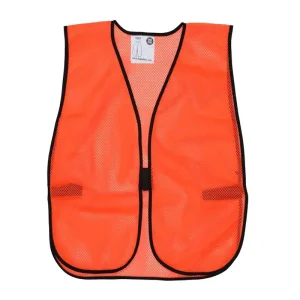
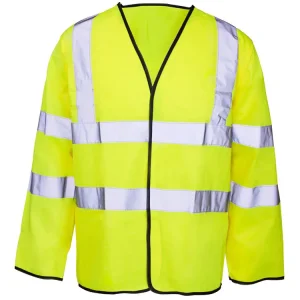
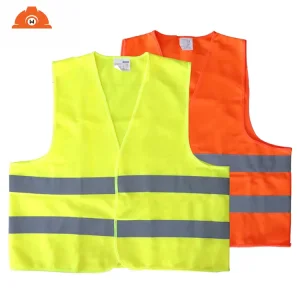
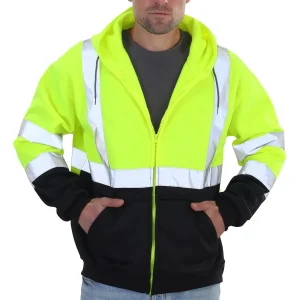
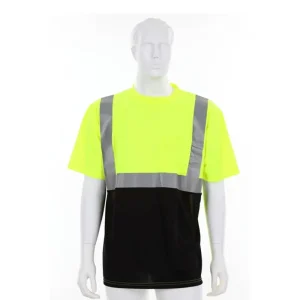
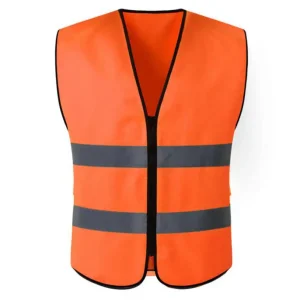
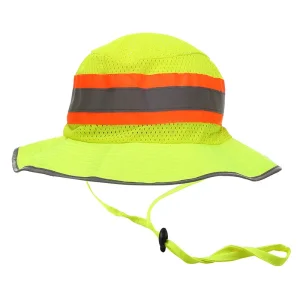
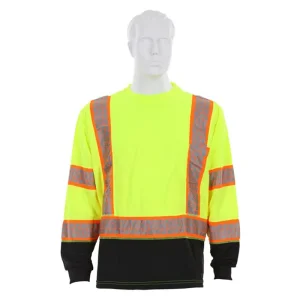
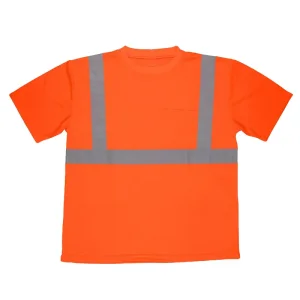
Featured certified hi-vis safety vests, shirts, and headwear engineered for maximum luminance and industrial durability.
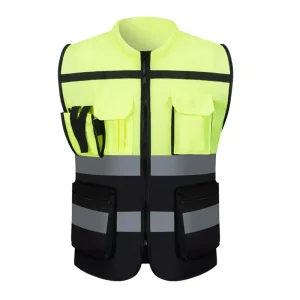
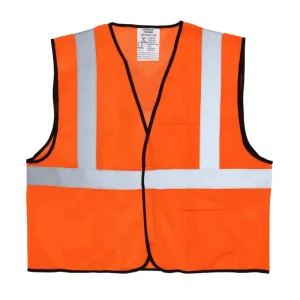
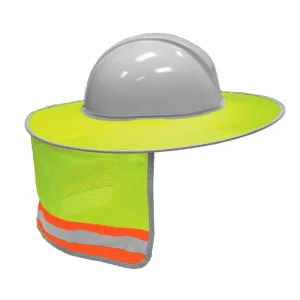
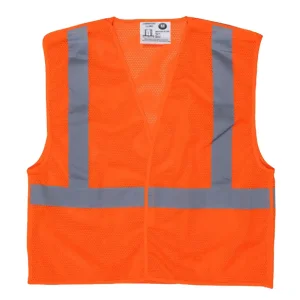
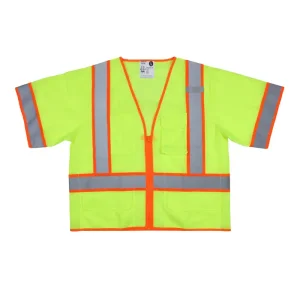

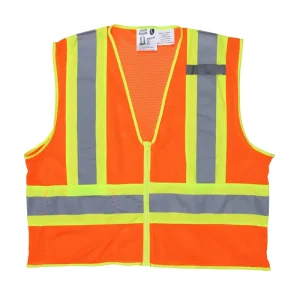
Understanding photometric performance, retroreflective physics, and synthetic polymer engineering for enterprise PPE procurement.
In high-consequence work environments—ranging from interstate highway construction corridors to heavy industrial ports—the efficiency of Personal Protective Equipment (PPE) is fundamentally defined by visual contrast ratio and retroreflective coefficient ($R_A$). When evaluating Wholesale Safety Shirts High Visibility Suppliers & Supplier options, industrial procurement officers must move beyond superficial aesthetics to analyze the micro-structural fabric science that dictates worker survivability.
High-visibility safety shirts rely on two distinct optical mechanisms: Fluorescence for daytime recognition and Retroreflection for nighttime or low-light illumination. Fluorescent background materials absorb invisible ultra-violet (UV) radiation (300–400 nm) from sunlight and re-emit it as longer wavelengths of visible light (500–600 nm), creating a striking visual pop against natural background environments.
Under ANSI/ISEA 107-2020 and EN ISO 20471:2013+A1:2016, fluorescent fabrics must meet strict chromaticity coordinates $(x,y)$ and minimum luminance factors ($\beta$). Fluorescent yellow-green requires $\beta \ge 0.70$, while fluorescent orange-red demands $\beta \ge 0.40$. Retroreflective glass beads must achieve a minimum coefficient of retroreflection $R_A \ge 330 \text{ cd}/(\text{lx}\cdot\text{m}^2)$ at an entrance angle of $+5^\circ$ and observation angle of $0.2^\circ$.
| Fabric Type | GSM Weight | Composition | Breathability Index | Primary Industrial Application |
|---|---|---|---|---|
| Birdseye Poly Mesh | 120 - 140 GSM | 100% Spun Polyester | Very High (Capillary Wicking) | High-Heat Construction, Logistics, General Workwear |
| Interlock Micro-Knit | 150 - 180 GSM | 100% Poly Filament | High (Soft-Hand Feel) | Surveying, Site Supervisors, Facilities Management |
| FR Moisture Wicking | 180 - 220 GSM | Modacrylic / Cotton Blend | Moderate (Dual Protection) | Oil & Gas, Utility Maintenance, Petrochemical Plants |
| Recycled rPET Mesh | 130 - 150 GSM | 100% Post-Consumer PET | High (Eco-Engineered) | Corporate Sustainability & Green Procurement Bids |
Why leading global safety equipment brand owners, wholesalers, and government contractors partner directly with Zhejiang & Jiangsu industrial clusters.
China's centralized chemical dye parks produce high-purity fluorescent pigments that resist solar photodegradation. Fabrics achieve grade 4+ colorfastness to light (AATCC 16 / ISO 105-B02) and maintain compliance even after 50+ industrial laundering cycles.
From PET polymer synthesis and warp knitting to automated heat-transfer film lamination, Yongkang and Jinhua production hubs eliminate intermediary markups, guaranteeing factory-direct unit pricing and rapid throughput.
Leading Chinese exporters operate in-house ISO 17025 accredited laboratories equipped with spectrophotometers and retroreflectometers. Batch samples undergo rigorous testing for wash resistance, tensile strength, and seam burst limits.
Support for private label branding, custom logo print zones without compromising ANSI background area, customized pocket configurations, breakaway Velcro seams, and bespoke sizing from XS up to 7XL.
Modern factories hold BSCI, SEDEX/SMETA, ISO 9001, and ISO 14001 certifications, streamlining vendor onboarding for Fortune 500 enterprise buyers and municipal procurement tenders.
How sustainable materials, micro-prismatic segmentations, and smart IoT textiles are reshaping protective apparel.
Traditional sewn-on glass-bead tapes create rigid stress points across knitted shirts, restricting wearability and breathability. The industry is rapidly shifting toward segmented micro-heat-transfer reflective tapes. By bonding heat-applied segmented blocks directly to polyester birdseye mesh, garment breathability is boosted by 35% while granting 4-way mechanical stretch without tape cracking.
Global ESG directives require corporate buyers to minimize carbon footprints. Modern China suppliers lead the shift toward Global Recycled Standard (GRS) certified 100% recycled polyester derived from post-consumer PET water bottles. Eco-friendly water-free solution-dyeing technologies reduce chemical effluent by up to 60% while maintaining bright fluorescent luminance.
Passive retroreflection requires external light beams (vehicle headlights) to illuminate the wearer. Next-generation hi-vis safety shirts integrate flexible, washable LED optical strips and electroluminescent wiring powered by micro-USB rechargeable lithium-polymer battery packs, delivering active worker visibility even in total pitch-black environments.
Outdoor workwear faces severe degradation from UV exposure and sweat-induced microbial rot. Advanced finishing treatments apply bio-based silver-ion antimicrobial agents and micro-encapsulated organic UV absorbers, offering UPF 50+ ultraviolet protection while controlling odor-causing bacteria during 12-hour field shifts.
A clear comparative analysis of North American, European, and Australian safety apparel standards.
| Standard | Geographic Region | Class / Category | Min. Fluorescent Area | Min. Reflective Area |
|---|---|---|---|---|
| ANSI/ISEA 107-2020 | North America (USA/Canada) | Type R, Class 2 | 775 in² (0.50 m²) | 201 in² (0.13 m²) |
| ANSI/ISEA 107-2020 | North America (USA/Canada) | Type R, Class 3 | 1240 in² (0.80 m²) | 310 in² (0.20 m²) |
| EN ISO 20471:2013 | European Union / UK | Class 2 Garment | 0.50 m² | 0.13 m² |
| EN ISO 20471:2013 | European Union / UK | Class 3 Garment | 0.80 m² | 0.20 m² |
| AS/NZS 4602.1:2011 | Australia / New Zealand | Class D/N (Day/Night) | 0.40 m² (Front/Back) | 50mm Wide Strips |
Engineered hi-vis workwear customized to meet the distinct operational hazards of diverse industry verticals.
Hazards: High-speed motor vehicles (>50 mph), adverse rain, nighttime road paving.
Solution: ANSI Class 3 long-sleeve safety shirts with 360° continuous retroreflective striping on sleeves and torso, constructed from breathable 130 GSM birdseye mesh for summer comfort.
Hazards: Heavy equipment moving parts, crane swings, snagging hazards.
Solution: ANSI Class 2 short-sleeve safety t-shirts featuring 5-point breakaway Velcro closures, reinforced chest radio tabs, and pen-pocket sleeves engineered for mobility.
Hazards: Gantry cranes, container stackers, low-contrast fog and ocean spray conditions.
Solution: Bi-color contrast safety shirts (Fluorescent Yellow-Green torso with Navy Blue lower splash panel) to hide dirt and grease while maximizing upper body recognition.
Hazards: Flash fire risk, arc flash, static discharge in volatile chemical atmospheres.
Solution: Flame-resistant (FR) Hi-Vis shirts compliant with NFPA 2112, NFPA 70E (Arc Rating ATPV ≥ 8.0 cal/cm²), and EN 1149 anti-static carbon fiber grid integration.
Hazards: High jet-engine noise levels, Foreign Object Debris (FOD) restrictions, turbine intake risks.
Solution: Zipperless, buttonless tagless hi-vis t-shirts with heat-sealed micro-segmented reflective tape to eliminate loose metallic components or detaching snaps.
Navigating landed costs, durability lifecycles, and risk mitigation when purchasing from wholesale safety shirt suppliers.
For high-volume enterprise buyers, evaluating Wholesale Safety Shirts High Visibility Suppliers & Supplier partners solely on FOB unit price often leads to hidden cost inflation. Substandard hi-vis garments suffer from premature retroreflective tape peeling, seam failure, and color fading after fewer than 10-15 wash cycles, forcing frequent replacements and increasing the Total Cost of Ownership (TCO).
Expert insights addressing key procurement, customization, and technical compliance questions.
Explore long-sleeve safety shirts, hoodies, fluorescent mesh vests, and specialized high-visibility accessories.