Explore our ANSI/ISEA and EN ISO 20471 compliant protective garments engineered with certified retroreflective transfers and breathable fluorescent fabrics.
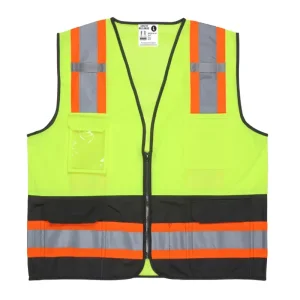
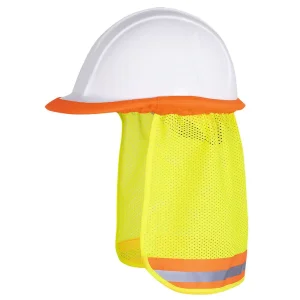
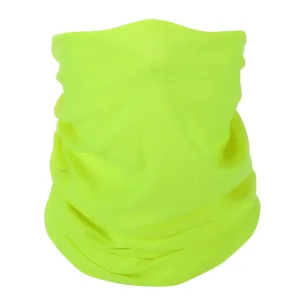
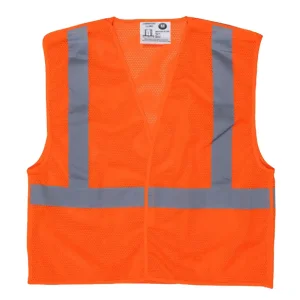
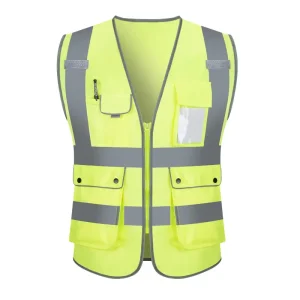
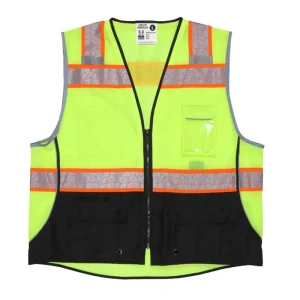
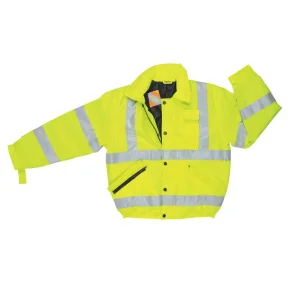
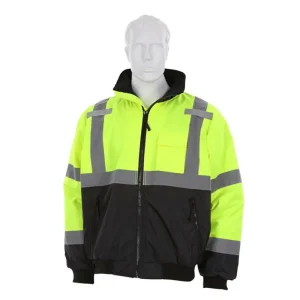
A rigorous examination of surface area reduction, chromaticity parameters, and material interaction when printing corporate identities on ANSI/ISEA 107-2020 & EN ISO 20471 certified garments.
Crucial Compliance Insight: Oversized, non-reflective screen-printed logos applied to fluorescent background fabrics can inadvertently reduce total compliant background area below the mandatory regulatory thresholds (0.50 m² for ANSI Class 2 and 0.80 m² for ANSI Class 3), rendering certified workwear non-compliant during safety audits.
When custom corporate logos are printed directly onto the high-visibility fluorescent yellow-green or orange-red substrate, the opaque pigment obscures the fluorescent fibers. Under ANSI/ISEA 107-2020 Clause 6.2, non-compliant logo prints occupying more than 200 cm² on smaller garment sizes (S/M) risk voiding the garment's lab certification.
Fluorescent 100% polyester knit (such as 130–180 GSM bird's-eye mesh) undergoes dye sublimation when subjected to heat transfers exceeding 140°C. Disperse fluorescent dyes migrate into white or light-colored corporate logos, creating unsightly tinting and reducing brand color fidelity.
| Logo Printing Tech | Reflective Coefficient ($R_A$) | Industrial Wash Life | Breathability / Elasticity | Compliance Suitability |
|---|---|---|---|---|
| Micro-Glass Bead Retroreflective HTV | > 330 cd/(lx·m²) | 25 to 50 Cycles at 60°C | Moderate / High Elasticity | ANSI Class 2/3 & EN ISO 20471 Compliant |
| Micro-Prismatic TPU Transfer Film | > 500 cd/(lx·m²) | 50+ Cycles (Heavy Duty) | High Rigidity / Waterproof | Severe Weather & High-Angle Reflectivity |
| Anti-Bleed Screen Printing (Silicone/Water-based) | N/A (Opaque Color) | 50+ Cycles | High Breathability / Ultra Soft | Requires area calculation on small sizes |
| Direct-to-Film (DTF) Digital Transfer | N/A (Opaque Color) | 30 to 40 Cycles at 40°C | Stretchable Polyurethane | Ideal for complex multi-color branding |
| Flame-Retardant (FR) Direct Embroidery | N/A (FR Threads) | 100+ Cycles (Garment Lifetime) | Direct Stitching / Non-Stretch | NFPA 2112 & ASTM F1506 Utility Compliant |
How modern OEM safety garment factories in Yongkang, Zhejiang leverage Industry 4.0 automation, digital proofing, and lean manufacturing to deliver scalable quality for global bulk procurement.
Integrated automated optical recognition camera laser cutting tables scan reflective film rolls and fabric panels to achieve ±0.2mm precision cut tolerances. This eliminates fraying along logo edges and ensures perfectly aligned badges for thermal pressing.
High-speed, 10-color automatic oval screen printing machinery equipped with real-time quartz flash-cure lamps guarantees uniform ink film thickness, zero color distortion, and extreme output efficiency exceeding 1,200 shirts per hour.
Every bulk safety order is tracked via cloud-connected Manufacturing Execution Systems (MES). From raw yarn lot inspection to final spectrophotometer color reading (Delta E < 1.0), complete traceability ensures zero quality variance.
Anticipating regulatory shifts, environmental directives, and wearable technology integration for next-generation personal protective equipment (PPE).
Transitioning from pure passive retroreflection to hybrid illumination systems. Flexible, ultra-thin micro-LED light channels are embedded within custom logo borders, operating via USB-rechargeable micro-lithium batteries to provide up to 500 meters of visibility even in pitch-black underground or zero-headlight environments.
Smart reactive logo inks change color dynamically when ambient temperatures exceed critical thresholds (e.g., shifting from dark navy to bright magenta above 38°C). This gives safety supervisors immediate visual warnings of heat stroke risk for highway workers and foundry operators.
Meeting global EU ESG and Zero-Carbon mandates by replacing virgin polyester with 100% GRS-certified Recycled PET (rPET) derived from ocean plastics. Combined with water-based bio-polyurethane retroreflective transfer films, carbon footprints are reduced by over 42% per unit produced.
Custom workwear configurations matching severe operational hazards across heavy infrastructure, logistics, petrochemical, and municipal work sectors.
Workers operating alongside high-speed traffic (exceeding 50 mph / 80 km/h) demand ANSI Class 3 or Class 2 apparel with maximum visual contrast and abrasion resistance.
Focuses on worker agility, thermal regulation, and high breathability inside indoor distribution centers or dark loading docks.
For oil refineries, natural gas plants, and electrical utility crews exposed to sudden thermal flash fire (NFPA 2112) or electrical arc flash hazards (ASTM F1506).
Multi-hazard protection combined with clear organizational identification for public works crews, water authority technicians, and traffic marshals.
Mitigating supply chain risks through structured Quality Assurance (QA) protocols, factory social audits, and optimized Total Cost of Ownership (TCO).
Our factory operates under strict ISO 2859-1 Acceptable Quality Limit (AQL) guidelines. Every bulk production run undergoes rigorous multi-stage checkpoints:
We maintain full compliance with international ethical manufacturing standards, giving corporate procurement directors peace of mind:
Bypassing regional distributors and procuring factory-direct from China reduces unit costs by 25% to 40% while unlocking OEM customization flexibility.
Complete your procurement portfolio with our specialized reflective accessories, breakaway vests, dielectric safety gear, and weather-proof jackets.
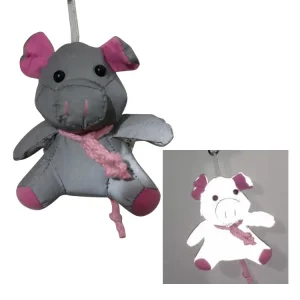
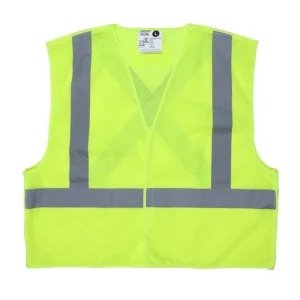
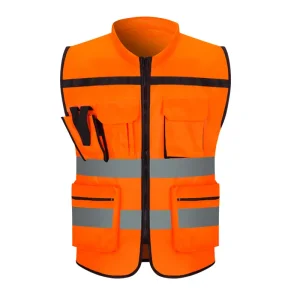
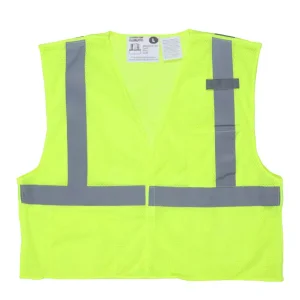
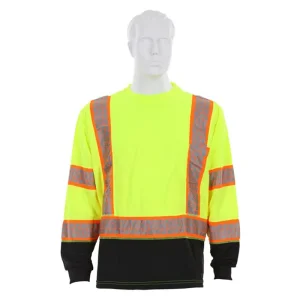
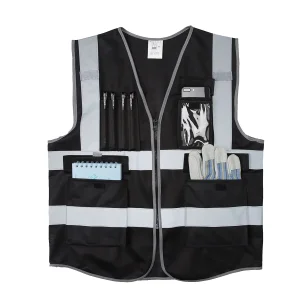
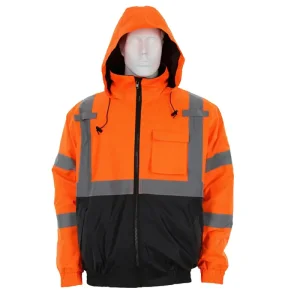
Expert guidance on safety shirt customization, ANSI/ISEA & EN ISO 20471 compliance parameters, logo durability, and bulk factory procurement.
Printing a logo using standard non-reflective screen printing inks replaces compliant fluorescent background fabric with opaque pigment. Under ANSI/ISEA 107-2020 and EN ISO 20471:2013 standards, garments must maintain minimum fluorescent surface areas (0.50 m² for Class 2 and 0.80 m² for Class 3). If an oversized logo (e.g., 30cm x 20cm on the back) covers too much fluorescent yellow-green or orange-red mesh on smaller garment sizes (S or M), the garment may fail compliance audits. To avoid this, our factory engineers recommend using certified retroreflective heat transfer films for logos or calculating total available non-compliant print zones during pre-production artwork proofing.
For workwear undergo harsh commercial laundering (ISO 15797 / ISO 6330 industrial washing at 60°C to 75°C), Micro-Glass Bead Retroreflective Heat Transfer Film with Polyurethane Adhesive or Direct Silicone Screen Printing offers superior durability. Standard PVC or cheap acrylic transfers crack and peel after 5 to 10 wash cycles. Our heavy-duty industrial transfers utilize dual-component polyurethane bonding resins that endure over 50 industrial wash cycles while retaining a retroreflection coefficient ($R_A$) above 330 cd/(lx·m²).
High-visibility 100% polyester knits (bird's-eye mesh and interlock jersey) are dyed using disperse dyes that thermally activate and migrate at temperatures above 140°C. When heat-applying white or light corporate logos, the dye bleeds into the ink, turning white logos into muted fluorescent yellow or orange. Yongkang Wow Safety Products solves this by applying an Activated Carbon Anti-Bleed Barrier Layer beneath the white ink or by utilizing low-temperature curing silicone inks (120°C curing), permanently locking disperse dyes in place and maintaining crisp 100% Pantone color accuracy.
Micro-Glass Bead Transfers: Utilize microscopic glass spheres embedded in a conductive layer. They offer smooth flexibility, soft hand-feel, and excellent retroreflectivity ($R_A \approx 330\text{ cd}/(\text{lx}\cdot\text{m}^2)$) under dry conditions. Ideal for standard safety t-shirts and summer mesh vests.
Micro-Prismatic TPU Transfers: Utilize micro-engineered acrylic prisms molded into a durable vinyl film. They reflect light at significantly higher intensities ($R_A > 500\text{ cd}/(\text{lx}\cdot\text{m}^2)$) and maintain full retroreflective brightness even when drenched in heavy rain. Ideal for severe weather rain jackets and heavy-duty surveyor apparel.
No. Applying standard non-FR plastisol or PVC transfers to a certified FR garment (NFPA 2112 / ASTM F1506) invalidates its thermal protective rating. Under flash fire exposure, standard synthetic inks melt, drip, and ignite, causing severe secondary burn injuries to workers. FR safety shirts must only be customized using Meta-Aramid (Nomex®) FR Thread Embroidery or certified Flame-Retardant Transfer Films that pass vertical flame testing (ASTM D6413) with zero melt-drip behavior.
For standard customized OEM production (custom logo print/transfer, custom woven labels, standard fabric colors), our factory minimum order quantity is 500 units per style. Digital vector artwork proofing and pre-production physical samples are delivered in 3 to 5 business days. Bulk production for 5,000 to 20,000 units is typically completed within 20 to 25 calendar days, backed by automated CCD laser cutting and high-speed oval printing machinery.