- Yongkang, Jinhua City, Zhejiang, China
- [email protected]
- +86-0579-87121726


Premium OEM/ODM Solutions Engineered for Global Enterprise Procurement
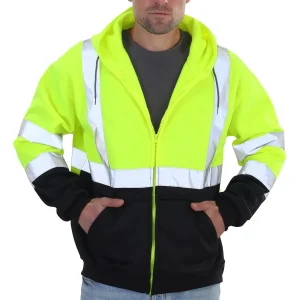
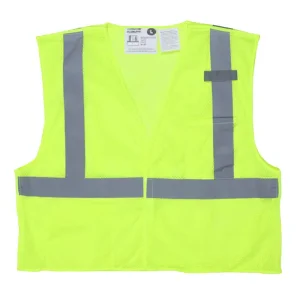
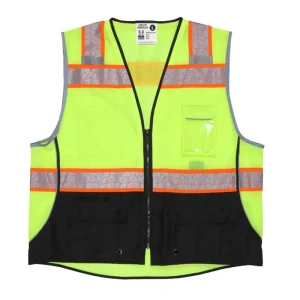
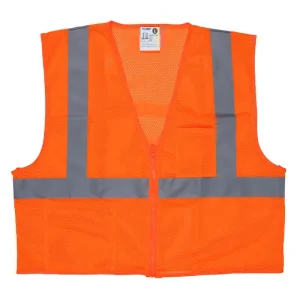
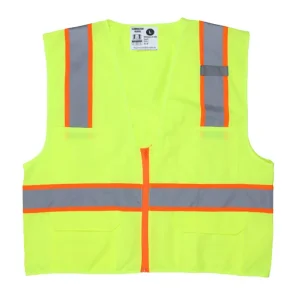
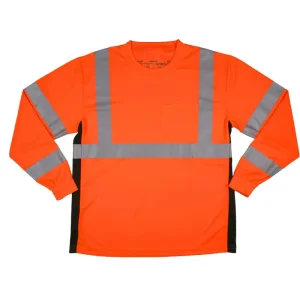
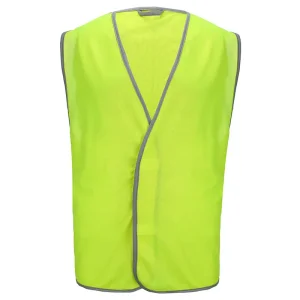
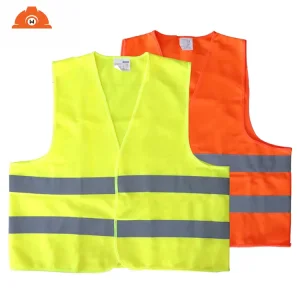
Architecting Next-Generation Personal Protective Equipment (PPE) for Global Industrial Safety
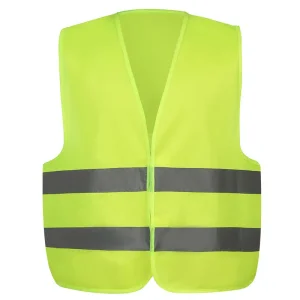
In the modern occupational health and safety landscape, high-visibility personal protective equipment (PPE) serves as the primary line of defense against workplace struck-by injuries. High-visibility mesh safety vests are specialized garments designed to maintain human silhouette contrast against complex occupational backgrounds under both daytime sunlight and low-light headlight conditions. As regulatory frameworks such as ANSI/ISEA 107-2020 in North America, EN ISO 20471:2013+A1:2016 across the European Union, and AS/NZS 1906.4:2010 in Australasia become increasingly stringent, procurement executives, corporate safety directors, and global safety distributors face an evolving challenge: balancing strict compliance with ergonomic breathability, wash-durability, and cost-efficiency.
Evaluating wholesale safety mesh vest suppliers requires moving beyond basic transactional pricing to conduct deep technical due diligence on fabric chemistry, retro-reflective photometric properties, and supply chain scalability. Sourcing managers must analyze raw material provenance, micro-pore air permeability, flame-retardant mesh treatments, and retro-reflective glass bead vs. micro-prismatic tape adhesion dynamics.
The Physics Behind Thermal Breathability and Retro-Reflective Performance
High-visibility mesh vests rely on 100% polyester warp-knitted tricot or open-weave mesh fabric (typically ranging from 110 GSM to 160 GSM). The fluorescent properties are achieved through specialized organic dyes that absorb invisible ultra-violet (UV) light waves and re-emit them as visible photons of longer wavelengths.
Retro-reflection occurs when incoming light beams from vehicular headlights are redirected back toward the original light source. Premium safety mesh vests employ either exposed high-index glass bead tape or micro-prismatic polymer film.
Understanding Technical Differences Across International Safety Standards
| Standard / Jurisdiction | Garment Class / Type | Min. Background Fabric | Min. Reflective Material | Primary Industrial Applications |
|---|---|---|---|---|
| ANSI/ISEA 107-2020 (North America) |
Type R, Class 2 | 775 sq. in. ($0.50\text{ m}^2$) | 201 sq. in. ($0.13\text{ m}^2$) | Roadway construction, utility crews, airport ramp agents |
| ANSI/ISEA 107-2020 (North America) |
Type R, Class 3 | 1240 sq. in. ($0.80\text{ m}^2$) | 310 sq. in. ($0.20\text{ m}^2$) | High-speed interstate highways, emergency responders, night crews |
| EN ISO 20471:2013 (European Union / UKCA) |
Class 2 | $0.50\text{ m}^2$ | $0.13\text{ m}^2$ | Urban logistics, railway platforms, municipal sanitation |
| EN ISO 20471:2013 (European Union / UKCA) |
Class 3 | $0.80\text{ m}^2$ | $0.20\text{ m}^2$ | Full-body coverage required; usually jacket/vest-pant combinations |
| AS/NZS 1906.4 / 4602.1 (Australia & NZ) |
Class D/N (Day/Night) | $0.40\text{ m}^2$ (fluorescent) | 50mm wide tape layout | Mining operations, civil infrastructure, port authority logistics |
Why Sourcing from Yongkang, Zhejiang Unlocks Unmatched Cost-to-Quality Ratios
Situated in Yongkang, Zhejiang—China's premier industrial and manufacturing cluster—our facilities benefit from immediate access to synthetic textile weaving mills, fluorescent dye houses, retro-reflective tape manufacturers, and automated trim suppliers. This proximity minimizes raw material transport lag times, allowing us to shorten sample turnaround to 3–5 days and mass production lead times to 15–25 days.
Every batch of safety mesh vests undergoes stringent incoming raw material inspection (IQC), in-process visual audit (IPQC), and final pre-shipment sampling (FQC) following ANSI/ASQ Z1.4 (AQL 1.5 for major defects, 2.5 for minor defects). We test seam bursting strength, tape adhesion peel resistance, and color fastness to washing, light, and perspiration under ISO 105 test procedures.
Equipped with computer-controlled automatic pattern cutters, programmable pattern sewing machines, and continuous heat-transfer reflective tape applicators, our factory maintains a monthly production capacity exceeding 500,000 safety vests. This automated precision guarantees zero dimensional variance across large-scale enterprise purchasing orders.
Tailoring Safety Vests to Specific Operational Requirements
Engineered for high-risk hazards near moving machinery, traffic, or rail yards. Incorporates heavy-duty hook-and-loop fasteners along the shoulders, sides, and front closure that detach instantaneously under pull tension, preventing worker entanglement.
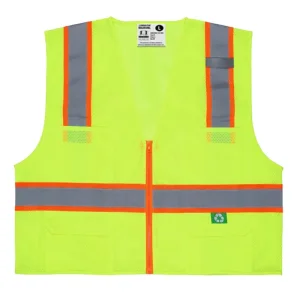
Optimized for field engineers and surveyors. Features heavy-duty gusseted chest pockets, clear vinyl ID card slots, double mic tabs, interior tablet storage pockets, and reinforced pen holders with bar-tacked stress points.
Precision logo application options including high-density screen printing, thermal transfer film, and silicone heat seal logos. All artwork layouts are pre-calculated to ensure logo placement does not reduce the certified minimum fluorescent background area.
The Future of Smart, Sustainable, and Multifunctional High-Visibility Workwear
In alignment with global ESG (Environmental, Social, and Governance) targets, wholesale buyers are rapidly transitioning to recycled polyester fabrics derived from post-consumer plastic bottles. Our GRS (Global Recycled Standard) certified mesh vests deliver identical tensile strength, UV colorfastness, and retro-reflective adhesion while reducing carbon emissions by over 30%.
Passive retro-reflection requires external light beams to illuminate the wearer. Next-gen safety mesh vests integrate flexible, rechargeable LED optical fibers embedded along the torso and shoulders. This active illumination provides 360-degree visibility over distances exceeding 500 meters even in total dark zones without vehicle illumination.
Matching Garment Engineering to Harsh Workplace Environments
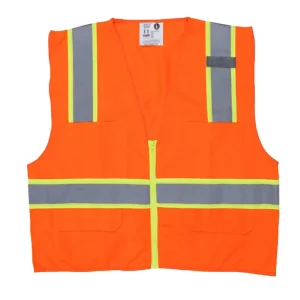
High-speed vehicular zones require ANSI Class 2 or Class 3 vests with high-contrast two-tone tape layouts (orange border on silver reflective striping) to ensure immediate visual recognition against asphalt and concrete backgrounds.
Airport ground crews require anti-static (ESD) mesh safety vests to prevent spark generation near aircraft fueling zones, combined with non-magnetic zippers and smooth pull tabs.
High-turnover distribution centers utilize ultra-lightweight 110 GSM breathable mesh vests equipped with quick-release breakaway shoulders to protect forklift operators and inventory pickers.
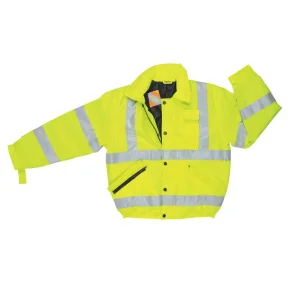
Explore Extended Product Lines Designed for Comprehensive Industrial Safety

Addressing Buyer Intent, Compliance Protocols, and Supply Chain Logistics