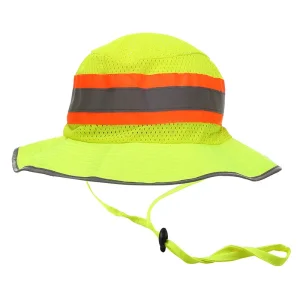
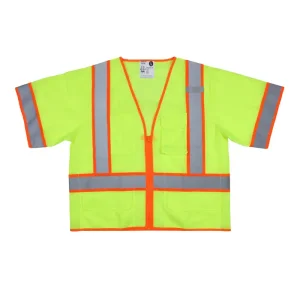
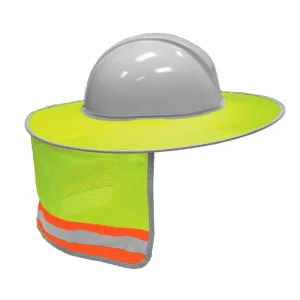
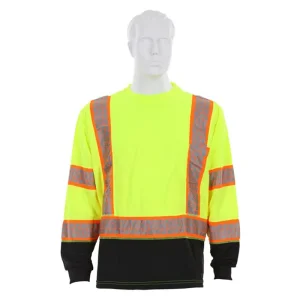
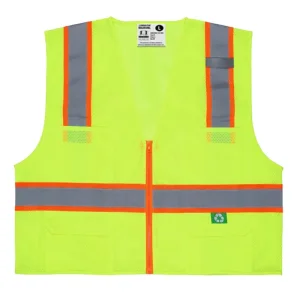
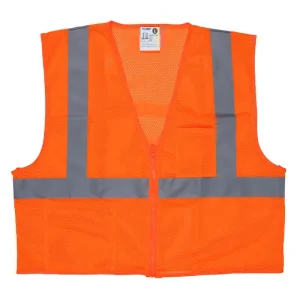
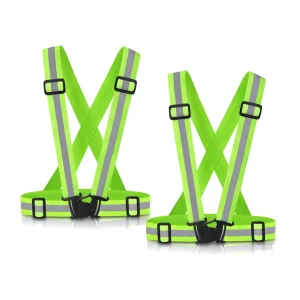
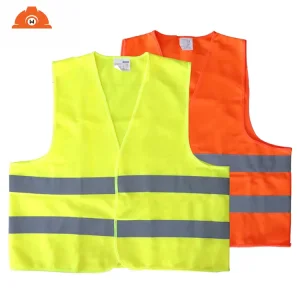
Factory-direct compliant safety jackets, vests, and gear built for maximum nighttime retroreflectivity and harsh industrial endurance.
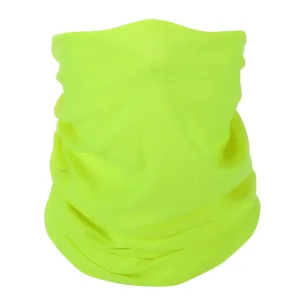
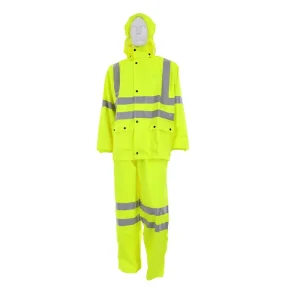
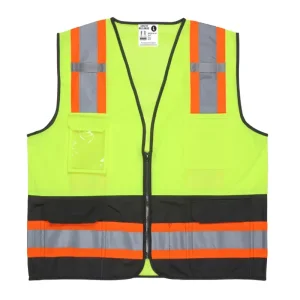

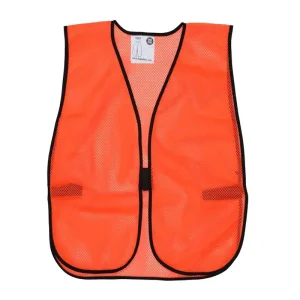
The mandatory convergence of international occupational health regulations (OSHA, EN ISO 20471, ANSI/ISEA 107-2020) and global infrastructure expansion driving high-performance reflective safety jacket procurement.
In modern industrial safety engineering, high-visibility protective apparel, particularly Wholesale Safety Jackets With Reflectors, forms the first line of defense against workplace struck-by injuries, vehicle collisions, and machinery-related fatalities. According to recent industrial safety statistics from the International Labour Organization (ILO) and OSHA, struck-by accidents represent over 15% of all non-fatal workplace injuries in construction, heavy logistics, and roadside maintenance sectors. As global infrastructure investments surge across North America, Europe, and Asia-Pacific, mandatory enforcement of personal protective equipment (PPE) standardizations has escalated from simple visual warning vests to technologically sophisticated, multi-weather reflective garments.
The global demand matrix for safety apparel is governed by rigorous technical standards that mandate specific chromaticity coordinates for fluorescent background fabrics (such as high-vis lime-yellow, fluorescent orange-red, and high-visibility red) paired with photometric retroreflective microprismatic or glass-bead tapes. Procurement managers, municipal safety directors, and global safety equipment distributors face complex choices when navigating supply chains to guarantee that bulk safety garments comply with regulatory enforcement frameworks while maintaining cost efficiency and durability.
To assist global procurement officers in assessing international specifications, the following compliance matrix delineates the core operational parameters of major global standards across regional jurisdictions:
| Standard Designation | Target Jurisdiction | Minimum Background Fabric Area | Minimum Retroreflective Tape Area | Typical High-Risk Application |
|---|---|---|---|---|
| ANSI/ISEA 107-2020 Type R Class 3 | North America (US/Canada) | 0.80 m² (1240 sq in) | 0.20 m² (310 sq in) | High-speed highway work (>50 mph), heavy construction, emergency response |
| EN ISO 20471:2013+A1:2016 Class 3 | European Union & UK (UKCA) | 0.80 m² | 0.20 m² | Railway maintenance, motorways, airport tarmac ground handling |
| ANSI/ISEA 107-2020 Type R Class 2 | North America | 0.50 m² (775 sq in) | 0.13 m² (201 sq in) | Urban traffic control, survey operations, parking enforcement |
| EN ISO 20471 Class 2 | European Union & International | 0.50 m² | 0.13 m² | Municipal sanitation, courier services, warehouse logistics |
| AS/NZS 1906.4:2010 Class D/N | Australia & New Zealand | Day/Night dual certified area | R-Class photometric coefficient | Mining operations, civil infrastructure, port terminals |
From microscopic retroreflection physics to smart active illumination: mapping the future of worker visibility technology.
The core efficacy of a Safety Jacket With Reflector rests upon optical physics. Retroreflection occurs when light rays striking a surface are reflected directly back toward the originating light source—such as a driver's headlights—with minimal scattering loss. Unlike diffuse reflection (found in ordinary fabrics) or specular reflection (found in mirrors), retroreflection uses engineered geometric structures to achieve extreme photometric intensity ($R'$ values exceeding $330 \text{ cd}/(\text{lx}\cdot\text{m}^2)$ under ISO 20471 protocols).
Utilizes millions of microscopic spherical glass beads ($N_d \ge 1.90$) embedded in a reflective silver polymer matrix. Light entering the bead is refracted, focused on the back metallic mirror layer, and returned directly to the driver's sightline across broad angularity ranges.
Precision-molded retroreflective corner-cube microprisms (typically acrylic or vinyl) engineered for ultra-long-range visibility (>500 meters). Offers superior lumen maintenance under rain and moisture conditions, ideal for severe rainwear applications.
Integration of ultra-thin flexible Electroluminescent (EL) active light strips and rechargeable Li-ion powered micro-LED tubing embedded directly along garment seams, ensuring visibility even in zero ambient light environments.
Looking ahead, the industrial safety garment industry is undergoing a paradigm shift toward intelligent protective clothing. Below is the multi-stage Technical Roadmap (2024–2030) detailing the integration of advanced functional fabrics and smart warning technology into factory production lines:
100% GRS-certified post-consumer recycled PET (polyester mesh and oxford) paired with fluorine-free durable water repellent (DWR) eco-coatings.
Embedding miniaturized fall-detection sensors, ambient temperature alarms, and GPS emergency beacons for lone workers in remote sites.
Integration of graphene heating elements and phase-change materials (PCM) automatically modulating interior vest temperature in sub-zero environments.
How localized industrial clusters in Zhejiang offer unmatched OEM/ODM speed, cost optimization, and rigorous batch consistency for global B2B buyers.
When sourcing Wholesale Safety Jackets With Reflectors at scale, procurement directors face a dual challenge: maintaining strict compliance with evolving international safety directives while mitigating global supply chain volatility. China’s safety apparel manufacturing ecosystem—centered in industrial hubs such as Yongkang, Zhejiang—delivers unmatched structural advantages that stem from complete vertical integration.
From raw polyester filament extruding, high-visibility fluorescent dyeing, and waterproof PU/PVC backing coating to reflective tape glass-bead lamination and automatic laser pattern cutting—every production phase occurs within a 30-kilometer radius, eliminating multi-stage freight delays.
Modern Chinese facilities utilize computer-controlled automated pattern cutters, computerized seam-sealing waterproof taping machines, and automated multi-head embroidery systems. This automation ensures precision seam margins, consistent stitch density (minimum 4 stitches/cm), and defect rates below 0.1%.
Whether customizing 50,000 units for a national railway tender or producing specialized flame-retardant safety parkas for offshore oil platforms, local factories offer rapid prototyping (samples delivered within 3–5 business days) and scalable monthly outputs exceeding 500,000 pieces.
Tailoring garment specifications to micro-climates, specific workplace hazard vectors, and specialized industry requirements.
Requires multi-layer 3-in-1 winter parka configurations featuring 300D Oxford waterproof PU-coated outer shells, detachable thermal fleece linings, flame-retardant (FR) treated fabrics compliant with EN ISO 11612, and 2-inch wide silver retroreflective tapes that maintain flexibility at -40°C.
Focuses on ultra-lightweight 115g 100% polyester bird's-eye mesh fabric engineered with moisture-wicking and UV 50+ sun protection. Incorporates breathable perforated retroreflective tape to facilitate heat dissipation while maintaining ANSI Class 2 daytime and nighttime compliance.
Demands ANSI/ISEA Class 3 surveyor style safety jackets equipped with 5-point breakaway Velcro seams to prevent worker entanglement in moving machinery or high-speed traffic wind shear, combined with multi-functional mic tabs and radio pockets.
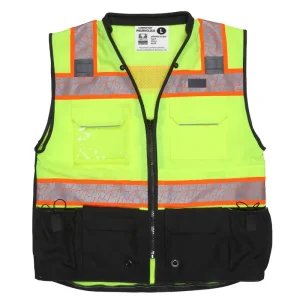
Tailored for corporate ESG initiatives, utilizing 100% Recycled PET fabrics certified under the Global Recycled Standard (GRS). Blends high-visibility lime-yellow with dirt-masking navy black bottoms for enhanced aesthetic longevity across daily operations.
Rigorous multi-stage laboratory testing ensuring every production lot meets exact international standards before leaving the factory floor.
To guarantee that safety distributors and brand owners receive zero-defect inventory, professional Chinese manufacturers enforce a multi-tier Quality Management System (QMS) aligned with ISO 9001:2015 and BSCI (Business Social Compliance Initiative) audit guidelines. Every batch of Wholesale Safety Jackets With Reflectors undergoes rigorous physical and optical testing in specialized textile laboratories:
Measures the exact chromaticity coordinates $(x,y)$ and luminance factor ($Y\%$) of fluorescent fabrics to guarantee compliance before and after exposure to xenon arc light fastness testing (ISO 105-B02).
Reflective tapes are subjected to repeated ISO 6330 laundering cycles at 60°C. High-grade reflective tapes retain over 100 cd/(lx·m²) retroreflectivity even after 50 intensive industrial wash cycles.
Waterproof safety jackets undergo hydrostatic pressure testing (>10,000mm H₂O under ISO 811) and breathability testing (>5,000 g/m²/24h under JIS L1099 B1) ensuring worker comfort in wet environments.
Addressing key technical questions regarding compliance, custom branding, wash durability, and factory minimum order quantities.
The fundamental distinction lies in worker speed exposure and total reflective/fluorescent surface area. ANSI Class 2 garments are designed for tasks where traffic speeds do not exceed 25 mph (40 km/h) or work areas requiring higher visibility during bad weather, needing a minimum of 775 sq. in. of background fabric and 201 sq. in. of reflective material. ANSI Class 3 garments are mandatory for high-risk environments where vehicle speeds exceed 50 mph (80 km/h). Class 3 garments require sleeves with reflective striping (providing a human silhouette in motion) and at least 1,240 sq. in. of background fabric and 310 sq. in. of retroreflective tape.
Adding corporate logos or custom branding can compromise certification if the printed area reduces the visible background fluorescent fabric below the mandatory minimum square meter threshold (e.g., 0.80 m² for Class 3). Professional factories ensure that custom logos are positioned in designated non-certified print zones or utilize heat-transfer reflective logos that contribute to retroreflective area calculations while complying with EN ISO 20471 Section 4.2 guidelines.
Standard commercial reflective tape survives approximately 25 home wash cycles (ISO 6330 at 40°C) before retroreflectivity drops below the 100 cd/(lx·m²) threshold. However, premium industrial-grade glass bead or microprismatic reflective tapes manufactured for heavy industry endure 50 to 75 wash cycles at 60°C, and selected aramid-backed flame-retardant tapes withstand industrial dry cleaning.
Standard OEM production MOQs typically range from 500 to 1,000 units per colorway for custom-dyed fabrics or customized reflective placements. In-stock core items (such as standard Class 2 vests and Class 3 jackets) can be ordered in smaller batch sizes (100–200 units). Production lead time is generally 20 to 30 days after sample approval, with expedited 14-day rush production available for urgent tenders.
Complete workwear solutions: certified shirts, headwear, environmental vests, and high-visibility workwear accessories.