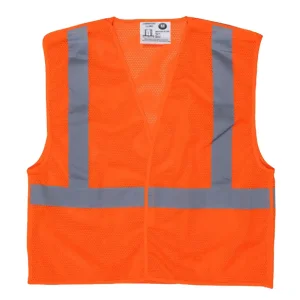
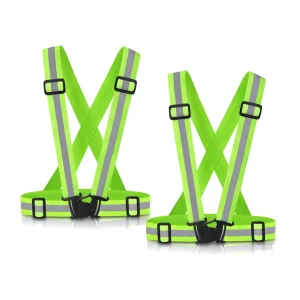
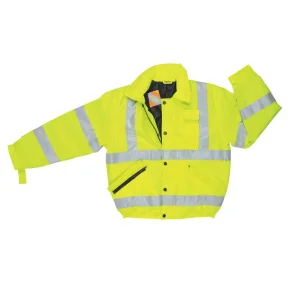
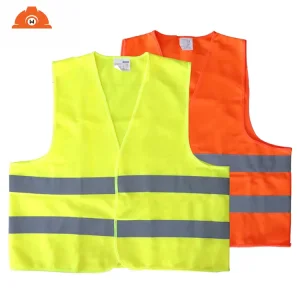
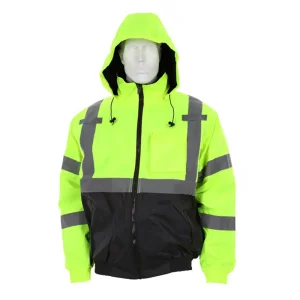
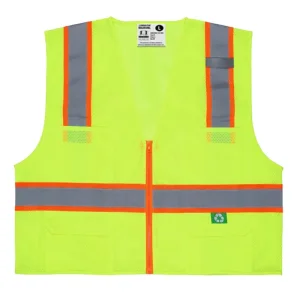
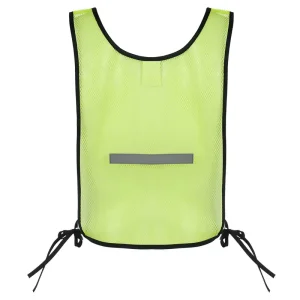
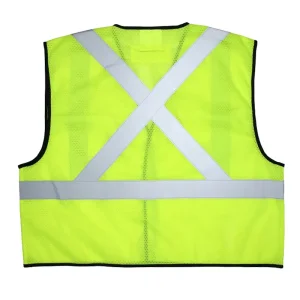
Engineered to exceed global optical performance thresholds. Direct factory supply engineered for heavy civil infrastructure, logistics hubs, municipal fleets, and high-risk industrial work zones.
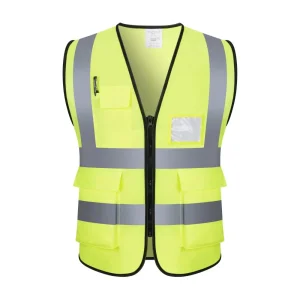
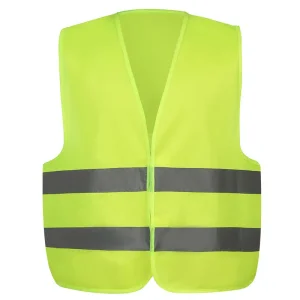
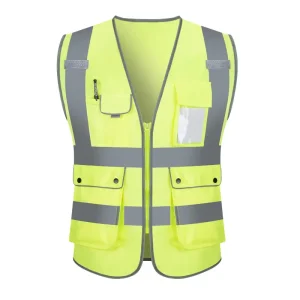
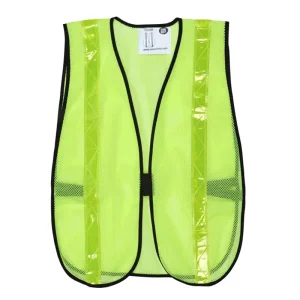
The global personal protective equipment (PPE) high-visibility clothing market is undergoing a structural paradigm shift driven by stringent occupational safety regulations, automated mega-infrastructure projects, and heightened liability insurance mandates.
Global regulatory bodies including the US Department of Transportation (DOT), OSHA, and the European Agency for Safety and Health at Work (EU-OSHA) have mandated stricter high-visibility garment utilization across transport corridors, construction zones, and logistics centers.
Failure to supply compliant personal protective apparel exposes enterprise contractors to catastrophic liability, stop-work directives, and punitive commercial sanctions.
While road construction historically captured the lion's share of hi-vis procurement, smart automated warehousing, rapid e-commerce fulfilment hubs, maritime container terminals, and renewable energy (wind and utility solar farms) now represent the fastest-growing demand segments globally.
Modern operations require specialized vests engineered with ergonomic multi-pocket tooling, radio pass-throughs, and anti-snag breakaway points.
Tier-1 industrial buyers increasingly consolidate their global procurement by seeking cross-certified garments that seamlessly satisfy both North American ANSI/ISEA 107-2020 and European EN ISO 20471:2013+A1:2016 standards.
This harmonization slashes duplicate SKU carrying costs for multinational supply chain operators and global distribution partners.
| Standard / Regulation | Geographic Jurisdiction | Key Classification Framework | Minimum Fluorescent Base Fabric | Minimum Retroreflective Tape | Typical Industrial Deployment |
|---|---|---|---|---|---|
| ANSI/ISEA 107-2020 | North America (USA, Canada) | Type R (Roadway), Type P (Public Safety), Type O (Off-Road); Class 1, 2, 3 | Class 2: 775 in² (0.50 m²) Class 3: 1,240 in² (0.80 m²) |
Class 2: 201 in² (0.13 m²) Class 3: 310 in² (0.20 m²) |
Highway DOT roadwork, heavy civil utilities, municipal emergency operations. |
| EN ISO 20471:2013+A1 | European Union & Global Cross-Standard | Class 1 (Low Risk), Class 2 (Medium Risk), Class 3 (Maximum Risk) | Class 2: 0.50 m² Class 3: 0.80 m² |
Class 2: 0.13 m² (Level 2 retroreflection) Class 3: 0.20 m² |
Airport ground crews, logistics hub operators, European public works. |
| AS/NZS 4602.1:2011 | Australia & New Zealand | Class D (Day Only), Class N (Night Only), Class D/N (Day/Night) | 0.40 m² continuous fluorescent front/back | 50mm wide retroreflective tape in configured 'H' or 'X' pattern | Mining extraction, Australasian railway networks, civil infrastructure. |
| CSA Z96-15 | Canadian Federal Standards | Class 1, Class 2, Class 3 with Level 1 or Level 2 photometric tape | Comparable to ANSI Class 2 / 3 metrics with mandatory 'X' on back | Full retroreflective coverage with side-view visibility bands | Resource extraction, oil & gas rigs, sub-zero highway maintenance. |
From raw polyester monomer synthesis in Zhejiang to automated precision CAD laser cutting and automated seam-welding in Jinhua, Chinese PPE manufacturers provide unmatched speed, cost optimization, and photometric consistency.
Yongkang Wow Safety Products Co., Ltd. leverages direct proximity to the world's most dense synthetic textile clusters. Sourcing 120gsm warp-knitted tricot, 100% polyester open-hole cooling mesh, and micro-glass-bead retroreflective materials happens within a 50km radius.
This hyper-localized raw material ecosystem eliminates upstream bottlenecks, lowers freight tariffs, and guarantees stable lead times even during seasonal demand surges.
Modern production facilities utilize automated continuous optical spectrometers, spectrophotometers for chromaticity coordinate verification (x, y color space), and computerized multi-needle lockstitch machines.
Automated cutting tables minimize fabric waste to under 3.5%, directly translating into razor-thin per-unit margins passed on to wholesale distributors and institutional purchasers.
Enterprise clients require tailored pocket configurations for gas detectors, rugged two-way radio clips, clear ID badge holders, and flame-retardant binding. Our engineering department prototypes bespoke designs within 48 to 72 hours.
Whether branding via automated silk-screen printing, heat transfer reflective films, or woven silicone badging, our lines support seamless private-label integration.
Contracting directly with source manufacturers in Jinhua City drastically compresses middle-tier brokerage markups by 28% to 42%. In addition, container-optimized flat packaging reduces cubic meter (CBM) freight overhead, enabling international distributors to achieve higher operating margins while maintaining competitive wholesale bidding power.
A safety vest is not merely apparel; it is a life-critical visual detection system. Photometric durability requires deep material science across retroreflection, fluorescent dye longevity, and environmental wear resistance.
Our safety vests utilize premium glass-bead retroreflective tapes with coefficients of retroreflection ($R_A$) surpassing 330 to 500 cd/(lx·m²) at an observation angle of 12' and entrance angle of +5°.
Incoming vehicle headlights are bounced directly back to the driver's cone of vision rather than scattered diffusely. For harsh outdoor environments subjected to torrential downpours, micro-prismatic PVC/vinyl films ensure zero loss of retroreflectivity under water film submersion.
Fluorescent fabrics work by absorbing invisible ultraviolet (UV) solar radiation and re-emitting it as visible light, creating intense daytime visual pop against dreary overcast, foggy, or twilight industrial backdrops.
We formulate three primary certified chromaticity palettes: Fluorescent Yellow-Green (Lime) (500–530nm peak excitation), Fluorescent Orange-Red (590–610nm), and Fluorescent Red.
Safety vests must be engineered around specific industrial kinematics and hazards. Standard generic vests fail under specialized occupational rigors.
Workers operating in work zones adjacent to high-speed vehicular traffic (>50 mph / 80 km/h) require mandatory ANSI Type R Class 3 or EN ISO 20471 Class 3 apparel featuring full retroreflective coverage across the torso and sleeves.
Heavy-duty reinforced zipper fronts and dual D-ring fall arrest harness pass-through access slots are critical engineering criteria for bridge construction and elevated scaffolding crews.
Forklift impact mitigation in multi-tier fulfillment warehouses requires ANSI Type R Class 2 vests engineered with 5-point breakaway velcro systems (shoulders, sides, front) to prevent entanglement in automated conveyor rollers.
Integrated transparent barcode scanner sleeves, tablet pockets, and heavy-duty mic tabs ensure seamless mobile inventory management.
Ground handling staff encounter continuous kerosene jet blast, marine spray, salt mist, and low-light operations. Garments require oil-repellent Teflon fabric coatings and windproof bonded substrates.
Dual-color contrasting tape configurations (fluorescent orange borders on fluorescent lime base) ensure contrast recognition against tarmac and steel containers.
Enterprise procurement managers and global wholesalers must mitigate compliance risk by executing rigorous factory qualification workflows. Below is our standard manufacturing quality framework.
Incoming spectrophotometer lot inspection for chromaticity box coordinates (EN ISO 20471 Table 2). Tensile tear resistance testing of base polyester tricot (min. 100N warp/weft).
Stitch density maintained at 10–12 stitches per inch (SPI) using high-durability polyester bonded thread. Reinforced bar-tack stitching at all stress pockets, zippers, and mic tabs.
Batch sampling utilizing portable retroreflectometers to verify $R_A > 380\text{ cd}/(\text{lx}\cdot\text{m}^2)$. Thermal stress and industrial laundering wash-cycle simulation.
Moisture-barrier polybagging, automated custom EAN/UPC retail barcode labeling, drop-tested 5-ply export master cartons optimized for standard container palletization.
With 15+ years of specialized experience, Yongkang Wow Safety Products Co., Ltd. provides full turn-key contract manufacturing services. From private label design drafting, CE and UKCA module B/C type-examination certification support, to direct FOB Ningbo/Shanghai container shipments, we empower distributors across Europe, the Americas, the Middle East, and Australasia.
The high-visibility garment sector is transitioning beyond passive retroreflection into active, connected, and sustainable protective gear ecosystems.
Global Fortune 500 infrastructure contractors now enforce mandatory ESG purchasing quotas. We manufacture high-visibility vests utilizing 100% post-consumer recycled plastic bottles (rPET) certified under the Global Recycled Standard (GRS).
Each safety vest diverts approximately 12 to 18 plastic bottles from marine ecosystems while maintaining full mechanical tensile strength and optical certification.
Passive retroreflection depends entirely on external incident light sources. In total pitch-black mining shafts, container yards, or dense smoke conditions, active electroluminescent (EL) strips and micro-LED piping provide 360-degree self-illuminated visibility up to 1,000 meters away.
Rechargeable lightweight lithium-ion power packs offer 14+ hours of continuous flashing or steady illumination modes.
Integrating UHF passive RFID chips and ultra-wideband (UWB) tracking modules into vest lining allows industrial facilities to implement automated man-down alerts and proximity-warning alerts when personnel approach heavy autonomous machinery.
These smart PPE vests form an integral node within Industry 4.0 connected worker health and safety ecosystems.
Expert answers to common engineering, regulatory, testing, and volume order logistics questions encountered by enterprise supply directors.
ANSI Class 2 garments require at least 775 sq. inches of fluorescent background material and 201 sq. inches of retroreflective tape (typically sleeveless vests). Class 3 garments require a minimum of 1,240 sq. inches of background fabric and 310 sq. inches of reflective tape, mandating short or long sleeves with retroreflective bands around the arms to present a distinct full-body human silhouette at long distances.
Standard commercial vests are certified for 25 home wash cycles at 40°C. However, our heavy-duty industrial workwear incorporates high-grade glass-bead retroreflective tape certified for 50+ industrial laundry cycles (ISO 6330) or dry-cleaning cycles while maintaining retroreflectivity well above the 100 cd/(lx·m²) minimum threshold.
Yes, provided the printed area does not reduce the required minimum area of fluorescent background fabric below certified class thresholds. We recommend placement within designated non-certified accent zones (such as black trim panels) or utilizing custom micro-prismatic reflective heat transfer film that contributes to overall reflectivity.
Our standard MOQ for custom OEM manufacturing (custom PMS fluorescent dye colors, specific pocket designs, branded labels) is 1,000 pieces per SKU. For stock designs with custom heat-transfer logo printing, MOQs start as low as 200–500 pieces. Standard container production lead time is 25 to 35 business days from final sample approval.
We provide comprehensive third-party test reports issued by internationally accredited laboratories including SATRA, SGS, TÜV Rheinland, and Intertek, covering EN ISO 20471:2013+A1:2016, ANSI/ISEA 107-2020, AS/NZS 1906.4:2010, and OEKO-TEX Standard 100 chemical safety certifications.
Safety vests manufactured from synthetic woven or warp-knitted polyester fabrics generally classify under HS Code 6114.30 (other garments, knitted or crocheted, of man-made fibers) or HS Code 6211.33 / 6211.43 (other garments, of man-made fibers). Accurate sub-headings are coordinated based on country of import.
Discover our extended line of ANSI Class 2 & Class 3 insulated jackets, eco-friendly rPET vests, breathable mesh gear, and reflective high-visibility safety accessories.