Direct factory wholesale items engineered with advanced retroreflective tape, moisture-wicking synthetic fibers, and high-contrast color fastness.
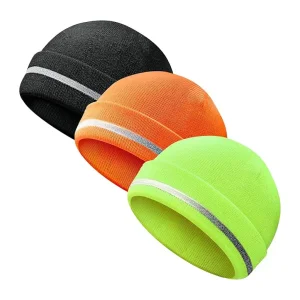
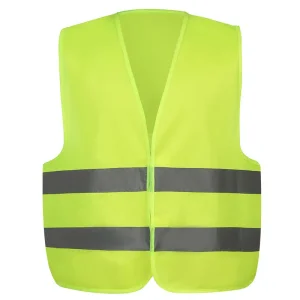
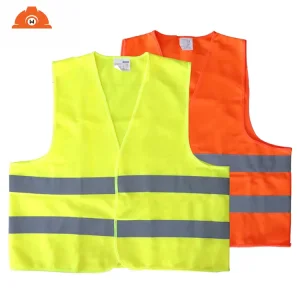
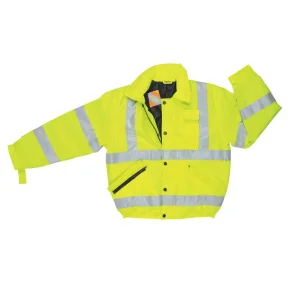
Analyzing regulatory shifts, ergonomic demands, and global procurement trends in lightweight high-visibility protective wear.
The global demand for high-visibility (hi-vis) personal protective equipment (PPE) has experienced a structural paradigm shift over the past decade. Modern occupational health and safety (OHS) frameworks no longer view high-visibility garments as mere passive compliance gear. Instead, enterprise procurement teams, safety engineers, and logistics operations require advanced lightweight outerwear solutions that combine certified retroreflective performance with high thermal comfort, mobility, and multi-risk protection.
As specialized wholesale lightweight hi-vis jacket manufacturers & suppliers, operating within China's advanced textile manufacturing hubs, enterprise manufacturing capability must bridge rigorous compliance standards (such as ANSI/ISEA 107-2020 in North America and EN ISO 20471:2013+A1:2016 in Europe) with cutting-edge textile chemistry. Lightweight hi-vis jackets—typically ranging between 120 GSM and 240 GSM in shell fabric weight—have largely replaced traditional heavy, restrictive canvas and rubberized safety jackets across spring, summer, and transitional autumn work settings globally.
Driven by massive DOT infrastructure upgrades and federal highway expansions, demand centers heavily on Class 2 and Class 3 lightweight shells equipped with 3M™ Scotchlite™ retroreflective tape, tear-away mechanisms, and breathability ratings under 100 RET.
Strict European environmental and ergonomic directives require OEKO-TEX® Standard 100 certification, fluorine-free DWR (Durable Water Repellent) coatings, and bio-based recycled polyester blends, without compromising photopic luminance.
Rapid urban infrastructure build-outs and extreme heat working environments demand ultra-lightweight ripstop polyester mesh fabrics (100–140 GSM) engineered with UPF 50+ UV blocking and anti-microbial treatments.
The industrial dynamic relies heavily on material innovation. Traditional heavy-duty polyurethane (PU) coated garments often induce thermal stress and heat stroke in active industrial environments. Modern lightweight hi-vis jacket configurations utilize engineered micro-porous membranes, mechanical stretch polyesters, and strategic laser-cut ventilation zones to optimize RET (Resistance to Evaporative Heat Transfer) while maintaining complete compliance for background fabric area requirements.
Quantitative benchmarks defining industrial-grade lightweight high-visibility jacket manufacturing.
| Parameter / Standard | Technical Requirement | Manufacturing Testing Protocol | Performance Impact |
|---|---|---|---|
| Background Luminance | Fluorescent Yellow (>0.70), Orange (>0.40), Red (>0.25) | Spectrophotometer Chromaticity (ISO 105-J03) | Ensures daytime long-range optical recognition |
| Retroreflective Coefficient ($R_A$) | Class 2 minimum ≥ 330 cd/(lx·m²) | CIE 54.2 Retroreflectometer Test at 0.2° observation angle | Provides night-time vehicle headlight reflection up to 300m |
| Fabric Breathability (RET) | Class 4: RET ≤ 15 m²Pa/W | ISO 11092 Sweating Guarded Hotplate Method | Prevents worker heat-exhaustion during heavy physical exertion |
| Tear & Tensile Strength | Warp ≥ 100N, Weft ≥ 70N (Lightweight Ripstop) | ISO 13937-2 Elmendorf Tear Testing | Prevents snagging and damage on construction sites |
| Industrial Laundering | Maintains color & retroreflectivity after 25 to 50 cycles | ISO 6330 / ISO 15797 Commercial Wash Protocol | Extends garment lifespan for enterprise rental programs |
Tailoring lightweight high-visibility outerwear for multi-sector industrial environments and severe micro-climates.
High-speed environments require maximum visual contrast distance. Lightweight jackets utilized here feature Class 3 configurations (full sleeve coverage) with continuous 360-degree retroreflective bands around the torso and arms. Integrated mic-tabs, dual pen-pockets, and radio harnesses are seam-reinforced to withstand continuous use by highway maintenance crews and tarmac handling personnel.
Last-mile delivery drivers and courier networks operate under mixed lighting conditions—from direct sunlight to dusk rainstorms. Lightweight windbreaker-style hi-vis jackets constructed from soft-shell polyester with TPU membranes offer wind-proofing and shower resistance while providing maximum mobility when mounting and dismounting vehicles frequently.
For hazardous sites requiring electrostatic dissipation and flame-retardant (FR) properties, lightweight hi-vis jackets utilize specialized modacrylic and treated cotton-poly fabrics. These garments meet EN ISO 11612 and NFPA 2112 standards while keeping total garment weight minimal to prevent heat exhaustion in tropical or desert oil refineries.
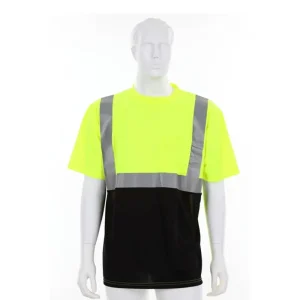
On heavy equipment and vertical building sites, breathability and snag resistance are paramount. Polyester birdseye mesh or mesh-lined lightweight jackets with reinforced black-bottom fronts prevent visible dirt and oil staining on high-wear zones while keeping the fluorescent yellow upper torso compliant to safety standards.
For B2B distributors, safety brand owners, and multinational procurement organizations, securing a reliable supply chain requires high customization flexibility alongside automated manufacturing controls. As dedicated lightweight hi vis jacket suppliers, our production architecture supports deep vertical integration:
The convergence of smart electronics, advanced polymer chemistry, and sustainable manufacturing in high-visibility workwear.
Integrating micro-thin, flexible polymer electroluminescent strip lights and rechargeable ultra-light battery packs directly into lightweight jackets. This guarantees worker visibility even in pitch-black environments devoid of ambient headlight beams (unlit tunnels, mines, and night outages).
Next-generation smart lightweight jackets featuring conductive textile sensors woven into the chest lining. These track heart rate, ambient skin temperature, and localized heat index, wirelessly alerting safety managers to potential heat stroke risks in real-time.
Transitioning from petroleum-derived polyesters to 100% bio-based PLA and chemical recycling systems that allow used lightweight hi-vis jackets to be melted down and re-extruded into high-tenacity safety yarns without degradation of luminance or physical strength.
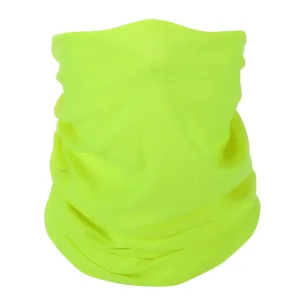
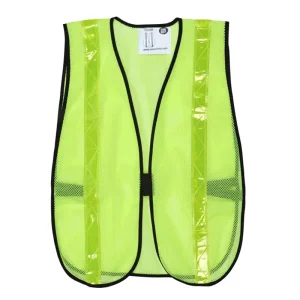
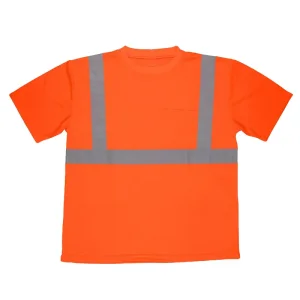
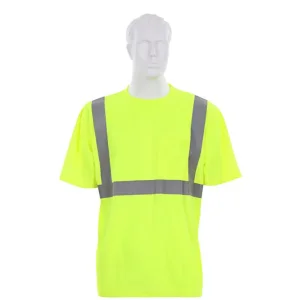
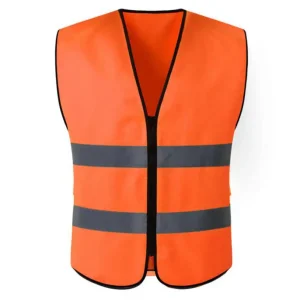
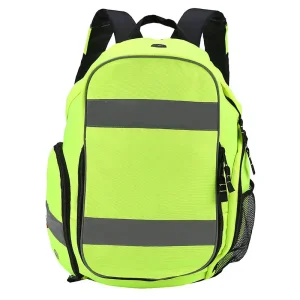
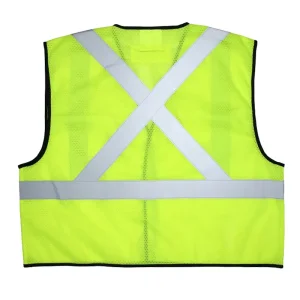
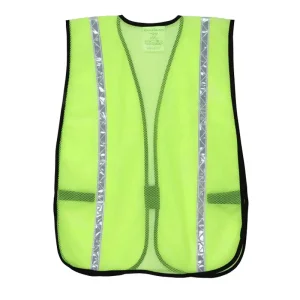
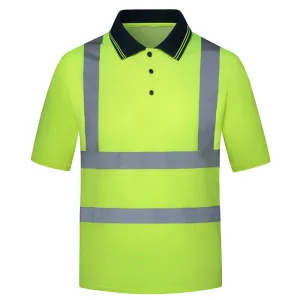
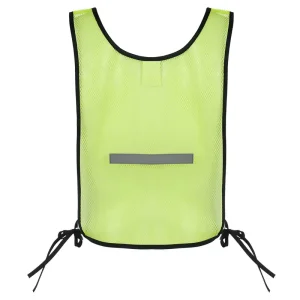
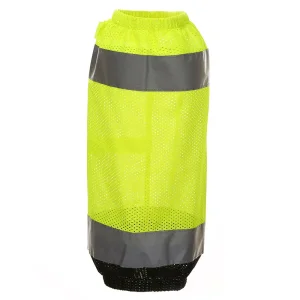
Explore our full OEM catalogue of safety vests, shirts, gaiters, and specialized high-visibility outerwear.
Technical, compliance, and B2B ordering insights for lightweight high-visibility jackets.