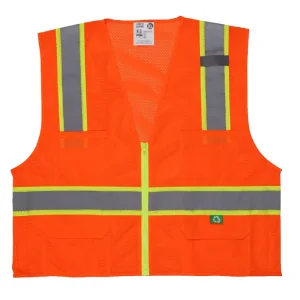
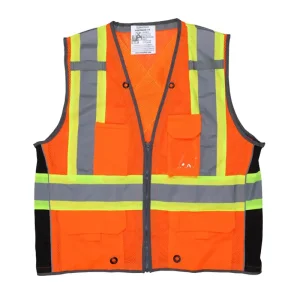
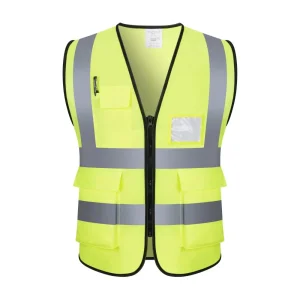
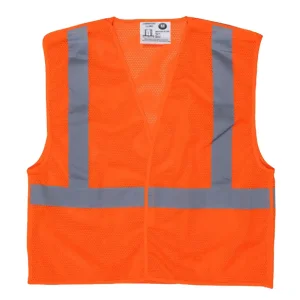
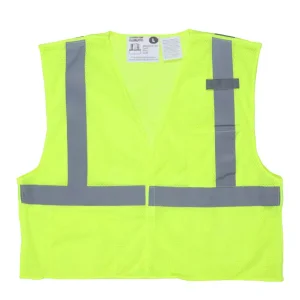
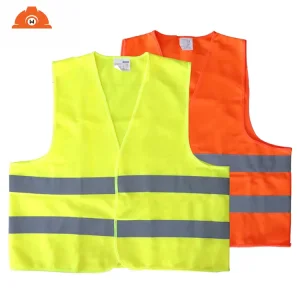
Certified workwear engineered for cold-climate visibility, maximum retroreflectivity, and heavy-duty industrial durability.
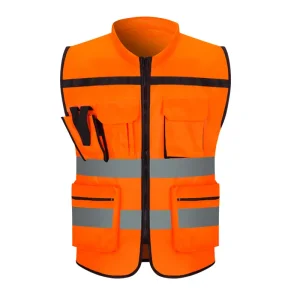
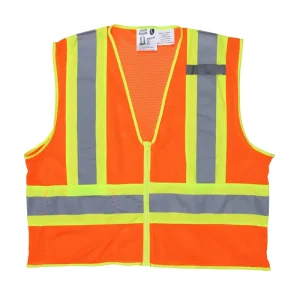
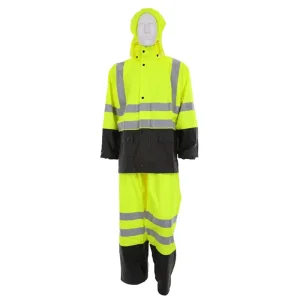
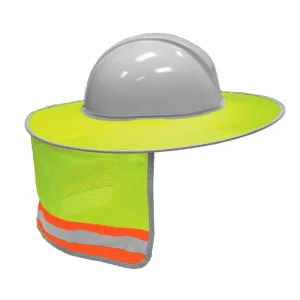
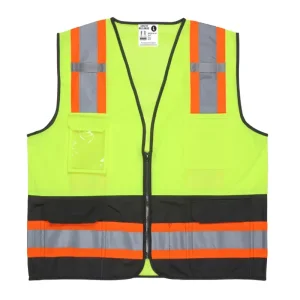
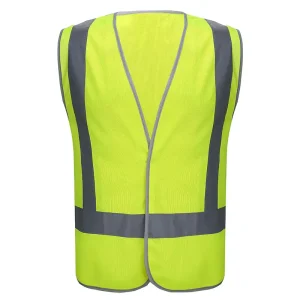

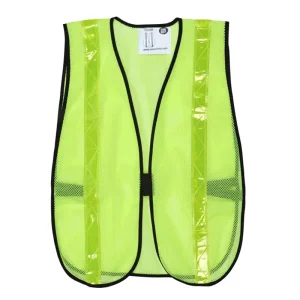
In the global market for Personal Protective Equipment (PPE), selecting qualified wholesale high visibility fleece vest suppliers requires a deep understanding of optical physics, textile thermodynamics, and stringent industrial compliance mandates. Unlike standard summer-weight mesh safety vests, high-visibility fleece vests serve a dual critical function: providing high-contrast daytime background luminosity combined with nighttime retroreflectivity, while simultaneously serving as a primary thermal insulation layer for personnel operating in low-temperature, high-risk operational environments.
Industrial cold-weather operations—spanning municipal winter maintenance, sub-zero cold-storage logistics, railway signal engineering, and coastal port logistics—demand garments that maintain thermal equilibrium without restricting physical range of motion. Fleece vests engineered with high-density spun polyester (typically ranging from 280 GSM to 350 GSM) act as a mid-layer or outer-layer barrier that traps dead air within micro-fiber pockets, inhibiting convective heat dissipation while allowing moisture vapor to escape during intensive physical exertion.
Standard polyester mesh vests degrade rapidly under thermal stress and offer zero insulating value. Premium hi-vis polar fleece garments must undergo anti-pilling treatments (ISO 12945-2 Grade 4+) and hydro-phobic surface coatings to prevent fabric matting and moisture absorption, which drastically reduces thermal resistance ($R_{ct}$) and compromises retroreflective tape adhesion over repeated wash cycles.
Navigating regional safety mandates: ANSI/ISEA 107-2020, EN ISO 20471:2013+A1:2016, and AS/NZS 4602.1:2011.
B2B enterprise buyers and government procurement officers must verify that imported high-visibility fleece vests strictly adhere to regional safety legislation. The chromaticity coordinates (x, y) and minimum luminance factor ($\beta$) of the fluorescent background material (Fluorescent Yellow/Lime, Fluorescent Orange-Red, and Fluorescent Red) are subject to rigorous spectrophotometric testing before certification.
| Standard & Jurisdiction | Garment Class | Min. Fluorescent Fabric | Min. Reflective Material | Primary Technical Requirement |
|---|---|---|---|---|
| ANSI/ISEA 107-2020 (USA) | Type R, Class 2 | 0.50 m² (775 sq. in.) | 0.13 m² (201 sq. in.) | Mandatory 360° visibility; 50mm reflective bands around torso and shoulders. |
| ANSI/ISEA 107-2020 (USA) | Type R, Class 3 | 0.80 m² (1240 sq. in.) | 0.20 m² (310 sq. in.) | Requires full body coverage including sleeves; typically achieved via removable fleece sleeves. |
| EN ISO 20471:2013 (EU) | Class 2 Garment | 0.50 m² | 0.13 m² | Photometric performance after 25-50 wash cycles; strict color fastness to rubbing and perspiration. |
| AS/NZS 4602.1:2011 (AU/NZ) | Class D/N (Day/Night) | 0.40 m² (Front & Back) | 50mm Retroreflective tape | Specific "H-Pattern" or "X-Pattern" reflective layout on upper back for rail & highway sectors. |
| CSA Z96-15 (Canada) | Class 2 Level 2 | 0.50 m² | 0.13 m² | Distinctive Canadian "X-back" pattern requirement with retroreflective waist band. |
Retroreflective tapes used on fleece vests must achieve coefficient of retroreflection values ($R_A$) exceeding 330 cd/(lx·m²) at 0.2° observation angle to guarantee night driver recognition at distances over 300 meters.
Polar fleece vests undergo thermal resistance testing (ISO 11092). Premium 300 GSM fleece provides thermal insulation values between 0.25 to 0.35 $m²K/W$, ideal for ambient temperatures from -5°C to 10°C.
Fluorescent dye retention is critical. Our manufacturing process enforces Grade 4-5 color fastness to artificial light (ISO 105-B02) and wet/dry rubbing fastness to eliminate color bleeding under precipitation.
How industrial clustering in Zhejiang enables unparalleled cost efficiency, rapid OEM customization, and scale economies.
Global distributors sourcing wholesale high visibility fleece vests benefit exponentially from China's vertically integrated safety apparel supply chain ecosystem—centered predominantly in Yongkang, Jinhua, and the broader Zhejiang manufacturing corridor. Unlike fragmented overseas operations, Chinese safety factories integrate yarn spinning, dyeing, fleece brushing, automated laser cutting, heat-transfer retroreflective tape application, and multi-stage quality control within tight geographic radii.
Streamlined raw material buffering permits sample turnarounds in 3 to 5 business days and full container load (FCL) production cycles within 20 to 25 days, reducing time-to-market for seasonal distributors.
Engineered compression packing protocols allow up to 40% more fleece garments per 40ft High Cube container, drastically reducing per-unit freight tariffs and landed costs for overseas buyers.
Custom woven neck labels, hangtags with custom UPC/EAN barcodes, eco-friendly polybags, and retail packaging display boxes built to exact brand identity specifications.
Optimizing garment functional specs for construction, logistics, utility, and emergency response workforces.
When issuing Requests for Quotation (RFQs) to hi-vis fleece vest manufacturers, procurement executives must balance worker comfort, field utility, and regulatory compliance constraints. Adding excessive non-reflective branding patches or misplacing pocket hardware can accidentally reduce the certified square area of background fluorescent fabric below the strict Class 2 or Class 3 threshold.
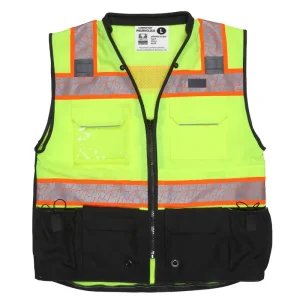
Professional safety vests designed for winter use require deliberate engineering features to enhance utility in severe environments:
Integration of reinforced radio/walkie-talkie chest loops, clear PVC ID badge holders, dual pen slots, heavy-duty tablet storage pockets, and fleece-lined handwarmer pockets with heavy-duty zipper closures.
For high-elevation construction tasks, fleece vests can be engineered with reinforced rear harness D-ring pass-through slits featuring storm flap covers to maintain safety harness integration.
Designed for rail workers and machinery operators to prevent entanglements. Heavy-duty hook-and-loop closures along shoulders, sides, and front zip release under sudden tensile stress.
Custom silk-screen printing or heat-transfer logos must strictly conform to ANSI/ISEA 107-2020 Appendix A. Direct embroidery on polar fleece should be backed with lightweight waterproof film to prevent wind leakage and thread unraveling after repetitive industrial washing.
Sustainable circular textiles, smart active lighting, and multi-risk protection technologies.
With ESG compliance taking center stage, top suppliers are transitioning to GRS 4.0 certified 100% recycled post-consumer PET fleece, reducing carbon footprints by up to 32% without sacrificing color fastness or tensile strength.
Passive retroreflective tape relies on external vehicle headlights. Next-gen fleece vests feature flexible, washable micro-LED light strips and glow-in-the-dark photoluminescent piping for zero-light environment safety.
Integration of inherently flame-retardant (IFR) modacrylic/cotton fleece blends meeting NFPA 70E / EN ISO 11612 standards, combined with non-conductive dielectric resin zippers for power utility linemen.
Engineered solutions optimized for specific climate challenges and industrial environments.
Constant operations in sub-zero freezer facilities require non-bulky thermal retention. 300 GSM polar fleece vests provide core chest warmth while allowing unrestricted arm movement for forklift drivers and order pickers.
High-speed vehicular traffic in winter low-visibility conditions requires ANSI Class 2 or Class 3 fluorescent orange/lime vests with 3M™ Scotchlite™ retroreflective glass bead material for 360-degree night visibility.
Ground crews working in windy tarmac environments benefit from wind-resistant micro-fleece construction combined with dual radio loops for air traffic communication equipment.
Expert responses covering technical specifications, MOQ, sampling, compliance testing, and bulk logistics.
For general cold-weather workwear, 280 GSM to 300 GSM polar fleece provides the ideal balance between thermal insulation, weight, and breathability. Heavy-duty sub-zero environments may require 320 GSM to 350 GSM bonded fleece with a windproof inner membrane.
Polar fleece has a textured surface that can hinder direct heat-lamination. We utilize specialized hot-melt adhesive primers or high-tensile twin-needle stitching to attach glass-bead or prismatic reflective tapes, ensuring compliance through 25 to 50 industrial wash cycles under ISO 6330.
Yes. However, the logo placement must not reduce the visible background fluorescent fabric below 0.50 m² (775 sq. in.). Our engineering team provides digital artwork positioning layouts to verify certified area compliance prior to bulk screen printing or embroidery.
Our standard MOQ for OEM custom color or custom pocket configurations is 500 units per style. For in-stock standard fluorescent lime and orange garments with custom logo printing, MOQs start as low as 100 to 200 units.
Absolute transparency is guaranteed. We supply certified lab test reports verifying background fabric chromaticity, luminance factor, retroreflective photometric performance, and chromaticity after wash cycles from accredited bodies such as SGS, TÜV, and SATRA.
High-visibility knitted polyester fleece vests generally fall under HS Code 6110.30 (Knitted or crocheted waistcoats/vests of man-made fibers) or HS Code 6211.33 for woven/shell safety garments. Check with your customs broker for regional tariff rates.
Connect directly with our senior PPE apparel engineers to request free fabric lab dips, physical samples, and complete factory direct volume pricing.
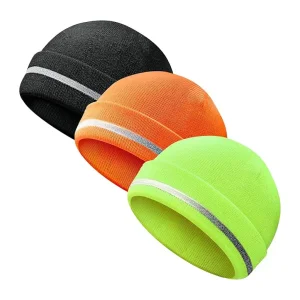
Request B2B Factory QuoteExplore our broader portfolio of winter safety gear, surveyor vests, beanies, and rainwear.