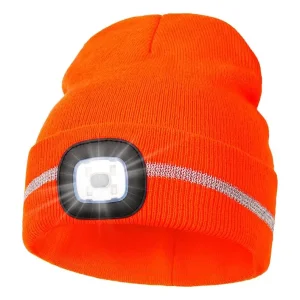
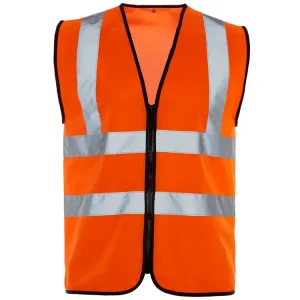
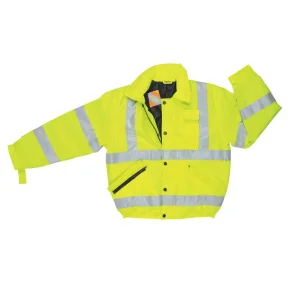
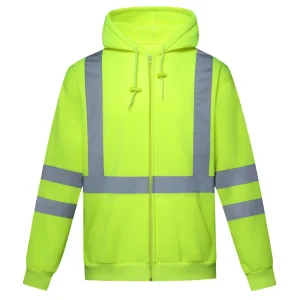
Explore our core engineered safety collection designed for severe weather resilience, industrial high-risk compliance, and ergonomic durability.
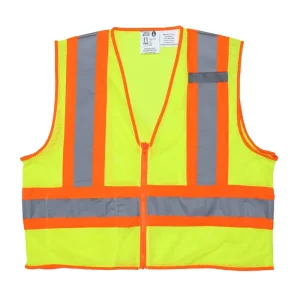
In high-risk industrial, construction, and infrastructure environments, High-Visibility (Hi Vis) soft shell jackets have evolved from basic Personal Protective Equipment (PPE) into sophisticated micro-climate thermal management systems. Modern B2B procurement demands not only compliance with stringent international luminance standards, but also dynamic weather barrier integration, ergonomic flexibility, and long-cycle durability.
As an authoritative OEM/ODM supplier and source factory rooted in Yongkang, Zhejiang—China’s global hardware and industrial textiles hub—Yongkang Wow Safety Products Co., Ltd. engineered this whitepaper to provide corporate buyers, safety equipment distributors, and enterprise fleet procurement managers with deep material engineering insights, regional compliance matrices, and total cost of ownership evaluation frameworks.
The superior performance of a premium wholesale Hi Vis soft shell jacket relies on micro-layered composite textiles that balance breathability, hydrostatic pressure defense, and thermal insulation.
Constructed typically with 94% High-Tenacity Polyester blended with 6% Spandex (280–340 gsm), the outer layer features dynamic 4-way stretch capability. It is treated with durable C0 fluorocarbon-free Durable Water Repellent (DWR) coating, causing liquid water to bead and slide off while preserving fluorescent dye integrity under UV exposure.
The core breathability engine consists of a Thermoplastic Polyurethane (TPU) membrane. With pore sizes 20,000 times smaller than a water droplet but 700 times larger than a water vapor molecule, it ensures a minimum hydrostatic head resistance of 8,000 mm to 10,000 mm H₂O and moisture vapor transmission rate (MVTR) exceeding 5,000 g/m²/24h.
Directly bonded to the membrane, the 100% polyester bonded microfleece (120–180 gsm) traps warm air in static air pockets while wicking moisture away from the wearer's inner layers. Anti-static and anti-pilling treatments guarantee tactile comfort and extended structural life during shift work.
A soft shell jacket’s night-time visibility depends on retroreflective tapes applied to the torso, shoulders, and sleeves. The tape must achieve a Coefficient of Retroreflection (R_A) exceeding 330 cd/(lx·m²) under standard entrance angles.
Procurement teams must ensure that wholesale Hi Vis soft shell jackets adhere to the specific legislative requirements of their destination market. Below is an expert breakdown of key standards supported by Wow Safety Products.
| Standard | Jurisdiction | Key Performance Metrics | Typical Softshell Application |
|---|---|---|---|
| ANSI/ISEA 107-2020 | North America (USA / Canada) | Class 2 (0.50m² fluorescent background / 0.13m² retroreflective) Class 3 (0.80m² background / 0.20m² retroreflective) |
Type R (Roadway/Traffic), Type P (Public Safety), Type O (Off-Road Industrial) |
| EN ISO 20471:2013+A1 | European Union (EU) & UK | Class 1, Class 2, and Class 3 area calculations. Minimum luminance factor beta > 0.70 (Fluorescent Yellow) | Highway Maintenance, General Construction, Logistics Fleet Operations |
| RIS-3279-TOM | United Kingdom (UK Rail) | Requires specific high-chroma Fluorescent Orange fabric color coordinates (CIELAB) to ensure distinction from green foliage signal lights | Network Rail approved trackside contractors and infrastructure engineers |
| AS/NZS 4602.1:2011 | Australia / New Zealand | Class D/N (Day/Night utilization), Class N (Night only). Minimum UV Protection Factor (UPF 50+) integration | Mining operations, civil engineering, Australian port authorities |
| OEKO-TEX® Standard 100 | Global Eco-Tox | Screening for harmful aromatic amines, heavy metals, formaldehyde, and organotin compounds in dyed softshell materials | Human-ecological textile safety guarantee for wearer skin contact |
Partnering directly with an established manufacturer like Yongkang Wow Safety Products Co., Ltd. offers institutional buyers distinct cost, scalability, and quality engineering advantages.
Situated in Zhejiang’s advanced manufacturing belt, our factory benefits from immediate proximity to raw material yarn spinning mills, specialized TPU laminating plants, and certified reflective material laboratories—drastically shortening production lead times.
Utilizing automated CAD pattern layout cutters, computerized laser-guided seam sealing machinery, and programmable bar-tacking equipment, we guarantee zero-tolerance dimensional consistency across thousands of softshell garments.
Every softshell batch undergoes rigorous Quality Assurance (QA): color fastness testing, hydrostatic pressure burst testing, xenon-arc light exposure fastness, and 50+ industrial wash cycle durability checks before shipment.
When procuring Hi Vis soft shells at scale, looking solely at initial unit FOB price can result in unexpected long-term costs. Professional buyers evaluate garments based on Cost Per Wear (CPW) and wash cycle endurance.
Different industrial environments require targeted functional features integrated into the wholesale soft shell design.
Requires ANSI Class 3 or EN ISO Class 3 coverage with 360-degree reflective tape framing. High-abrasion shoulder patches prevent wear from carrying equipment, while zippered radio chest pockets keep communication tools secure.
Demands Flame-Retardant (FR) softshell blends (e.g., Modacrylic/Cotton/Nomex outer) treated with anti-static spark-suppression threads (EN 1149-5) to prevent catastrophic ignition in explosive atmospheres.
Focuses on windproof storm cuffs with thumbholes, fleece-lined high neck collars, drop-tail hem coverage, and heavy-duty YKK® dual-slider zippers operational while wearing thick insulated gloves.
The high-visibility garment market is transitioning rapidly toward eco-conscious materials and active safety integration:
Modern global brands are mandating GRS (Global Recycled Standard) certified polyester made from ocean-bound plastic bottles. Up to 35 post-consumer PET bottles are recycled to create a single high-performance Hi Vis soft shell jacket without compromising luminance or tear strength.
Passive reflective tape relies on external vehicle light sources. Next-gen softshells integrate flexible LED fiber-optic piping powered by slim USB-rechargeable lithium-ion packs, providing active illumination even in unlit dark zones.
Direct answers from our engineering team regarding bulk soft shell manufacturing, customization, and certification.
Our standard OEM MOQ is 500 units per colorway for custom dyed fabrics and custom pocket configurations. For standard stock fluorescent colors (Lime/Yellow and Orange-Red), we offer flexible low-MOQ programs starting at 200 units.
Yes. However, ISO 20471 mandates minimum areas of uninterrupted fluorescent background material for Class 1, 2, and 3 garments. Our design engineers analyze your logo dimensions and place them strategically on pocket flaps, chest panels, or upper sleeves to maintain strict compliance.
Sewn-on tape uses stitch perforations which can slightly compromise water resistance along seam lines unless heat-sealed inside. Segmented heat-transfer tape is bonded using thermopress technology, offering 30% greater stretch flexibility and sleeker aesthetic styling on softshell fabrics.
Every production batch is tested on a Hydrostatic Head Tester (AATCC 127 / ISO 811). We subject seam-sealed areas to hydrostatic pressure up to 10,000mm to guarantee zero water penetration under heavy storm conditions.
Standard counter-samples are produced within 5 to 7 working days. Custom technical samples requiring custom dye lots or specialized FR treatments take approximately 12 to 15 days.
Browse our expanded safety wear lineup engineered for all work environments, seasons, and international safety compliance specs.