Engineered for extreme worksite conditions, featuring certified retroreflective tapes, durable background fabrics, and precision high-contrast custom printing.
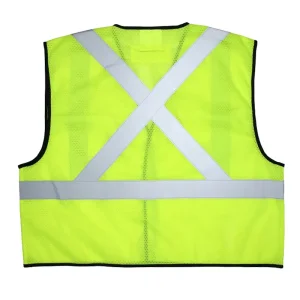
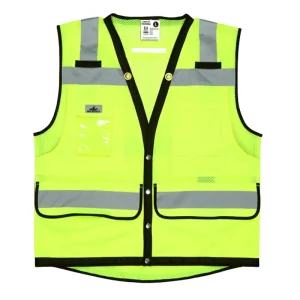
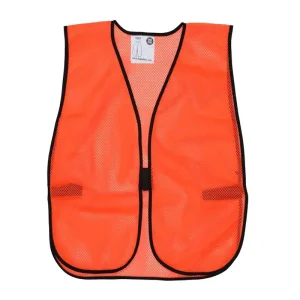
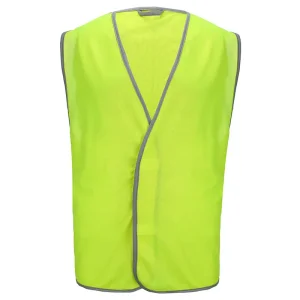
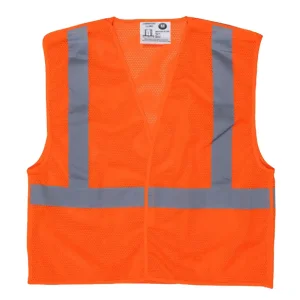
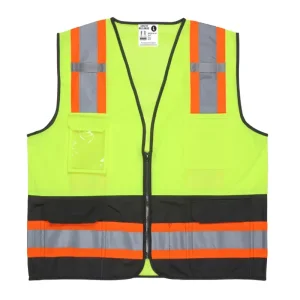
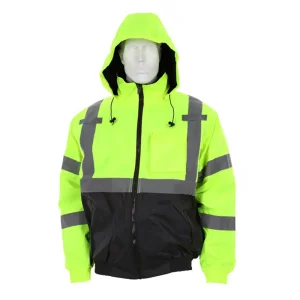
Quantifiable technical standards delivered consistently across millions of printed high-visibility safety garments worldwide.
Understanding the critical intersection of specialized textile chemistry, retroreflective optics, and strict regulatory limits during custom branding.
High-visibility safety garments (PPE) serve as the frontline defense against struck-by hazards in construction zones, industrial manufacturing, logistics hubs, and emergency operations. However, executing custom corporate logos, departmental text, and safety warnings onto high-visibility substrates demands a sophisticated understanding of photometric compliance. Unlike standard promotional apparel, custom printing on hi-vis safety vests, jackets, and shirts must strictly preserve the minimum required square inches of fluorescent background fabric and retroreflective taping mandated by global safety standards.
Formulated for maximum elasticity, UV stability, and flame-retardant properties. Prevents cracking or peeling when applied over 100% polyester mesh and solid tricot fabrics.
Ideal for high-detail, multi-color company logos. Utilizes premium hot-melt adhesives optimized for low-temperature application to prevent dye migration from fluorescent polyesters.
Integrates micro-glass beads directly into the liquid ink matrix, enabling custom printed back logos and chest text to bounce light directly back to vehicle headlights.
Technical Insight on Luminance Factor ($\beta$): Custom printing cannot cover more than a specific percentage of certified fluorescent yellow-green or orange-red fabric. Over-printing large solid black logos on the torso can reduce the effective surface area below the 0.50 m² threshold required for EN ISO 20471 Class 2 compliance, rendering the garment non-compliant during official worksite inspections.
From raw polymer spinning in Zhejiang to automated screen printing and ultrasonic tape welding in Yongkang, Chinese manufacturers provide global B2B buyers with seamless vertical integration.
Sourcing wholesale high-visibility printed apparel directly from established Chinese manufacturers (specifically centered around the industrial manufacturing corridors of Jinhua, Yongkang, and Ningbo) delivers distinct competitive advantages that extend far beyond unit price reduction. China’s eco-system for technical textiles integrates the entire supply chain within a 50-kilometer radius.
Raw polyester pellet extrusion, yarn spinning, high-visibility fluorescence dyeing, retroreflective tape manufacture, and screen printing occur under unified quality control supervision, shortening lead times from months to weeks.
State-of-the-art automatic oval printing machines capable of outputting 1,200 printed vests per hour with zero optical registration drift. Computerized ink mixing guarantees batch-to-batch color matching within Delta E < 0.8.
In-factory testing facilities equipped with retroreflectometers, xenon arc weathering chambers, and tensile testing apparatuses ensure every batch meets ANSI/ISEA 107-2020 and EN ISO 20471 prior to container loading.
A detailed engineering comparison of minimum background material, retroreflective tape surface areas, and printing placement constraints across major regional standards.
| Standard / Jurisdiction | Garment Class | Min. Fluorescent Area | Min. Reflective Area | Allowed Logo Print Zones | Primary Industrial Applications |
|---|---|---|---|---|---|
| ANSI/ISEA 107-2020 (United States / North America) |
Type R, Class 2 | 775 sq. inches (0.50 m²) | 201 sq. inches (0.13 m²) | Upper chest pockets, upper back (between reflective bands) | Construction, road work, traffic control, logistics hubs |
| ANSI/ISEA 107-2020 (United States / North America) |
Type R, Class 3 | 1,240 sq. inches (0.80 m²) | 310 sq. inches (0.20 m²) | Sleeves, upper back panel, left/right chest text placement | High-speed roadway work, severe weather operations, emergency response |
| EN ISO 20471:2013+A1 (European Union / International) |
Class 2 | 0.50 m² | 0.13 m² | Restricted to areas not counted toward minimum fluorescent surface | Municipal utility maintenance, delivery drivers, warehouse staff |
| EN ISO 20471:2013+A1 (European Union / International) |
Class 3 | 0.80 m² | 0.20 m² | Limited print footprint to prevent chromaticity displacement | Highway repair crews, airport apron staff, railway workers |
| AS/NZS 1906.4:2010 (Australia / New Zealand) |
Class Day / Night | 0.40 m² (High UV stability) | 0.10 m² (Class R/H) | Custom screen printing with UV-cured low-fade inks | Mining operations, civil engineering, Australian outback sites |
How next-generation chemical formulations, micro-prismatic optics, and IoT tracking are transforming high-visibility apparel production.
Replacing rigid solid silver glass-bead tapes with heat-applied, segmented micro-prismatic transfers. Enhances worker breathability, flexibility, and garment ergonomic motion by up to 35%.
Transitioning away from PVC and phthalate-heavy plastisol inks toward water-based polyurethane dispersion (PUD) systems that eliminate volatile organic compounds (VOCs) during screen printing.
Integrating washable flexible RFID micro-chips directly beneath custom printed chest logos. Enables automated PPE inventory auditing, industrial laundry cycle counts, and personnel worksite tracking.
Fluorocarbon-free DWR (Durable Water Repellent) surface treatments prevent oil, dirt, and mud from blinding the fluorescent background fabric, dramatically extending product operational lifespan.
Customizing printed safety apparel configurations tailored precisely to the environmental hazards of distinct industrial verticals.
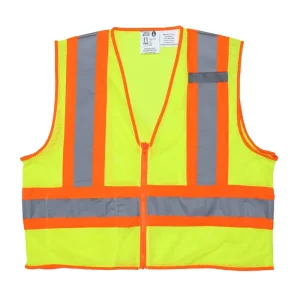
Recommended Spec: ANSI Class 2 or 3 fluorescent lime vests with 4-inch contrast orange/silver reflective striping. Printed back logos using high-contrast black silicone inks for 360-degree daytime and night-time recognition.
Recommended Spec: Flame-Retardant (FR) treated 100% cotton or Modacrylic blend fabrics meeting NFPA 2112 and ASTM F1506. Screen printing executed strictly using FR-certified water-based or silicone ink matrices.
Recommended Spec: EN ISO 20471 Class 3 insulated parkas and softshell jackets featuring non-magnetic zipper closures and anti-FOD (Foreign Object Debris) pockets with specialized reflective heat-applied branding.
Step-by-step OEM/ODM manufacturing procedure designed for global safety equipment distributors, government tender bidders, and corporate safety buyers.
Evaluation of customer artwork (.AI / .EPS), pantone matching, print zone compliance check against ANSI/EN ISO surface area rules.
Rapid physical prototype creation within 3–5 days. Includes spectrophotometer color audit and wash test verification.
Computer-controlled cutting, automated multi-head screen printing, and precision stitching across 6,000+ m² facility floor.
Rigorous line audit covering seam tensile strength, retroreflectivity index ($R_A > 330$), print adhesion, and size tolerances.
Barcoded polybags, sturdy corrugated master cartons, customs documentation, and FOB/CIF worldwide ocean or air delivery.
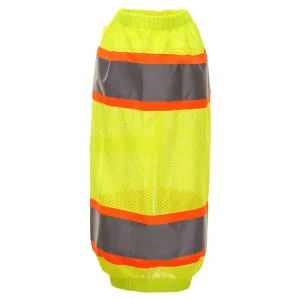
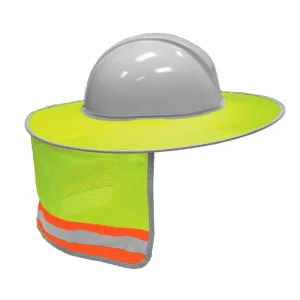
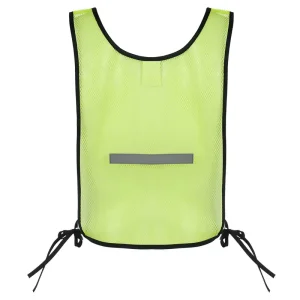
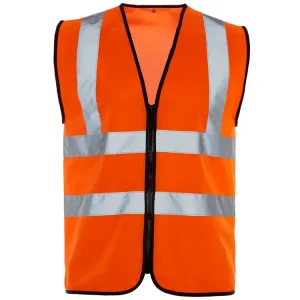
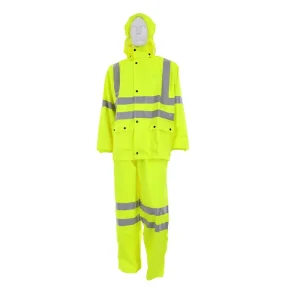
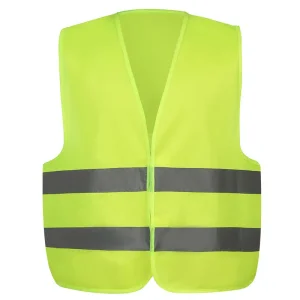
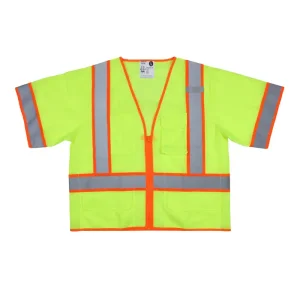
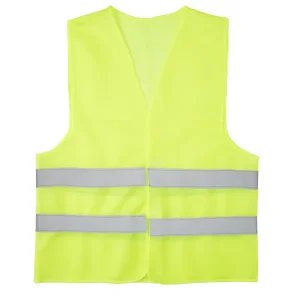
Expand your procurement scope with fully customizable weather-proof rain suits, sun shields, reflective gaiters, and economy safety vests.
Clear answers to critical questions regarding custom high-visibility printing, minimum order quantities, compliance certification, and wash durability.