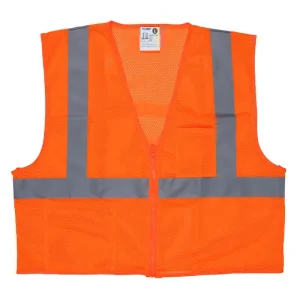
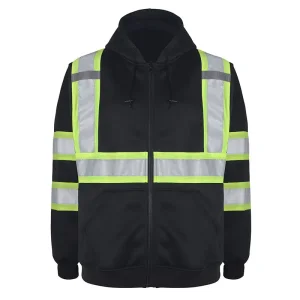
Direct from our certified manufacturing facility — heavy-duty safety shirts, reflective vests, thermal jackets, and accessories engineered for harsh industrial environments.
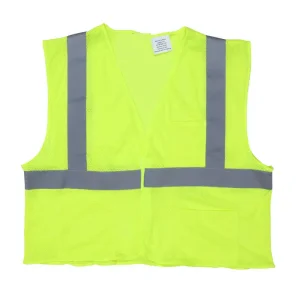
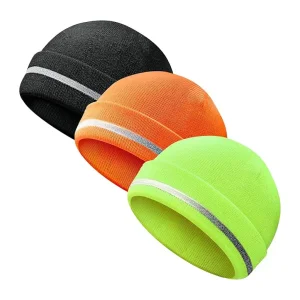
Understanding the transition from basic reflective clothing to complex multi-norm weather-defying 7-in-1 Hi Vis Parka systems in global industrial procurement.
Occupational safety standards such as OSHA (US), EU Directive 89/686/EEC, and UK HSE directives have strictly enforced Class 3 high-visibility protection for low-light, high-velocity work zones (>50 mph / 80 km/h). Procurement officers are pivoting toward certified multi-norm parkas that simultaneously guarantee waterproofness (EN 343) and sub-zero thermal insulation (EN 342).
Modern enterprise buying demands versatility. The market has shifted heavily toward 7-in-1 and 3-in-1 modular parka systems featuring detachable fleece liners, zip-off sleeves, reversible high-vis bodies, and storm-proof hoods, reducing total cost of ownership (TCO) across multi-season deployments.
With escalating geopolitical and environmental risks, global enterprise buyers are partnering directly with high-capacity Chinese manufacturing hubs capable of providing fully compliant, vertically integrated manufacturing — from raw fabric extrusion to certified lab testing and custom OEM labeling.
An in-depth look into textile construction, hydrophobic membranes, retroreflective optics, and thermal dynamics that define premium protective outerwear.
Commercial Hi-Vis Parkas utilize heavy-duty 300D or 600D Polyester Oxford weaves engineered with a microporous Thermoplastic Polyurethane (TPU) or Polyurethane (PU) backing. This dual-layer structure delivers an impressive hydrostatic head rating exceeding 10,000 mm to 15,000 mm H₂O while maintaining a Water Vapour Resistance (RET) below 12 m²Pa/W (EN 343 Class 4). Additionally, eco-friendly C0 Fluorocarbon-free Durable Water Repellent (DWR) surface treatments ensure liquid beaded resistance against rain, grease, and industrial mud.
Thermal protection in extreme arctic or sub-zero logistics requires high loft synthetic insulation (e.g., 160 g/m² body padding, 120 g/m² sleeve padding) or detachable 280 g/m² anti-pilling polar fleece liners. The thermal resistance index ($R_{ct}$) achieves optimal values under EN 342:2017 standards ($I_{cler} > 0.310 \text{ m}^2\text{K/W}$), preserving core body warmth in ambient working environments down to -30°C (-22°F) while permitting rapid moisture vapor escape during physical exertion.
High-visibility parkas rely on retroreflective tapes certified under ANSI/ISEA 107 level 2 / EN ISO 20471. Utilizing glass bead technologies (such as 3M™ Scotchlite™ 8906/8912) or advanced microprismatic polymer films (Orafol/Reflexite), these tapes feature a coefficient of retroreflection ($R_A$) surpassing $330 \text{ cd/lx}\cdot\text{m}^2$. This ensures light rays from oncoming vehicle headlights are returned directly to the driver's eye line, providing critical 360° visibility over distances exceeding 300 meters.
Every structural seam in a professional parka undergoes high-temperature thermoplastic PU sealing tape application to prevent moisture penetration under severe hydrostatic pressure. Hardware specifications include two-way heavy-duty resin zippers (YKK or SBS) equipped with double storm flaps, snap-fasteners, neoprene storm cuffs with adjustable hook-and-loop closures, fleece-lined chin protection, and fully taped detachable ergonomic storm hoods.
Comprehensive baseline parameters guaranteed by Yongkang Wow Safety Products Co., Ltd. for custom OEM Hi Vis Parka manufacturing orders.
| Performance Characteristic | Testing Protocol / Standard | Minimum Requirement | Wow Safety Factory Baseline |
|---|---|---|---|
| Waterproofness (Hydrostatic Head) | ISO 811 / EN 20811 | > 5,000 mm H₂O | 10,000 mm – 15,000 mm H₂O |
| Breathability (WV Vapour Resistance) | EN ISO 11092 (RET) | RET < 20 m²Pa/W | RET < 10.5 m²Pa/W (Class 4) |
| Retroreflective Coefficient ($R_A$) | EN ISO 20471 / ANSI 107 | > 330 cd/lx·m² | 380 – 500 cd/lx·m² (3M / Orafol) |
| Washing Durability (Tape Brightness) | ISO 6330 (60°C Industrial Wash) | 25 Washing Cycles | 50+ Certified Wash Cycles |
| Tear Strength (Outer Shell Fabric) | ISO 13937-2 (Elmendorf) | > 25 N | > 45 N (300D Ripstop Oxford) |
| Cold Weather Thermal Resistance ($I_{cler}$) | EN 342:2017 Mannequin Test | $I_{cler} > 0.265 \text{ m}^2\text{K/W}$ | $0.315 \text{ m}^2\text{K/W}$ (Down to -35°C) |
Ensuring your imported high-visibility outerwear meets or exceeds legal safety mandates across North America, Europe, Australia, and the UK.
Specifies garment requirements for high-risk environments. Class 3 Parkas mandate a minimum of 1,240 square inches ($0.80 \text{ m}^2$) of background fluorescent fabric (Safety Lime or Orange-Red) and 310 square inches ($0.20 \text{ m}^2$) of retroreflective material spanning 360° around the torso, arms, and shoulders.
The harmonized European benchmark for high-visibility warning clothing. Class 3 requires full upper body coverage including full-length sleeves surrounded by dual horizontal reflective bands. Color metrics must strictly satisfy EN ISO chromaticity coordinates before and after UV exposure.
Mandatory for UK railway infrastructure workers. RIS-3279-TOM dictates the use of a specialized high-visibility orange dye (Pantone 15-1360 TPX) to ensure high recognition against green railway embankment backgrounds, combined with specific retroreflective configurations.
Governs Canadian worker protection. Requires an explicit "X-back" pattern on the rear of the parka, allowing co-workers and machine operators to instantly discern whether a worker is facing toward or away from vehicle traffic in low-visibility conditions.
Evaluates waterproofing ($Y$) and breathability ($X$). Grade 4/4 is the highest attainable level, certifying that a parka withstands high hydrostatic pressure over extended work shifts while actively exhausting perspiration heat.
Certifies thermal insulation properties in environmental conditions below -5°C. Measures effective thermal insulation ($I_{cler}$), air permeability (Class 1 to 3), and resistance to water penetration for extreme winter applications.
Leveraging industrial cluster economies, advanced automation, and OEM/ODM flexibility for competitive global procurement.
Located in Yongkang, Zhejiang, our production ecosystem aggregates yarn spinning, Oxford weaving, TPU lamination, reflective slitting, automated CAD laser cutting, seam sealing, and laboratory testing within a localized 50 km radius. This tight integration slashes raw material lead times and enables highly aggressive wholesale pricing.
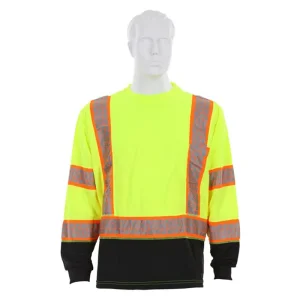
We provide complete OEM/ODM services tailored to enterprise procurement needs: custom color blocking (lime/black contrast), logo screen printing, transfer reflective prints, silicone high-frequency badges, bespoke zipper pulls, radio loop placements, and localized sizing patterns (EU, US, Asian fit specs).
Operating under ISO 9001:2015 quality management systems, our facilities regularly undergo BSCI, Sedex SMETA, and OEKO-TEX Standard 100 audits. Every batch of Hi-Vis Parkas undergoes AQL 1.5/2.5 pre-shipment inspections covering seam hydrostatic testing, color fastness, and retroreflective luminosity.
Custom-engineered high-visibility outerwear tailored to the operational hazards of specialized industrial sectors.
Challenge: High risk from high-speed vehicular traffic, rain storms, and heavy dirt contamination.
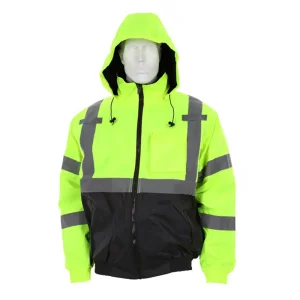
Solution: ANSI Class 3 Parkas with black dirt-concealing lower torsos and sleeve cuffs, 3M Scotchlite reflective stripes, and heavy-duty 600D ripstop Oxford fabrics.
Challenge: Saltwater spray, high gale-force winds, and continuous sub-zero sea mist.
Solution: Marine-grade 15,000mm hydrostatic head waterproof parkas equipped with anti-corrosive plastic resin zippers, double neoprene storm wrist cuffs, and high-visibility yellow panels.
Challenge: Extended exposure to freezer environments down to -35°C causing muscle strain and hypothermia.
Solution: Modular 7-in-1 parkas featuring 300g thermal polar fleece removable inner jackets, fleece-lined handwarmer pockets, and extended storm collars.
Challenge: Explosive atmospheric hazards, static build-up, and flash fire risks.
Solution: Multi-norm FR parkas crafted from inherent Flame Retardant (Modacrylic/Cotton) shell fabric, anti-static carbon grid threads (EN 1149-5), and FR reflective tape (EN ISO 11612).
Challenge: Strict network safety requirements and high night visibility requirements.
Solution: RIS-3279-TOM rail orange parkas with chemical-resistant surface coatings, mic loops for communication devices, and transparent ID chest pockets.
Challenge: Wind blast, engine grease, jet fuel splatter, and high background noise.
Solution: Windproof breathable parkas with radio/hearing protection strap loops, dirt-resistant contrast sleeves, and scratch-free plastic hardware.
A step-by-step risk mitigation framework for procurement managers sourcing wholesale Hi Vis Parkas from China.
Never accept supplier self-declarations. Always request third-party lab testing certificates issued by accredited testing bodies (SGS, TÜV Rheinland, SATRA, or UL). Verify that test reports specifically cover EN ISO 20471 (luminance factor & retroreflectivity), EN 343 (hydrostatic pressure & water vapour resistance), and ISO 6330 wash durability under current standards.
Demand fabric batch lot numbers for outer shell dye lots. Fluorescent dyes (Lime/Orange) can vary between production dye baths if not strictly controlled. Professional suppliers like Wow Safety utilize computerized spectrophotometers to guarantee color consistency ($\Delta E < 1.0$) across multi-thousand unit production runs.
Waterproof failure occurs almost exclusively at stitched seams. Ensure your manufacturer operates automated hot-air seam sealing machinery with precise temperature/pressure controls, and carries out inline hydrostatic seam pressure testing (>10,000mm) every 50 garments during live assembly.
Heavy winter parkas are bulky. Optimize shipping costs by confirming your factory uses high-pressure hydraulic vacuum packing systems. Vacuum packing reduces cargo cubic volume by 40-50%, drastically lowering per-unit freight costs in 40ft HQ container shipments.
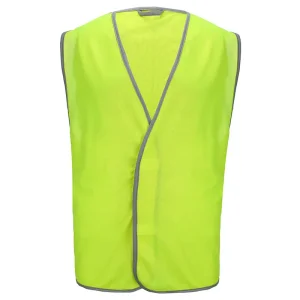
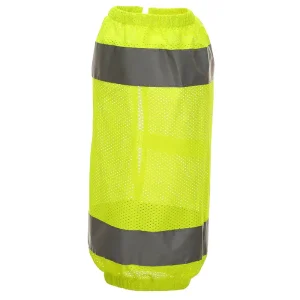
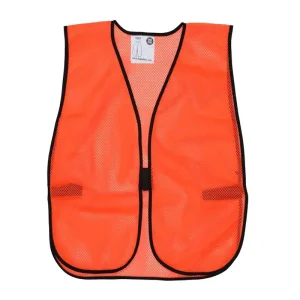
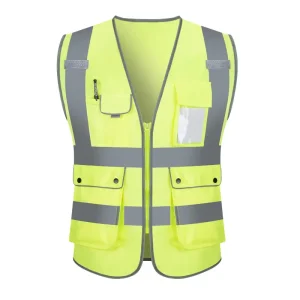
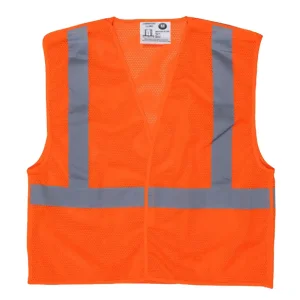
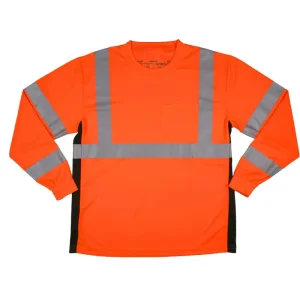
Explore our extended catalog of wholesale safety vests, long-sleeve shirts, insulated hooded sweatshirts, and protective gaiters.
Expert answers to the most common questions raised by enterprise procurement officers and PPE safety managers.
The fundamental difference lies in background fabric area, reflective tape coverage, and continuous visibility requirements. ANSI Class 2 garments require 775 sq in of background fabric and 201 sq in of reflective tape, suitable for personnel working near traffic moving under 25 mph. ANSI Class 3 Hi Vis Parkas require a minimum of 1,240 sq in of background fluorescent material and 310 sq in of reflective tape, with full sleeve coverage and 360° retroreflective taping. Class 3 is legally mandated for high-risk workers operating near traffic exceeding 50 mph, severe weather environments, or nighttime roadway operations.
Heavy thermal padding can trap moisture vapor released by the worker, causing perspiration buildup and eventual chilling. Premium Hi Vis Parkas resolve this issue by combining hydrophobic microporous membranes (TPU coatings) with breathable synthetic fiber insulation (such as 3M Thinsulate or hollow-fiber thermo-fill). This combination ensures a low Water Vapour Resistance rating (RET < 12 m²Pa/W under EN 343 Class 4), allowing perspiration vapor to escape freely while keeping rain and sub-zero wind out.
7-in-1 modular parkas offer unparalleled economic versatility. A single procurement purchase provides an all-weather outer shell jacket, a removable thermal polar fleece liner, a detachable hi-vis body warmer vest, and zip-off sleeve configurations. This modularity allows safety officers to equip work crews across four seasons (spring rain, autumn wind, harsh winter ice) using a unified garment system, yielding up to a 35% reduction in annual PPE budget allocation.
Reflective tape degradation during industrial laundering occurs due to chemical abrasion and thermal stress breaking down glass bead bonding layers. Manufacturers like Yongkang Wow Safety utilize glass bead reflective tapes laminated with heat-activated polyurethane adhesive films (e.g., 3M 8912 or customized heavy-duty TC backing tapes). These materials are tested per ISO 6330 standards at 60°C wash cycles, ensuring the coefficient of retroreflection ($R_A$) remains well above the 100 cd/lx·m² safety threshold even after 50 continuous industrial washings.
While standard EN ISO 20471 permits a range of orange-red hue coordinates, RIS-3279-TOM (UK Railway standard) specifies tight chromaticity coordinates for high-visibility orange dye (Pantone 15-1360 TPX). This exact shade ensures maximum contrast against the natural green vegetation of railway trackside environments under both sunlit and overcast lighting conditions. Furthermore, RIS-3279-TOM parkas must incorporate tear-resistant ripstop Oxford outer shells to prevent snags on railway track ballast and equipment.
Yes, provided the logo placement adheres to certified non-background area limits. Under EN ISO 20471 and ANSI 107, adding excessive heat-transfer prints or embroidered patches over fluorescent background fabric can reduce the compliant visible surface area below the mandatory threshold ($0.80 \text{ m}^2$ for Class 3). Professional OEM factories provide pre-approved printing zones (typically on black contrast lower panels or localized pocket flaps) and utilize certified retroreflective heat-transfer vinyl for logos to maintain compliance.
For standard stock colorways (Hi-Vis Lime Yellow / Hi-Vis Orange with black contrast bottom), MOQ starts as low as 500 units per style. For custom fabric dyeing, specialized flame-retardant coatings, or custom tape layouts, the standard OEM MOQ is typically 1,000 units per order. Lead time for pre-production sample approval is 7 to 10 days, with mass production completed in 30 to 45 days depending on container volume.
Lower body panels and sleeve cuffs are prone to rapid accumulation of grease, dirt, oil, and mud in construction and mining work sites. Dirty fluorescent fabric rapidly loses its luminance factor. Integrating heavy-duty 600D black Oxford contrast fabric in high-wear zones conceals stains, preserves the visual cleanliness of the garment, and dramatically extends the usable life of the parka before replacement is required.