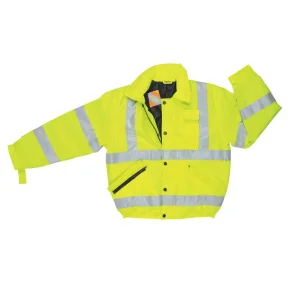
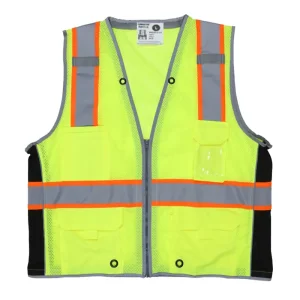
Industrial-grade compliant safety garments engineered for extreme thermal comfort and photometric durability.
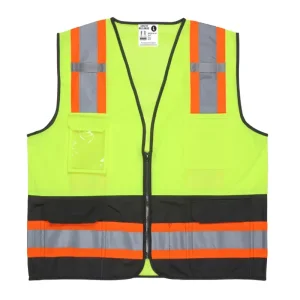
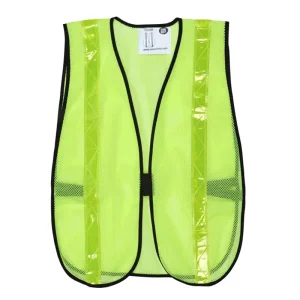
How modern thermal management and strict occupational health mandates are reshaping the global market for high-visibility mesh workwear.
Driven by multi-trillion dollar infrastructure investments, global industrialization, and stringent OSHA/EU-OSHA enforcement, the global high-visibility workwear market is projected to surpass $4.2 billion by 2030, with lightweight mesh fabric formulations capturing over 42% of warm-climate market share.
Rising global temperatures have made occupational heat stress a top liability for enterprise contractors. Hi vis mesh shirts engineering focuses on micro-pore airflow maximization (exceeding 180 CFM) alongside hydrophobic moisture-wicking technology to reduce core body temperature by up to 2.8°C.
Enterprise buyers are shifting focus from initial unit cost to durability-adjusted life-cycle metrics. Premium high-visibility mesh shirts manufactured with reinforced double-needle stitching and colorfast polyester matrices withstand 50+ industrial laundering cycles without photometric degradation.
Deep dive into polymer selection, micro-mesh breathability physics, and retroreflective glass-bead vs. micro-prismatic technologies.
High-visibility mesh shirts rely on 100% virgin polyester micro-knit substrates engineered with a specific grams-per-square-meter (GSM) weight range of 120 to 160 GSM. The structural integrity relies on a warp-knitted hexagonal or birdseye pinhole configuration.
Safety visibility depends on retroreflection—returning light directly to its source (vehicle headlights). OEM high-vis shirts leverage high-grade glass-bead or micro-prismatic reflective media certified under ANSI/ISEA 107 Level 2 standards.
Technical Insight for Procurement Directors: Specifying segmented heat-transfer reflective tape on 130 GSM birdseye mesh increases overall garment air permeability by 24% compared to traditional 2-inch solid sewn reflective tape, significantly boosting worker compliance in ambient temperatures above 32°C (90°F).
| Fabric Metric / Specification | Standard Economy Mesh | Enterprise Grade Micro-Mesh | Severe Climate Industrial Mesh |
|---|---|---|---|
| Fabric Composition | 100% Recycled Polyester (100 GSM) | 100% High-Tenacity Polyester (130-140 GSM) | Polyester-Arimid Heat Resistant Blend (160 GSM) |
| Air Permeability (ASTM D737) | < 120 CFM | 180 - 240 CFM | > 250 CFM |
| Reflective Coefficient (R_A) | 330 cd/lux/m² | 500 cd/lux/m² (Segmented) | 550 cd/lux/m² (Prismatic Moisture-Proof) |
| Industrial Wash Cycles | 15 - 25 Cycles | 50+ Cycles (ISO 6330 Standard) | 75+ Heavy Industrial Wash Cycles |
| UV Protection Factor (UPF) | UPF 15+ | UPF 35+ to 50+ | UPF 50+ Broad Spectrum |
Navigating regional safety mandates across North America, Europe, Australia, and international jurisdictions.
Defines Type R (Roadway), Type P (Public Safety), and Type O (Off-Road) garments. Class 2 mesh shirts require at least 775 in² of background fabric and 201 in² of reflective tape; Class 3 requires 1,240 in² of background fabric with continuous coverage over torso and sleeves.
Strict European standard classifying garments into Class 1, 2, and 3 based on visible surface areas. Mandates rigorous colorfastness to rubbing, perspiration, and laundering, alongside strict photometric performance after defined pre-treatment cycles.
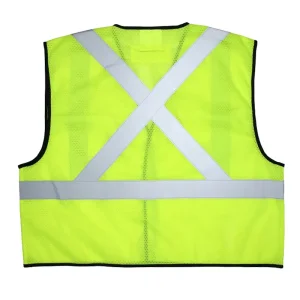
Requires distinct retroreflective tape layout patterns, specifically mandating an 'X' pattern on the back of the garment to indicate worker directionality to approaching machinery operators, especially in low-light environments.
Specifies Class D/N (Day/Night) utility shirts. Demands high UV transmittance protection (UPF 50+) alongside specialized breathable micro-mesh weaves suited for intense Southern Hemisphere solar irradiance.
Tailored hi vis mesh apparel configurations for specialized industrial working environments.
High-speed traffic zones require Class 3 hi vis mesh long-sleeve shirts with 360-degree reflectivity and 2-inch wide segmented tape. Micro-mesh construction prevents heat exhaustion during asphalt paving and daytime earthmoving operations.
Airport ground crews work around jet blast zones and heavy baggage equipment. Short-sleeve mesh shirts equipped with tear-away breakaway side seams prevent snag risks around conveyor belts while offering maximum heat dissipation.
Combines high-visibility fluorescent yellow/orange mesh with anti-static carbon fiber grid weaves. Provides mandatory visibility under heavy dust conditions while mitigating electrostatic discharge risks in hazardous atmospheric zones.
Streamlining private-label manufacturing, custom logo integration, and quality assurance control.
For global safety brands and regional PPE distributors, seamless OEM integration is critical. Modern high-vis mesh shirt manufacturing supports multiple logo printing technologies without compromising safety certifications:
Enterprise procurement requires strict supplier audit compliance. Professional China suppliers maintain ISO 9001 quality systems, BSCI social compliance, and OEKO-TEX Standard 100 textile safety certifications.
Anticipating the next decade of smart textiles, active illumination, and bio-based circular fabrics.
Embedding flexible micro-LED strip channels directly into the mesh shirt matrix. Active illumination guarantees worker visibility in total darkness, fog, or smoke where passive retroreflective tape lacks external light sources.
Transitioning from virgin polyester to 100% rPET (recycled post-consumer polyethylene terephthalate) micro-mesh without compromising yarn tensile strength or fluorescent dye absorption specs.
Incorporating Phase Change Materials (PCM) inside synthetic mesh fibers. Microcapsules absorb body heat when temperatures spike and release thermal energy as workers cool down, maintaining optimal thermal homeostasis.
Expert technical answers for safety managers, procurement agents, and wholesale distributors.
Birdseye mesh features a micro-patterned circular knit that offers exceptional breathability, soft hand-feel, and natural 2-way stretch, making it ideal for high-activity shirts. Tricot mesh is a warp-knitted fabric with higher structural stiffness, optimal for heavy-duty safety vests and structured work apparel requiring resistance to snagging.
Solid reflective tape blocks the ventilation holes of underlying mesh fabric and creates stiff points on the garment. Segmented heat-transfer tape leaves breathable gaps between reflective blocks, preserving full fabric breathability, stretch elasticity, and wearer comfort in hot climates.
Standard OEM custom orders typically start at an MOQ of 500 to 1,000 units per style/color combination. Production lead times average 15 to 25 days following sample approval, supported by expedited air shipment options for urgent fleet tenders.
Manufacturers use automated CAD pattern grading to measure exact surface areas of background fluorescent mesh and reflective tape. Class 2 garments require at least 775 in² of fluorescent background, while Class 3 requires 1,240 in² plus retroreflective elements encircling the sleeves for full body outline visibility.
Wash garments inside out using mild detergent at water temperatures below 40°C (104°F). Avoid chlorine bleach, fabric softeners, and high-heat tumble drying, which degrade the micro-glass beads in retroreflective tapes and compromise fluorescent dye brightness.
Yes, provided the total area occupied by non-compliant logo printing does not reduce the background fluorescent fabric area below minimum required thresholds. Strategic logo placement on pocket flaps or non-reflective sleeve zones ensures total safety compliance.
Explore our extended manufacturing lineup of certified reflective outerwear, accessories, and workwear.
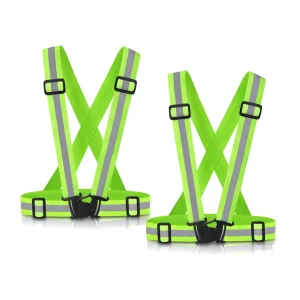
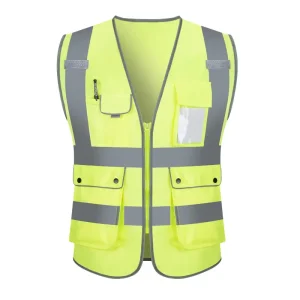
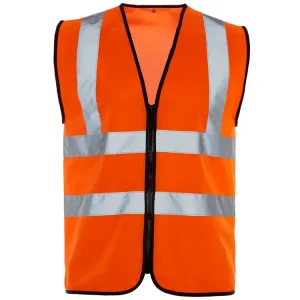
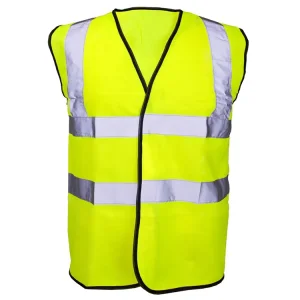
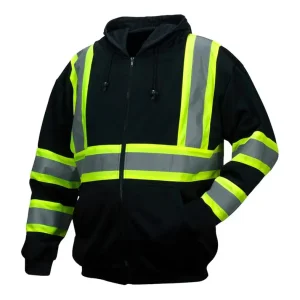
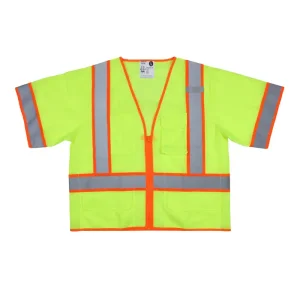
Leverage 15+ years of OEM expertise, direct factory pricing, and fully certified ANSI/EN ISO compliant workwear manufacturing. Contact our technical team today for sample requests, custom specifications, and bulk volume quotes.
Initiate Factory Consultation & Request Sample Pack