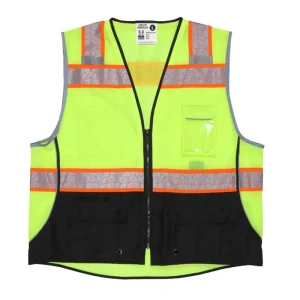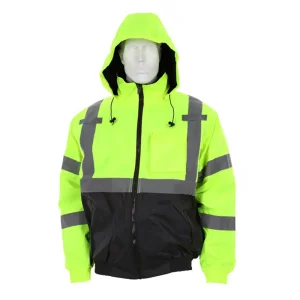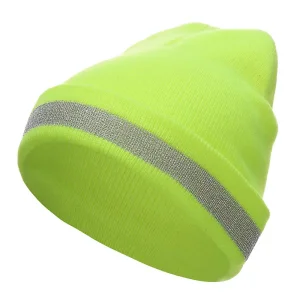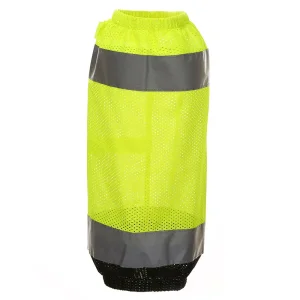
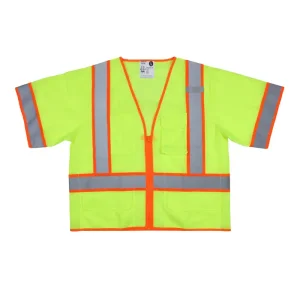
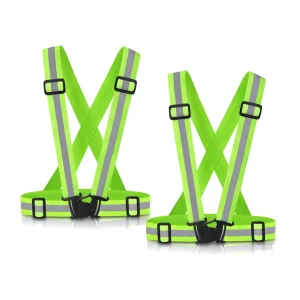
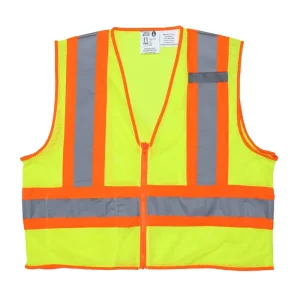
In modern industrial safety engineering, procurement managers across petrochemical, utility, mining, and heavy construction sectors are rapidly transitioning from standard 100% polyester high-visibility garments toward high-visibility cotton jackets. While polyester historically dominated the high-visibility market due to its low cost and ease of accepting fluorescent dyes, synthetic fibers present catastrophic risks in high-heat, electric arc flash, and spark-prone environments due to their low melting thresholds and molten drip characteristics.
As enterprise safety standards evolve globally under stringent OSHA, EU-OSHA, and AS/NZS workplace regulations, sourcing Wholesale Hi Vis Cotton Jackets directly from audited Chinese manufacturers has become a critical strategic objective. Cotton offers inherent breathability, superior comfort in extreme temperature gradients, non-melting thermal properties, and anti-static stability when treated with specialized Flame Retardant (FR) chemical matrices such as Pyrovatex® or Proban® finishes.
Unlike synthetic polyester which absorbs disperse dyes inside hydrophobic fibers, 100% natural cotton fibers are hydrophilic. Historically, achieving luminous chromaticity coordinates (x, y) for Fluorescent Yellow (EN ISO 20471 compliance) on natural cotton was notoriously difficult. Modern Chinese factories utilize advanced cationic pre-treatment combined with high-fixation reactive dyes to achieve persistent fluorescent luminosity exceeding 0.70 luminance factor without compromising fiber tensile strength.
China's textile clusters in Zhejiang and Jiangsu integrate cotton spinning, heavy duck weave canvas weaving (280GSM to 380GSM), fluorescent Reactive Dyeing, and FR chemical padding under unified industrial zones. This eliminates intermediary logistic markups and drastically reduces lead times.
Hi Vis Cotton Jackets require intricate panel alignment to meet EN ISO 20471 total fluorescent surface area ratios (0.80 m² for Class 3). Factories utilize automated CAD laser cutters to ensure exact dimensions, zero fabric waste, and double-stitched stress points using Kevlar or heavy-duty cotton threads.
Tier-1 manufacturers operate fully equipped in-house testing laboratories. Samples undergo rigorous hydrostatic head testing, retroreflective coefficient (cd/lx/m²) evaluations via photometric sensors, and colorfastness testing against industrial laundering solvents prior to shipment.
When issuing tenders for heavy industrial high-visibility outerwear, safety procurement directors must evaluate technical trade-offs between fabric breathability, tear strength, arc flash rating, and color stability. Below is a comprehensive engineering comparison matrix developed for B2B buyers:
| Performance Parameter | 100% Cotton Duck Canvas (FR Treated) | CVC Blend (60% Cotton / 40% Poly) | Standard 100% Polyester Oxford |
|---|---|---|---|
| Fabric Weight (GSM) | 300 GSM – 380 GSM | 240 GSM – 300 GSM | 150 GSM – 300 GSM |
| Melting & Drip Hazard | Does NOT Melt or Drip (Char Formation) | Low Melt Risk (Partial Char) | High Risk (Melts at ~260°C onto skin) |
| Thermal Resistance & Arc Rating | High (ATPV 8.0 - 14.0 cal/cm²) | Moderate (ATPV 4.0 - 8.0 cal/cm²) | None (Requires Specially Treated Modacrylic) |
| Breathability (RET Index) | Superior (RET < 6 m²Pa/W) | Good (RET 6-12 m²Pa/W) | Poor (RET > 20 m²Pa/W without membrane) |
| Industrial Wash Fastness (ISO 6330) | 50+ Cycles at 60°C (Durable FR) | 40+ Cycles at 60°C | 30+ Cycles at 40°C |
| Static Electricity Dissipation | Inherent Low Charge Density | Requires Embedded Carbon Filament | High Electrostatic Charge Accumulation |
| Target Industrial Application | Petrochemical, Smelting, Welding, Utilities | General Construction, Logistics, Offshore | Traffic Management, Sanitation, Temporary Warehousing |
For European Union markets, high-visibility cotton jackets are categorized into 3 distinct classes based on minimum retroreflective and fluorescent background fabric area:
In the United States and Canada, garments are classified by Worksite Performance Types:
Enterprise buyers are demanding GOTS-certified (Global Organic Textile Standard) and recycled cotton fibers combined with eco-friendly fluorine-free water-repellent (DWR) coatings to meet corporate ESG and carbon-reduction mandates.
Modern cotton hi-vis jackets are no longer single-function. Factories are manufacturing multi-norm garments combining EN ISO 20471 with Anti-Static (EN 1149-5), Arc Flash (IEC 61482-2), and Chemical Splash (EN 13034) properties into one jacket.
Integration of segmented heat-transfer micro-prismatic glass bead retroreflective glass tape. Segmented tape provides maximum stretch and flexibility, reducing fabric stiffening and maintaining tape adhesion through 50+ industrial washes.
Challenge: Hydrocarbon ignition risks combined with low-visibility offshore platforms.
Solution: 350 GSM 100% Cotton Heavyweight Duck Canvas Jacket with THPC Flame Retardant finish, double-stitched 3M™ Scotchlite™ 8935 FR reflective tape, anti-static grid, and storm flap closure.
Challenge: Electric arc flash blast hazards during high-voltage transformer servicing.
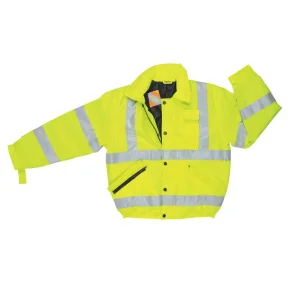
Solution: NFPA 70E Category 2 compliant Hi Vis Cotton Bomber Jacket featuring non-conductive plastic zippers, covered snap buttons, and 100% cotton thermal fleece lining.
Challenge: Extreme radiant heat, airborne particulate grime, and abrasive rock surfaces.
Solution: Dirt-concealing Two-Tone Hi Vis Cotton Jacket (Fluorescent Lime top panel for visibility, Navy/Black lower torso and sleeve cuffs to hide grease and oil stains).
Yes. While natural cotton fibers are naturally off-white and absorbent, advanced textile processing utilizes a multi-step cationization treatment. This chemical process alters the cell wall potential of the cotton fiber, allowing reactive fluorescent dyes to bond covalently with high color chromaticity (x, y coordinates) and luminance factors exceeding standard requirements set by EN ISO 20471 and ANSI/ISEA 107-2020.
Standard factory MOQ for custom-dyed 100% cotton high-visibility jackets typically ranges from 500 to 1,000 units per colorway. However, for stock-supported fabric weights (e.g., standard 300GSM fluorescent lime or orange cotton canvas), many manufacturers accept trial order quantities starting at 200 units with custom logo screen printing or embroidery options.
Treated FR cotton (such as Proban® or Pyrovatex® finishes) provides excellent protection against short-duration flame exposure and arc flash at approximately 30% to 50% lower material cost than inherent synthetic aramid fabrics like Nomex®. When laundered according to manufacturer specifications (avoiding chlorine bleach and softeners), treated cotton retains FR protective qualities for up to 50 to 100 industrial wash cycles.
Untreated raw cotton fabric exhibits shrinkage rates of 5% to 8%. Professional Chinese safety apparel factories perform pre-shrunk Sanforization mechanical finishing prior to garment cutting. This process stabilizes the fabric matrix, guaranteeing a final residual shrinkage rate of less than 2.0% to 3.0% under standard ISO 6330 industrial laundering routines.
For cotton jackets, micro-glass bead heat-transfer segmented retroreflective tape or sew-on heavy-duty cotton-backed reflective tape (such as 3M™ Scotchlite™ 8906/8912 or domestic equivalent) is highly recommended. Heat-transfer tape provides superior flexibility without cause seam puckering on heavy cotton canvas.
Tier-1 factories follow ANSI/ASQ Z1.4 (ISO 2859-1) Single Sampling Plans, executing AQL 1.5 for critical defect checks (e.g., missing reflective tape, non-functional zippers) and AQL 2.5 for minor visual defects. Inspection stages include Raw Fabric Inspection (4-Point System), In-line Sewing Checks, Retroreflective Photometric Verification, and Final Packing Audits.
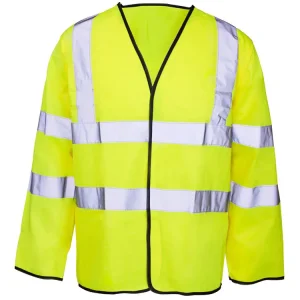
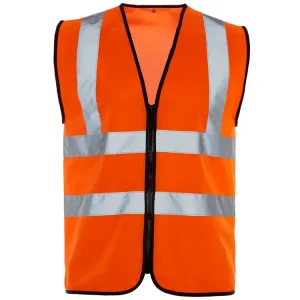
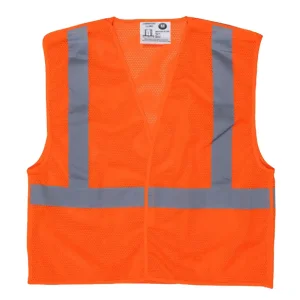
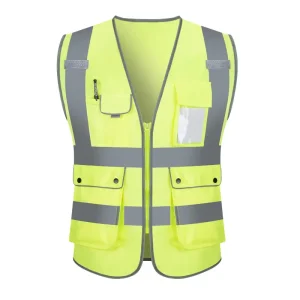
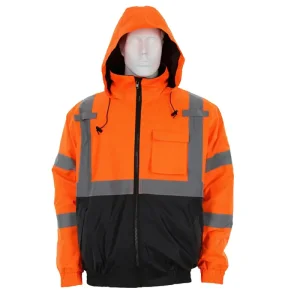
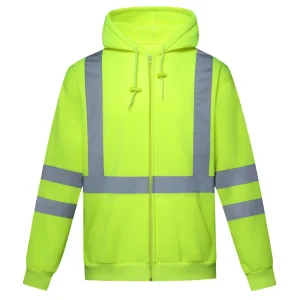
Whether you require standard EN ISO 20471 Class 3 Cotton Work Jackets or custom-engineered multi-hazard Arc Flash FR outerwear with private label branding, our engineering team is prepared to provide factory-direct technical consultations, fabric swatches, and competitive volume quotations within 24 hours.