Explore our core certified high-visibility reflective vests, rain suits, and protective accessories manufactured for international hazard environments.
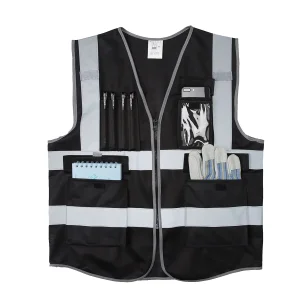
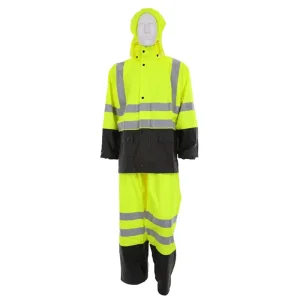
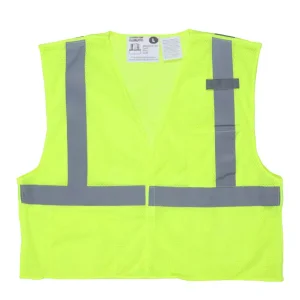
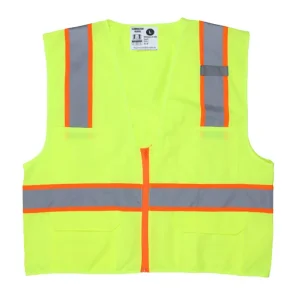
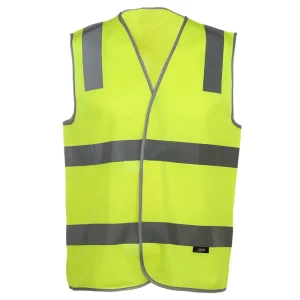
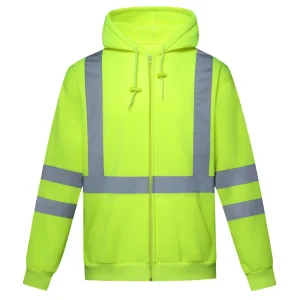
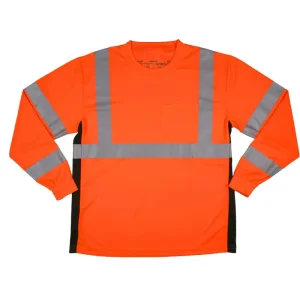
In modern industrial operations—ranging from offshore petrochemical extraction platforms and high-voltage power transmission grids to heavy civil engineering and mining projects—the dual threat of workplace thermal hazards and low-visibility struck-by accidents demands an uncompromising personal protective equipment (PPE) strategy. Finding a dependable Wholesale FR Reflective Jacket Supplier & Factory is no longer merely a purchasing transaction; it is a critical life-safety procurement decision.
Flame Retardant (FR) Reflective Jackets sit at the intersection of life-saving thermal protection and optical safety engineering. Unlike standard high-visibility workwear, an industrial FR reflective jacket must withstand catastrophic thermal events such as hydrocarbon flash fires (governed by NFPA 2112 and EN ISO 11612) and electrical arc flashes (certified under NFPA 70E / ASTM F1506), while simultaneously maintaining high retroreflective intensity under ambient nighttime conditions in accordance with ANSI/ISEA 107-2020 (Type R Class 2/3) and EN ISO 20471.
Evaluating raw fabric tear strength, colorfastness, and laundering cycle counts to minimize multi-year fleet replacement overhead for B2B buyers.
Integrating anti-static grid fibers (EN 1149-5) with flame-resistant treatments and high-visibility fluorescent hues into single-garment construction.
Complete traceability of raw FR yarns, retroreflective tape batch certificates, and independent third-party laboratory test reports (UL, Shirley, SATRA).
To understand the information gain in specifying high-performance FR reflective jackets, technical procurement officers must analyze the fundamental differences between Inherent Flame Resistant (IFR) polymers and Treated Flame Retardant (TFR) cotton/poly blends. As a leading manufacturer in Yongkang, Zhejiang, Yongkang Wow Safety Products Co., Ltd. deploys state-of-the-art weaving and coating methodologies to tailor garment performance to end-user risk profiles.

Inherent FR Fabrics: Formulated from modacrylic-cotton blends (e.g., 55% Modacrylic, 43% Long-Staple Cotton, 2% Antistatic Fiber), the flame-resistant properties are woven into the chemical structure of the polymer itself. When exposed to flame, the modacrylic fiber releases non-flammable thermal suppression gases and creates a protective char layer, preventing melt-drip behavior. Inherent garments provide lifetime flame resistance regardless of the number of industrial wash cycles.
Treated FR Fabrics: Derived from high-density heavy-oz cotton or poly-cotton canvas chemically impregnated with organophosphorus compounds (e.g., Pyrovatex® or Proban®). TFR fabrics offer superior breathability, moisture absorption, and cost efficiency for large-scale enterprise workforce deployments, retaining certified thermal protection up to 50–100 industrial wash cycles under strict neutral pH laundering conditions.
| Performance Parameter | Inherent FR (Modacrylic/Aramid Blend) | Treated FR Cotton Canvas (88/12 Poly-Cotton) | Standard Non-FR Workwear (Polyester) |
|---|---|---|---|
| Flame Response | Self-extinguishing immediately; zero melt/drip | Char formation; non-propagating flame | Melts, drips, and ignites rapidly (Extreme Hazard) |
| Wash Durability | Lifetime of garment (Permanent IFR) | 50 to 100 Industrial Laundering Cycles | N/A (Non-FR) |
| Arc Thermal Performance (ATPV) | 8.5 to 45.0 cal/cm² (CAT 2 to CAT 4) | 9.2 to 25.0 cal/cm² (CAT 2 to CAT 3) | 0 cal/cm² (Ignites under arc blast) |
| High-Visibility Dyeing | Fluorescent Yellow/Lime & Orange (ANSI 107) | Fluorescent Yellow/Lime & Orange (ANSI 107) | Standard High-Vis Dyes |
| Retroreflective Tape Integration | 3M™ Scotchlite™ 8935 / 8940 FR Glass Bead Tape | 3M™ Scotchlite™ FR Silver Flame-Resistant Tape | Micro-prismatic Standard Non-FR Tape |
Engineered protective outerwear must address the distinct physical hazards present in different heavy industrial sectors. Yongkang Wow Safety Products Co., Ltd. designs tailored garment architectures optimized for severe operational conditions:
Primary Risks: Hydrocarbon flash fire, liquid chemical splash, explosive atmosphere static discharge, torrential offshore rain.
Primary Risks: High-voltage arc flash exposure, severe thermal thermal energy releases, low-light roadside utility work.
Primary Risks: Sub-zero winter temperatures, icy high-speed highway maintenance, thermal flame exposure.
High-visibility performance relies on retroreflection—the physics of directing scattered ambient vehicle headlight beam rays straight back to the driver's optical center. Standard retroreflective tapes utilize micro-plastic lenses that melt rapidly when exposed to temperatures exceeding 150°C.

Located in Jinhua City, Zhejiang Province, Yongkang Wow Safety Products Co., Ltd. represents 15+ years of specialized manufacturing experience in protective safety apparel. Operating from a modern 6,000 m² facility with over 150 skilled garment technicians, our factory bridges the gap between raw fabric science and finished global safety compliance.

Every production lot undergoes rigorous laboratory verification. Our internal testing lab evaluates hydrostatic water head pressure, vertical flame burn rates (ASTM D6413), tear strength, and spectroradiometric color coordinates.

We offer total flexibility for OEM procurement clients: custom color blocking, corporate screen-printing with FR ink, aramid embroidered logos, radio mic loops, custom pocket layouts, and multi-lingual user instruction labels.

Our modular assembly lines allow rapid scaling for tender bids and emergency replenishment orders. We maintain raw stock of certified FR fabrics to ensure 15–25 day production cycles for container shipments.

Our in-house pattern-makers optimize 3D ergonomic seam placing to prevent sleeve pull-up when workers raise their arms, ensuring complete flame barrier coverage at all work angles.

We partner exclusively with ISO-certified yarn spinners and OEKO-TEX standard fabric mills, maintaining batch-level lot certificates for full audit compliance in Europe, Australia, and the Americas.

Eliminating middleman trading markups, our factory-direct pricing enables international safety distributors to win competitive government and enterprise industrial tenders with strong profit margins.
Navigating international regulatory compliance requires clear comprehension of regional safety codes. B2B buyers must specify the exact standard combination required for their destination market:
| Region | High-Visibility Standard | Flame Retardancy Standard | Arc Flash Standard | Anti-Static Standard |
|---|---|---|---|---|
| North America (USA / Canada) | ANSI/ISEA 107-2020 (Class 2 / Class 3) | NFPA 2112 (ASTM F1930 Thermo-Man Test < 50% Burn) | NFPA 70E / ASTM F1506 (ATPV Rating) | ASTM F1506 / NFPA 99 |
| European Union (EU) | EN ISO 20471 (Class 1, 2, or 3) | EN ISO 11612 (A1, A2, B1, C1, F1 Thermal Code) | IEC 61482-2 (Box Test & Open Arc) | EN 1149-5 (Electrostatic Dissipative) |
| Australia / New Zealand | AS/NZS 4602.1:2011 (Class D/N) | AS/NZS 4824 / ISO 11612 | NFPA 70E Alignment | AS/NZS 1020 |
| International (Global Maritime) | SOLAS Chapter III / ISO 20471 | ISO 14116 (Limited Flame Spread) | IEC 61482-1-1 | EN 1149-3 |
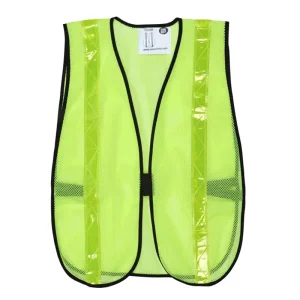
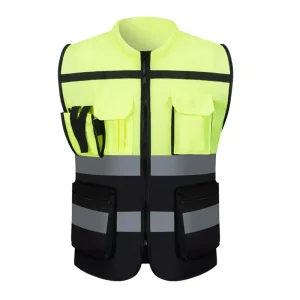
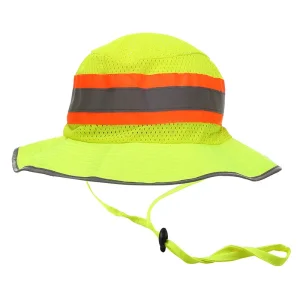
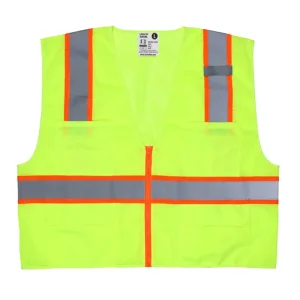
Browse our complete line of industrial safety vests, reflective headwear, thermal beanies, and high-visibility accessories.
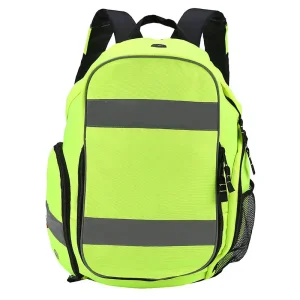
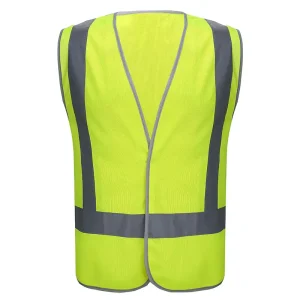
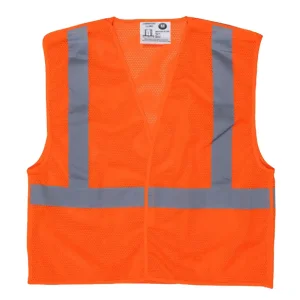
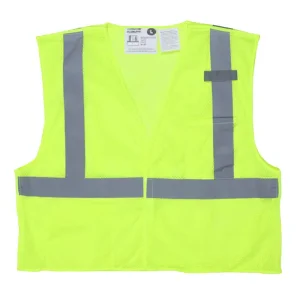
One of the highest sources of information gain for enterprise procurement managers is understanding how proper maintenance preserves the protective barrier of FR reflective jackets over multi-year deployments. Improper washing will degrade flame-resistant chemicals or destroy retroreflective glass beads, compromising worker safety.
Never use Chlorine Bleach: Sodium hypochlorite degrades treated cotton FR bonds and weakens modacrylic polymer fibers.
Avoid Fabric Softeners: Softeners leave a flammable wax coating over the surface of the jacket, masking the flame-retardant properties and reducing retroreflectivity.
Wash Temperature: Maximum 60°C (140°F) using non-ionic synthetic liquid detergents with pH values between 7.0 and 8.5.
Drying: Tumble dry low (max 60°C exhaust temp). Remove garments immediately to prevent heat-set wrinkling. Air drying in shade is preferred to minimize UV degradation.
Garments must be removed from service if:
1. Heavy petroleum/grease contamination cannot be laundered out.
2. Fabric features tears, holes, or unraveled seams exceeding 1/2 inch.
3. Retroreflective tape coverage has worn off by more than 20%.
Detailed answers to technical procurement questions regarding flame-resistant high-visibility outerwear manufacturing, testing, and compliance.
Empower your safety catalog with multi-norm certified high-visibility flame-retardant jackets. Request custom fabric swatches, OEM pricing matrices, or independent test reports today.