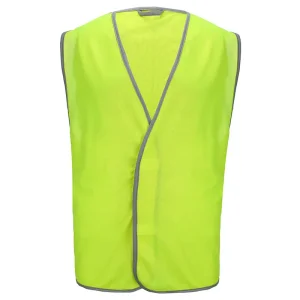
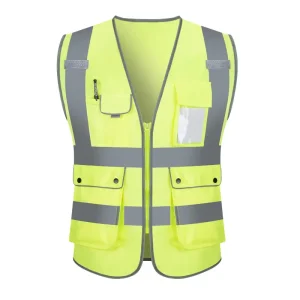
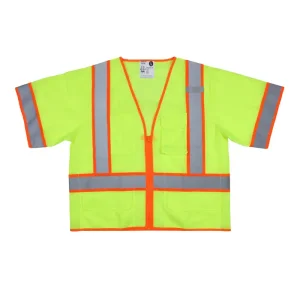
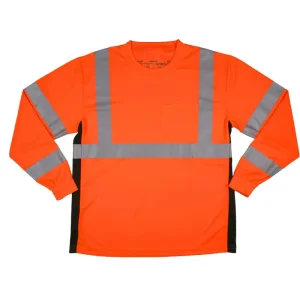
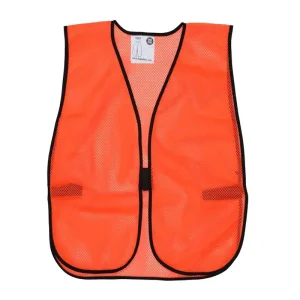
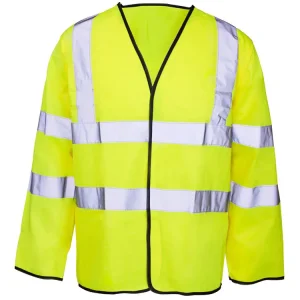
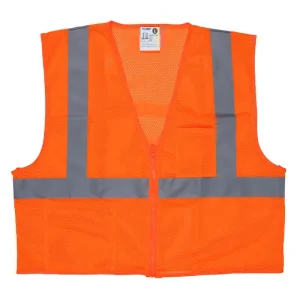
Certified compliant fluorescent apparel manufactured directly by Yongkang Wow Safety Products Co., Ltd. Optimized for contrast, retroreflectivity, and ergonomics.
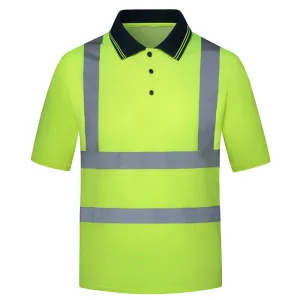
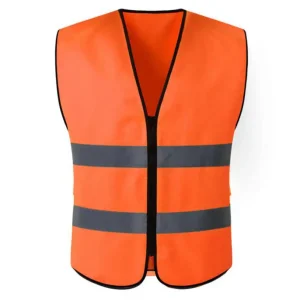
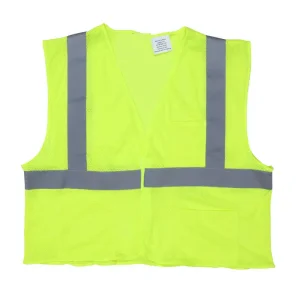
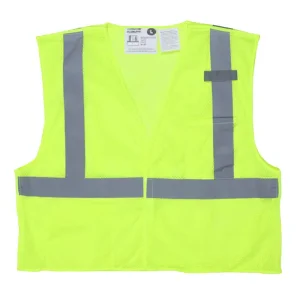
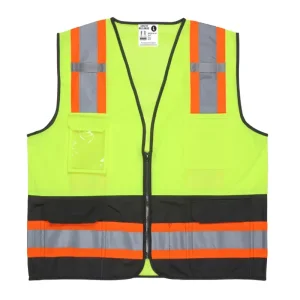
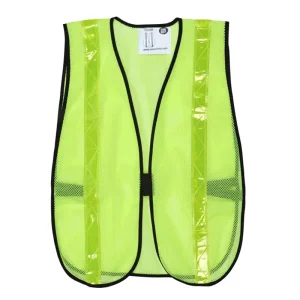
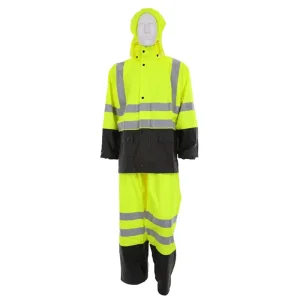
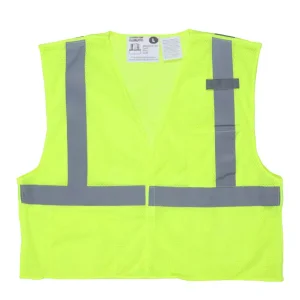
Examining the transition from basic Personal Protective Equipment (PPE) to high-performance, photometrically engineered industrial safety apparel across global enterprise supply chains.
High-visibility fluorescent ("Fluro") work shirts act as the primary line of passive defense for personnel operating in hazardous, high-traffic, or low-light environments. Modern safety guidelines dictate that garment materials absorb invisible ultraviolet light energy and re-emit it as longer, visible light wavelengths. This fluorescent reaction increases luminance by up to 200% compared to standard dyed fabrics during twilight, overcast, and early morning conditions.
For global corporate procurement directors, specifying compliant fluro work shirts is not merely an aesthetic choice—it is a critical legal requirement. Failure to provide safety apparel certified under ANSI/ISEA 107-2020 (USA), EN ISO 20471 (Europe), or AS/NZS 1906.4 (Australia/New Zealand) exposes operations to severe regulatory fines, corporate liability lawsuits, and elevated insurance premiums during industrial accidents.
Enterprise buyers prioritize garment longevity. Modern fluro shirts must withstand commercial laundering cycles without losing chromaticity or retroreflective efficiency. By utilizing color-fast polyester matrix knits, specialized dye-fixing agents, and industrial-grade micro-prismatic glass bead retroreflective tapes, tier-1 manufacturers extend garment operational life cycles from 25 to over 50 wash cycles.
Understanding chromaticity coordinates, retroreflection coefficients, and fabric substrate selections for maximum field performance.
To meet international compliance for high-visibility garments, background fluorescent fabrics must fall within strict chromaticity coordinates $(x,y)$ defined inside the CIE 1931 colorimetric system. Fluorescent Yellow-Green requires a minimum luminance factor ($\beta$) of $\ge 0.70$, while Fluorescent Orange-Red mandates $\beta \ge 0.40$. At Yongkang Wow Safety Products, our raw materials undergo spectrophotometric testing before batch processing to guarantee color fidelity and zero lot-to-lot color shifts.
Retroreflective performance relies on high-index glass micro-beads ($n \ge 1.90$) embedded into a polymer backing, or micro-prismatic synthetic sheeting. Our retroreflective tapes deliver coefficient of retroreflection ($R'$) values exceeding $330 \text{ cd}/(\text{lx}\cdot\text{m}^2)$ at an entrance angle of $5^\circ$ and observation angle of $0.2^\circ$, surpassing basic ANSI Class 2 requirements by over 30%.
| Material Category | Fabric Composition | Weight (GSM) | Breathability / Air Permeability | Primary Industrial Application |
|---|---|---|---|---|
| Birdseye Knit Mesh | 100% Micro-Polyester | 130 - 150 GSM | Very High (> 250 mm/s) | High-temperature outdoor construction, roadwork |
| Interlock Jersey Knit | 100% Spun Polyester | 160 - 180 GSM | Moderate to High | Indoor warehousing, logistics, transport drivers |
| Cotton-Touch Poly Blend | 60% Cotton / 40% Poly | 180 - 210 GSM | Balanced / Soft Touch | Executive site supervisors, light industrial handling |
| Flame-Resistant (FR) Modacrylic | 60% Modacrylic / 40% Cotton | 200 - 240 GSM | Engineered Thermal Protection | Oil & Gas, electrical utilities, petrochemical facilities |
Navigating complex international safety regulations. How our production lines adhere to regional standards across North America, Europe, Australia, and Asia-Pacific.
Compliance with ANSI/ISEA 107-2020 requires strict classification by occupational usage:
• Type R (Off-Road & Roadway): Class 2 requires minimum $775 \text{ in}^2$ of fluorescent background fabric and $201 \text{ in}^2$ of retroreflective tape. Class 3 requires $1240 \text{ in}^2$ background material with continuous coverage over limbs.
• Type O (Off-Road/Occupational): Tailored for indoor warehouse workers and mines.
• CSA Z96-15 (Canada): Enforces specific visual coverage and X-back reflective striping patterns on the rear garment.
EN ISO 20471:2013+A1:2016 categorizes high-visibility workwear into three distinct risk classes based on minimum surface area of visible material:
• Class 1: Lowest risk, min $0.14 \text{ m}^2$ background, $0.10 \text{ m}^2$ reflective tape.
• Class 2: Intermediate risk, min $0.50 \text{ m}^2$ background, $0.13 \text{ m}^2$ reflective tape.
• Class 3: Highest risk, min $0.80 \text{ m}^2$ background, $0.20 \text{ m}^2$ reflective tape.
• RIS-3279-TOM: Mandatory British railway standard requiring specific fluorescent orange hues ($x \ge 0.570, y \ge 0.355$).
Australian and New Zealand safety mandates require high UV protection alongside conspicuity:
• AS/NZS 1906.4:2010: Specifies high-visibility materials for outdoor workwear.
• AS/NZS 4602.1:2011: Defines garment design classes (Class D for Day use, Class N for Night use, Class D/N for Day/Night combined).
• UPF 50+ Sun Protection: Work shirts destined for ANZ markets undergo UPF testing per AS 4399 to protect workers from intense solar radiation.
Leveraging Zhejiang's industrial cluster to provide cost-optimized, high-capacity, and rapid-turnaround manufacturing solutions for enterprise B2B buyers.
Situated in Yongkang, Jinhua City, Zhejiang Province—China’s premier manufacturing heartland—Yongkang Wow Safety Products Co., Ltd. benefits from an integrated textile network. Within a 30-mile radius, we source high-tenacity polyester yarns, specialized fluorescent dye houses, retroreflective film extruders, and customized trim suppliers. This micro-geographic clustering minimizes lead times and reduces raw material logistics overhead.
Our 6,000 m² facility features automated laser fabric cutters, computerized pattern sewing machines, ultrasonic reflective tape bonding systems, and multi-head embroidery/screen-printing machines. Over 150 skilled operators maintain stringent quality check gates at pattern cutting, panel joining, tape application, and final packaging—ensuring zero defects across multi-thousand-piece bulk orders.
We cater to global B2B procurement models, offering complete OEM and ODM customization services:
• Custom Apparel Tech Packs: Tailored sleeve configurations, radio loops, mic tabs, pen pockets, and ID badge holders.
• Private Labeling & Branding: High-definition silk screening, heat transfer vinyl logos, and custom woven neck tags.
• Flexible MOQ Structures: Supporting both fast-replenishment regional distributors and massive enterprise contract tenders.
Exploring technological advancements reshaping the next decade of workplace safety, sustainability, and worker ergonomics.
As global ESG mandates tighten, major corporate buyers require sustainable safety garments. Future fluro work shirts incorporate 100% post-consumer recycled polyethylene terephthalate (rPET) derived from ocean plastics and discarded plastic bottles. These eco-friendly polyesters retain 99% of virgin synthetic strength, color retention, and moisture-wicking properties while reducing carbon footprint by up to 35%.
Traditional retroreflective materials require external ambient light sources (vehicle headlights) to reflect conspicuity. Next-generation smart fluro shirts integrate flexible, ultra-thin LED light strips and electroluminescent (EL) piping powered by compact rechargeable lithium-ion battery packs. This provides active, self-illuminating visibility in zero-light environments such as subterranean mining shafts and unlit highway zones.
Solid stitched retroreflective tape creates fabric stiffness and restricts torso flexibility. Modern fluro workwear utilizes heat-applied segmented reflective tape patterns. By fragmenting reflective strips into micro-blocks, garments achieve 360-degree stretchability, improved airflow across taped zones, and significantly higher wearer comfort during heavy manual labor.
Matching garment engineered attributes to specific hazardous operational environments worldwide.
Risk Environment: Fast-moving traffic exceeding 50 mph (80 km/h), heavy machinery operation, daytime solar heat.
Recommended Spec: ANSI Class 3 / EN ISO 20471 Class 3 Long-Sleeve Fluro Yellow Polo Shirt with 2-inch continuous micro-prismatic segmented reflective stripes, moisture-wicking birdseye mesh, anti-microbial finish.
Risk Environment: Low light indoor aisles, forklift traffic, temperature fluctuations, high friction movement.
Recommended Spec: ANSI Class 2 Fluro Orange Short-Sleeve Safety Shirt with reinforced shoulder panels, stain-release polyester interlock finish, contrast dark navy bottom to hide grease and dirt accumulation.
Risk Environment: Saltwater spray, oil immersion risks, extreme weather, night deck operations.
Recommended Spec: Flame-Retardant (FR) Modacrylic Fluro Orange Shirt with marine-grade waterproof reflective tape, dielectric plastic zippers, storm flaps, and integrated harness access ports.
Detailed answers addressing procurement specifications, customization workflows, laundering resilience, and international shipping protocols.
Our standard MOQ for customized wholesale fluro work shirts starts at 500 pieces per style/colorway. This threshold allows us to source custom-dyed fabric batches that strictly match your brand’s specific pantone codes and guarantee photometric compliance under ANSI/EN ISO standards. For stock fabrics with custom logo printing, we offer lower trial order quantities starting at 200 units.
We utilize 100% high-grade polyester filament yarns treated with specialized cation-dyeing processes at high temperatures ($130^\circ\text{C}$). This locks the fluorescent pigment deep within the molecular structure of the synthetic fiber. Our fabrics achieve a grade 4-5 color fastness rating to washing (ISO 105-C06) and light fastness (ISO 105-B02), retaining compliance for up to 50 commercial wash cycles at $60^\circ\text{C}$.
The fundamental difference lies in the total surface area of visible high-visibility material. ANSI Class 2 garments require at least 775 square inches of background fabric and 201 square inches of retroreflective tape—ideal for workers exposed to traffic under 50 mph. ANSI Class 3 garments require a minimum of 1,240 square inches of background fabric and 310 square inches of reflective tape, featuring long sleeves with reflective bands around the arms to define human outline at high speeds (50+ mph).
Yes. However, standards like EN ISO 20471 and ANSI 107 restrict the total non-compliant surface area allowed on a garment. Logos must be placed in designated non-essential areas or calculated within the garment's margin of tolerance. At Yongkang Wow Safety Products, our technical design team reviews your vector logo artwork and placement coordinates to ensure the remaining fluorescent fabric surface area fully satisfies the target certification class.
Every production lot undergoes rigorous in-house quality control testing, including spectrophotometer color measurement, tensile strength tests, and retroreflection measurement ($R'$ values). We welcome third-party inspection agencies such as SGS, Intertek, TUV, and Bureau Veritas for AQL 2.5 final random inspections at our Yongkang facility prior to container loading and shipping port dispatch.
Our standard mass production lead time is 25 to 35 days post sample approval and deposit confirmation. We support all major international commercial terms including FOB (Ningbo/Shanghai), CIF, CFR, DDP (Delivered Duty Paid), and EXW. For urgent enterprise contract renewals, expedited air freight or fast sea freight options are available.
Discover specialized reflective gear, weather-resistant jackets, and safety accessories manufactured to meet stringent international standards.