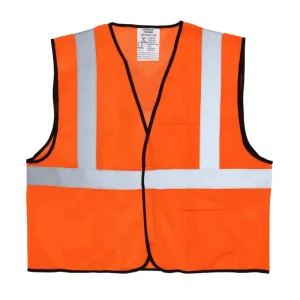
Explore our certified inventory of thermoregulating shirts, lightweight mesh vests, and specialized high-visibility equipment manufactured to rigorous international safety standards.
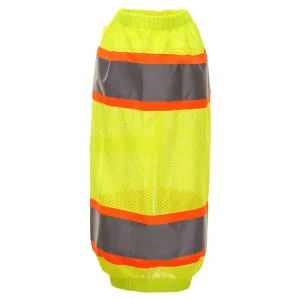
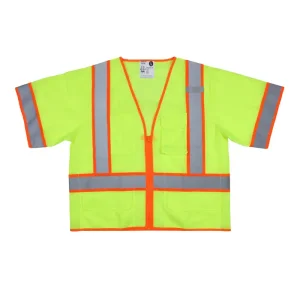
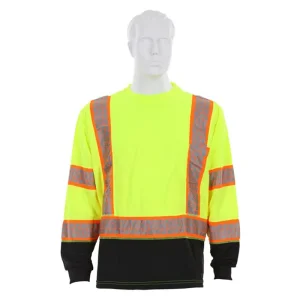
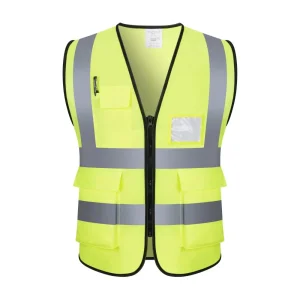
Analyzing the convergence of heat-stress mitigation regulations, micro-ventilation fabric engineering, and global high-visibility compliance standards for procurement leaders.
In high-intensity industrial sectors—spanning infrastructure construction, tarmac aviation handling, oil and gas, and overland logistics—occupational health guidelines are undergoing a rapid paradigm shift. Regulatory agencies worldwide, such as the U.S. Occupational Safety and Health Administration (OSHA) under its National Emphasis Program for Outdoor and Indoor Heat Hazards, along with EU Directives on Personal Protective Equipment (PPE Directive 89/656/EEC), now strictly enforce thermal stress management protocols. Traditional high-visibility work shirts, historically constructed from dense, non-breathable 100% polyester interlock fabrics, trap metabolic heat, causing core body temperatures to spike, accelerated fatigue, and heightened risk of heat stroke.
Key Procurement Finding: Advanced thermoregulating "Cool High Vis Shirts" reduce microclimate humidity inside workwear by up to 38% while maintaining 100% photometric compliance with ANSI/ISEA 107-2020 Type R Class 2/3 and EN ISO 20471:2013+A1 standards.
To solve this trade-off between optical safety and ergonomic thermoregulation, top-tier Chinese manufacturers, led by industry pioneers such as Yongkang Wow Safety Products Co., Ltd., have developed next-generation micro-ventilation knit fabrics. By combining cross-sectional hydrophobic yarns, segmented retroreflective heat-transfer tapes, and open-mesh moisture-wicking structures, modern wholesale cool high-vis shirts actively pull sweat away from the epidermis via capillary action, speeding up evaporative cooling while guaranteeing maximum retroreflective visibility in night-time and low-light environments.
Understanding the micro-structure of advanced cooling fibers, moisture transport dynamics, and flexible retroreflective strip technology.
Utilizing cross-channel hydrophobic micro-polyester and poly-birdseye knits. The unique fiber geometry amplifies surface area by 40%, channeling perspiration away from the skin instantly to evaporate rapidly under convective airflow.
Solid glass-bead reflective tape blocks airflow. Our cool hi-vis shirts utilize segmented heat-transfer reflective strips. This continuous gap pattern improves garment breathability by over 45% while enabling 360-degree stretchability.
Formulated with inorganic titanium dioxide (TiO2) particles embedded directly into the masterbatch polymer prior to spinning. Provides permanent UPF 50+ blocking of harmful UV-A and UV-B solar radiation without losing efficacy through laundering.
Integrated silver-ion nanotech treatments inhibit the growth of odor-causing bacteria during long shifts in tropical or high-heat work zones, extending garment life and user freshness under demanding wear conditions.
Optional PCM micro-capsules embedded in collar and underarm panels absorb excess thermal energy during peak sun hours and release latent cold feel, preventing rapid body temperature spikes in ambient heat over 38°C.
Engineered knit structure provides 4-way mechanical elasticity without relying heavily on spandex, which degrades under intense sun and industrial wash chemicals. Guarantees longevity, shape retention, and tear resistance.
Different industrial working conditions mandate tailored high-visibility specifications, color chromaticity, and garment construction styles.
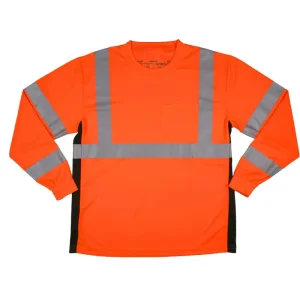
Road crews work near radiant hot-mix asphalt (up to 150°C) under bright sunlight. Solution: Class 3 long-sleeve cool shirts featuring dark two-tone lower panels (navy/black) to conceal oil and grime, high-visibility fluorescent lime-yellow upper bodies, and UPF 50+ rated moisture-wicking mesh. Segmented 3M or home-made micro-prismatic tape ensures compliance under vehicle headlights.
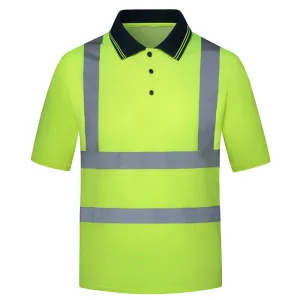
Tarmac operators face wind shears, jet blast thermal bursts, and high visual glare from concrete runaways. Solution: Short-sleeve cool polo shirts with rib-knit lay-flat collars, radio mic loops, chest utility pockets, and lightweight 130 GSM birds-eye polyester fabric certified to ANSI Class 2 or EN ISO 20471 Class 2 for daylight and night retroreflectivity.
Refinery environments require protection against spark hazards alongside extreme heat stress. Solution: Dual-hazard Cool FR (Flame Resistant) high-visibility work shirts blending Modacrylic, Cotton, and Conductive Anti-Static Fibers (98% / 2%) with perforated FR reflective trim compliant with NFPA 2112 and EN ISO 11612.
Workers frequently move between hot loading docks and climate-controlled distribution bays. Solution: Highly breathable, rapid-drying short-sleeve hi-vis crewneck T-shirts that prevent chill from trapped sweat when stepping into refrigerated storage areas.
Combining automated garment manufacturing execution systems (MES), stringent QA testing, and integrated supply chains in Zhejiang, China.
Headquartered in Jinhua City, Zhejiang Province—the global hub for hardware and textile safety manufacturing—Yongkang Wow Safety Products Co., Ltd. operates a modern 6,000 square meter production facility equipped with Industry 4.0 apparel infrastructure. With over 15 years of OEM/ODM experience supplying fortune-tier safety distributors, the facility integrates computer-aided design (CAD) automatic layout tables, digital laser cutting beds, automated pocket setters, and ultrasonic heat-bonding units for reflective tape application.
Digital laser cutting guarantees precision edge seal on synthetic mesh and cool knit fabrics, eliminating fabric fraying and ensuring consistent size accuracy across 100,000+ garment production runs.
Every batch of fluorescent dye knit fabric and retroreflective tape undergoes in-house spectrophotometer and retroreflectometer verification to confirm compliance before mass stitching begins.
Located inside Zhejiang's industrial corridor, raw material lead times are cut to under 48 hours. Direct sourcing of yarns, zippers, and trims translates into direct cost savings for bulk wholesale buyers.
Navigating global compliance frameworks to ensure smooth customs clearance and complete jobsite protection across target regions.
To successfully distribute high-visibility cool workwear internationally, garments must adhere strictly to region-specific photometric and chromaticity standards. High-visibility compliance requires both minimum surface area coverage of daytime fluorescent background fabric and night-time retroreflective tape performance measured in coefficient of retroreflection ($R_A > 330 \text{ cd/lx/m}^2$).
| Standard / Region | Classification / Types | Fluorescent Background Area | Retroreflective Material Area | Key Testing Parameters |
|---|---|---|---|---|
| ANSI/ISEA 107-2020 (United States) |
Type R (Roadway) Type O (Off-Road) Class 2 & Class 3 |
Class 2: $\ge 775 \text{ in}^2$ Class 3: $\ge 1240 \text{ in}^2$ |
Class 2: $\ge 201 \text{ in}^2$ Class 3: $\ge 310 \text{ in}^2$ |
Chromaticity coordinates, Luminance factor ($\beta$), 25-50 wash durability cycles. |
| EN ISO 20471:2013+A1 (European Union) |
Class 1, Class 2, Class 3 Garment Systems |
Class 2: $\ge 0.50 \text{ m}^2$ Class 3: $\ge 0.80 \text{ m}^2$ |
Class 2: $\ge 0.13 \text{ m}^2$ Class 3: $\ge 0.20 \text{ m}^2$ |
Bursting strength, water vapor resistance (RET), color fastness to perspiration/rubbing. |
| AS/NZS 1906.4 / 4602.1 (Australia / NZ) |
Class D (Day Only) Class N (Night Only) Class D/N (Day/Night) |
Class D/N: Minimum $0.40 \text{ m}^2$ front/back coverage | $50\text{mm}$ continuous or segmented tape layout | Solar UV protection (AS 4399 UPF 50+), extreme climate colorfastness testing. |
| OEKO-TEX Standard 100 (Global Ecological) |
Class II (Direct contact with skin) | N/A (Chemical Safety) | N/A (Chemical Safety) | Zero harmful azo dyes, formaldehyde, heavy metals, or carcinogenic chemical residues. |
Unlocking streamlined OEM manufacturing workflows, private label packaging, low MOQs, and sustainable recycled polyester options.
Full custom logo placement via silk-screen printing, heat transfer, or silicone badging. Designed within certified print zones that do not diminish required ANSI/EN ISO fluorescent background surface areas.
Low trial order minimums (starting from 500 pcs per style) for customized orders, with standard production turnaround of 20-30 days and expedited 14-day delivery for stock safety vest & T-shirt blanks.
Support enterprise ESG procurement goals with Global Recycled Standard (GRS) certified rPET cooling yarns produced from post-consumer recycled plastic bottles, cutting carbon footprints by up to 30%.
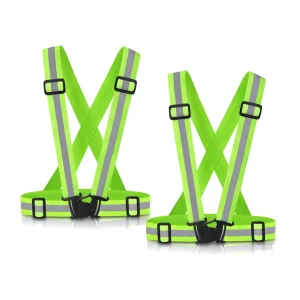
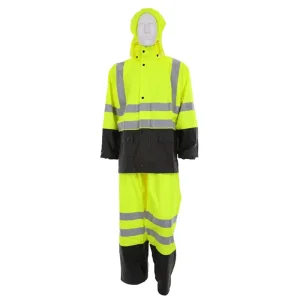
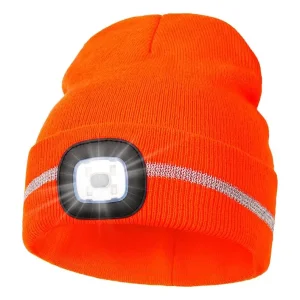
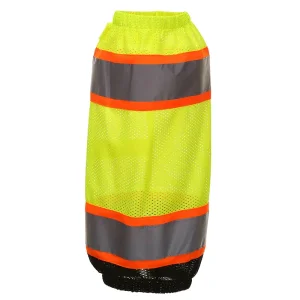
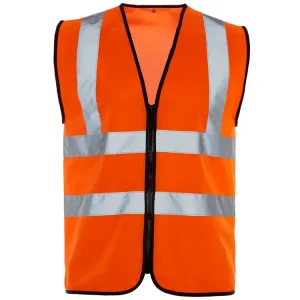
Explore ancillary safety products including reflective headwear, thermal sweatshirts, weather-resistant suits, and traffic safety items.
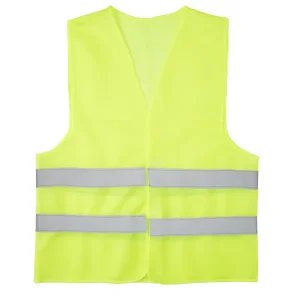
Direct answers for enterprise procurement buyers, safety officers, and wholesale importers regarding performance, compliance, and ordering logistics.
Unlike standard 100% solid polyester work shirts that trap body heat, cool high-vis shirts feature specialized micro-mesh or bird’s-eye knit fabrics made from cross-channel hydrophobic yarns. These fabrics rapidly draw sweat off the skin via capillary moisture-wicking action. Furthermore, premium cool shirts utilize segmented heat-transfer reflective tape instead of continuous solid tape, enhancing breathability by 45% and allowing unrestricted mechanical stretch.
Yes. Segmented reflective tapes manufactured by top suppliers (such as 3M Scotchlite or certified factory equivalents) fully comply with ANSI/ISEA 107-2020 and EN ISO 20471 photometrics. The spacing between segments is engineered to fall well within allowed standard tolerances, maintaining an active coefficient of retroreflection ($R_A > 330 \text{ cd/lx/m}^2$) while offering superior thermal relief.
Garments manufactured by Yongkang Wow Safety Products are rated for 25 to 50 certified wash cycles at 60°C (140°F), depending on fabric grade and reflective trim specification. High-durability heat-transfer films retain both fluorescent chromaticity and retroreflectivity over prolonged industrial laundering cycles.
Our standard MOQ for OEM custom dye colors, screen-printed branding, or specific tape layouts is 500 units per style. Production lead times typically range between 20 and 30 calendar days following pre-production sample approval. In-stock blank garments can ship within 7 working days.
Yes. Enterprise logos can be added via screen printing, heat transfer, or embroidery. However, logos must be placed in standardized "branding zones" (such as upper chest pockets or sleeves) to ensure that the total area of daytime fluorescent background fabric remains above mandatory ANSI or EN ISO minimum threshold limits.
Our facility operates under an ISO 9001 certified quality management system. Raw materials undergo inline spectrophotometer colorfastness testing, seam strength verification, and 100% final inspection by our quality assurance team prior to container loading and export.