Industrial-grade high visibility protective wear certified for emergency responders, municipal services, and tactical paramedics.
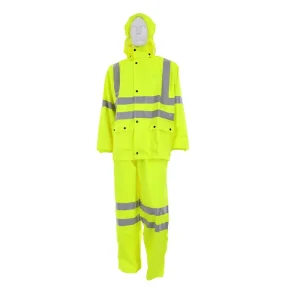
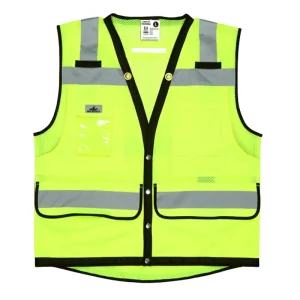
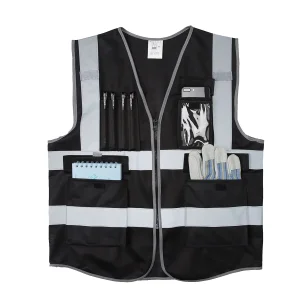
Analyzing global EMS procurement shifts, multi-hazard emergency protocols, and modern high-visibility garment architecture.
Modern emergency medical technicians (EMTs) operating on high-speed motorways face compound risks: oncoming traffic, harsh microclimates, and biohazard exposure. Sourcing from experienced wholesale ambulance high vis jacket suppliers ensures garments integrate photometric retroreflection with liquid barrier protection meeting ISO 16604 blood-borne pathogen standards.
Procurement departments across North America, Europe, and the Middle East are harmonizing specifications. Key standards include EN ISO 20471 Class 3 for luminous background area and ANSI/ISEA 107-2020 Type R Class 3. Suppliers must guarantee minimum photometric brightness values of >500 cd/(lx·m²) following 50+ industrial wash cycles.
The modern ambulance jacket is no longer a passive vest—it functions as a mobile equipment rig. Leading factories incorporate reinforced radio/walkie-talkie loops, dual mic tabs, heavy-duty shear pockets, interior tablet compartments, and rapid breakaway zippers engineered for immediate removal during hazardous entanglement scenarios.
A deep dive into high-performance textiles, retroreflective optics, and weatherproof membrane technologies.
Paramedic jackets deployed in extreme weather require multi-layer laminate construction. Outer shells typically utilize high-tenacity 300D to 600D Oxford Polyester woven with Ripstop grid reinforcement, treated with Durable Water Repellent (DWR) C6 fluorocarbon or PFC-free finishes. Hydrophobic Polyurethane (PU) micro-porous coatings provide a hydrostatic head pressure rating exceeding 10,000mm H₂O while allowing water vapor transmission (>5,000 g/m²/24h) under EN 343 Class 4:4 parameters.
| Technical Parameter | Standard Specification | EMS Grade Premium Target |
|---|---|---|
| Outer Fabric Weight | 180 - 220 gsm Polyester Oxford | 300D Ripstop Polyester (260 gsm) |
| Retroreflective Coefficient | ≥ 330 cd/(lx·m²) | ≥ 500 cd/(lx·m²) Micro-prismatic |
| Waterproof Rating (EN 343) | 5,000 mm H₂O | 15,000 mm H₂O (Fully Seam Sealed) |
| Breathability Ret | Ret < 20 m²Pa/W | Ret < 10 m²Pa/W (Ultra-Breathable) |
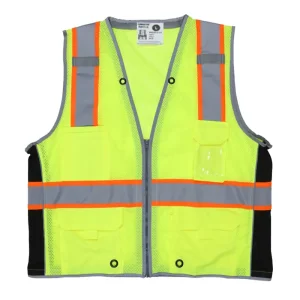
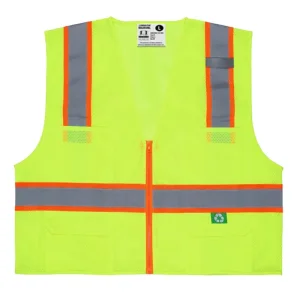
The visual prominence of an emergency jacket relies on precise chromaticity coordinates defined by EN ISO 20471. Background colors must strictly hit the Fluorescent Yellow (Lime) or Fluorescent Orange-Red color box, combined with high-contrast Dark Navy or Royal Blue lower panels to mask dirt, oil, and fluid splatters.
Photometric performance is guaranteed through wide-angle micro-prismatic tape technology (such as 3M™ Scotchlite™ 5510 or equivalent Orafol® glass bead systems), engineered to bounce incident headlight beam angles back to driver eye-level even in zero-light highway environments.
Quantifiable operational benchmarks from verified manufacturing clusters in Zhejiang, China.
By establishing direct strategic partnerships with direct manufacturing plants in China's industrial safety belt (Yongkang, Jinhua Region), wholesale buyers, municipal procurement officers, and emergency apparel distributors achieve up to 35% cost optimization while maintaining strict adherence to ISO, ANSI, and CE safety standards. Automated computer-guided laser cutting, fully sealed seam-taping machines, and automated needle inspection lines ensure zero-defect production runs.
Tailored high-visibility garment configurations designed for diverse regional emergency operating environments.
In the United States and Canada, paramedic jackets must meet ANSI/ISEA 107-2020 Type R Class 3 rules. Features demand 360-degree reflective coverage across torso and arms. Optional breakaway shoulder and side seams are often integrated to protect first responders against violent patient grabs or vehicle entrapment.
European emergency medical services favor two-tone contrast layouts: Fluorescent Yellow (EN ISO 20471 compliant) combined with Navy Blue or Bottle Green contrast zones on cuffs and waistlines. Battenburg reflective tape patterns are frequently added to rear panels alongside heavy-duty epaulettes for rank structure identification.
For Middle Eastern and Asia-Pacific emergency fleets operating under high ambient heat, jackets require 3-in-1 modular systems: an ultra-breathable outer shell featuring underarm zip vents and detachable thermal fleece liners. Anti-UV treatments (UPF 50+) prevent premature fabric degradation from solar radiation.
Exploring the future of active lighting integration, IoT tracking, and sustainable recycled high-vis textiles.
Passive retroreflective tape relies on external vehicle light sources. Next-gen jackets embed active electroluminescent wire or rechargeable LED micro-flex arrays into seam piping, guaranteeing high visibility even when unlit vehicles approach in foggy pitch-black terrain.
Global ESG initiatives are driving demand for eco-friendly workwear. Modern manufacturers utilize Global Recycled Standard (GRS) certified rPET yarn derived from post-consumer plastic bottles, reducing carbon footprint by 40% without compromising tensile strength or flame-retardant performance.
High-frequency washable RFID transponders embedded inside jacket neck labels enable emergency service departments to track laundering cycles, monitor protective equipment allocation, and automate stock replenishments during mass-casualty event dispatches.
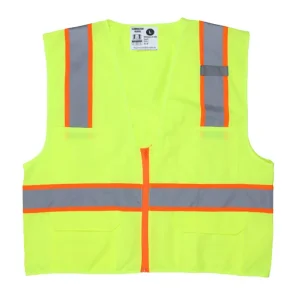
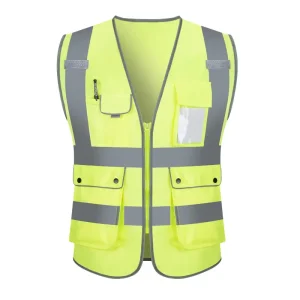
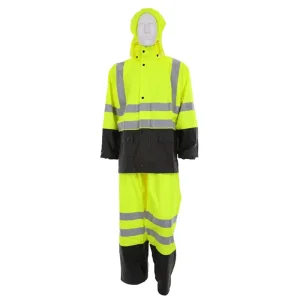
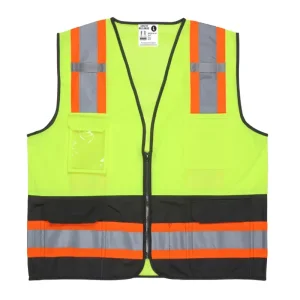
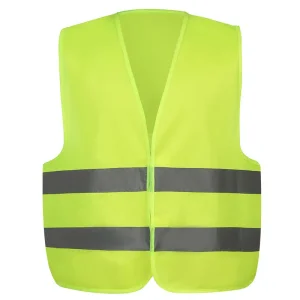
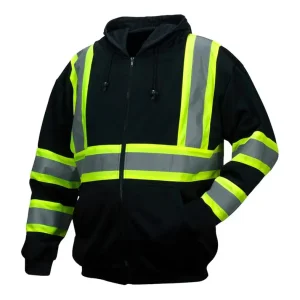
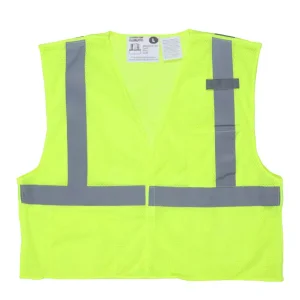
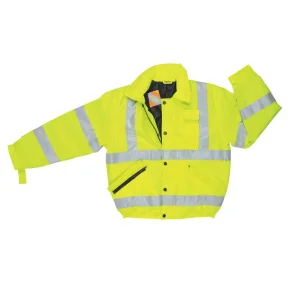
Explore our extended range of certified high-visibility safety clothing, vests, rainsuits, and reflective workwear accessories.

Essential answers for safety apparel distributors, government buyers, and EMS fleet managers.
Qualified manufacturers must furnish accredited third-party test reports (such as SATRA, SGS, or TÜV Rheinland) verifying compliance with EN ISO 20471 (Class 2 or Class 3 depending on total fluorescent surface area), ANSI/ISEA 107-2020 (Type R Class 3), and EN 343 for waterproofness and breathability. For medical and paramedic applications, testing for resistance to blood-borne pathogens under ASTM F1671 or ISO 16604 is highly recommended.
Standard OEM custom orders (including bespoke color contrast panels, custom logo embroidery, epaulettes, and radio loop placements) typically start at 500 to 1,000 units per style. Production lead time ranges between 25 to 35 business days following sample approval. For stocked raw material configurations, expedited lead times of 15 to 20 days can be arranged.
High-grade jackets feature heat-applied segment reflective tape or industrial sewn-on retroreflective trims rated for at least 50 wash cycles at 60°C (140°F) under ISO 6330 washing standards. Micro-prismatic glass bead technology protects the reflective layer against micro-abrasions, maintaining photometric values above 330 cd/(lx·m²).
Yes, as a specialized OEM/ODM manufacturer, full customization is supported. Standard paramedic modifications include heavy-duty webbing radio loops, dual mic tabs on shoulders, clear vinyl chest pocket windows for emergency credentials, reinforced lower utility pockets for trauma shears, and hook-and-loop patch panels for departmental insignia.
EN 343 Class 4:4 is the highest current European rating standard. The first digit represents water penetration resistance (waterproofness > 13,000 Pa after pretreatments), while the second digit indicates water vapor resistance (breathability Ret < 15 m²Pa/W). Class 4:4 garments prevent rain ingress during prolonged outdoor rescues while allowing body heat and moisture to escape, preventing internal condensation buildup.
Our fabrics utilize solution-dyed polyester yarns treated with high-grade UV stabilizers. Fabrics undergo laboratory xenon arc lamp testing to achieve a minimum light colorfastness rating of Grade 4-5 under ISO 105-B02 standards, preventing yellow/orange shade shifting under intense sunlight exposure.