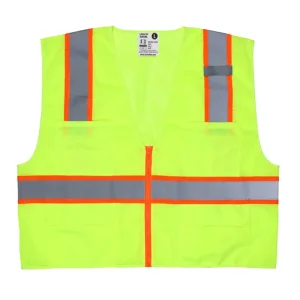
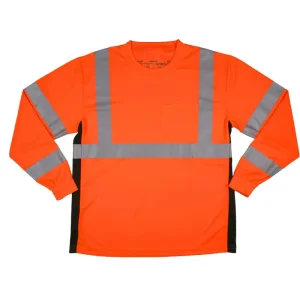
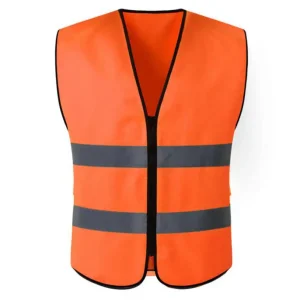
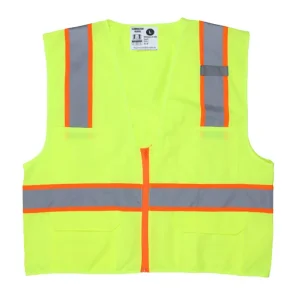
Certified reflective apparel engineered for extreme durability, ANSI/ISEA compliance, and maximum low-light visibility.
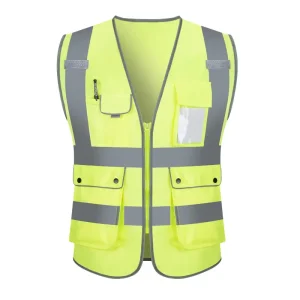
Analyzing global shifts in paramedic protection, biosecurity mandates, and retroreflective compliance for high-risk incident management.
Emergency Medical Technicians (EMTs) and paramedics operate at the intersection of vehicular traffic, extreme weather, and biological hazards. Modern Ambulance Hi Vis Jackets serve as the first line of defense, mitigating struck-by hazards on high-speed interstates while ensuring fluid resistance during emergency field procedures.
Global emergency services are rapidly adopting strict compliance metrics. The alignment between EN ISO 20471 (Class 3) and ANSI/ISEA 107-2020 ensures that wholesale procurement managers can source unified jacket platforms that meet multi-jurisdictional municipal tenders seamlessly.
The market is shifting from passive retroreflective strips to active illumination and multi-layer breathable membranes. OEM factories must offer micro-prismatic technologies integrated with hydrophobic, windproof, and bloodborne pathogen protection layers.
Statistical analyses show that high-visibility garments incorporating 3M™ Scotchlite™ or equivalent micro-prismatic reflective tape reduce roadside first-responder accident rates by over 74% during low-light conditions (<10 lux). Factory-direct quality control ensures photometric values exceed 330 cd/(lx·m²).
Deep dive into textile physics, retroreflective photometry, thermal regulation, and pathogen resistance required for elite emergency jackets.
EMS jackets require full 360-degree detection under vehicle headlights. Class 3 compliance mandates a minimum of 0.80 m² of fluorescent background material (Fluorescent Yellow-Green, High-Vis Orange-Red, or High-Vis Red) combined with 0.20 m² of retroreflective tape. Micro-prismatic glass bead structures channel light back to vehicle drivers across distances exceeding 300 meters.
Our manufacturing process incorporates microporous ePTFE / PU membrane laminations. This delivers a hydrostatic head water resistance exceeding 10,000 mm H₂O while maintaining a Water Vapor Resistance ($R_{et}$) under 12 m²Pa/W. Additionally, pass rates under ASTM F1671 guarantee protection against bloodborne pathogens and viral penetration.
| Performance Parameter | International Standard | Ambulance Jacket Spec | Procurement Advantage |
|---|---|---|---|
| Luminance Factor ($\beta$) | EN ISO 20471 / ANSI 107 | $\beta \ge 0.76$ (Fluorescent Lime-Yellow) | Maximum daytime contrast against ambient backgrounds |
| Retroreflection ($R_A$) | EN ISO 20471 Class 2/3 | $> 330 \text{ cd}/(\text{lx}\cdot\text{m}^2)$ | Superior optical return at acute 88.5° observation angles |
| Water Penetration Resistance | EN 343 Class 4:4 | $> 15,000 \text{ mm}$ Hydrostatic Head | Complete stormproof performance during extended rescue ops |
| Pathogen Barrier | ASTM F1671 / EN 14126 | Synthetic Blood Penetration Pass | Critical biosecurity protection during trauma patient care |
| Industrial Launder Life | ISO 6330 / ISO 15797 | 50+ Wash Cycles at 60°C | Lower Total Cost of Ownership (TCO) for municipal buyers |
Purpose-engineered pocket configurations, radio webbing, and breakaway safety mechanisms tailored for emergency response personnel.
Reinforced chest webbing loops designed to secure heavy-duty tactical radio microphones, body-worn cameras, and push-to-talk (PTT) communication devices at optimal acoustic angles.
Includes waterproof storm-flapped cargo pockets, transparent sleeve ID holders, internal tablet compartments, dedicated stethoscope pockets, and fleece-lined hand warmers.
Optional anti-entanglement breakaway systems on shoulders, sleeves, and front zipper prevent paramedics from being dragged if caught on moving equipment or vehicle hazards.
Removable inner thermal fleece or softshell jacket allows paramedics to adjust insulation seamlessly across freezing winter calls and humid summer rain shifts.
3D pre-curved sleeve construction and underarm gussets provide full range of motion without hem lift-up during CPR execution, patient lifting, and vehicle extraction.
Integration of green/yellow or blue/yellow high-contrast checker patterns compliant with UK NHS and European ambulance visual recognition standards.
Yongkang Wow Safety Products Co., Ltd.: 15+ years of specialized workwear production supplying global distributors and government fleets.
Operating out of our modern 6,000 m² production hub in Jinhua City, Zhejiang, every batch of wholesale jackets undergoes rigorous testing. We execute seam hydrostatic testing, colorfastness evaluations, reflective coefficient verification, and tensile stress checks before container loading.
We support custom Pantone dye matching for specific service branches, high-definition screen printing, heat-transfer insignia, custom hook-and-loop badge panels, and bespoke radio harness placement to align with regional paramedic operational requirements.
Customizing high-visibility paramedic apparel to comply with North American, European, and Asia-Pacific emergency service mandates.
Mandates Type R Class 3 compliance for roadway emergency responders. Demands 1,248 sq. in. of background fabric and 310 sq. in. of reflective tape. NFPA 1999 biosecurity specifications are integrated for emergency medical operations.
Requires strict Class 3 area calculations and EN 343 rain resistance certification. Incorporates UK NHS High-Vis green/yellow Battenburg designs alongside retroreflective tape durable up to 50 industrial launderings.
Specifies Class D/N (Day/Night) performance standards. Outer shells must resist high UV radiation indices while offering maximum breathability for tropical and arid Australian rescue climates.
Integrating wearable electronics, active luminescent panels, and sustainable recycled polymers into modern protective gear.
Embedding flexible LED light strips directly into shoulder and back panels, enabling 1,000-meter visibility even in complete darkness or heavy smoke environments without relying on external vehicle headlights.
Incorporating lightweight panic buttons, fall-detection accelerometer nodes, and vital sign monitoring sensors inside the interior liner for real-time paramedic safety tracking.
Transitioning to GRS-certified recycled polyester fibers derived from post-consumer plastic bottles, reducing product carbon footprints by 45% without compromising tear strength or fluorescence.
Expert answers regarding OEM manufacturing, minimum order quantities, testing standards, and logistics.
Our emergency jackets are engineered to meet EN ISO 20471 Class 3, ANSI/ISEA 107-2020 Type R Class 3, and EN 343 Class 4:4 waterproofness. Specific models also meet ASTM F1671 bloodborne pathogen resistance criteria. Test reports from accredited third-party laboratories (SGS, TÜV, SATRA) are provided with OEM orders.
Our standard MOQ for customized ambulance jackets with specific colorways, radio loops, and logo printing is 500 units per style. For standard stock reflective vest models, lower MOQs starting from 200 units are available to support smaller municipal trial runs.
Yes! As a direct factory supplier, we offer complete OEM/ODM pattern customization. We can adjust pocket dimensions, add custom velcro patches, incorporate specialized microphone loops, and position high-contrast callout panels based on your department's tech requirements.
We use premium high-visibility polyester fabrics treated with colorfast reactive dyes and certified retroreflective tapes. Our garments retain their photometric performance and luminance requirements for up to 50 industrial laundering cycles at 60°C (140°F).
Sample creation typically takes 5–7 business days. Upon sample approval and deposit confirmation, mass production lead times range between 25–35 days depending on order volume. We ship globally from Ningbo or Shanghai ports via FCL, LCL, or expedited air freight.
Comprehensive safety gear designed to complement emergency responder apparel.